





Blog
Insights & updates from our experts


Resolve plant floor and IT issues before they disrupt production.

Stay audit-ready while resolving issues and reducing operational risk.
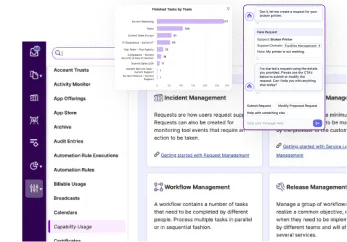
Resolve issues quickly with an AI-powered system that automates ticketing.
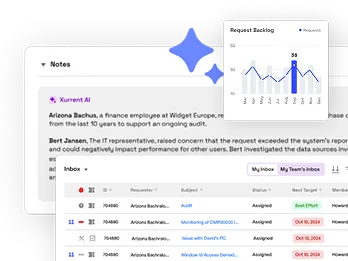
Unifiy IT, HR, Facilities, Finance, and more on a single, AI-powered service platform.
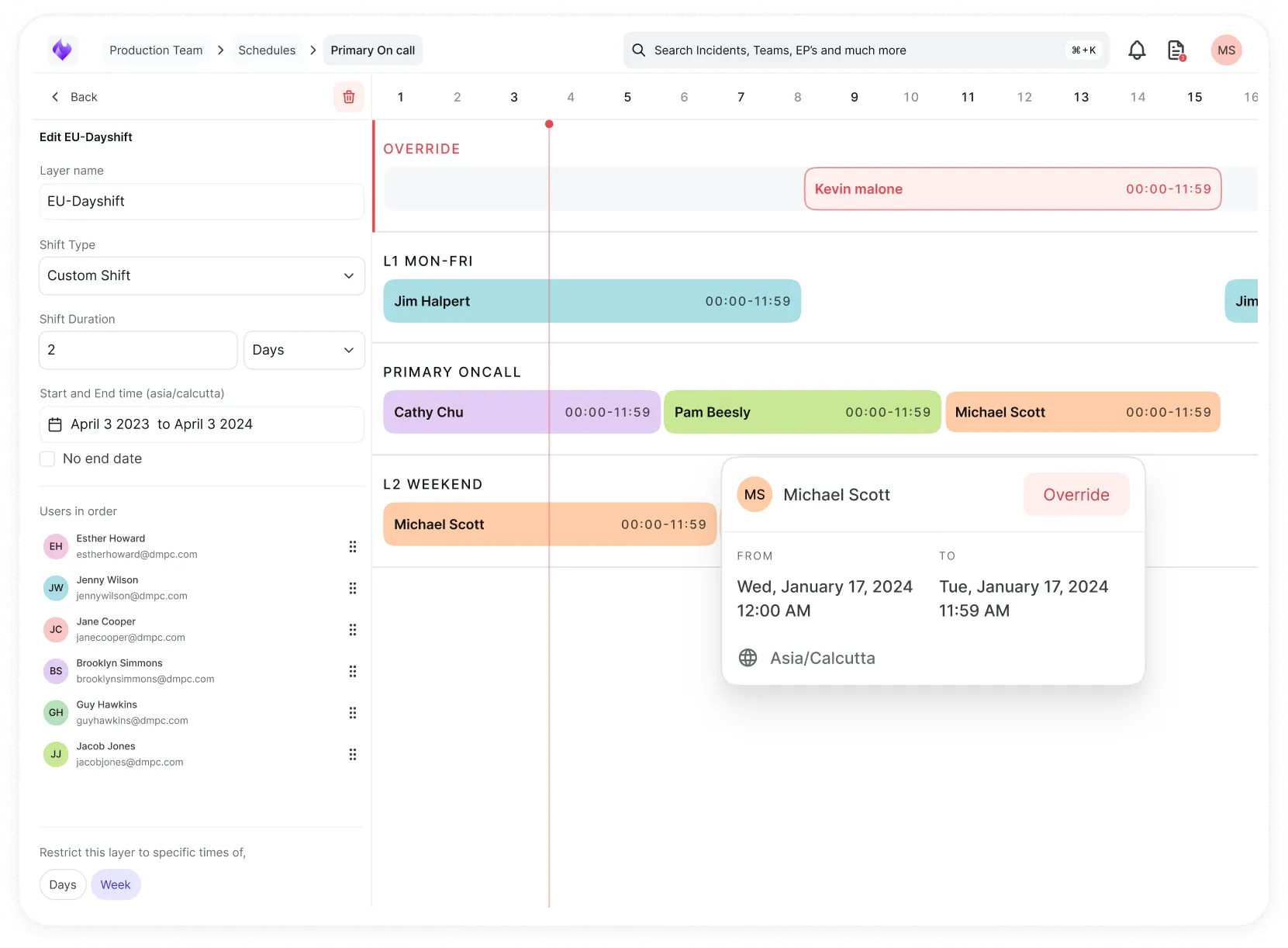
Simplify on-call scheduling, automate escalations, and reduce burnout.
Automate postmortems, AI summaries, and post-incident workflows
Create, organize, and continuously improve your knowledge base to find the right answers with Sera AI.

We're here to help

The integration with Atlassian Jira using the Xurrent Integration Service is

The integration with Atlassian Jira using the Xurrent Integration Service is

The integration with Atlassian Jira using the Xurrent Integration Service is

The integration with Atlassian Jira using the Xurrent Integration Service is

The integration with Atlassian Jira using the Xurrent Integration Service is

The integration with Atlassian Jira using the Xurrent Integration Service is

The integration with Atlassian Jira using the Xurrent Integration Service is

The integration with Atlassian Jira using the Xurrent Integration Service is
Resolve issues quickly with an AI-powered system that automates ticketing.
Unifiy IT, HR, Facilities, Finance, and more on a single, AI-powered service platform.
Simplify on-call scheduling, automate escalations, and reduce burnout.
Automate postmortems, AI summaries, and post-incident workflows
Create, organize, and continuously improve your knowledge base to find the right answers with Sera AI.
Resolve plant floor and IT issues before they disrupt production.
Stay audit-ready while resolving issues and reducing operational risk.

Detect, respond, and resolve incidents fast to cut downtime and MTTR.

Keep your store online, even during your biggest sales moments.

Protect patient data and resolve issues fast, so care teams stay focused on care.

Standardize service delivery across every store and channel.

We are here to help 24/7

Connect with other Xurrent Users

Get insights and tips on how to get the most out of Xurrent

Apps, APIs, and updates

Xurrent service functionality

Eliminate manual tasks, optimize workflows, and deliver faster resolutions.
Learn how organizations have reduced downtime, improved 50% MTTA & MTTR, and cut costs with Xurrent IMR.
Discover Xurrent IMR's quick support, bidirectional integrations with Jira and Slack, and more cohesive incident response capabilities compared to Opsgenie.
Understand why users value Xurrent IMR for its intuitive interface, efficient incident alerting, customizable On-call schedules, and escalations.

IT service desk managers in manufacturing face a specific operational challenge: when incident management is siloed across IT, OT, and plant teams, incidents take longer to resolve and critical issues fall through the cracks. Tickets bounce between queues. OT engineers and plant technicians run their own diagnostics off to the side. By the time everyone is aligned on what's happening, the factory floor has already absorbed most of the impact.
On paper, the escalation path looks solid. IT/OT integration projects are connecting systems and data. But the day-to-day reality during a cross-domain incident looks different: multiple teams working from different records, partial context, and no shared place where ownership is visible in real time. That structural problem is why incident ownership breaks down before technical diagnosis even starts, and why SLA exposure and repeat disruptions keep climbing.
The impact of siloed incident management isn't just slower tickets or higher service desk workload. It shows up as business costs that plant leaders feel immediately:
These costs compound because each incident crosses IT, OT, and the plant floor differently, but the structural problem is the same each time: separate workflows, separate records, and no single place where ownership, status, and resolution history are visible end to end.
Consider a common packaging-line issue: a conveyor feeding a case packer starts to hesitate intermittently. Operators see cartons backing up and log a call to the local service desk. HMI screens are freezing, so it looks like a network or system lag problem.
From there, siloed workflows multiply the impact:
Each team is reacting to the same symptom, but because they're operating in separate tools, no one sees the full picture. IT sees network metrics. OT sees control faults. The plant sees backlog and missed shift targets. There is no single incident record where all of that comes together.
The result is predictable:
From the service desk's perspective, it looks like one slow-moving ticket. From the plant's perspective, it's an unnecessarily long disruption, not because the failure was hard to diagnose, but because it was diagnosed three times in three places.
Downtime is only one dimension of the cost. The other is the amount of skilled labour consumed by handoffs and information chasing every time a cross-domain incident opens.
Take a scenario where a palletizer cell starts faulting intermittently at the end of a shift. An operator sends an email with a brief description. A supervisor forwards it to site IT, who logs a ticket. By the time the incident starts moving:
Each hop burns skilled time:
None of this appears as a specific line item in the incident record. The ticket shows a few updates and a resolution note. It doesn't show the 6–8 people who touched the issue in parallel or the lost hours of specialist attention that could have gone toward preventive work and higher-priority incidents.
Siloed incident management also drives quality-related costs, especially when issues cross IT and OT boundaries.
Imagine a filling line where one product starts drifting out of weight tolerance a few times a week. Operators notice the pattern and flag it in their production system. OT traces the issue to how a temperature change affects a specific valves-and-scales combination. IT identifies that the reporting job aggregates readings in a way that hides some of the spikes for that product.
The fix is multi-step and cross-domain: a controls configuration adjustment, a minor firmware update, and a change to how the reporting logic aggregates data for that SKU. But each team documents in its own system:
There is no single incident record that ties these together.
Weeks later, during a seasonal changeover, the same issue appears on a sister line running a similar product. Without a unified history, the new incident kicks off a fresh round of troubleshooting:
By the time teams rediscover the combined root cause, several batches have already gone out of spec:
The quality issue wasn't new. Fragmented documentation and unlinked records hid the fact that it was a repeat.
The most expensive effect of siloed incident management is repeat incidents that nobody recognizes as repeat.
Picture a mixer in one plant that starts tripping on drive faults during startup. OT engineers and plant maintenance spend a week working through possible causes: motor health, VFD configuration, batch sequencing, and load conditions. IT confirms that the underlying network and control communications are stable. Eventually, the team identifies a subtle interaction between startup sequencing and a firmware quirk on the drive.
The resolution is sound: a firmware upgrade, a minor change to the startup routine, and updated operator instructions. But again, documentation fragments:
Months later, another site brings the same mixer model online for a new product. Within days, they start seeing similar drive faults on startup. Because there's no shared incident history across plants:
The cost isn't just the downtime from each occurrence. It's the lost productivity from re-solving the same problem repeatedly, because prior resolutions aren't discoverable across teams and sites at the moment a new incident opens.
Automation can even make this worse in a specific way:
Running only the first without the second accelerates a knowledge-deficit model. You close incidents faster, but the same failures recur in different plants, consuming capacity that a unified knowledge base could have protected.
These cost categories trace back to the same set of structural mechanics. During an incident, cross-collaboration and visibility are critical. Siloed tools and processes block both.
The patterns are consistent across manufacturers:
For IT service desk managers, this means:
Silos turn every cross-domain incident into a coordination problem first and a technical problem second. The longer ownership and context stay fragmented, the more downtime, labour cost, and repeat disruptions accumulate.
Closing the ownership gap doesn't come from another escalation step or a tighter handoff script. It comes from unifying how IT, OT, and plant teams manage incidents from the moment they open.
In a unified service management model for manufacturing:
Revisiting the earlier scenarios under a unified model:
For IT service desk managers, unified service management turns the service desk into the coordination hub for cross-domain incidents instead of just another siloed entry point. Ownership becomes visible, collaboration becomes structured, and knowledge compounds across sites instead of evaporating at closure.
Manufacturing environments are only becoming more connected. As OT systems converge with IT and plants add more instrumentation, the number of cross-domain incidents will rise. The question is whether your incident management structure will scale with that complexity, or amplify its cost.
When IT, OT, and plant teams share a unified service management model, each incident becomes an opportunity to strengthen institutional knowledge rather than another one-off firefight. Downtime shrinks, handoff overhead drops, rework and waste decline, and repeat incidents become exceptions instead of the norm.

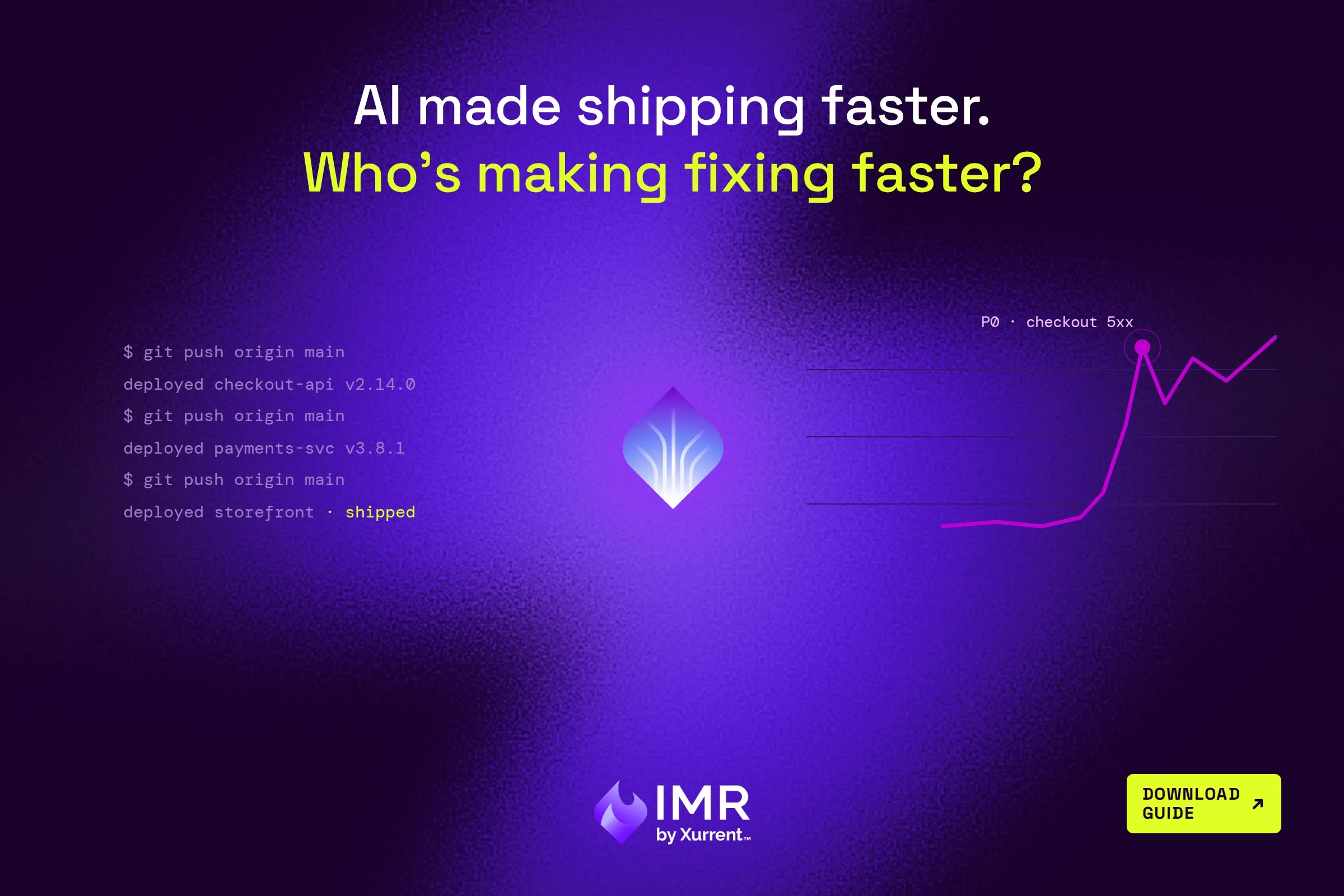
Google's 2025 DORA report found that 90% of technology professionals now use AI at work, and more than 80% say it has made them more productive. With code assistants and agents, the speed at which code gets written has changed more in eighteen months than in the decade before.