





Blog
Insights & updates from our experts


Resolve plant floor and IT issues before they disrupt production.

Stay audit-ready while resolving issues and reducing operational risk.
Resolve issues quickly with an AI-powered system that automates ticketing.
Unifiy IT, HR, Facilities, Finance, and more on a single, AI-powered service platform.
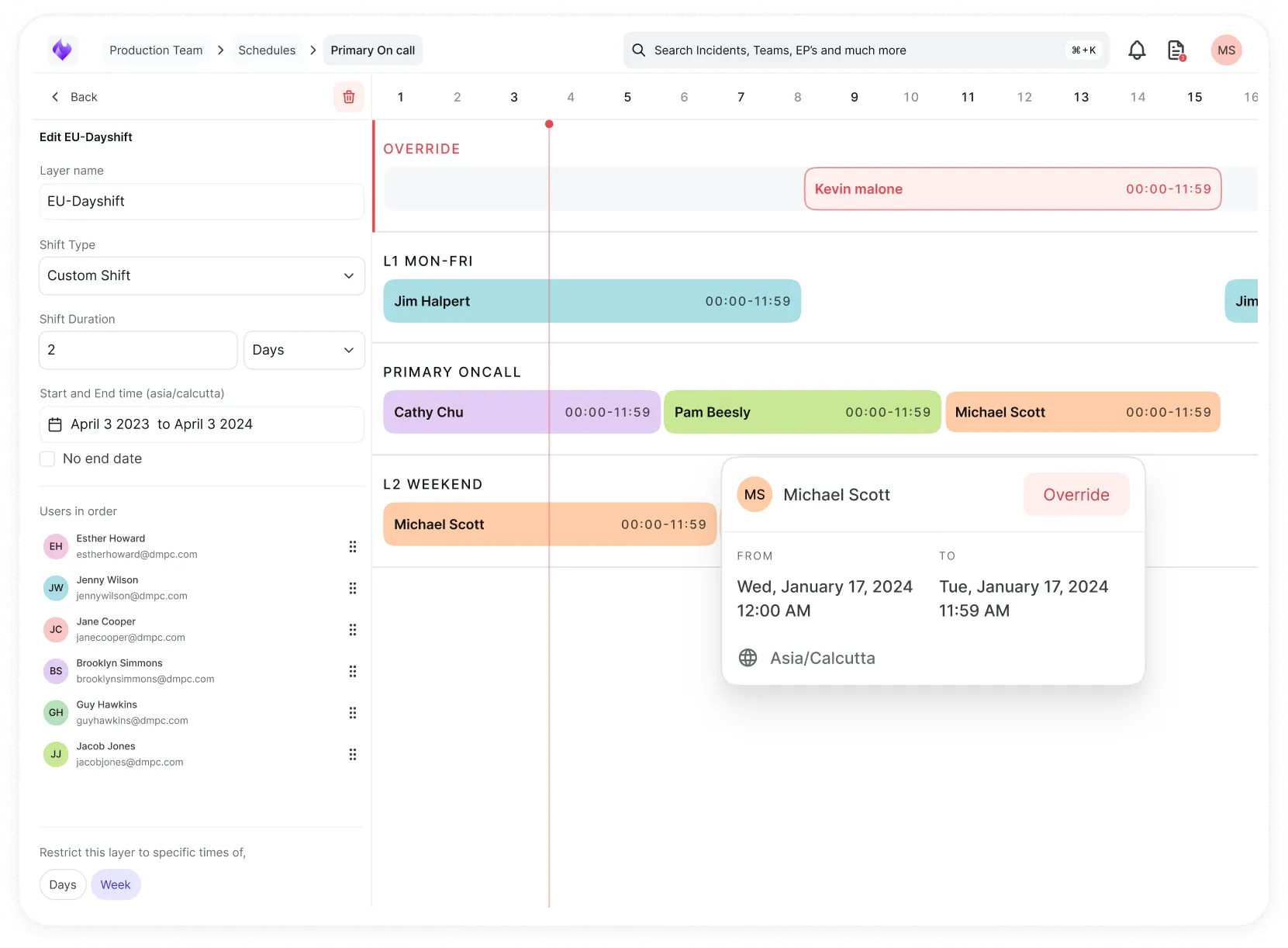
Simplify on-call scheduling, automate escalations, and reduce burnout.
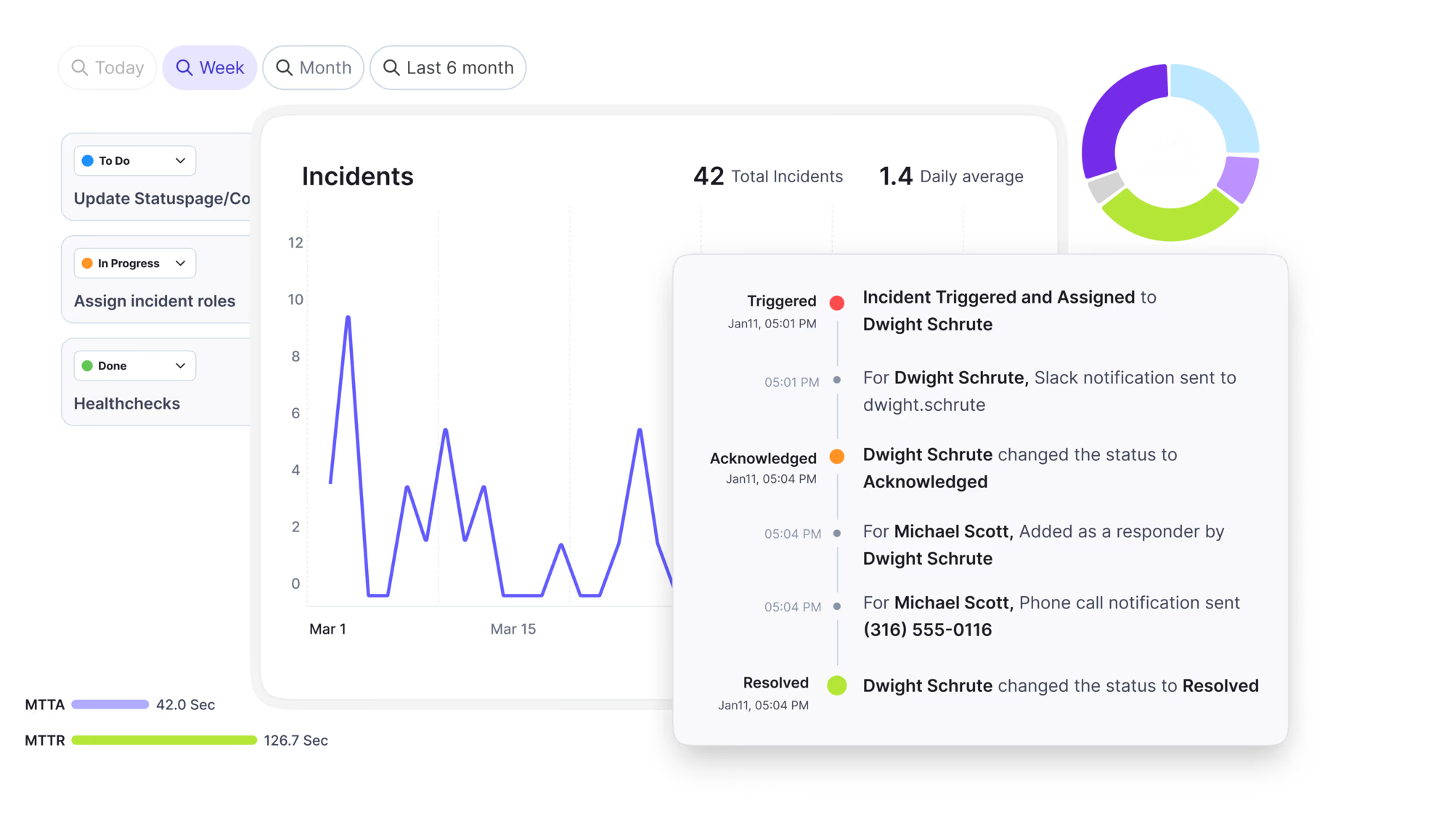
Automate postmortems, AI summaries, and post-incident workflows
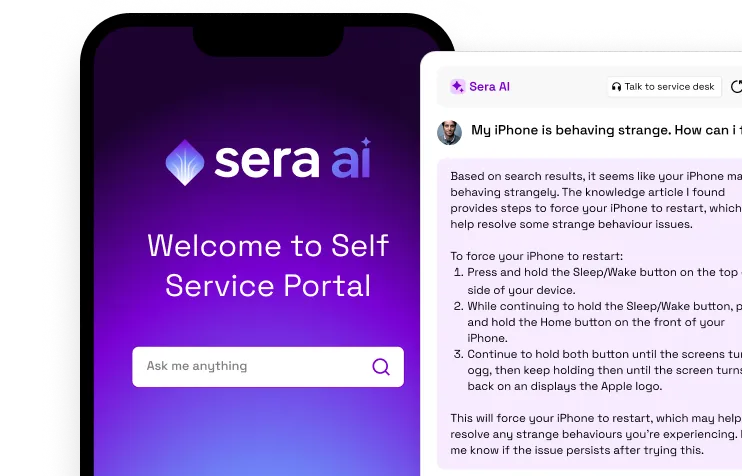
Create, organize, and continuously improve your knowledge base to find the right answers with Sera AI.
We're here to help

The integration with Atlassian Jira using the Xurrent Integration Service is

The integration with Atlassian Jira using the Xurrent Integration Service is

The integration with Atlassian Jira using the Xurrent Integration Service is

The integration with Atlassian Jira using the Xurrent Integration Service is

The integration with Atlassian Jira using the Xurrent Integration Service is

The integration with Atlassian Jira using the Xurrent Integration Service is

The integration with Atlassian Jira using the Xurrent Integration Service is

The integration with Atlassian Jira using the Xurrent Integration Service is
Resolve issues quickly with an AI-powered system that automates ticketing.
Unifiy IT, HR, Facilities, Finance, and more on a single, AI-powered service platform.
Simplify on-call scheduling, automate escalations, and reduce burnout.
Automate postmortems, AI summaries, and post-incident workflows
Create, organize, and continuously improve your knowledge base to find the right answers with Sera AI.
Resolve plant floor and IT issues before they disrupt production.
Stay audit-ready while resolving issues and reducing operational risk.

Detect, respond, and resolve incidents fast to cut downtime and MTTR.

Keep your store online, even during your biggest sales moments.

Protect patient data and resolve issues fast, so care teams stay focused on care.
Standardize service delivery across every store and channel.

We are here to help 24/7

Connect with other Xurrent Users

Get insights and tips on how to get the most out of Xurrent

Apps, APIs, and updates

Xurrent service functionality

Eliminate manual tasks, optimize workflows, and deliver faster resolutions.
Learn how organizations have reduced downtime, improved 50% MTTA & MTTR, and cut costs with Xurrent IMR.
Discover Xurrent IMR's quick support, bidirectional integrations with Jira and Slack, and more cohesive incident response capabilities compared to Opsgenie.
Understand why users value Xurrent IMR for its intuitive interface, efficient incident alerting, customizable On-call schedules, and escalations.

On paper, your incident management process looks healthy. Tickets close within SLA, dashboards stay green, and every shift hands over a neat list of "resolved" issues.
But from your chair as a service desk or site IT manager, the pattern feels different. The same production incidents keep cycling through your queue. A machining cell throws a familiar quality fault. A packaging line stops with the same intermittent PLC error. A temperature sensor on the loading dock goes out of range again.
Different shift. Different people. Same lost time and cost. You watch teams spend hours re-investigating problems that have already been solved before, somewhere, by someone, on some shift.
You can already close this incident on time. The real question is: how do you stop it from happening again?
Legacy ITSM platforms were not built for knowledge management. They were built to standardize and track work: intake, routing, escalation, and closure. That discipline has real value, but it leaves a structural gap. The system proves that work moved. It does not prove that the organization learned.
From the floor, that gap shows up in three interconnected patterns.
The recurring scrap loop. A production defect causes a batch of parts to fail quality inspection. The team spends two shifts investigating, traces the fault to a misaligned sensor or a drifting process parameter, implements the fix, and restores yield. The incident closes, SLA clocks stop, and everyone moves on. But the root cause, data traces, and recovery steps live inside a closed ticket that nobody on another shift, or at another plant, will ever search. Six months later, the same defect returns on a different line with a different crew, and they restart the investigation from scratch. The knowledge existed. It just wasn't accessible when it mattered.
Knowledge loss from workforce turnover. An aging manufacturing workforce means experienced technicians and process engineers are retiring, taking decades of troubleshooting expertise and institutional nuance with them. They know which alarms on Line 4 are noise after a washdown, which sensor tends to drift in cold weather near the dock doors, and how to restart a filler without damaging tooling. In most legacy environments, those insights live in memory, hallway conversations, or personal notebooks, not in a governed, searchable library. When they leave, newer technicians face the same failures as "new" problems, take longer to diagnose issues, rely on guesswork, or escalate to central engineering.
The "fresh incident" trap. Without root cause data tied to a usable knowledge base, the same failure repeats every four to six months, but every plant, and often every shift, treats each occurrence as a standalone crisis. One month it's a scrap loop on a casting line; the next quarter it's a recurring nuisance trip on a conveyor drive. Root causes aren't capitalized, technical trade-offs aren't tracked, and solutions remain informal and scattered across closed tickets and inboxes. Troubleshooting depends on individual intuition rather than collective learning.
These three patterns share a common cause: legacy ITSM systems make knowledge capture and retrieval difficult enough that learning doesn't stick. Knowledge capture is clunky. Articles, when they exist, go stale. There is no intelligent way to surface the right solution when a new incident comes in. The cycle repeats, even as the system reports perfect closure metrics.
The cost of this cycle rarely appears as a single dramatic outage. It accumulates in steady, predictable ways that everyone feels but few can quantify.
Consider how it shows up across your plants:
Your teams have discipline. The tools treat each incident as an isolated event rather than evidence in a longer pattern, and that is the core problem. As experienced staff retire and new hires fill the gap, the absence of institutional memory becomes a structural cost center.
Breaking this cycle requires more than a better runbook or a new escalation policy. It requires two integrated capabilities that work together every time an incident is resolved:
In a modern model, the closed ticket becomes input into organizational memory. Each investigation, each root cause, and each technical trade-off is captured once and reused many times across shifts, sites, and regions.
Most legacy ITSM systems were never designed to deliver these capabilities. They excel at process tracking and compliance reporting, but they leave the knowledge layer to manual effort and best intentions.
In practice, that looks like:
The result is predictable: even well-run ITSM implementations continue to treat recurring faults as fresh incidents. The platform reports success on closure metrics while recurrence, rework, and turnover quietly erode performance on the shop floor.
Modern platforms like Xurrent treat knowledge capture and reuse as a structural output of every resolved incident.
In practical terms, this looks like:
When these capabilities work together, technicians on different shifts, new hires, and experienced staff all operate from the same collective playbook. Instead of relying on who remembers a past fix, teams can check what the system already knows about the fault. The incident management process now does more than report that work was done. It ensures the organization is better equipped the next time the alarm sounds.
At Xurrent, these capabilities are built into the incident process itself, not sold as add-ons requiring separate configuration or additional licensing. For global IT service delivery across manufacturing sites, that integration determines whether knowledge capture scales across your plants or stays dependent on individuals choosing to document under pressure.
The limitations you've inherited from legacy ITSM platforms don't reflect a lack of discipline on your team's part. Legacy platforms were built to close tickets, not to build organizational memory.
If your service desk is fielding the same production incidents again and again (same issue, different shift, same lost time), the decision in front of you is straightforward: continue optimizing for closure metrics, or modernize around knowledge-driven incident management that reduces recurrence.
To go deeper on how manufacturing IT leaders are redesigning incident and knowledge workflows across distributed plants, explore our follow-up article on reducing service delivery chaos in global production environments. It outlines practical steps for evaluating platforms, establishing governance, and measuring recurrence reduction as a core performance metric.
Google's 2025 DORA report found that 90% of technology professionals now use AI at work, and more than 80% say it has made them more productive. With code assistants and agents, the speed at which code gets written has changed more in eighteen months than in the decade before.