




Blog
Insights & updates from our experts


Resolve plant floor and IT issues before they disrupt production.

Stay audit-ready while resolving issues and reducing operational risk.
Resolve issues quickly with an AI-powered system that automates ticketing.
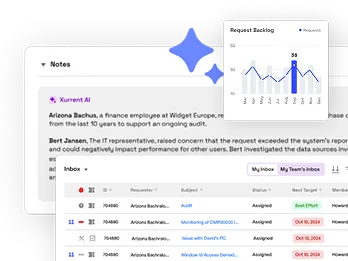
Unifiy IT, HR, Facilities, Finance, and more on a single, AI-powered service platform.
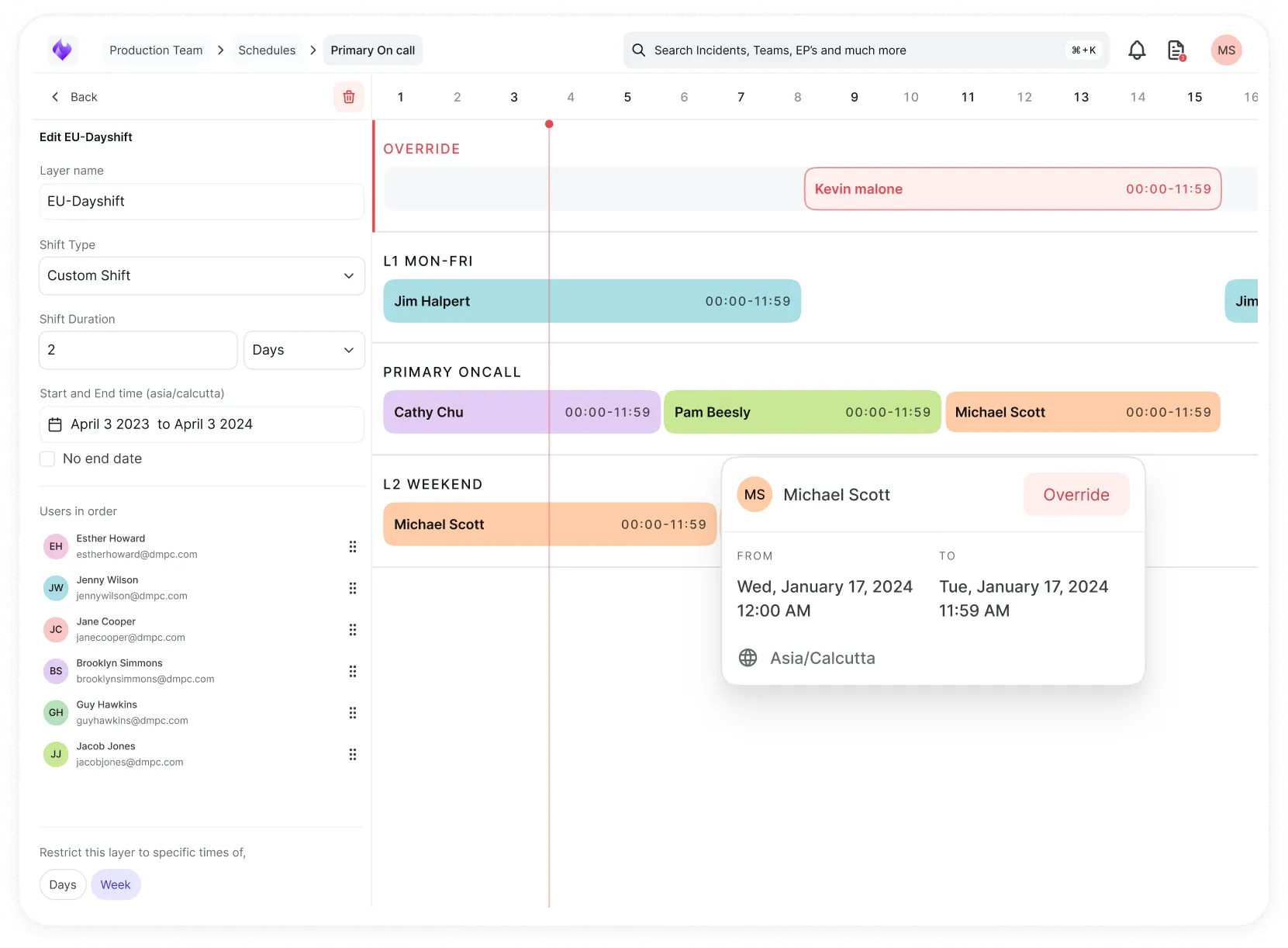
Simplify on-call scheduling, automate escalations, and reduce burnout.
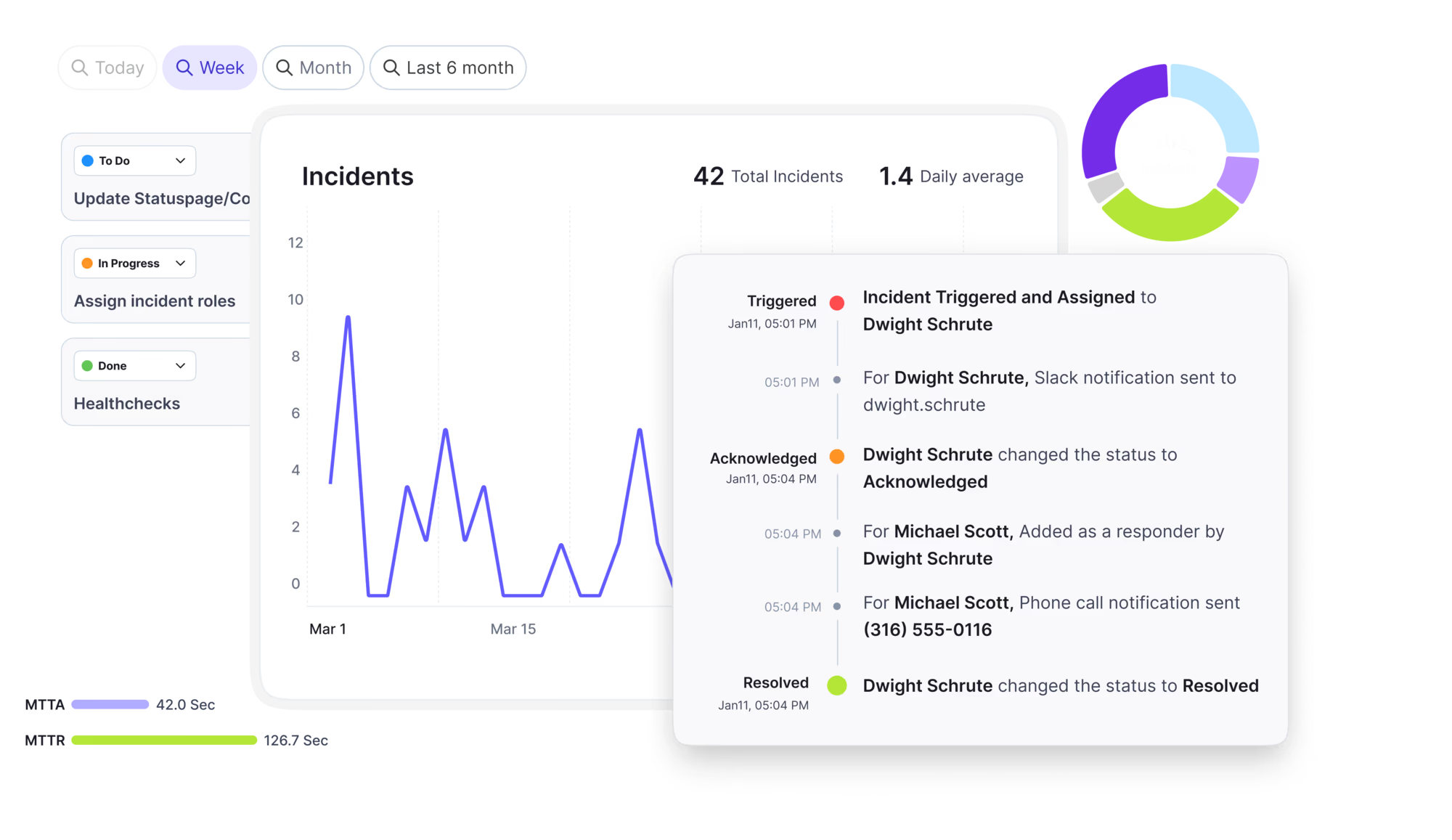
Automate postmortems, AI summaries, and post-incident workflows
Create, organize, and continuously improve your knowledge base to find the right answers with Sera AI.
We're here to help

The integration with Atlassian Jira using the Xurrent Integration Service is

The integration with Atlassian Jira using the Xurrent Integration Service is

The integration with Atlassian Jira using the Xurrent Integration Service is

The integration with Atlassian Jira using the Xurrent Integration Service is

The integration with Atlassian Jira using the Xurrent Integration Service is

The integration with Atlassian Jira using the Xurrent Integration Service is

The integration with Atlassian Jira using the Xurrent Integration Service is

The integration with Atlassian Jira using the Xurrent Integration Service is
Resolve issues quickly with an AI-powered system that automates ticketing.
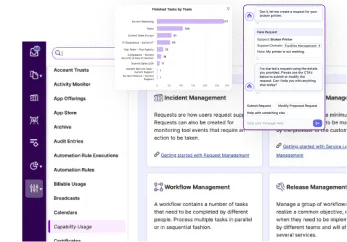
Unifiy IT, HR, Facilities, Finance, and more on a single, AI-powered service platform.
Simplify on-call scheduling, automate escalations, and reduce burnout.
Automate postmortems, AI summaries, and post-incident workflows
Create, organize, and continuously improve your knowledge base to find the right answers with Sera AI.
Resolve plant floor and IT issues before they disrupt production.
Stay audit-ready while resolving issues and reducing operational risk.

Detect, respond, and resolve incidents fast to cut downtime and MTTR.

Keep your store online, even during your biggest sales moments.

Protect patient data and resolve issues fast, so care teams stay focused on care.

Standardize service delivery across every store and channel.

We are here to help 24/7

Connect with other Xurrent Users

Get insights and tips on how to get the most out of Xurrent

Apps, APIs, and updates

Xurrent service functionality

Eliminate manual tasks, optimize workflows, and deliver faster resolutions.
Learn how organizations have reduced downtime, improved 50% MTTA & MTTR, and cut costs with Xurrent IMR.
Discover Xurrent IMR's quick support, bidirectional integrations with Jira and Slack, and more cohesive incident response capabilities compared to Opsgenie.
Understand why users value Xurrent IMR for its intuitive interface, efficient incident alerting, customizable On-call schedules, and escalations.

A multi-campus college cut mean time to resolution by 49% and gave its community one place to check, on Xurrent IMR.
When a network goes down at a college spread across Southern Arizona, the people who need to know are not in one building. They are students between classes on one campus, faculty mid-lecture on another, and an application team three sites over wondering if the problem is theirs. For a long time, Pima Community College had no good way to tell any of them what was happening.
The IT team could see the outage. Getting the word out was the hard part. So Pima built an incident communication strategy and put it on Xurrent IMR statuspage.
Subscriber capacity grew tenfold, giving 31,000 students and 3,000 staff a single source of truth.
Pima's IT team regularly dealt with outages, maintenance downtime, and weather disruptions across several campuses, with no way to tell anyone. When something broke, the people affected often found out by hitting the failure themselves.
Pima moved forward with Xurrent IMR, and the rollout was quick. The platform uses beacons to connect internal and external systems and update the page in real time. The detail that matters most in Arizona is geographic: during monsoon season a storm can hit one side of town, so Pima focuses its beacons on the affected sites instead of alerting everyone.
Implementation was fast, too. “We were up and running within two weeks,” Wilson said, and Pima now maps maintenance windows a year ahead so staff can plan around them.
Since the rollout, Pima has cut mean time to resolution by 49%, and its subscriber base has grown tenfold to 3,300 people. At peak the college sends as many as 60,000 notifications a month. Network, infrastructure, and application teams are all trained on the platform, so each can push alerts the moment an issue appears. That distributed ownership is what makes the speed possible.
See how Xurrent IMR keeps your whole community informed and your IT team ahead of the next incident.



.webp)
.webp)