



Blog
Insights & updates from our experts


Resolve plant floor and IT issues before they disrupt production.

Stay audit-ready while resolving issues and reducing operational risk.
Resolve issues quickly with an AI-powered system that automates ticketing.
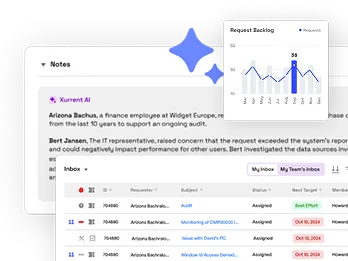
Unifiy IT, HR, Facilities, Finance, and more on a single, AI-powered service platform.
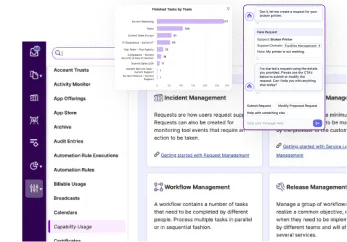
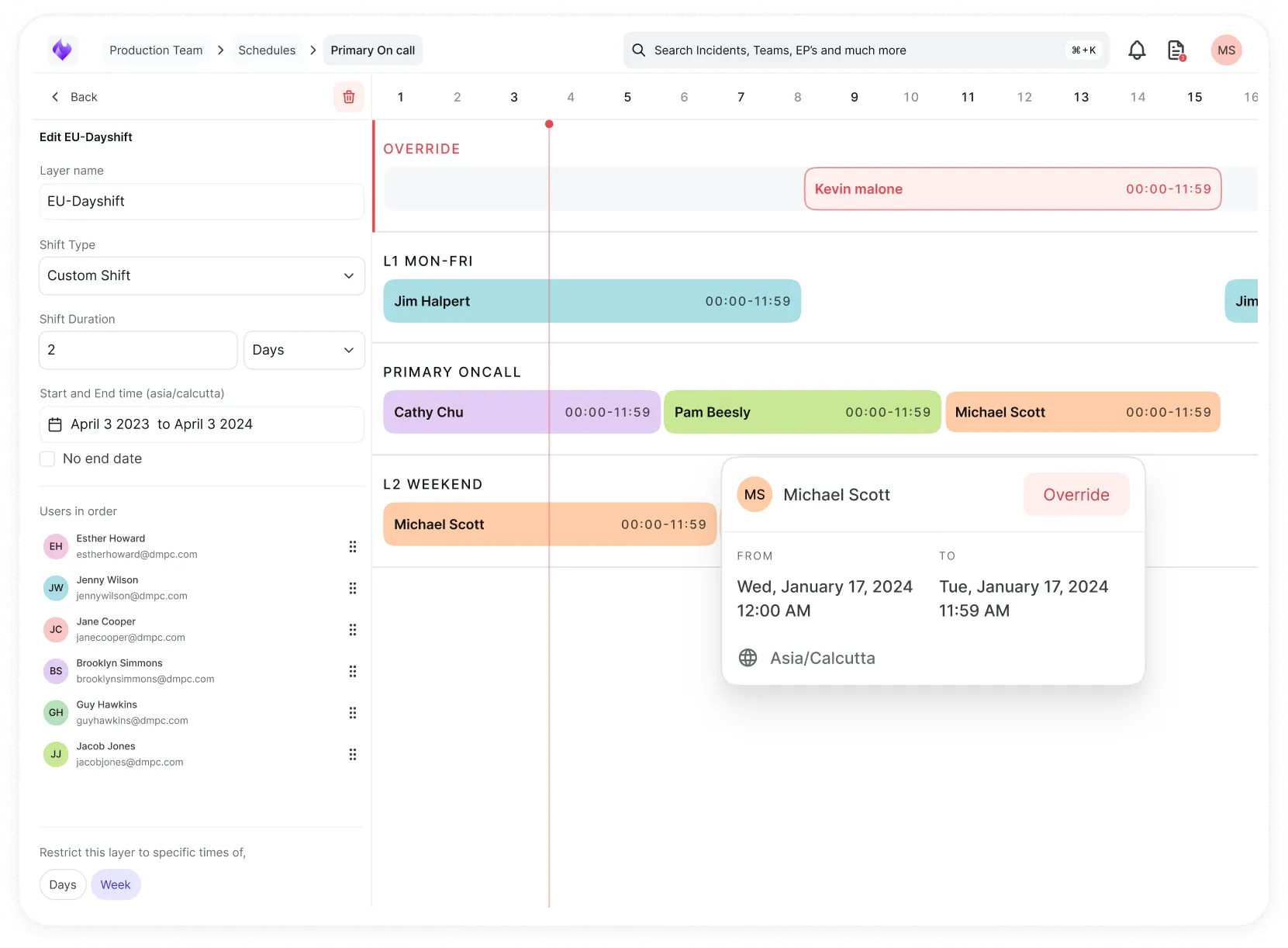
Simplify on-call scheduling, automate escalations, and reduce burnout.
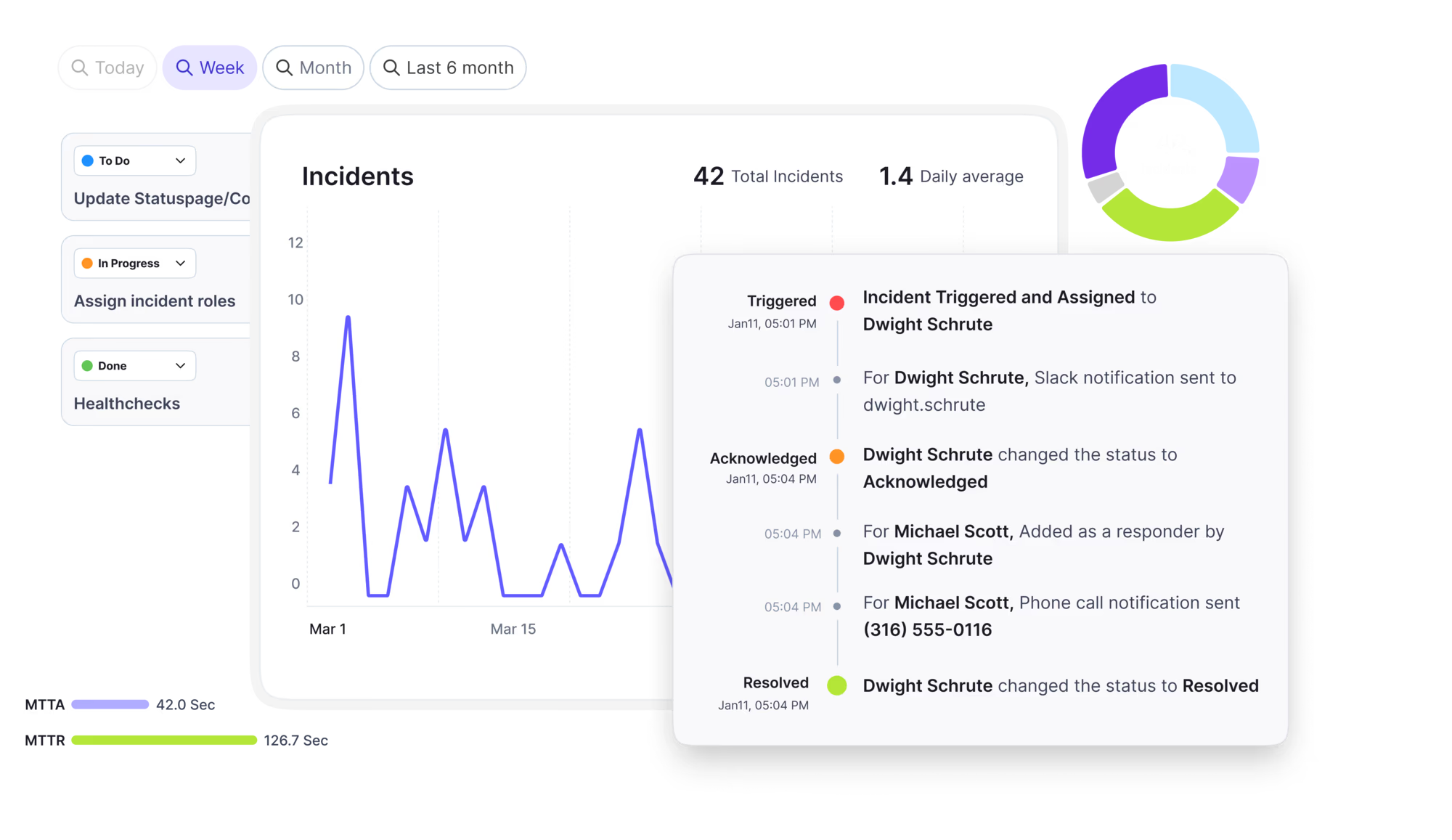
Automate postmortems, AI summaries, and post-incident workflows
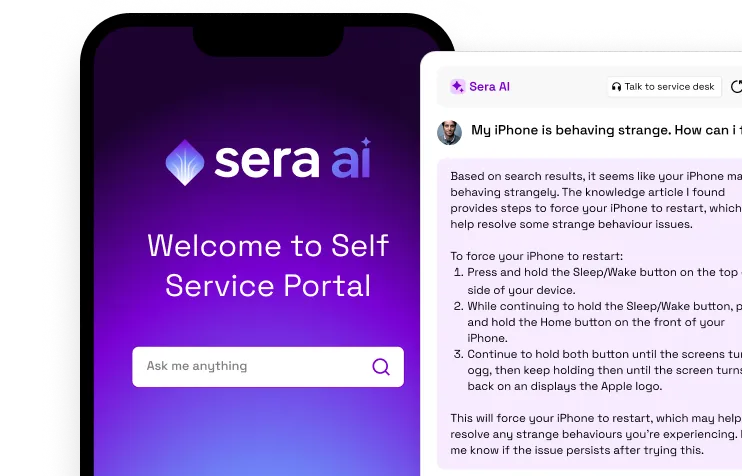
Create, organize, and continuously improve your knowledge base to find the right answers with Sera AI.
We're here to help

The integration with Atlassian Jira using the Xurrent Integration Service is

The integration with Atlassian Jira using the Xurrent Integration Service is

The integration with Atlassian Jira using the Xurrent Integration Service is

The integration with Atlassian Jira using the Xurrent Integration Service is

The integration with Atlassian Jira using the Xurrent Integration Service is

The integration with Atlassian Jira using the Xurrent Integration Service is

The integration with Atlassian Jira using the Xurrent Integration Service is

The integration with Atlassian Jira using the Xurrent Integration Service is
Resolve issues quickly with an AI-powered system that automates ticketing.
Unifiy IT, HR, Facilities, Finance, and more on a single, AI-powered service platform.
Simplify on-call scheduling, automate escalations, and reduce burnout.
Automate postmortems, AI summaries, and post-incident workflows
Create, organize, and continuously improve your knowledge base to find the right answers with Sera AI.
Resolve plant floor and IT issues before they disrupt production.
Stay audit-ready while resolving issues and reducing operational risk.

Detect, respond, and resolve incidents fast to cut downtime and MTTR.

Keep your store online, even during your biggest sales moments.

Protect patient data and resolve issues fast, so care teams stay focused on care.
Standardize service delivery across every store and channel.

We are here to help 24/7

Connect with other Xurrent Users

Get insights and tips on how to get the most out of Xurrent

Apps, APIs, and updates

Xurrent service functionality

Eliminate manual tasks, optimize workflows, and deliver faster resolutions.
Learn how organizations have reduced downtime, improved 50% MTTA & MTTR, and cut costs with Xurrent IMR.
Discover Xurrent IMR's quick support, bidirectional integrations with Jira and Slack, and more cohesive incident response capabilities compared to Opsgenie.
Understand why users value Xurrent IMR for its intuitive interface, efficient incident alerting, customizable On-call schedules, and escalations.

Not as long as your vendor is telling you. Probably not even close.
The old playbook was written for a different era of enterprise software. Six months to go-live, eighteen months to get it all right. It assumed heavy customization, lengthy professional services engagements, and integration work that could drag on for quarters. That playbook still applies to legacy platforms built around that model. It does not apply to modern, configuration-first platforms, and the gap between the two is getting harder to ignore.
Here is what ITSM implementation actually looks like in 2026 when the platform is built for speed: two to four weeks on the short end, three to six months for complex migrations with significant data requirements, and no more than six months even for the most intricate enterprise rollouts. Six months is the outer edge, not the starting point.
Zentis, a German manufacturing company with 2,000 employees operating across more than 50 countries, completed its core Xurrent implementation in two to three weeks. Sixty percent of services were live from day one.
That is not an outlier. UHasselt, a Belgian university, went from zero to live across 1,800-plus staff members in 24 days. Axsos, a German managed service provider, completed a full platform implementation in just 10 business days. They also deployed across five separate departments within the organization.
What these organizations have in common is not that they had simple needs. It is that they did not let customization get in the way.
Configuration instead of customization is what changes the math. When the platform is designed so that you adjust it through settings and rules rather than code, the implementation is not waiting on development cycles. You are configuring a platform to fit your environment, not building one from scratch inside someone else’s.
The shift from customization-heavy platforms to configuration-first design is the single biggest reason implementations are faster today. But it is not the only one.
Integration has historically been one of the biggest timeline killers in ITSM deployments. Connecting a new platform to your existing CMDB, HR system, monitoring tools, and everything else used to mean custom connectors, IT involvement at every step, and timelines that slipped for reasons that had nothing to do with the ITSM platform itself.
That problem is shrinking. Xurrent’s integration platform as a service (iPaaS) makes connecting to existing tools faster and simpler than previous approaches required. For organizations with complex integration requirements, this removes what used to be a reliable bottleneck.
Your implementation timeline is not random. It lands where it lands based on a handful of knowable factors.
Organizational complexity. More services, more teams, more stakeholders all take longer to align and configure. A 200-person company and a 20,000-person enterprise are genuinely different problems.
IT environment complexity. The size of your CMDB matters. The number of services, service instances, and integrations you need to configure before go-live matters. SEAS, Slovakia’s largest electricity producer, came into their implementation with 50,000 configuration items to import, 160 services spanning six separate power plant locations, and over 400 service instances across those sites. Each location ran its own IT systems. Their implementation still landed in five months. That is what a genuinely complex IT environment looks like on a modern, configuration-first platform. Read the full SEAS story.
Phased versus full rollout. Many organizations implement for IT first, then expand to enterprise service management (ESM) by rolling out to HR, Finance, Facilities, and other departments over time. A phased approach can hit faster initial milestones because you are not trying to model the entire organization before you go live with anyone.
Data migration scope. Moving open and closed tickets, audit trails, knowledge articles, and historical data from a legacy platform takes real work. Even so, the timeline for a heavy migration is months, not years. The next section shows why.
Vitality, a UK financial services company, replaced six years of ServiceNow progress in 90 days. Their team of 450 agents was live on Xurrent, supporting 3,000 employees, in three months. They also cut costs by 50 percent and achieved 70 percent self-service usage after rollout.
Fiskars, the Finnish manufacturing company with 7,000 employees across 29 countries, also migrated from ServiceNow. They had 350 users live in 16 weeks. In the first six months after implementation, they automated 3,000 workflows and achieved 96 percent user satisfaction.
The “but our migration is complicated” objection is understandable. It is not, however, a reason to accept an 18-month timeline.
The most common version of “our situation is different” is really an argument about scale. Large organizations with many locations, many departments, and many thousands of employees assume that complexity requires proportional implementation time.
Deichmann, the German footwear retailer with 50,000 employees and 5,000 storefronts, implemented Xurrent in three months and achieved 93 percent end-user satisfaction. Rossmann, the Polish retail chain, went from 10 stores to 100 stores to a full rollout in one month, ending up with 17,000 end users and 1,600-plus stores on the platform. Addiko Bank went live in under 90 days, then scaled to 900-plus agents across 160 branches of six subsidiary banks within six months.
Large and complex does not mean slow. It means the implementation needs to be managed well. That is a different problem entirely.
Every month a team spends waiting to go live is a month they are still running manual processes, still missing SLA visibility, still fielding requests through email. The cost of a slow implementation is not just the project budget. It is the operational drag that continues for every week the old system stays in place.
The organizations seeing the fastest implementations are not cutting corners. They are choosing platforms that do not require corners to be cut around. Configuration instead of customization means the platform adapts to the organization, not the other way around. And when integration is no longer a bottleneck, the timeline shrinks further.
In 2026, a long implementation is a choice. Make sure it is one you are making deliberately.