




Blog
Insights & updates from our experts


Resolve plant floor and IT issues before they disrupt production.

Stay audit-ready while resolving issues and reducing operational risk.
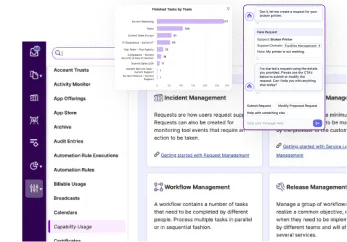
Resolve issues quickly with an AI-powered system that automates ticketing.
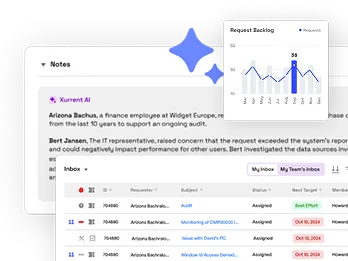
Unifiy IT, HR, Facilities, Finance, and more on a single, AI-powered service platform.
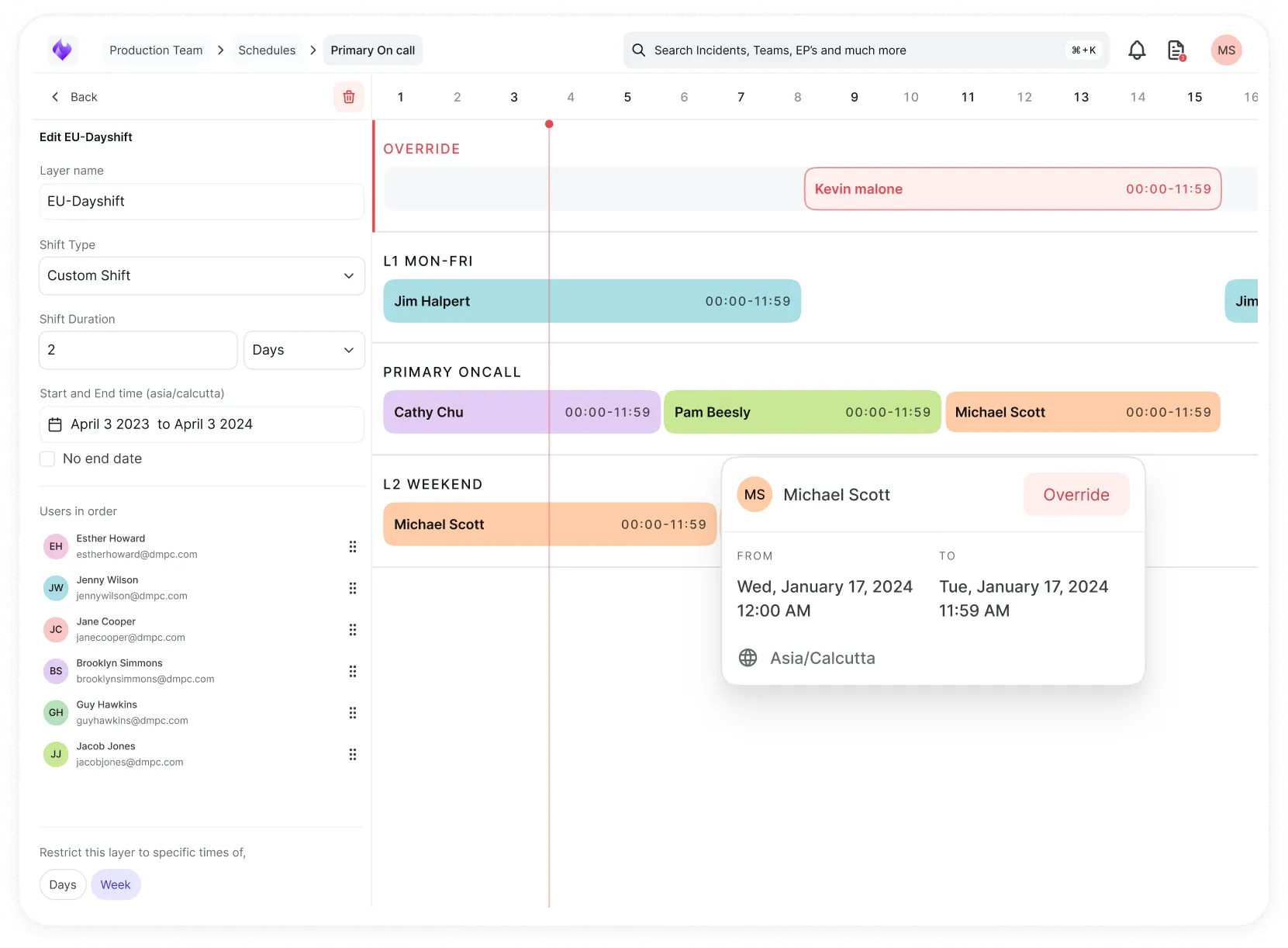
Simplify on-call scheduling, automate escalations, and reduce burnout.
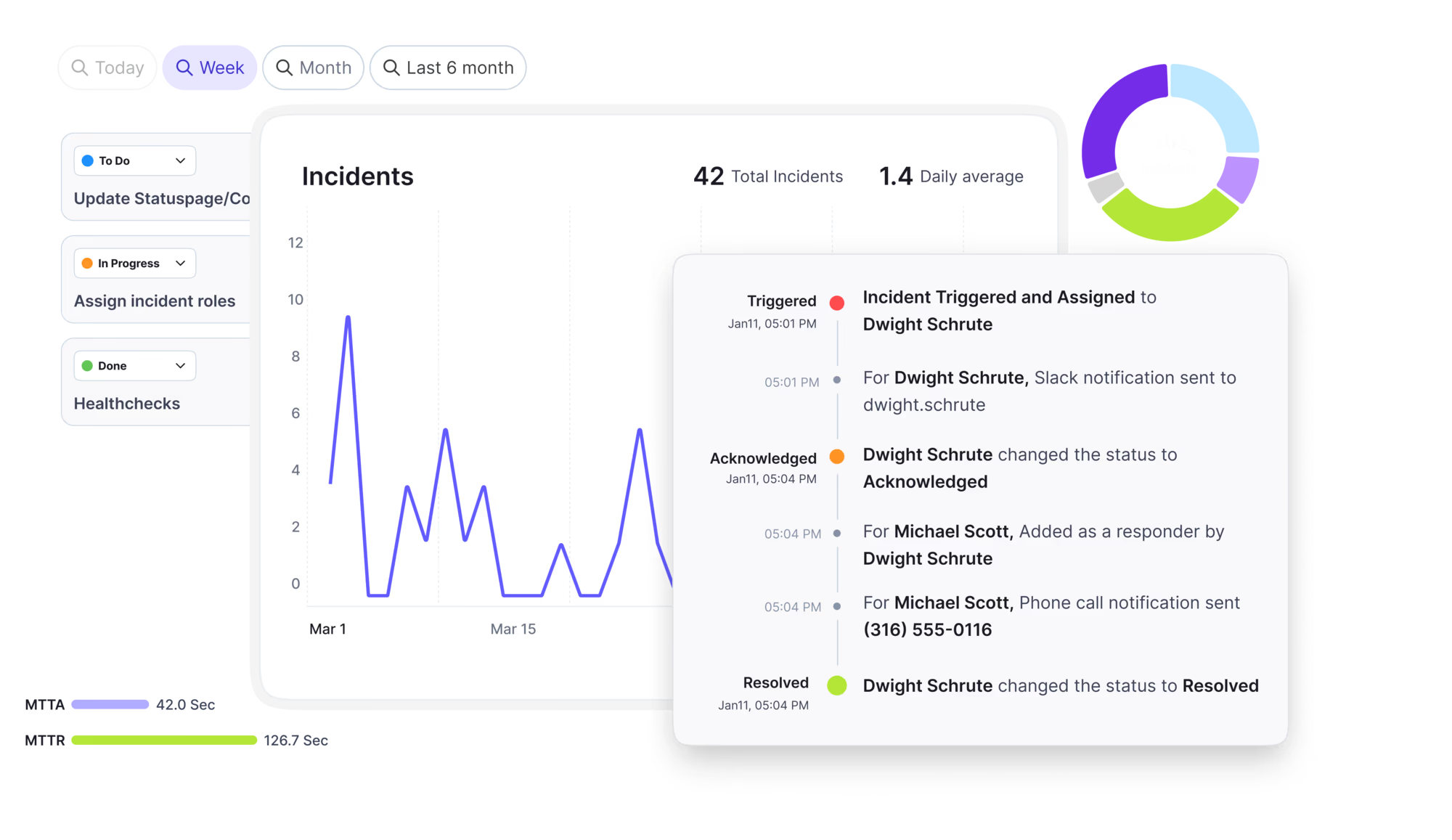
Automate postmortems, AI summaries, and post-incident workflows
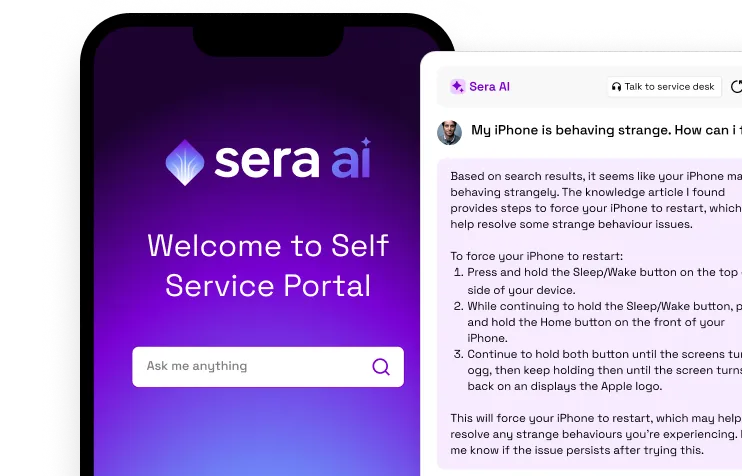
Create, organize, and continuously improve your knowledge base to find the right answers with Sera AI.
We're here to help

The integration with Atlassian Jira using the Xurrent Integration Service is

The integration with Atlassian Jira using the Xurrent Integration Service is

The integration with Atlassian Jira using the Xurrent Integration Service is

The integration with Atlassian Jira using the Xurrent Integration Service is

The integration with Atlassian Jira using the Xurrent Integration Service is

The integration with Atlassian Jira using the Xurrent Integration Service is

The integration with Atlassian Jira using the Xurrent Integration Service is

The integration with Atlassian Jira using the Xurrent Integration Service is
Resolve issues quickly with an AI-powered system that automates ticketing.
Unifiy IT, HR, Facilities, Finance, and more on a single, AI-powered service platform.
Simplify on-call scheduling, automate escalations, and reduce burnout.
Automate postmortems, AI summaries, and post-incident workflows
Create, organize, and continuously improve your knowledge base to find the right answers with Sera AI.
Resolve plant floor and IT issues before they disrupt production.
Stay audit-ready while resolving issues and reducing operational risk.

Detect, respond, and resolve incidents fast to cut downtime and MTTR.

Keep your store online, even during your biggest sales moments.

Protect patient data and resolve issues fast, so care teams stay focused on care.

Standardize service delivery across every store and channel.

We are here to help 24/7

Connect with other Xurrent Users

Get insights and tips on how to get the most out of Xurrent

Apps, APIs, and updates

Xurrent service functionality

Eliminate manual tasks, optimize workflows, and deliver faster resolutions.
Learn how organizations have reduced downtime, improved 50% MTTA & MTTR, and cut costs with Xurrent IMR.
Discover Xurrent IMR's quick support, bidirectional integrations with Jira and Slack, and more cohesive incident response capabilities compared to Opsgenie.
Understand why users value Xurrent IMR for its intuitive interface, efficient incident alerting, customizable On-call schedules, and escalations.

If you run IT for a midsize organization, this choice is familiar: a bloated enterprise platform that does everything your team will never use, or a lightweight ticketing tool that runs out of road the moment you try to grow.
Vendors designed neither platform for you. That's the problem, and it has been for years.
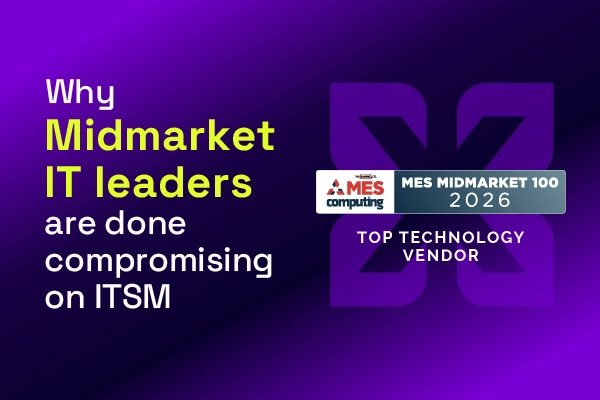
For the second consecutive year, MES Computing named Xurrent to the MES Midmarket 100, its annual list of the top 100 technology vendors built for midsize enterprises. We're the only ITSM vendor to appear on the list back-to-back. The recognition matters because it validates a gap our customers have described for years.

ServiceNow, BMC, and similar enterprise ITSM platforms handle almost any use case at the largest enterprise scale. For organizations managing tens of thousands of endpoints with large, dedicated IT teams, that flexibility is worth something.
For a midmarket IT team of 15 to 200 people serving 5,000 to 20,000 employees, it's a burden. These platforms require armies of administrators to keep day-to-day operations running. Every meaningful change involves a consultant. Upgrades are projects in themselves. Licensing is expensive and difficult to predict over a multi-year horizon. For midmarket IT, that complexity is overhead. It crowds out the actual work.
At the other end, basic ticketing tools are quick to deploy and easy to maintain. But they plateau fast. They can't support real automation, multi-team workflows, or enterprise service management beyond IT. AI capabilities are limited or nonexistent. The tool hits its ceiling when the business evolves and demands more.
Midmarket organizations need something that lives between those two extremes: powerful enough to run real ITSM and ESM, simple enough to implement and maintain without a dedicated team of specialists, and predictable enough to model costs two or three years out without a spreadsheet full of caveats.
That's the gap Xurrent closes.
Addiko Bank, an Austrian financial services group operating across six subsidiary banks and 160 branches, came to Xurrent after years on BMC. They went live in under 90 days and scaled to more than 900 agents within six months. In their first three to four months with Xurrent, they implemented more automated workflows than they had built in the previous decade on their prior platform.
Hans Anders, a European eyewear retailer, deployed Xurrent across 700 physical stores in two months, with no extended planning phase beforehand.
SEAS, a Slovak utility provider with more than 5,000 end users, has automated 43% of all IT requests. Their team is saving more than 4,300 hours annually through automation rules alone. Self-service portal adoption climbed from 5% to 32%.
Three industries, three countries, one consistent pattern: rapid deployment, meaningful automation, and no standing army of platform admins required to keep it running.
These outcomes reflect what midmarket organizations need from a service management platform:
We built Xurrent around exactly these constraints. Every capability we've shipped reflects that design decision.
MES Computing defines the midmarket as organizations with annual revenue of $50 million to $2 billion and between 100 and 2,500 total supported users. MES Computing selects vendors for the Midmarket 100 based on go-to-market strategy, product strength for midmarket customers, and demonstrated commitment to helping midsize organizations grow.
Back-to-back recognition as the only ITSM vendor on this list is independent validation of what we've built and what our customers are producing with it.
ITSM has underserved the midmarket for years. Organizations have squeezed themselves into tools too heavy or too limited. The right fit exists, and the results look like Addiko Bank, Hans Anders, and SEAS.
See Xurrent in action. Schedule a demo today.
Most vendors will tell you ITSM implementation takes six months to a year — but modern, configuration-first platforms have rewritten the math entirely. See what real implementations look like in 2026, and why a long rollout is now a choice, not a given.
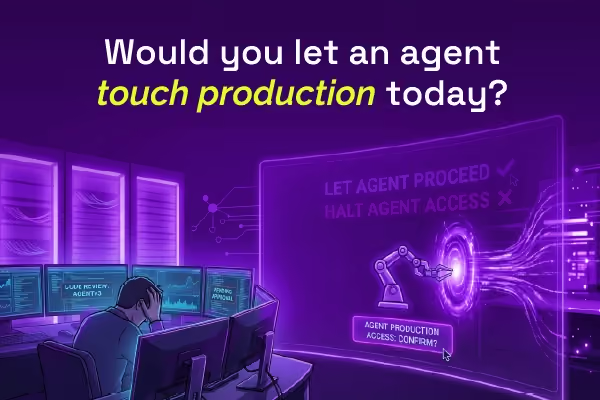
Most AI SREs are pattern matchers trained on public data. They know what a memory leak looks like in the abstract. They don't know that your payments-api has a flaky liveness probe everyone ignores, that the checkout team owns the retry policy, or that the last three "database incidents" were actually cache misconfigurations. That knowledge lives in your postmortems, your Slack channels, and the heads of two senior engineers.

.avif)