




Blog
Insights & updates from our experts


Resolve plant floor and IT issues before they disrupt production.

Stay audit-ready while resolving issues and reducing operational risk.
Resolve issues quickly with an AI-powered system that automates ticketing.
Unifiy IT, HR, Facilities, Finance, and more on a single, AI-powered service platform.
Simplify on-call scheduling, automate escalations, and reduce burnout.
Automate postmortems, AI summaries, and post-incident workflows
Create, organize, and continuously improve your knowledge base to find the right answers with Sera AI.
We're here to help

The integration with Atlassian Jira using the Xurrent Integration Service is

The integration with Atlassian Jira using the Xurrent Integration Service is

The integration with Atlassian Jira using the Xurrent Integration Service is

The integration with Atlassian Jira using the Xurrent Integration Service is

The integration with Atlassian Jira using the Xurrent Integration Service is

The integration with Atlassian Jira using the Xurrent Integration Service is

The integration with Atlassian Jira using the Xurrent Integration Service is

The integration with Atlassian Jira using the Xurrent Integration Service is
Resolve issues quickly with an AI-powered system that automates ticketing.
Unifiy IT, HR, Facilities, Finance, and more on a single, AI-powered service platform.
Simplify on-call scheduling, automate escalations, and reduce burnout.
Automate postmortems, AI summaries, and post-incident workflows
Create, organize, and continuously improve your knowledge base to find the right answers with Sera AI.
Resolve plant floor and IT issues before they disrupt production.
Stay audit-ready while resolving issues and reducing operational risk.

Detect, respond, and resolve incidents fast to cut downtime and MTTR.

Keep your store online, even during your biggest sales moments.

Protect patient data and resolve issues fast, so care teams stay focused on care.
Standardize service delivery across every store and channel.

We are here to help 24/7

Connect with other Xurrent Users

Get insights and tips on how to get the most out of Xurrent

Apps, APIs, and updates

Xurrent service functionality

Eliminate manual tasks, optimize workflows, and deliver faster resolutions.
Learn how organizations have reduced downtime, improved 50% MTTA & MTTR, and cut costs with Xurrent IMR.
Discover Xurrent IMR's quick support, bidirectional integrations with Jira and Slack, and more cohesive incident response capabilities compared to Opsgenie.
Understand why users value Xurrent IMR for its intuitive interface, efficient incident alerting, customizable On-call schedules, and escalations.

Originally published May 21, 2025 | Last updated February 24, 2026
Ever watched a busy restaurant kitchen during the dinner rush? Orders flying in, chefs coordinating, servers moving plates. It's a beautiful dance when everything works. But throw in a broken ticket system or miscommunication, and suddenly you've got chaos.
Your business workflows aren't so different. When they're disjointed, everybody suffers. ESM tools are crucial in 2026 because they optimize operations and deliver significant business value by connecting various elements to achieve competitive advantages quickly. Let me show you which ones actually work.
Let's be honest: most companies run on digital duct tape.
HR is buried in spreadsheets that would make Excel developers weep. Your IT team uses a ticketing system so old it probably ran on Windows Vista originally. And Finance? Their approval process has more loops than a rollercoaster at Six Flags. These manual processes hinder immediate access to essential services, urging businesses to innovate and integrate automated systems for a streamlined service experience across various departments.
It's no wonder many employees are disengaged. These fractured workflows directly contribute to diminished productivity and higher turnover rates.
When a new hire joins, watch the domino effect:
This isn't theoretical. Companies with well-organized onboarding improve new hire retention and productivity significantly. When processes break down, that advantage evaporates.
The problem gets worse at scale. A director at a Fortune 500 manufacturer told me recently: "We calculated that our approval processes alone, across departments, were costing us thousands of person-hours quarterly. That's nearly six full-time employees doing nothing but waiting for green lights."
Project management can also benefit from a streamlined service model to enhance efficiency and decision-making within the organization.
Think of Enterprise Service Management like this: it's taking everything that made IT help desks actually work, tickets, automated workflows, self-service, and applying it to every department. By leveraging core ITSM capabilities, ESM enhances business operations through improved digital workflows and various digital-work-enabling features.
Imagine if requesting HR benefits was as easy as ordering an Uber. Or if getting budget approval was as straightforward as one-click shopping on Amazon. That's what ESM brings to the table. ITSM tools serve as a foundation for implementing a broader ESM strategy, making the transition simpler for companies already using effective ITSM solutions.
The ESM market isn't just growing—it's exploding. The sector maintains a sustained growth rate, making it one of the fastest-growing enterprise software categories.
In a large healthcare network that recently adopted an enterprise service management platform, nurses went from spending significant time on administrative tasks across disconnected systems to just minutes. That's substantial time redirected from administrative busywork to patient care.
ESM is more about efficiency, it reclaims time for the work that actually matters to your business.
Three major shifts make ESM non-negotiable now:
Some of the most impactful features include:
All of this runs within a secure, explainable framework built on AWS Bedrock. Xurrent does not use your data to train external models, ensuring privacy at every level. In an era where most IT leaders are investing in AI to drive efficiency, platforms like Xurrent stand out by delivering actionable automation that teams can trust.
Let's talk specifics about where ESM creates immediate value. Studies of mid-market companies found these processes had the highest ROI when automated through ESM:
The beauty of modern ESM platforms is that automation isn't just for technical teams anymore. Other business functions can leverage ESM to enhance operational efficiency and improve employee experiences. "Implementing Xurrent's ESM solution has transformed our HR operations. We've automated onboarding processes, streamlined employee requests, and enhanced our self-service portals—all without the need for extensive coding or external consultants. This shift has not only improved our efficiency but also elevated the employee experience across the board."
However, the complexities and challenges of ESM implementation should not be underestimated. Successful deployment requires choosing the right tools, cultural and leadership support, and organizational buy-in and adaptation.
Before dropping six figures on an ESM platform, ask these questions:
A financial services client told me recently: "We chose the cheapest option and ended up spending multiple times more on consultants just to make departments talk to each other. Learn from our mistake."
It's also important to integrate workflows across various business departments to enhance efficiency and break down silos, improving overall customer experiences.
The self-service component is particularly crucial. In organizations with robust ESM implementations, self-service resolution rates average much higher compared to companies using traditional ticketing systems. Each percentage point increase in self-service adoption typically reduces operating costs.
Perfect if: You're a mid market organization or multi national manufacturer that prioritizes strong security, language translation, and embedded AI automation.
Xurrent is the newer platform gaining traction in regulated and security conscious industries. It brings ITSM, ESM, and ITOM together in a unified architecture designed for cross organizational collaboration without sacrificing control.
The standout capability: ITxM
At the center of Xurrent's strategy is its unified operational model known as ITxM. Rather than treating service management, operations monitoring, and incident response as separate domains, the platform synchronizes them in real time.
This approach connects the service desk with operational telemetry and infrastructure context so that when incidents occur, teams are working from the same data. Service impact, ownership, and root cause efforts are aligned instead of fragmented.
You can explore how this model works within Xurrent's broader Enterprise Service Management solution.
For organizations operating complex ecosystems with multiple internal and external stakeholders, this reduces handoffs, clarifies accountability, and shortens resolution cycles.
What sets it apart: Xurrent follows a configuration first philosophy. Customers receive meaningful functionality out of the box through its modern IT Service Management platform, with flexibility to tailor workflows where needed.
Because it avoids heavy customization and code level complexity, implementations can often be completed in as little as four weeks. That speed to value is significantly faster than many legacy enterprise platforms.
AI approach: Rather than adding AI as a surface feature, Xurrent embeds automation directly into service workflows. The platform reads, classifies, prioritizes, and routes requests automatically, helping eliminate manual triage and reduce resolution times.
AI capabilities are integrated across the platform experience, enabling smarter request handling and operational alignment without requiring complex rule building. You can see how Xurrent positions its broader platform approach on its main site at xurrent.com.
Security and collaboration:
Xurrent's Trust System enables multiple organizations to collaborate within the same instance while maintaining strict data boundaries. This is particularly valuable for managed service providers and global enterprises that must balance collaboration with compliance.
Recent security enhancements, including BYOK encryption and C5 attestation, reinforce its positioning for security conscious organizations. More details on security architecture and controls can be found on the IT Service Management solution page.
What makes Xurrent a great ESM solution?
Where can Xurrent improve for ESM?
Best fit industries: Manufacturing, healthcare, financial services, managed service providers
Implementation complexity: Low (4 weeks typical deployment)
Reality check: As a newer brand, Xurrent has fewer native integrations than some legacy incumbents. That gap is narrowing as the ecosystem expands and as customers leverage the platform's extensibility framework.
Pricing: Xurrent uses tiered licensing designed to support low total cost of ownership, particularly attractive for organizations expanding service management across multiple departments.
For current pricing structure details, visit the ITSM pricing page.
Success story: SSP Group, a global food and beverage operator, deployed Xurrent across IT and additional internal support functions to serve thousands of users worldwide. By leveraging its multi tenant architecture, supplier collaboration capabilities, and self service knowledge base, SSP increased self service adoption and significantly reduced reliance on first line support.
Read the full SSP Group success story.
If you want ESM that scales across organizational boundaries without the traditional complexity and overhead, Xurrent deserves serious consideration.
Perfect if: You're a Fortune 1000 with complex needs and budget to match
Like the Swiss Army knife of ESM—it does everything if you have the patience and resources. When Accenture implemented ServiceNow across 30 departments, they reduced service resolution times significantly over 18 months, showcasing the tool's role in driving digital transformation and improving operational capabilities.
What makes ServiceNow a great ESM solution?
Where can ServiceNow improve for ESM?
Best fit industries: Large enterprises, government, global corporations with complex regulatory requirements
Implementation complexity: High (6-8 months typical deployment)
Reality check: Implementation typically takes 6-8 months and costs can easily reach seven figures. One director described it as "buying a Ferrari when you might only need a Toyota."
Price: Typically $100-250 per user monthly, plus implementation
Success story: Global insurance provider Allianz used ServiceNow to consolidate dozens of separate ticketing systems into one unified platform. In year one, they processed millions of service requests with high uptime and reduced resolution times substantially.
Perfect if: You're a mid-sized company (250-2,500 employees) needing fast results
Boasting much faster implementation than legacy competitors, Freshservice has carved out the sweet spot between functionality and usability. When Trimble Navigation switched, their self-service adoption jumped dramatically in just one quarter, leading to better service delivery and improved service outcomes.
What makes Freshservice a great ESM solution?
Where can Freshservice improve for ESM?
Best fit industries: Mid-market companies, technology startups, professional services
Implementation complexity: Low to Medium (4-6 weeks typical deployment)
Reality check: While robust for basic needs, highly regulated industries may find compliance features less comprehensive than enterprise alternatives.
Price: $29-$109 per agent monthly
Success story: Marketing agency Havas Media rolled out Freshservice to manage both internal operations and client service workflows. They achieved high first-call resolution rates and reduced average handle time per interaction.
Perfect if: You're already using Atlassian tools and have tech-savvy teams
Software companies love this option because it integrates seamlessly with development workflows. Spotify's internal services team processes thousands of requests monthly through JSM with high satisfaction rates. Additionally, JSM leverages knowledge management to enhance service delivery, ensuring uniformity and efficiency in managing requests across various departments.
What makes Jira Service Managementa great ESM solution?
Where can Jira Service Management improve for ESM?
Best fit industries: Software companies, technology firms, agile organizations
Implementation complexity: Medium (6-10 weeks typical deployment)
Reality check: Non-technical users find the interface challenging, with training requirements significantly higher than more intuitive alternatives.
Price: $21-$55 per agent monthly
Success story: SaaS company Datadog unified their development and operations workflows through JSM, achieving what they call "request-to-deployment synchronicity." Changes requested by customers now move from ticket to production much faster than their previous siloed approach.
Perfect if: You're budget-conscious but only need core functionality
The Toyota Corolla of ESM tools—reliable, gets the job done, won't break the bank. A manufacturing client with 150 employees slashed IT response times significantly while staying under budget for year one. The tool's impact on service management is significant, particularly in fostering continual improvement.
What makes ManageEngine ServiceDesk Plus a great ESM solution?
Where can ManageEngine ServiceDesk Plus improve for ESM?
Best fit industries: Small to medium businesses, cost-conscious organizations, traditional industries
Implementation complexity: Medium (6-12 weeks typical deployment)
Reality check: The interface feels dated, and advanced automation requires more technical setup than competitors.
Price: From $10 per technician monthly
Success story: Community college system with 3 campuses consolidated help desk operations across IT, facilities, and student services. They processed thousands of tickets in their first year with most meeting SLA targets—all with a team of just 6 agents.
BMC Helix ITSM: Enterprise-grade platform with AI automation and hybrid cloud support. Best for complex IT environments requiring deep ITIL alignment. Strong in traditional ITSM but expanding ESM capabilities. Pricing available on request.
TOPdesk: Shared services specialist with visual resource planning and strong collaboration features. Ideal for organizations prioritizing cross-departmental workflows and European compliance requirements. Pricing available on request.
Ivanti Neurons: Combines service management with endpoint security and automation. Perfect for security-conscious organizations needing unified device and service management. Strong in healthcare and government sectors. Pricing available on request.
Matrix42 ESM: Unified endpoint and service management with strong compliance monitoring. Suited for organizations requiring integrated device and service delivery, particularly in regulated industries. Pricing available on request.
IFS Assyst: Business-focused ESM with strong process templates and business relationship management. Good for organizations wanting to connect service management directly to business outcomes. Pricing available on request.
Micro Focus SMAX: AI-enhanced platform with machine learning capabilities and social collaboration features. Works well for existing Micro Focus customers and organizations focused on AI-driven service delivery. Pricing available on request.
Many organizations start their ESM journey by extending existing ITSM tools beyond IT departments. While not purpose-built for enterprise-wide service management, these platforms can handle cross-departmental workflows with proper configuration:
SolarWinds Service Desk: Originally IT-focused but supports HR and facilities workflows through custom forms and automation. Popular with mid-market organizations already using SolarWinds monitoring tools. Pricing starts around $27/technician monthly.
HaloITSM: ITIL-aligned platform that extends well into business services through its workflow engine. Strong in UK/European markets with good compliance features. Pricing available on request.
Cherwell Service Management: Low-code platform that adapts well to non-IT departments. Strong in government and healthcare sectors requiring extensive customization. Recently acquired by Ivanti.
SysAid: All-in-one approach that handles IT, facilities, and basic HR workflows from a single interface. Good for smaller organizations wanting simplicity over specialization. Pricing from $14/technician monthly.
The trade-off: While these ITSM-first platforms can work for ESM, they typically require more configuration work and may lack the business-friendly interfaces that dedicated ESM platforms provide out of the box.
Different industries have unique ESM needs that influence platform selection:
Healthcare: HIPAA compliance, patient data protection, and integration with electronic health records. Platforms like Xurrent and ServiceNow offer healthcare-specific templates and compliance certifications.
Financial Services: SOX compliance, audit trails, and risk management workflows. Look for platforms with strong approval chains and detailed reporting capabilities.
Education: Budget constraints, student services integration, and academic calendar workflows. ManageEngine and TOPdesk are popular in this sector for their value and flexibility.
Government: FedRAMP compliance, accessibility requirements (Section 508), and complex approval hierarchies. ServiceNow and Ivanti have strong government presence.
Manufacturing: Integration with ERP systems, facilities management, and safety compliance workflows. Platforms with strong asset management capabilities work well here.
Technology Companies: Developer-friendly interfaces, integration with DevOps tools, and fast iteration cycles. Jira Service Management and Xurrent excel in tech environments.
You'll hear this term alongside ESM. Here's what it actually means: ensuring the right people have the right access to the right apps, securely.
Think of it this way: ESM handles the "how" of service delivery, while Enterprise App Management handles the "what" people can access. The best ESM platforms either include this functionality or integrate seamlessly with tools like Okta or Microsoft Entra ID. These platforms act as a comprehensive service management tool, evolving from tactical applications to strategic uses across different business functions, enhancing operational efficiency, reducing costs, and improving employee experiences.
At Brooksfield Insurance, implementing this dual approach reduced access-related tickets significantly and virtually eliminated security incidents from improper permissions. Their security team leader put it succinctly: "We used to spend Fridays hunting down who shouldn't have access to what. Now we spend Fridays actually improving our security posture."
This integration becomes critical during employee transitions. When someone changes roles or leaves, an integrated ESM/app management solution ensures access changes happen automatically, without the manual checklist that inevitably gets missed.
Here's what all this really means for your business:
When Fiskars Group rolled out Xurrent across 29 countries, they transformed how thousands of employees handled service requests. What once required multiple tools, external consultants, and English-only interfaces now happens in one place—with native language support, faster response times, and thousands of automated workflows live within six months. The result? High user satisfaction, projected cost savings over five years, and clear business outcomes that drive organizational success.
The magic happens when your internal operations feel as seamless as your customer experience. When an employee can request a laptop, file a risk assessment, or submit approvals without toggling between platforms or chasing emails—that's when real productivity kicks in.
Understanding the key factors influencing ESM adoption, such as process optimization and employee productivity enhancement, is crucial for leveraging these systems effectively.
In 2026, streamlined internal operations aren't a "nice to have"—they're the difference between keeping pace and falling behind.
As Fiskars IT leader Mike says:
"We went live on a Tuesday morning, and by the time I got in later, there was no feedback. I was thinking, what is going on? By the end of the day, we had no complaints; it just ran, it was that good, so we're really happy with it. Thousands of happy people all at the same time."
What could your teams accomplish with that kind of clarity and control?
Remember: the best ESM tool isn't necessarily the one with the most features—it's the one your teams will actually embrace and use daily. Choose accordingly, and watch your operational friction melt away.
The ESM market's explosive growth isn't happening by accident. It reflects the critical nature of streamlined service management in today's business environment.
With many employees disengaged and modern enterprises increasingly dependent on digital workflows, the battleground for talent and operational excellence is increasingly being fought on the quality of internal processes.
The combination of AI capabilities (where most IT leaders plan to invest) and robust workflow automation creates unprecedented opportunities to transform how work gets done across your organization.
Whether you choose an enterprise platform like ServiceNow or a modern solution like Xurrent, the important thing is to start the journey toward unified service management now.
Because in 2026 and beyond, your competitors aren't just competing on products and prices—they're competing on operational excellence. And that excellence begins with how effectively your teams can work together. Adopting a strategic approach to ESM not only improves operational efficiency but also enhances employee experiences and enables distributed work, creating value across the organization.

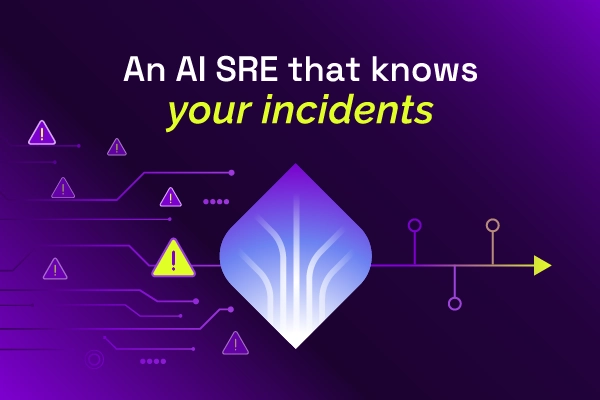
Most AI SREs are pattern matchers trained on public data. They know what a memory leak looks like in the abstract. They don't know that your payments-api has a flaky liveness probe everyone ignores, that the checkout team owns the retry policy, or that the last three "database incidents" were actually cache misconfigurations. That knowledge lives in your postmortems, your Slack channels, and the heads of two senior engineers.
Most vendors will tell you ITSM implementation takes six months to a year — but modern, configuration-first platforms have rewritten the math entirely. See what real implementations look like in 2026, and why a long rollout is now a choice, not a given.

.webp)
.webp)