




Blog
Insights & updates from our experts


Resolve plant floor and IT issues before they disrupt production.

Stay audit-ready while resolving issues and reducing operational risk.
Resolve issues quickly with an AI-powered system that automates ticketing.
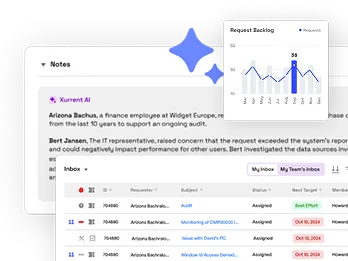
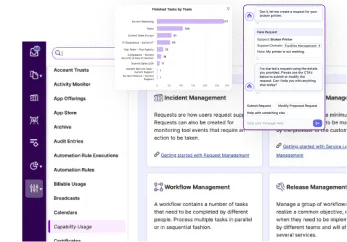
Unifiy IT, HR, Facilities, Finance, and more on a single, AI-powered service platform.
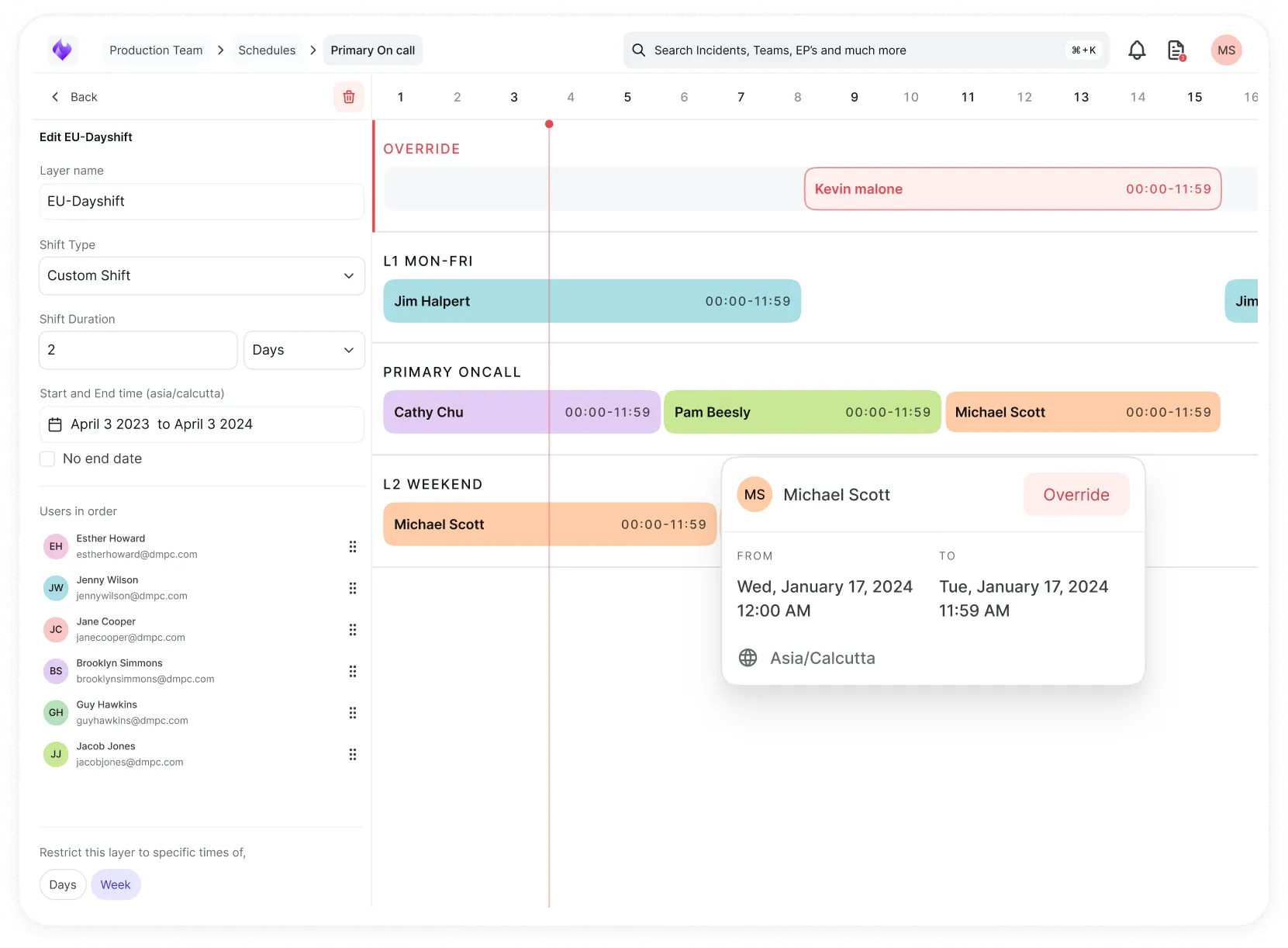
Simplify on-call scheduling, automate escalations, and reduce burnout.
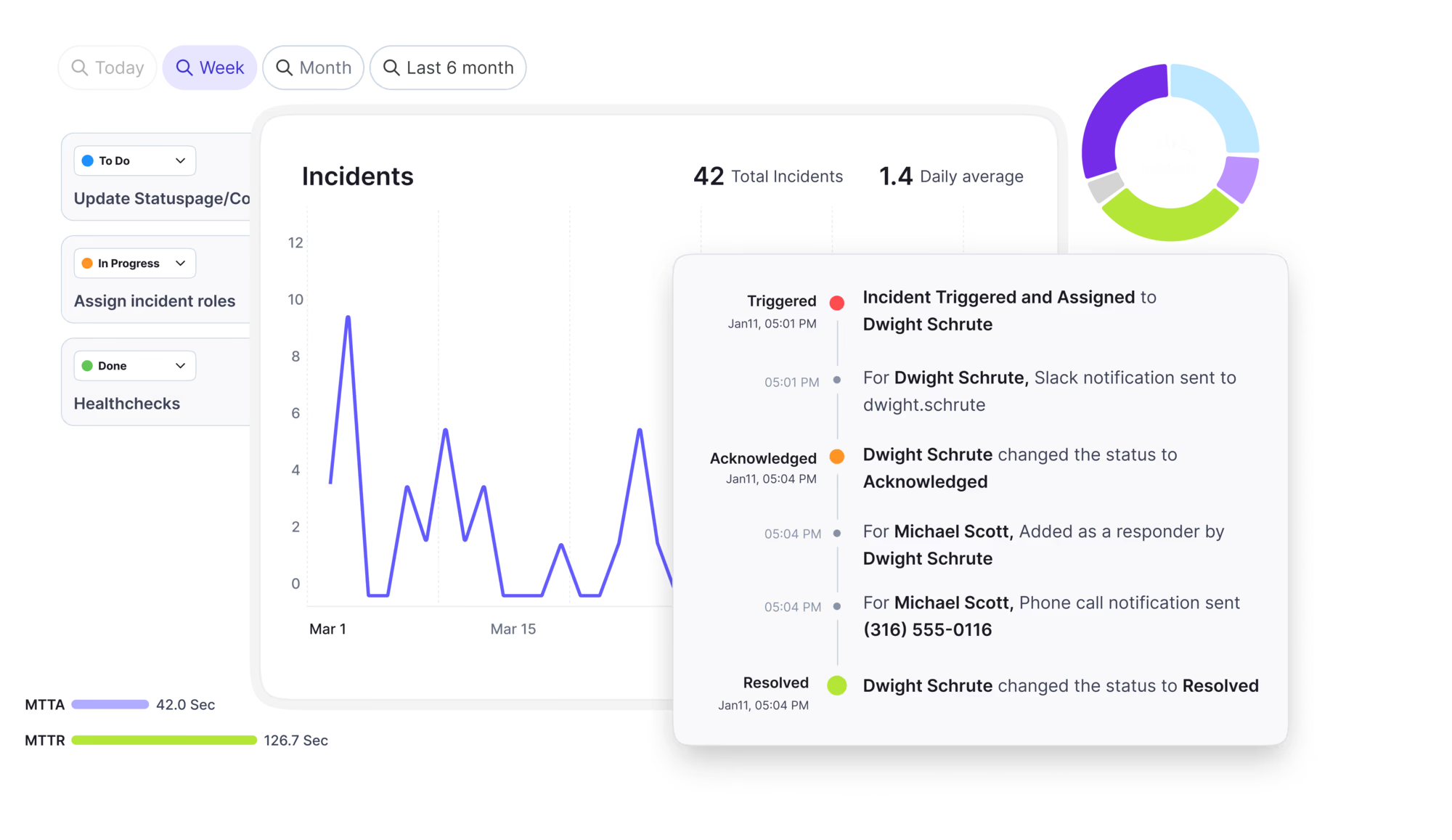
Automate postmortems, AI summaries, and post-incident workflows
Create, organize, and continuously improve your knowledge base to find the right answers with Sera AI.
We're here to help

The integration with Atlassian Jira using the Xurrent Integration Service is

The integration with Atlassian Jira using the Xurrent Integration Service is

The integration with Atlassian Jira using the Xurrent Integration Service is

The integration with Atlassian Jira using the Xurrent Integration Service is

The integration with Atlassian Jira using the Xurrent Integration Service is

The integration with Atlassian Jira using the Xurrent Integration Service is

The integration with Atlassian Jira using the Xurrent Integration Service is

The integration with Atlassian Jira using the Xurrent Integration Service is
Resolve issues quickly with an AI-powered system that automates ticketing.
Unifiy IT, HR, Facilities, Finance, and more on a single, AI-powered service platform.
Simplify on-call scheduling, automate escalations, and reduce burnout.
Automate postmortems, AI summaries, and post-incident workflows
Create, organize, and continuously improve your knowledge base to find the right answers with Sera AI.
Resolve plant floor and IT issues before they disrupt production.
Stay audit-ready while resolving issues and reducing operational risk.

Detect, respond, and resolve incidents fast to cut downtime and MTTR.

Keep your store online, even during your biggest sales moments.

Protect patient data and resolve issues fast, so care teams stay focused on care.

Standardize service delivery across every store and channel.

We are here to help 24/7

Connect with other Xurrent Users

Get insights and tips on how to get the most out of Xurrent

Apps, APIs, and updates

Xurrent service functionality

Eliminate manual tasks, optimize workflows, and deliver faster resolutions.
Learn how organizations have reduced downtime, improved 50% MTTA & MTTR, and cut costs with Xurrent IMR.
Discover Xurrent IMR's quick support, bidirectional integrations with Jira and Slack, and more cohesive incident response capabilities compared to Opsgenie.
Understand why users value Xurrent IMR for its intuitive interface, efficient incident alerting, customizable On-call schedules, and escalations.

Most buyers find out right after the first upgrade cycle breaks something that the admin team can't explain right away.
A customization that has worked for months stops working after a platform upgrade. The admin team doesn't notice, because nothing throws an error. The first sign is an end user complaint: this used to work, now it doesn't. That's the worst way to find out.
From there, the admin team traces the breakage through workflows, automation rules, and field mappings three steps upstream. On a legacy platform, most of these customizations are code, so tracking down the break requires someone who can read the code and rewrite around whatever the upgrade changed. Days pass, sometimes weeks, and occasionally months if the fix has to wait for the one person on the team (or a consultant) who can touch that part of the system.
None of this shows up in a demo or a pricing sheet. It shows up in your admin team's backlog for as long as you own the platform.
Admin overhead is a hidden cost, and most buyers don't weigh it enough while comparing platforms. Evaluations focus on feature checklists and demo environments, not the six months after go-live when someone (or multiple people) on the team become(s) a full-time platform mechanic.
Most ITSM platforms outsource that admin burden to the customer: upgrades, broken customizations, integration builds, and custom reporting all land on your team's plate as "ongoing maintenance." Code-based, customized platforms work this way by default, and the burden isn't specific to one vendor.
If you're comparing platforms, add this to your evaluation criteria: ask who does the work after go-live, for every platform on your shortlist. It's a consistent test, not a gotcha question.
Ask any vendor how updates roll out. Xurrent ships weekly updates and manages the rollout. Admins can test new features in a QA environment before they reach production, but that step is optional. Every customer moves to the same version at the same time, with zero downtime.
Compare that to a model where the customer schedules, tests, and coordinates every upgrade. That's a recurring project on someone's calendar, for as long as you own the platform.
When customizations are built in code, an upgrade can break something that used to work, and finding out why takes real digging.
Xurrent customizations are built through configuration, not code. That doesn't eliminate upgrade risk industry-wide, but it lowers it, A LOT: configuration doesn't get invalidated the way custom code can when the underlying platform changes shape. Admins spend less time troubleshooting mystery breakage and more time on work that moves the needle.
Build effort is a separate question from upgrade risk. Code-based customization takes more effort to build than configuration-based customization, before you even get to maintenance. It's a build-time cost as well as a keep-it-running cost.
If two platforms both claim to be customizable, ask what customizing requires: a developer with the right language skills, or someone on your team using configuration tools they already know.
Without an integration platform, connecting your ITSM tool to the rest of your stack usually means custom API code, which is a skill that most admin teams don't have in-house. Teams end up hiring consultants or settling for a pre-built connector that "sort of" fits.
Xurrent's iPaaS is built in-house and included in every subscription, not a bolted-on product with its own license and roadmap. Admins build and adjust integrations themselves using the framework provided, without paying a consultant or settling for a connector that's close enough.
Reporting is usually the thing teams build last, which is why the hidden cost shows up here late.
Xurrent ships with over 400 ready-to-use reports (436 actually) and dashboards, customizable through configuration and updated in real time. Any report can be added to a dashboard, which removes the need to build custom reporting from scratch to see what's happening in your environment.
At XAL Lightning, before Xurrent, the team used to spend about a week each cycle pulling reporting and billing data together in spreadsheets by hand. With real-time reporting and dashboards in place, that work now takes minutes, freeing that time for analysis instead of data assembly.
If you're mid-evaluation, run this test against every platform on your list. For each of these five areas, ask who does the work after go-live: your team, or the vendor's professional services team (paid engagement).
These questions won't show up on a feature comparison chart. They will show up in your team's workload six months after go-live.
Vendors that look cheapest or shiniest in the demo often ask your team to become part-time platform engineers. Ask what the platform can do, and who's going to do the work once it's live.
See how Xurrent handles updates, customization, integration, and reporting without adding to your admin team's workload. Schedule a demo.
Most vendors will tell you ITSM implementation takes six months to a year — but modern, configuration-first platforms have rewritten the math entirely. See what real implementations look like in 2026, and why a long rollout is now a choice, not a given.
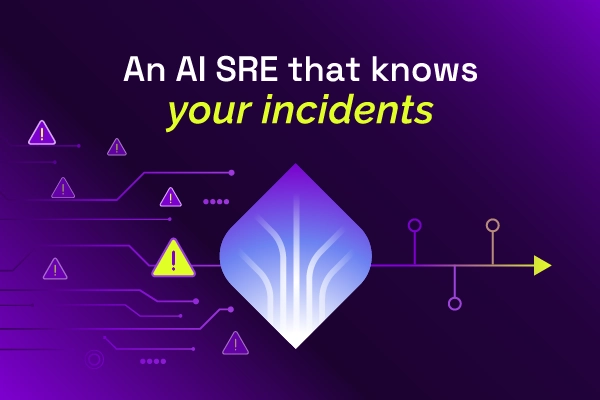
Most AI SREs are pattern matchers trained on public data. They know what a memory leak looks like in the abstract. They don't know that your payments-api has a flaky liveness probe everyone ignores, that the checkout team owns the retry policy, or that the last three "database incidents" were actually cache misconfigurations. That knowledge lives in your postmortems, your Slack channels, and the heads of two senior engineers.
Most vendors will tell you ITSM implementation takes six months to a year — but modern, configuration-first platforms have rewritten the math entirely. See what real implementations look like in 2026, and why a long rollout is now a choice, not a given.
.webp)
.webp)
.webp)