





Blog
Insights & updates from our experts


Resolve plant floor and IT issues before they disrupt production.

Stay audit-ready while resolving issues and reducing operational risk.
Resolve issues quickly with an AI-powered system that automates ticketing.
Unifiy IT, HR, Facilities, Finance, and more on a single, AI-powered service platform.
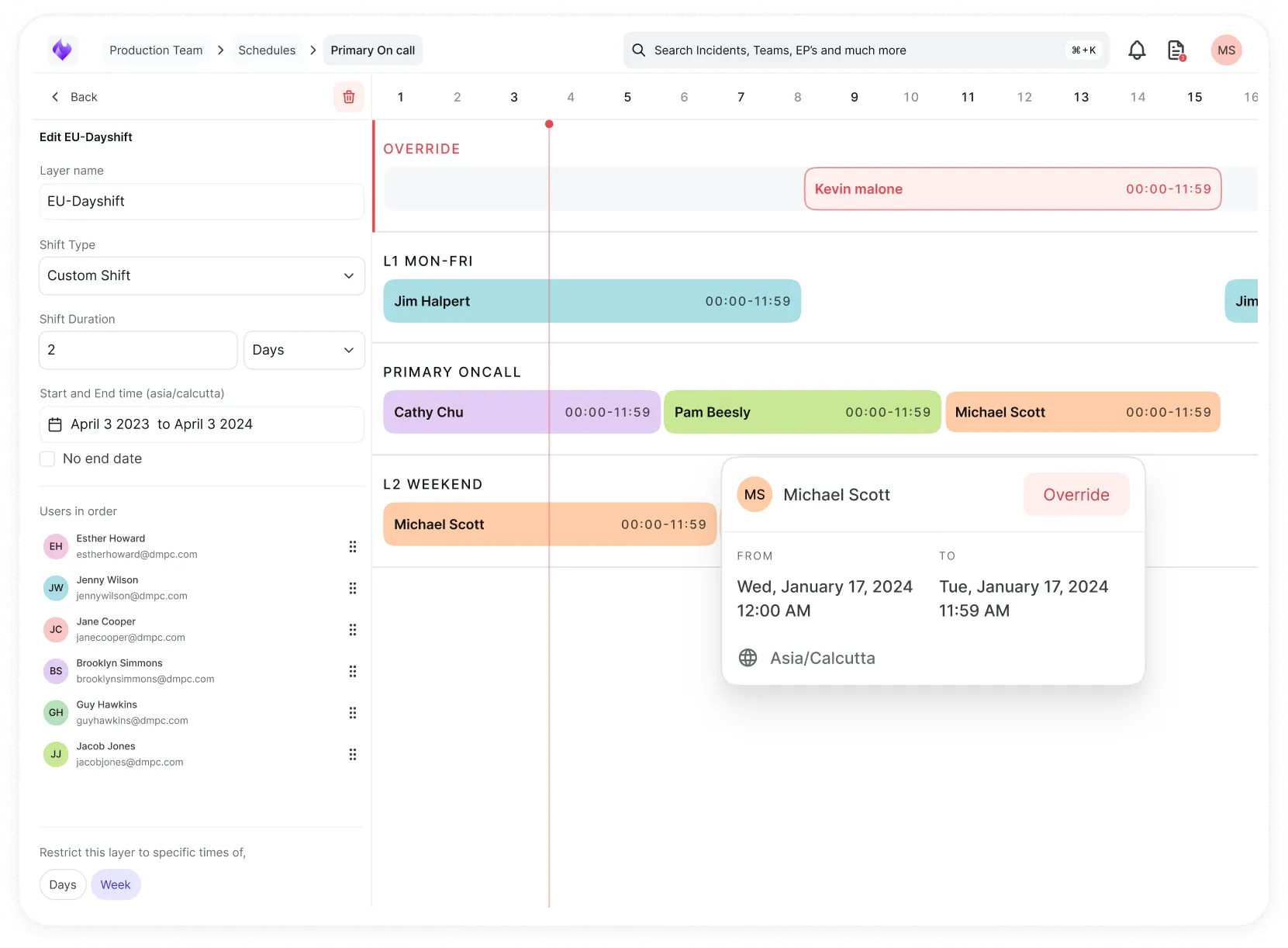
Simplify on-call scheduling, automate escalations, and reduce burnout.
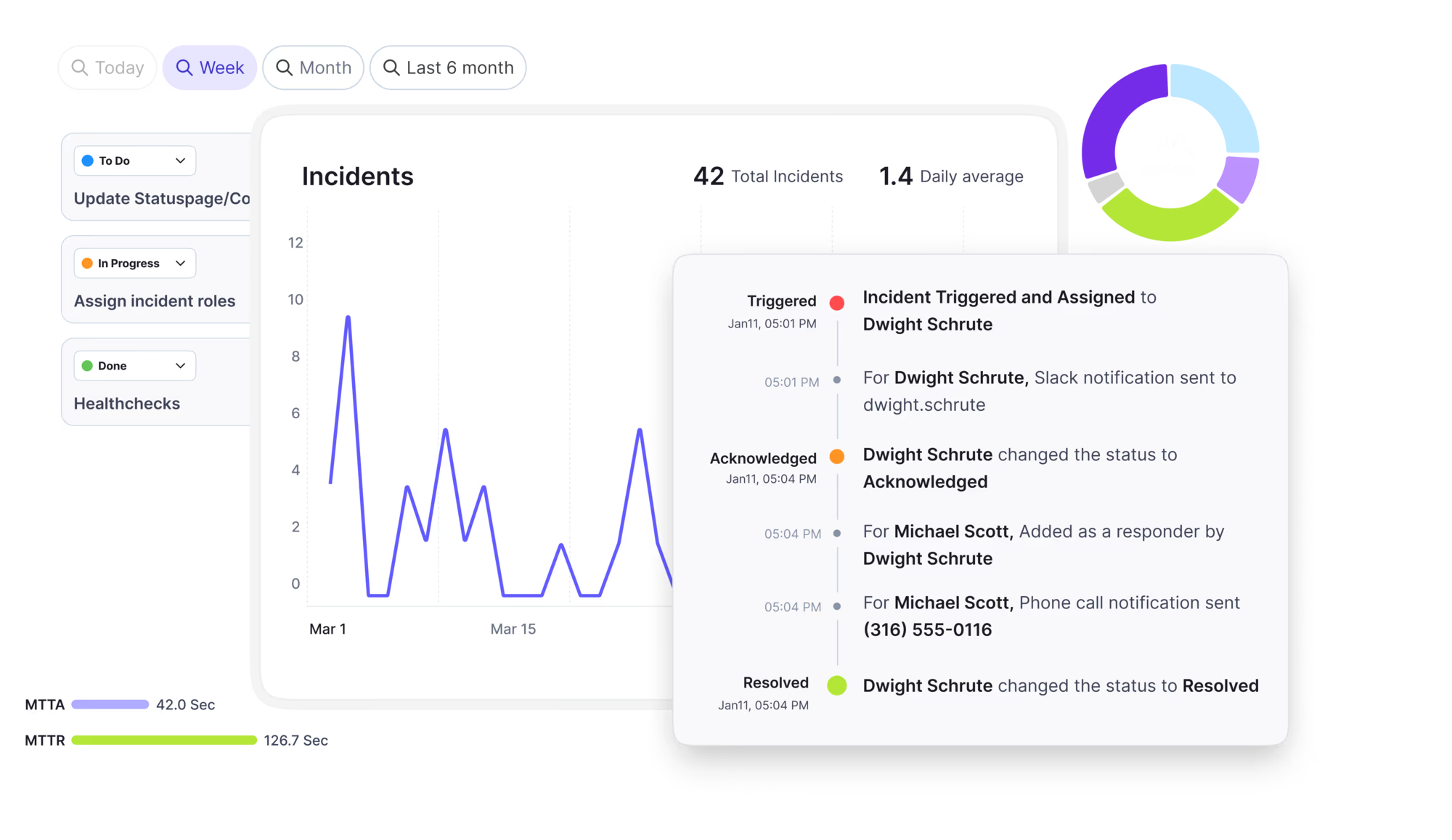
Automate postmortems, AI summaries, and post-incident workflows
Create, organize, and continuously improve your knowledge base to find the right answers with Sera AI.

We're here to help

The integration with Atlassian Jira using the Xurrent Integration Service is

The integration with Atlassian Jira using the Xurrent Integration Service is

The integration with Atlassian Jira using the Xurrent Integration Service is

The integration with Atlassian Jira using the Xurrent Integration Service is

The integration with Atlassian Jira using the Xurrent Integration Service is

The integration with Atlassian Jira using the Xurrent Integration Service is

The integration with Atlassian Jira using the Xurrent Integration Service is

The integration with Atlassian Jira using the Xurrent Integration Service is
Resolve issues quickly with an AI-powered system that automates ticketing.
Unifiy IT, HR, Facilities, Finance, and more on a single, AI-powered service platform.
Simplify on-call scheduling, automate escalations, and reduce burnout.
Automate postmortems, AI summaries, and post-incident workflows
Create, organize, and continuously improve your knowledge base to find the right answers with Sera AI.
Resolve plant floor and IT issues before they disrupt production.
Stay audit-ready while resolving issues and reducing operational risk.

Detect, respond, and resolve incidents fast to cut downtime and MTTR.

Keep your store online, even during your biggest sales moments.

Protect patient data and resolve issues fast, so care teams stay focused on care.
Standardize service delivery across every store and channel.

We are here to help 24/7

Connect with other Xurrent Users

Get insights and tips on how to get the most out of Xurrent

Apps, APIs, and updates

Xurrent service functionality

Eliminate manual tasks, optimize workflows, and deliver faster resolutions.
Learn how organizations have reduced downtime, improved 50% MTTA & MTTR, and cut costs with Xurrent IMR.
Discover Xurrent IMR's quick support, bidirectional integrations with Jira and Slack, and more cohesive incident response capabilities compared to Opsgenie.
Understand why users value Xurrent IMR for its intuitive interface, efficient incident alerting, customizable On-call schedules, and escalations.

Every minute of unplanned downtime costs money. The bigger damage shows up in the ripple effects: missed shipments, overtime recovery, and customer relationships that erode with each delayed order. Manufacturing teams know this, yet many still operate in reactive mode, fixing problems after they've stopped the line.
This guide covers the root causes of manufacturing downtime, how to calculate its true cost, and seven strategies to reduce it, from systematic tracking to predictive maintenance and unified incident response across IT and operations.
Manufacturing downtime is any period when production equipment or processes are not operating. To reduce downtime, shift from reactive repairs to predictive maintenance using real-time machine sensors and automated data tracking. This approach catches early signs of wear before a breakdown.
Downtime covers both scheduled stops and unexpected halts. A planned maintenance window counts as downtime, and so does an emergency repair after a motor fails mid-shift. The distinction matters because each type requires a different response.
Not all downtime carries the same weight. Planned downtime is scheduled, controlled, and budgeted: you know it's coming and can prepare. Unplanned downtime arrives without warning and costs far more to resolve.
Most reduction efforts focus on unplanned downtime. You can optimize planned maintenance schedules, but the bigger gains come from preventing unexpected stops that throw production into chaos and push teams into firefighting.
Reducing downtime starts with knowing what causes it. Most plants face a handful of recurring culprits.
Older machinery breaks down more often. Wear on components like bearings, belts, and seals is the most common source of unplanned stops. Even well-maintained equipment reaches a point where failures grow more likely, though predictive monitoring can extend that window.
Reactive maintenance, fixing something after it breaks, forces production halts. Teams scramble to diagnose the problem, source parts, and complete repairs while the line sits idle. The clock keeps running on labor costs and missed output.
Undertrained staff cause avoidable stops through incorrect machine operation or slow response to warning signs. When operators miss early symptoms of equipment trouble, minor issues escalate into major failures that a quick adjustment could have prevented.
Missing parts or raw materials force production lines to idle. A single missing component can halt an entire assembly process even when every machine runs fine. This downtime catches teams off guard because the root cause sits outside the plant floor.
Operational technology (OT) refers to the hardware and software that monitors and controls physical equipment: PLCs, SCADA systems, and industrial sensors. When IT and OT run in silos, teams lose visibility into the floor. That disconnect delays incident response and extends downtime, because the people who can fix the problem don't hear about it until someone walks over to tell them. Closing it takes a platform built to unify IT and operations across manufacturing sites.
Downtime costs extend far beyond the obvious lost production. When a line stops, the financial impact spreads across several categories, and many organizations underestimate the total because they track only the direct losses.
A minor 30-minute stop can translate into serious losses once you count the downstream effects. The true cost often surprises organizations that haven't tracked it.
A simple formula provides a starting point for understanding your downtime costs:
Downtime Cost = Production Capacity per Hour × Hours of Downtime × Average Margin per Unit
This gives you the direct production loss. The full picture includes factors that are easy to overlook:
Tracking downtime costs over time reveals patterns. You might find that certain equipment or shifts account for a disproportionate share of your downtime expenses, which tells you where to focus first.
Reducing downtime takes a systematic approach, not one-off fixes. These strategies work together to shift your operation from reactive firefighting to proactive prevention.
Capture the reason, duration, and impact of every stop, through manual logs or automated systems. This data is the foundation for improvement. Without it, you're guessing.
Make downtime reduction a visible, reported metric alongside output and quality. When teams see downtime numbers in regular operations meetings, it becomes a shared priority rather than an afterthought.
Preventive maintenance means scheduling regular inspections and part replacements before failures. Instead of waiting for equipment to break, you replace wear items on a set schedule based on manufacturer recommendations and historical performance.
Machine learning models analyze sensor data (temperature, vibration, acoustics) to predict failures before they happen. That shifts teams from reactive to proactive, addressing problems during planned windows rather than emergency stops. The technology has matured, and implementation is more accessible than it was a few years ago.
Equip frontline workers with real-time alerts and guided troubleshooting steps. When operators can spot and resolve minor issues, those issues don't grow into extended downtime. The people closest to the equipment often see problems first, so give them the tools to act.
Siloed systems slow response. When IT, OT, and maintenance teams work in separate tools with no shared visibility, handoffs create delays. A connected platform structured ITSM incident management routes alerts to the right teams and keeps everyone informed as resolution progresses. Platforms like Xurrent bring service, incidents, and operations into one workflow, so alerts reach the right people without manual triage.
Every incident produces lessons, if you capture them. Automated postmortem documentation lets teams record root causes and preventive actions without the manual effort that gets skipped during busy periods. The goal is to learn from each incident so it doesn't repeat.
Tip: Start with tracking before investing in advanced analytics. Accurate downtime data shows your biggest opportunities and helps you prioritize.
Effective tracking requires consistent metrics. Two measurements form the foundation of downtime analysis:
Beyond MTTR and MTBF, track:
Centralized dashboards make downtime metrics visible across teams. When everyone can see the same data, accountability improves and cross-functional collaboration becomes easier. Xurrent's live dashboards and pre-built reports provide this visibility without requiring custom development.
Predictive maintenance differs from preventive maintenance in one key way: it's condition-based rather than schedule-based. Instead of replacing a part every 90 days regardless of its condition, you replace it when sensor data shows it's near failure. This reduces both unnecessary maintenance and unexpected breakdowns.
Machine learning models learn normal operating patterns for each piece of equipment. When behavior deviates from those patterns, the system flags the anomaly for investigation before it becomes a production-stopping failure.
Key capabilities include:
When an incident occurs, multiple teams get involved. IT handles network and system issues, OT manages equipment and control systems, and maintenance performs physical repairs. Without coordination, they work in parallel with no shared visibility, and time gets lost.
Unified incident workflows route alerts to the right people, track progress in a single timeline, and keep all stakeholders informed. ChatOps integration brings communication into the same platform where work happens, eliminating the context-switching that slows resolution.
The result is faster MTTR and fewer incidents that drag on because teams didn't know what others were doing. Xurrent's modern incident management platform connects IT and operations workflows, so everyone works from the same information and handoffs happen automatically.
Get the free analyst report to see how AI-driven incident response accelerates resolution across IT and operations teams.
The shift from reactive firefighting to proactive operations requires connected workflows across service, incidents, and operations. Xurrent brings these functions into a single platform designed for teams that can't afford slow handoffs or missing context.
When IT and operations work from the same platform, downtime events resolve faster, and the lessons from each incident prevent the next one.
Most AI SREs are pattern matchers trained on public data. They know what a memory leak looks like in the abstract. They don't know that your payments-api has a flaky liveness probe everyone ignores, that the checkout team owns the retry policy, or that the last three "database incidents" were actually cache misconfigurations. That knowledge lives in your postmortems, your Slack channels, and the heads of two senior engineers.

Most vendors will tell you ITSM implementation takes six months to a year — but modern, configuration-first platforms have rewritten the math entirely. See what real implementations look like in 2026, and why a long rollout is now a choice, not a given.

.webp)
.webp)

.webp)