






Blog
Insights & updates from our experts


Resolve plant floor and IT issues before they disrupt production.

Stay audit-ready while resolving issues and reducing operational risk.
Resolve issues quickly with an AI-powered system that automates ticketing.
Unifiy IT, HR, Facilities, Finance, and more on a single, AI-powered service platform.
Simplify on-call scheduling, automate escalations, and reduce burnout.
Automate postmortems, AI summaries, and post-incident workflows
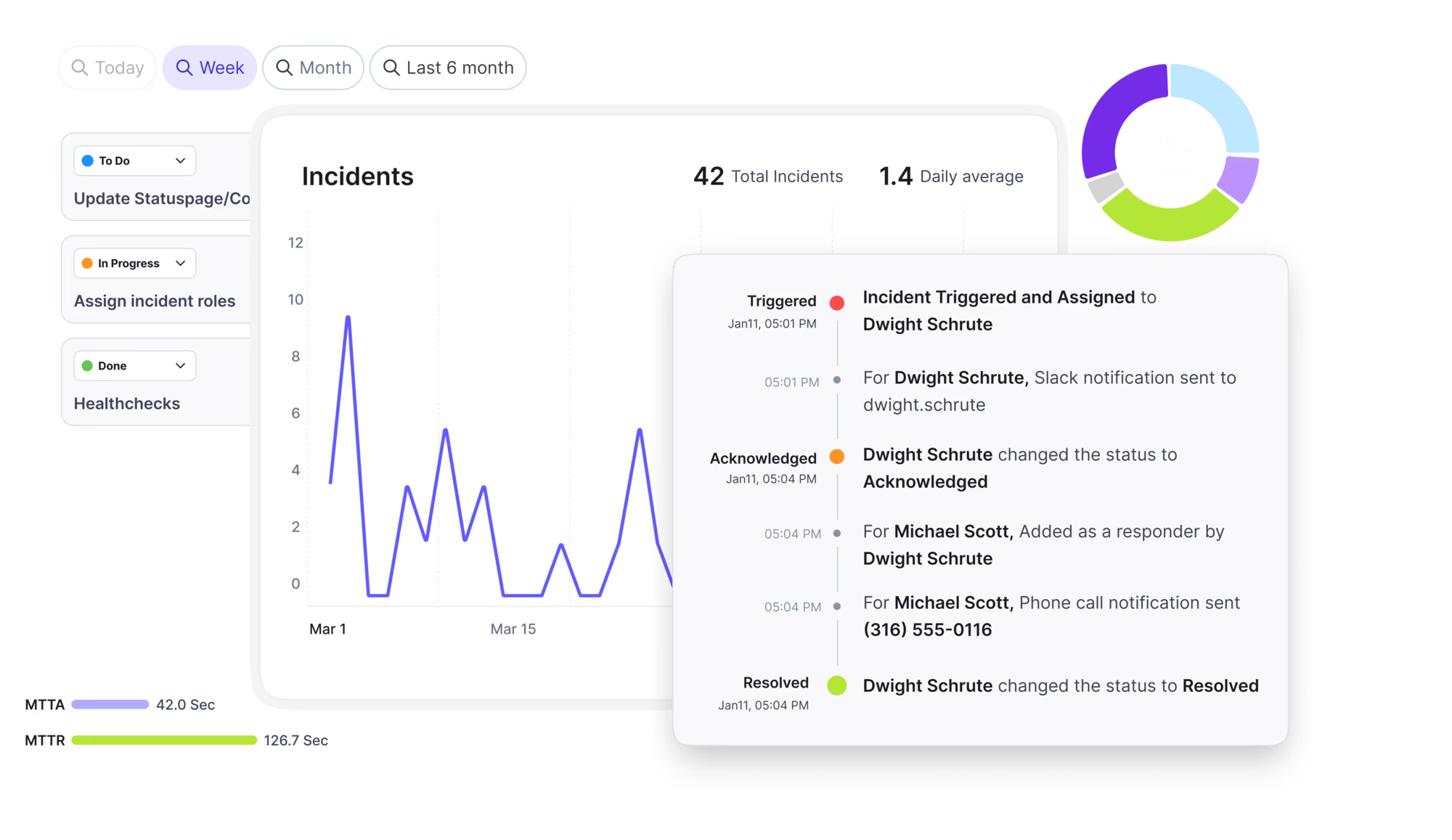
Create, organize, and continuously improve your knowledge base to find the right answers with Sera AI.
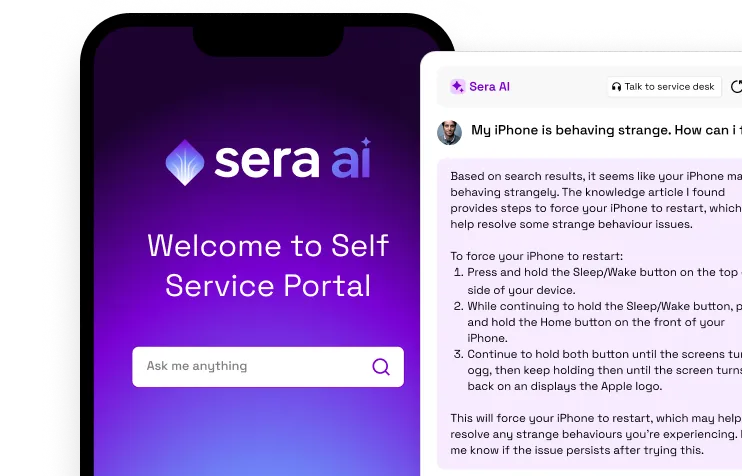
We're here to help

The integration with Atlassian Jira using the Xurrent Integration Service is
The integration with Atlassian Jira using the Xurrent Integration Service is

The integration with Atlassian Jira using the Xurrent Integration Service is

The integration with Atlassian Jira using the Xurrent Integration Service is

The integration with Atlassian Jira using the Xurrent Integration Service is

The integration with Atlassian Jira using the Xurrent Integration Service is

The integration with Atlassian Jira using the Xurrent Integration Service is

The integration with Atlassian Jira using the Xurrent Integration Service is
Resolve issues quickly with an AI-powered system that automates ticketing.
Unifiy IT, HR, Facilities, Finance, and more on a single, AI-powered service platform.
Simplify on-call scheduling, automate escalations, and reduce burnout.
Automate postmortems, AI summaries, and post-incident workflows
Create, organize, and continuously improve your knowledge base to find the right answers with Sera AI.
Resolve plant floor and IT issues before they disrupt production.
Stay audit-ready while resolving issues and reducing operational risk.

Detect, respond, and resolve incidents fast to cut downtime and MTTR.

Keep your store online, even during your biggest sales moments.

Protect patient data and resolve issues fast, so care teams stay focused on care.
Standardize service delivery across every store and channel.

We are here to help 24/7

Connect with other Xurrent Users

Get insights and tips on how to get the most out of Xurrent

Apps, APIs, and updates

Xurrent service functionality

Eliminate manual tasks, optimize workflows, and deliver faster resolutions.
Learn how organizations have reduced downtime, improved 50% MTTA & MTTR, and cut costs with Xurrent IMR.
Discover Xurrent IMR's quick support, bidirectional integrations with Jira and Slack, and more cohesive incident response capabilities compared to Opsgenie.
Understand why users value Xurrent IMR for its intuitive interface, efficient incident alerting, customizable On-call schedules, and escalations.

At a metal fabrication plant in the Midwest, a high-tonnage press goes down in the middle of a production run. The local IT and OT teams spend days working the issue: swapping IO cards, validating PLC code, consulting vendor documentation, and cycling through every configuration that might explain the intermittent fault. Eventually, they find the root cause: a firmware mismatch introduced during a routine maintenance window. The press comes back online. The resolution is logged in the local ITSM instance and in a site-level knowledge article. Production resumes.
Six months later, an identical press at a different facility, same vendor, same control stack, fails the same way. That team sees a new incident, not a known pattern. They open tickets, pull in engineering, repeat the same diagnostic tree, and arrive at the same firmware mismatch. Downtime accumulates, overtime piles up, and the production team feels the same frustration. The original fix existed. It just never crossed the site boundary.
This cycle is familiar across distributed manufacturing. Service desk teams do the hard work, find the fix, and document it. But when knowledge never leaves the site where it was created, every other facility pays full price to learn the same lesson again.
In a typical year, distributed manufacturing IT teams resolve thousands of incidents like the press failure. Each one feels like a win in the moment: the line is back up, the ticket is closed, and a knowledge article is created.
The problem shows up months later, when the same failure hits another facility and the story starts from scratch.
Consider a few representative scenarios:
In each case, the teams did the right thing locally. They captured the incident, diagnosed the issue, and documented the resolution. The cost comes from what happens next, or doesn't. The lesson stays where it was learned. Every other facility pays to rediscover it.
That's the real drag in multi-site operations: not just downtime, but paying repeatedly for the same troubleshooting work because your resolutions don't move as easily as your failures do.
It's tempting to blame repeat incidents on discipline: better search habits, more standardized post-mortems. But in most manufacturing organizations, the more accurate diagnosis is architectural, not behavioral.
Most ITSM platforms were designed around a single account or single-organization model. They capture what happens at one site well. They're far less capable of making those lessons visible, quickly and safely, to every other site that needs them.
That's how silos form, even when everyone is doing their job:
From a service desk manager's point of view, it looks like this:
On paper, you have great documentation. In practice, knowledge is trapped where it was created. Your teams do care about sharing. Your ITSM platform was never set up to move knowledge cleanly and securely across facilities by default.
Xurrent approaches this problem from the perspective of the service desk manager running multi-site operations. The goal: when one facility solves a problem, every other relevant facility should be able to benefit from that lesson, without creating compliance risk or administrative chaos.
Xurrent does this through Account Trust and Sera AI.
Account Trust is Xurrent's model for connecting facilities, departments, and central teams in a way that matches how your operations actually run. In plain terms, it lets you:
From a service desk manager's point of view, this means you can finally separate:
Once Account Trust is in place, Sera AI, Xurrent's AI assistant, makes sure those shared lessons show up when they're needed.
When a technician opens a ticket about a failed press at facility B, Sera AI reads the incident details, the equipment type, error codes, recent changes, and checks them against your cross-site knowledge base. If there's a matching article from an earlier incident at facility A, Sera AI surfaces it directly in the ticket as a recommended resolution.
The experience looks like this:
Nobody had to remember the prior incident or manually search across multiple systems. The right lesson simply appeared in front of the person doing the work.
That's the shift Xurrent is designed to create: instead of hoping somebody remembers a past incident, the system assumes it and proves it when it has.
When you combine Account Trust and Sera AI, the second equipment failure plays out differently.
Go back to the original story. The press at facility A fails. The team does the hard work, finds the firmware mismatch, and documents the resolution. With a traditional, siloed ITSM setup, that's where the story ends. Six months later, facility B starts from zero.
With Xurrent in place, the story changes:
The same pattern holds across other everyday manufacturing scenarios:
This shift comes from architecture and design, not luck or individual heroics. When your ITSM platform is built to move knowledge across facilities, and to respect the boundaries your compliance teams care about, fast, repeatable resolutions become the default behavior instead of the exception.
For service desk leaders in manufacturing, that's the real maturity shift: measuring success not just by tickets closed per site, but by how quickly a lesson from one facility prevents downtime in another.


.avif)