




Blog
Insights & updates from our experts


Resolve plant floor and IT issues before they disrupt production.

Stay audit-ready while resolving issues and reducing operational risk.
Resolve issues quickly with an AI-powered system that automates ticketing.
Unifiy IT, HR, Facilities, Finance, and more on a single, AI-powered service platform.
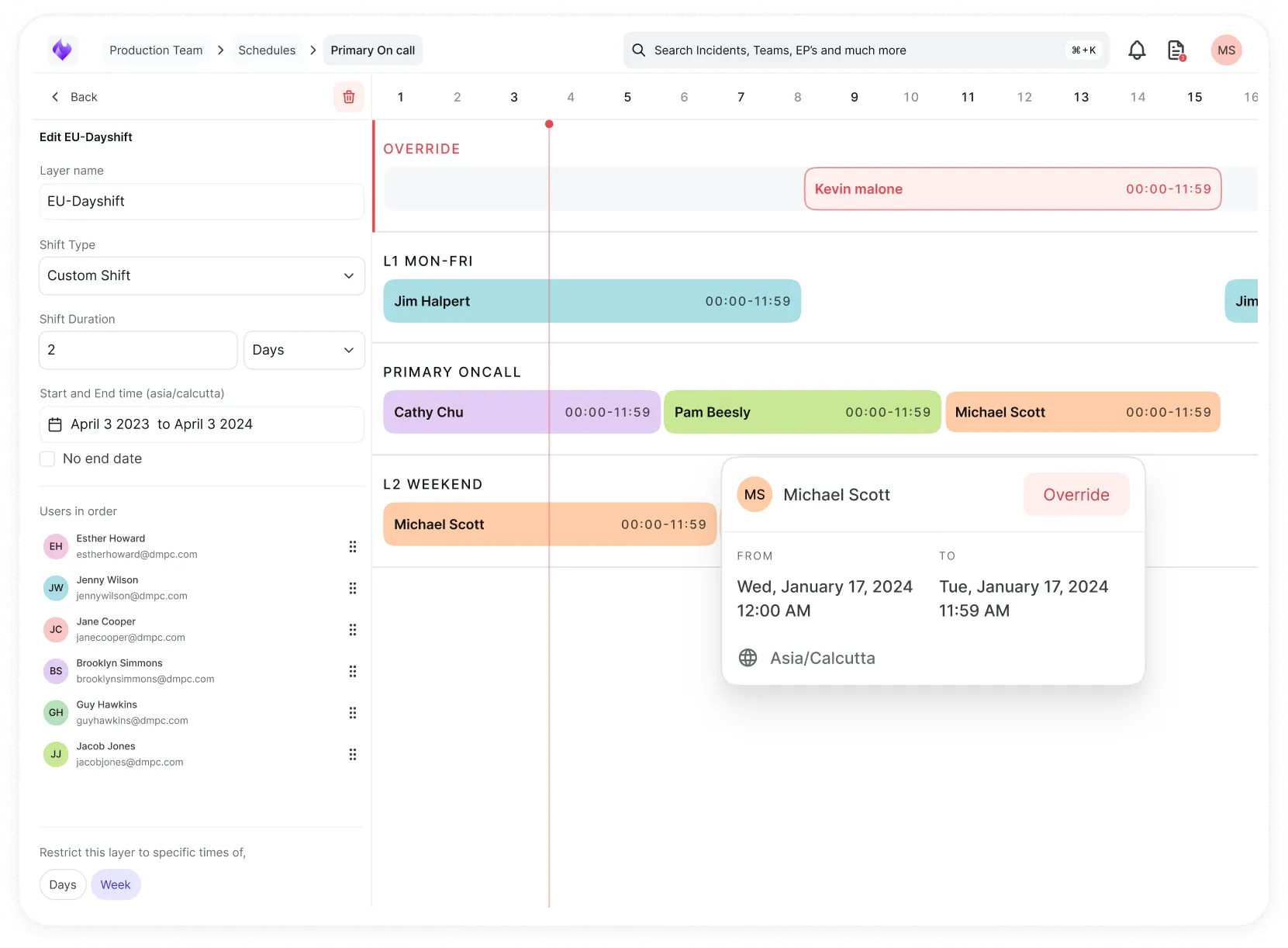
Simplify on-call scheduling, automate escalations, and reduce burnout.
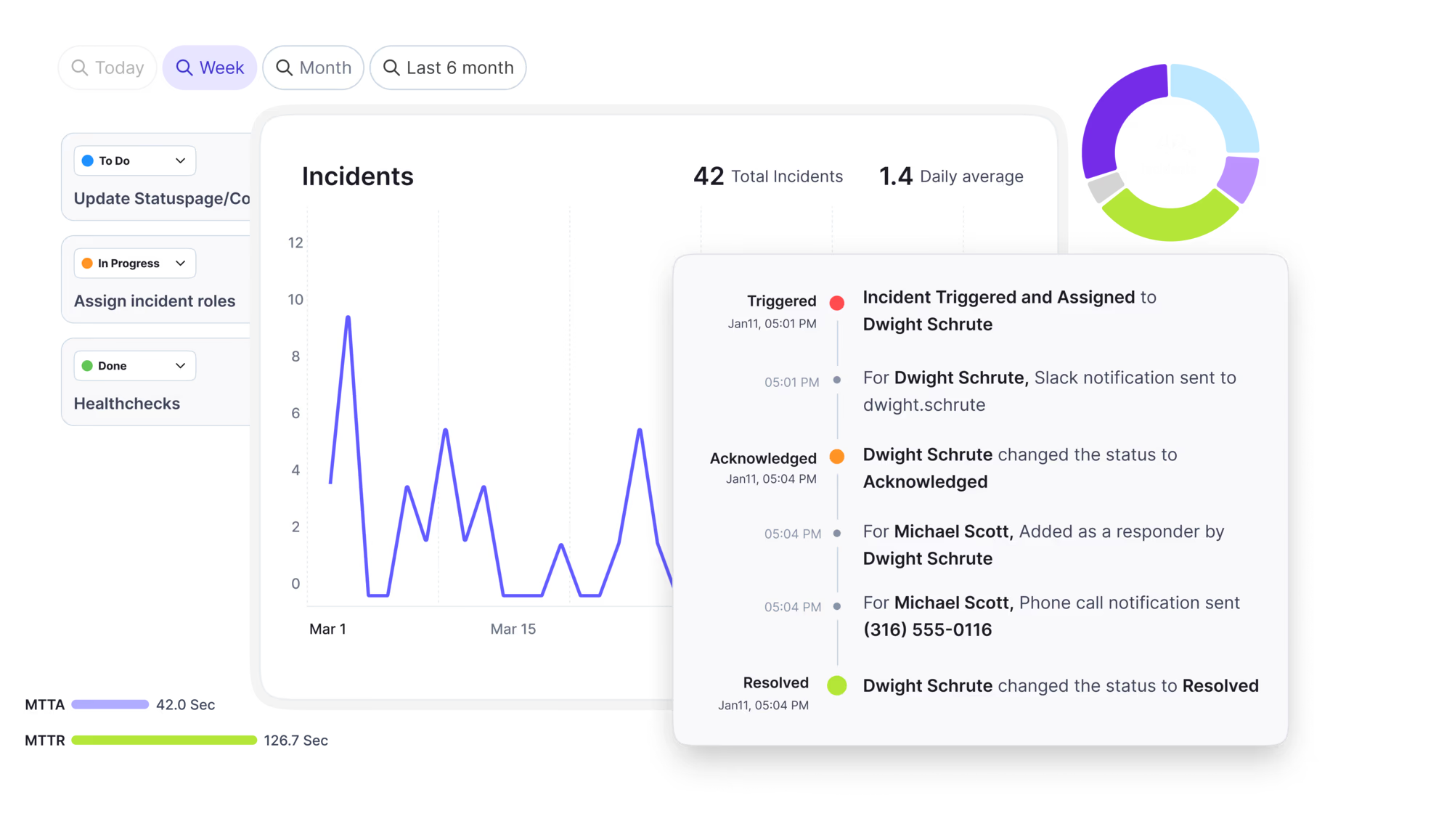
Automate postmortems, AI summaries, and post-incident workflows
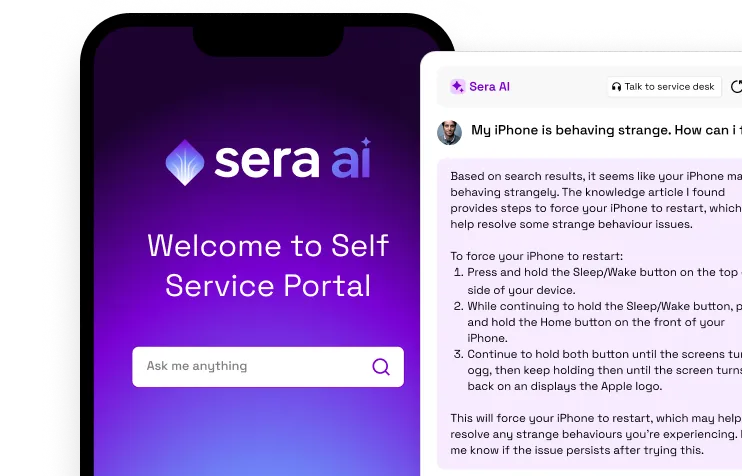
Create, organize, and continuously improve your knowledge base to find the right answers with Sera AI.
We're here to help

The integration with Atlassian Jira using the Xurrent Integration Service is

The integration with Atlassian Jira using the Xurrent Integration Service is

The integration with Atlassian Jira using the Xurrent Integration Service is

The integration with Atlassian Jira using the Xurrent Integration Service is

The integration with Atlassian Jira using the Xurrent Integration Service is

The integration with Atlassian Jira using the Xurrent Integration Service is

The integration with Atlassian Jira using the Xurrent Integration Service is

The integration with Atlassian Jira using the Xurrent Integration Service is
Resolve issues quickly with an AI-powered system that automates ticketing.
Unifiy IT, HR, Facilities, Finance, and more on a single, AI-powered service platform.
Simplify on-call scheduling, automate escalations, and reduce burnout.
Automate postmortems, AI summaries, and post-incident workflows
Create, organize, and continuously improve your knowledge base to find the right answers with Sera AI.
Resolve plant floor and IT issues before they disrupt production.
Stay audit-ready while resolving issues and reducing operational risk.

Detect, respond, and resolve incidents fast to cut downtime and MTTR.

Keep your store online, even during your biggest sales moments.

Protect patient data and resolve issues fast, so care teams stay focused on care.
Standardize service delivery across every store and channel.

We are here to help 24/7

Connect with other Xurrent Users

Get insights and tips on how to get the most out of Xurrent

Apps, APIs, and updates

Xurrent service functionality

Eliminate manual tasks, optimize workflows, and deliver faster resolutions.
Learn how organizations have reduced downtime, improved 50% MTTA & MTTR, and cut costs with Xurrent IMR.
Discover Xurrent IMR's quick support, bidirectional integrations with Jira and Slack, and more cohesive incident response capabilities compared to Opsgenie.
Understand why users value Xurrent IMR for its intuitive interface, efficient incident alerting, customizable On-call schedules, and escalations.

Atlassian's announcement that Opsgenie is reaching end of life caught many teams off guard—even though the signs had been building since the 2018 acquisition. If your on-call workflows, escalation policies, and alerting integrations run through Opsgenie today, you're now working against a hard deadline.
This guide covers the key dates you need to know, what happens to your data if you don't act, and how to evaluate your migration options—whether that's Jira Service Management, a third-party alternative, or a unified platform that brings incident management and ITSM together.
Atlassian announced in March 2025 that Opsgenie is being phased out as a standalone product. The alerting and on-call management features that made Opsgenie popular are being absorbed into Jira Service Management, which means the standalone tool is going away. If your team relies on Opsgenie today, you'll want to understand the key dates and start planning your next move.
June 4, 2025 marks the end of sale. After that date, new organizations can't sign up for Opsgenie, and existing customers can't purchase new subscriptions. However, if you're already a customer, you can still add seats to your current plan. Think of this as the "no new customers" cutoff.
April 5, 2027 is the full shutdown. On this date, Atlassian stops providing support, security patches, and platform access entirely. The difference between "end of sale" and "end of support" matters here: the first means you can't buy it, while the second means it stops working altogether.
Here's the part that catches people off guard: any data not migrated by April 5, 2027 gets permanently deleted. That includes historical incident records, on-call schedules, escalation policies, and integration configurations. There's no grace period and no recovery option after the deadline passes.
Atlassian bought Opsgenie back in 2018, and since then, the company has been weaving Opsgenie's capabilities into its broader platform. The retirement isn't a surprise if you've been watching Atlassian's product strategy—it's part of a larger push toward consolidation.
The impact on your operations depends on how deeply Opsgenie is embedded in your workflows. A team with a handful of integrations faces a different challenge than one with complex escalation chains and dozens of connected monitoring tools.
Your on-call schedules, escalation policies, and alert routing rules won't automatically transfer to a new platform. You'll likely need to recreate them, which means documenting what you have now. Items worth inventorying include on-call rotation schedules and override rules, escalation policies with timeout configurations, alert routing rules and filtering logic, and notification preferences for each team member.
Most teams connect Opsgenie to monitoring tools like Datadog, Prometheus, or CloudWatch, plus collaboration platforms like Slack or Microsoft Teams. Each of those integrations requires a fresh look. Some may have direct equivalents on your new platform, while others might need custom work or reconfiguration.
Your existing Opsgenie contract stays valid until the shutdown date, so there's no immediate billing disruption. That said, pricing structures vary across alternatives. JSM Premium and Enterprise tiers, which include the alerting features you're used to, typically carry higher price tags than standalone Opsgenie subscriptions.
Waiting until the last minute creates real operational risk. Here's what teams face if they don't act in time:
You have several paths forward, and the right choice depends on your existing tooling, team structure, and whether staying in the Atlassian ecosystem makes sense for you.
Atlassian's official recommendation is migrating to Jira Service Management Premium or Enterprise. These tiers include alerting, on-call management, and incident response features that mirror what Opsgenie offered. If your organization already uses Jira and Confluence heavily, this path involves the least friction.
Compass targets developer teams who want to track service ownership and health. It's not a full incident management replacement, though. Think of it as a service catalog with some operational visibility rather than a complete alerting platform. For most teams, Compass alone won't fill the Opsgenie gap.
Some teams are using this transition as an opportunity to look beyond Atlassian entirely. Options range from dedicated alerting tools like PagerDuty to unified platforms that combine incident management with ITSM capabilities. Platforms like Xurrent, which bring service, incident, and operations management together in one system, can reduce tool sprawl while addressing the fragmentation that point solutions often create.
When evaluating Opsgenie replacements, it helps to look at capabilities across several dimensions rather than just feature-matching what you had before.
The core features to evaluate include routing rules, escalation policies, schedule management, and mobile alerting. Pay attention to noise suppression capabilities too—alert fatigue is a common pain point for on-call responders who receive over 2,000 alerts weekly, and platforms that help filter out the noise make a real difference in quality of life.
Alerting gets people's attention, but coordination helps them actually resolve issues. Look at how each platform handles war rooms, stakeholder communication, timeline tracking, and post-incident reviews. The gap between "we got paged" and "we fixed it" often comes down to coordination capabilities.
Your monitoring stack, collaboration tools, and ticketing systems all need to connect. Key integration categories to evaluate include observability platforms like Datadog, New Relic, and Prometheus; cloud providers like AWS, Azure, and GCP; collaboration tools like Slack and Microsoft Teams; and CI/CD pipelines.
Per-user pricing tells only part of the story. Factor in implementation effort, ongoing administration overhead, and whether you're adding another tool to manage or actually consolidating your stack. Unified platforms can reduce total tool spend by eliminating the need for separate ITSM and incident management solutions.
The Opsgenie shutdown is a chance to think about what you actually need from incident management—not just what you had before.
Platforms that keep incident data, service data, and operational context in one system eliminate the handoff friction that slows resolution. When service desks, SREs, and operations teams work from the same information, incidents get resolved faster. Xurrent's ITxM platform, for example, provides a unified data model that keeps everyone on the same page.
Modern platforms use AI for intelligent alert routing, noise suppression, and automated response actions. The key distinction is whether AI is embedded in the platform or bolted on as a chatbot. Xurrent's AI Fabric operates continuously across the platform to improve routing and decision support, rather than sitting as a separate feature you have to invoke.
For security-conscious organizations, SOC 2 compliance, ISO certifications, zero-trust architecture, and data isolation capabilities matter. Stricter requirements often eliminate simpler tools from consideration early in the evaluation process.
Consider whether the platform can extend beyond IT to support HR, Facilities, Finance, and other departments. Enterprise service management capabilities let you standardize service delivery across the entire organization rather than maintaining separate tools for each team.
A structured approach reduces risk and keeps your team's alerting capabilities intact throughout the transition.
Before evaluating alternatives, document what you have. Capture on-call schedules and rotation patterns, escalation policies and timeout settings, integration configurations and API keys, routing rules and alert filters, and team structures with user permissions.
Build evaluation criteria based on your audit. Schedule demos with two or three incident management platforms and involve both operations and engineering stakeholders. The people who get paged at 3 AM have valuable input on what works and what doesn't.
Figure out what data can be exported, what requires manual recreation, and what historical information you actually need to preserve. Some configurations transfer easily; others require rebuilding from scratch.
Run parallel systems during a transition period. Test alert routing, verify escalations work correctly, and confirm integrations function as expected before turning off Opsgenie.
On-call responders need hands-on experience before go-live. Update runbooks, document new procedures, and make sure everyone knows how to acknowledge and resolve incidents in the new system.
The Opsgenie EOL is accelerating a broader trend: organizations are consolidating fragmented toolchains into unified platforms. Rather than replacing one point solution with another, many teams are rethinking their entire approach to incident and service management.
Xurrent's ITxM platform represents this unified model—bringing ITSM, incident management, and operations together in a single system with shared context and accountability.
The forced migration from Opsgenie is disruptive, but it's also an opportunity. Rather than simply replacing one alerting tool with another, teams can use this moment to address the underlying fragmentation that creates delays and finger-pointing during incidents.
A unified platform that connects service management, incident response, and operations provides the foundation for faster resolution and clearer accountability. Schedule a demo to see how Xurrent can unify your service and incident operations.