




Blog
Insights & updates from our experts


Resolve plant floor and IT issues before they disrupt production.

Stay audit-ready while resolving issues and reducing operational risk.
Resolve issues quickly with an AI-powered system that automates ticketing.
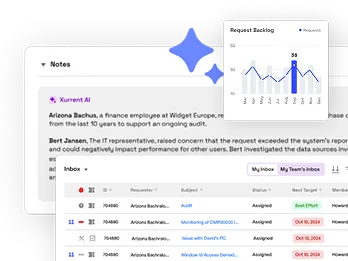
Unifiy IT, HR, Facilities, Finance, and more on a single, AI-powered service platform.
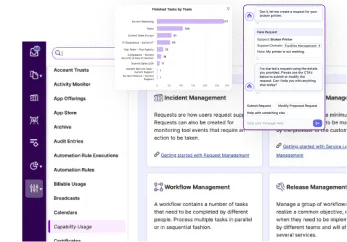
Simplify on-call scheduling, automate escalations, and reduce burnout.
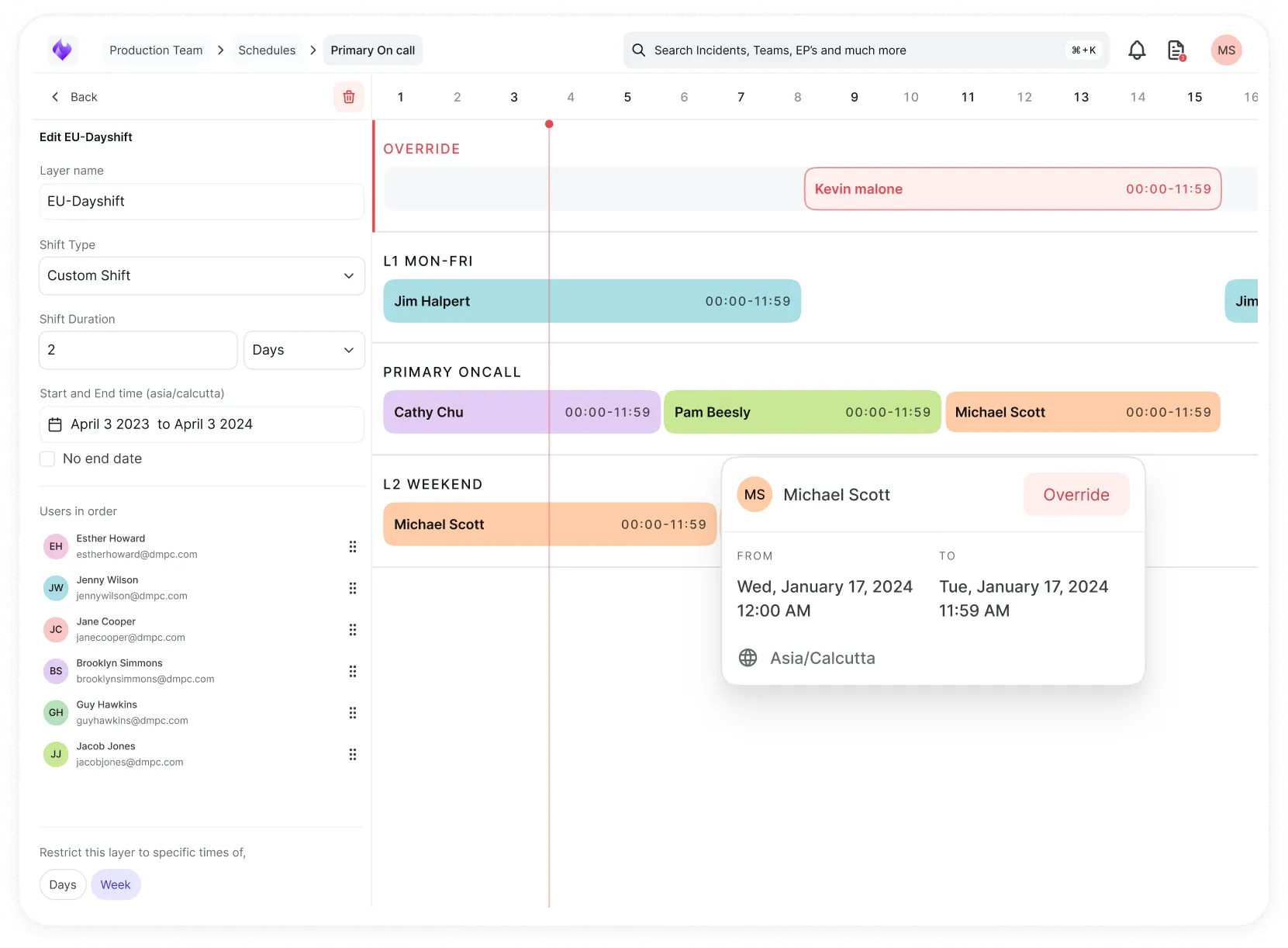
Automate postmortems, AI summaries, and post-incident workflows
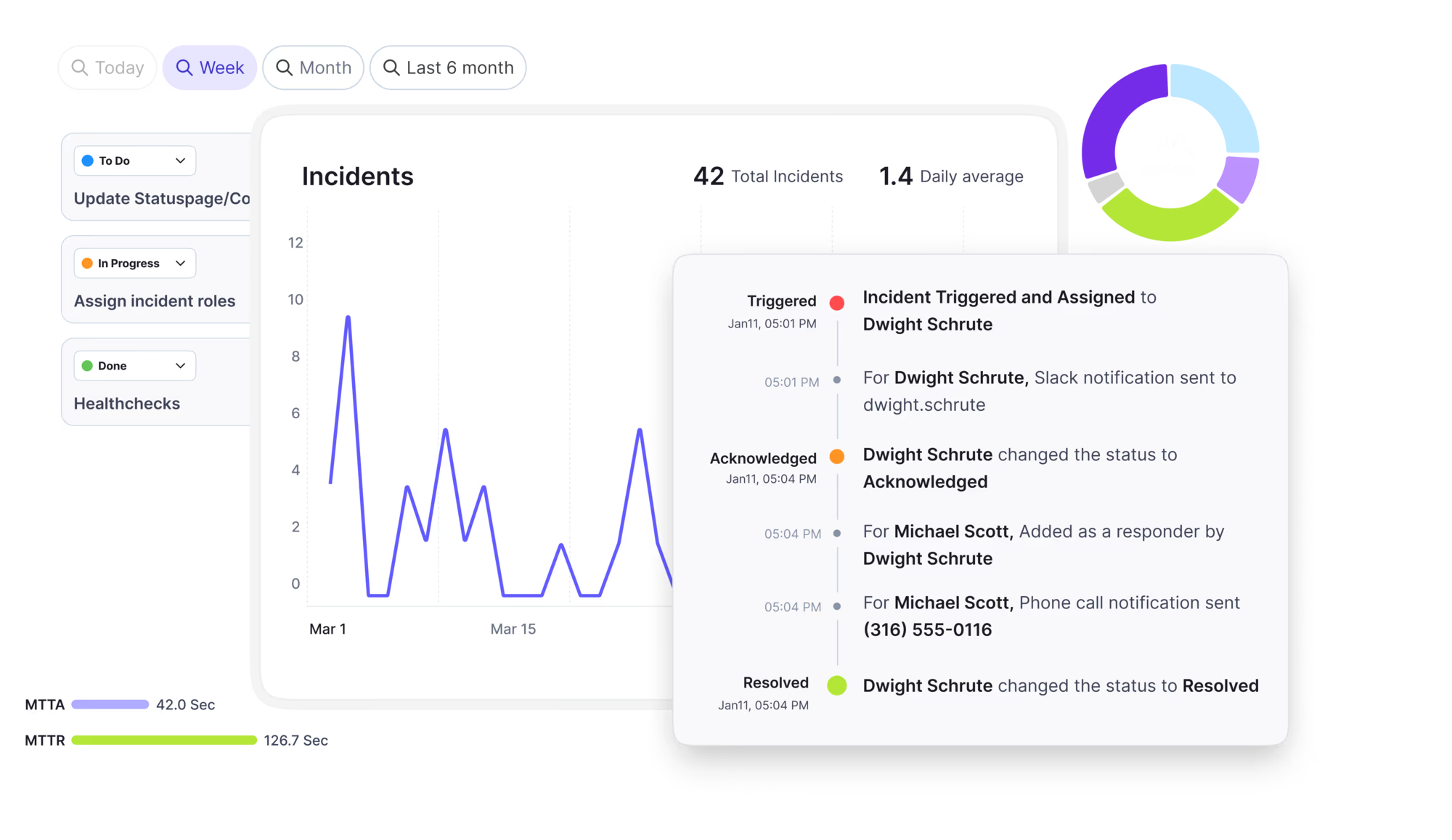
Create, organize, and continuously improve your knowledge base to find the right answers with Sera AI.
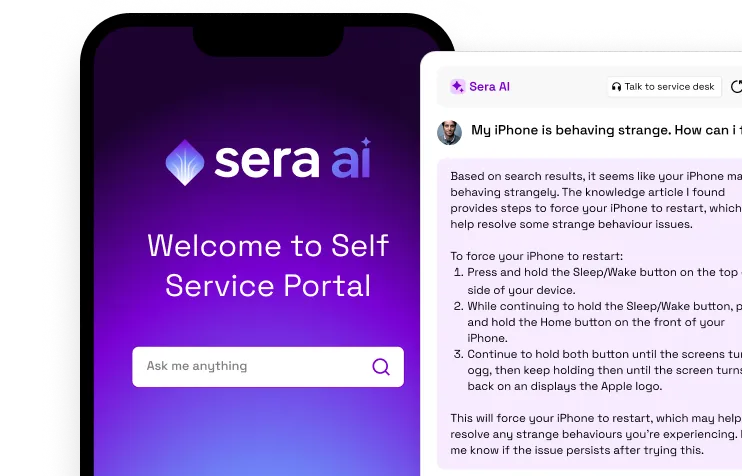
We're here to help

The integration with Atlassian Jira using the Xurrent Integration Service is

The integration with Atlassian Jira using the Xurrent Integration Service is

The integration with Atlassian Jira using the Xurrent Integration Service is

The integration with Atlassian Jira using the Xurrent Integration Service is

The integration with Atlassian Jira using the Xurrent Integration Service is

The integration with Atlassian Jira using the Xurrent Integration Service is

The integration with Atlassian Jira using the Xurrent Integration Service is

The integration with Atlassian Jira using the Xurrent Integration Service is
Resolve issues quickly with an AI-powered system that automates ticketing.
Unifiy IT, HR, Facilities, Finance, and more on a single, AI-powered service platform.
Simplify on-call scheduling, automate escalations, and reduce burnout.
Automate postmortems, AI summaries, and post-incident workflows
Create, organize, and continuously improve your knowledge base to find the right answers with Sera AI.
Resolve plant floor and IT issues before they disrupt production.
Stay audit-ready while resolving issues and reducing operational risk.

Detect, respond, and resolve incidents fast to cut downtime and MTTR.

Keep your store online, even during your biggest sales moments.

Protect patient data and resolve issues fast, so care teams stay focused on care.

Standardize service delivery across every store and channel.

We are here to help 24/7

Connect with other Xurrent Users

Get insights and tips on how to get the most out of Xurrent

Apps, APIs, and updates

Xurrent service functionality

Eliminate manual tasks, optimize workflows, and deliver faster resolutions.
Learn how organizations have reduced downtime, improved 50% MTTA & MTTR, and cut costs with Xurrent IMR.
Discover Xurrent IMR's quick support, bidirectional integrations with Jira and Slack, and more cohesive incident response capabilities compared to Opsgenie.
Understand why users value Xurrent IMR for its intuitive interface, efficient incident alerting, customizable On-call schedules, and escalations.
During the second SPARK event in Antwerp, I stood at the back of a training room and watched a customer build a custom integration with our new iPaaS, wiring Xurrent to another system in her stack that had never talked to it before. No services rep doing it for her. No statement of work, no project plan with a kickoff and a go-live date. Just a person with live beta access in her hands, connecting two systems by hand, and finishing it before her coffee went cold. A year ago that would have been a multi-week project with a budget attached. She looked up, a little surprised it had actually worked, and said something I have not stopped thinking about since. She said it just gave her her week back.
That is the whole reason we took SPARK on the road.
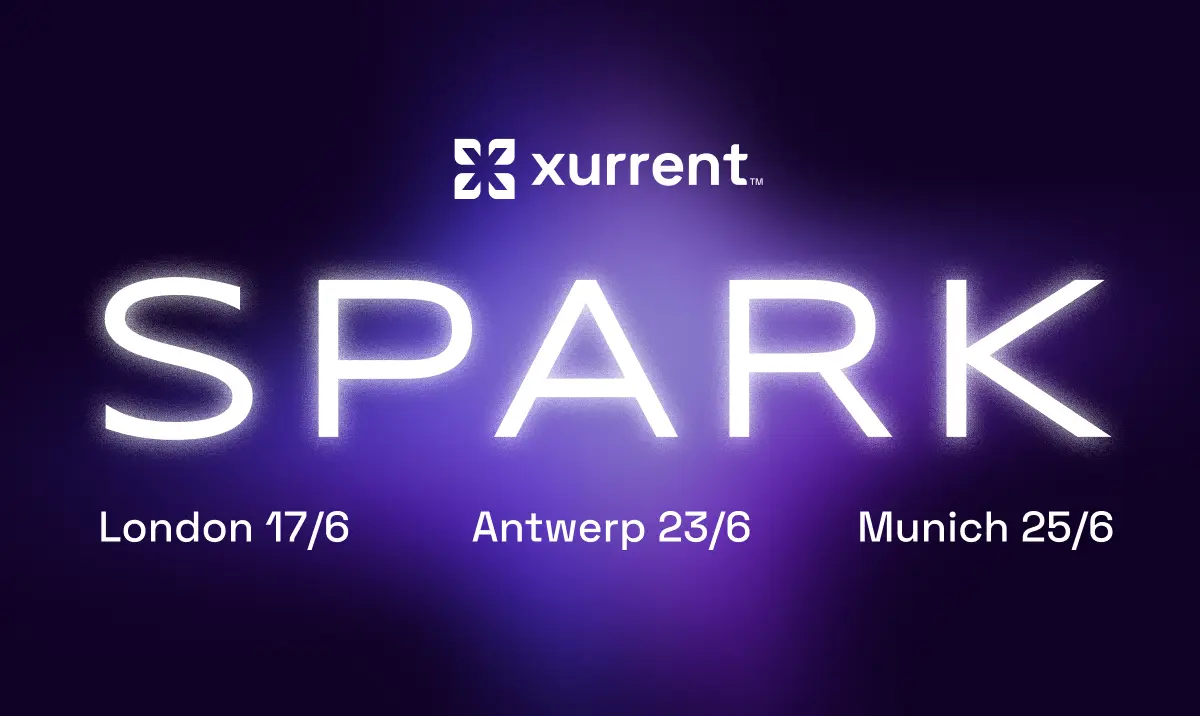
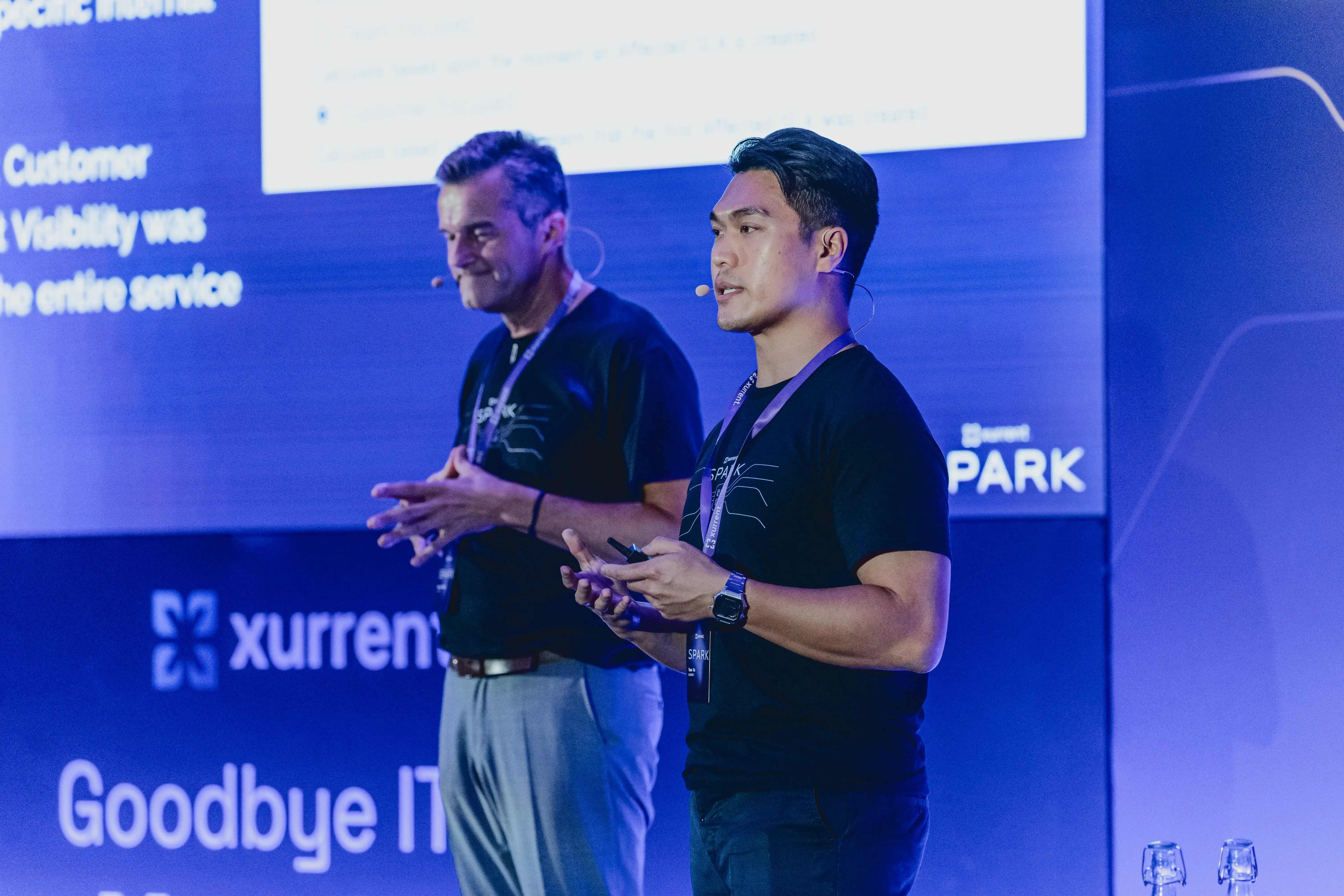
Over the past two weeks we ran three single-day events across London, Antwerp, and Munich. For years we brought everyone together once a year at Connect. This time we came to you, in smaller regional rooms, free to attend, with the substance of Connect and none of the travel and cost that used to keep people away. I was not certain it would work. I am certain now.
I opened each morning with a picture of a person standing in front of an enormous clock that is cracking apart. It is a dramatic image, and it is also honest. AI has changed the speed that work moves at. What used to take a quarter now takes a week, and that is as true for your competitors as it is for you.
So I kept coming back to one word, velocity, and to the question sitting underneath it. The question is not how fast can you go. It is what do you get to do with the time you save. Speed only counts for something if it hands something back. The work that fills an IT leader's week, the triage, the manual upgrades, the integrations nobody owns, the constant swivel between a dozen tools, none of that is the work they actually want their people doing. A modern platform earns its place by taking that off the table and giving the hours back.
Here is what I heard in every room. The work does not live in one place anymore. It lives across monitoring, the CMDB, identity, security, HR systems, developer tools, custom apps, and now a growing crowd of AI agents. The gaps between those systems are where time quietly disappears. Every handoff is a small tax, and the small taxes add up to whole weeks. I believe the companies that win the next few years will be the ones that close those gaps, not the ones that buy another tool to sit on top of the pile.
We built Xurrent to close those gaps, and at SPARK we showed it in three parts. Each one is really the same promise told a different way.
A foundation that deploys fast and then stays out of the way.
None of the clever parts matter if the base is shaky, so we lead with the base. Five nines of uptime over the last year. Every customer on the current version, with no one stranded on an old release. Well over a billion alerts handled in production. The number I am proudest of is quieter than the rest. We are shipping customer-requested changes about four times faster than we were a year ago, and because everyone is on the current version, that pace reaches you without an upgrade project. Our speed becomes your speed. Fiskars proved the point in the field, standing up service desks across fourteen countries in sixteen weeks at a fifth less cost than the stack they left behind. A long implementation is a choice now, not a law of nature.

AI that is built into the platform, not bolted onto the side.
Most platforms in our space can tell you an AI story. Far fewer have the layer underneath that makes the story true, because an agent is only as useful as the systems it can actually reach. If it cannot see the data and act across the environment, it is a demo and not a difference. Sera runs through the platform, so it cuts the noise and moves the work forward instead of becoming one more screen to check. It is live in production for most of our customers today, doing real work, and it is part of the subscription rather than a separate line item that appears at renewal. We would rather win on how many people use it than on what we can charge to unlock it.
One platform across every silo.
When service management, asset management, monitoring, and response share a single platform, you get one path from the first alert to the final fix instead of a relay of handoffs. The connective tissue for that is our own integration platform, built in house and included in every subscription, configurable in weeks rather than rebuilt over quarters. Customers are already running live integrations on it across the base. When the walls between the tools come down, the productivity that was trapped between them is suddenly yours to use. We did not just describe this. We showed it working, and you could feel the room lean in.
That brings me back to the woman in the training room. The moment I will remember longest from this whole series was not anything we presented. It was watching customers leave the hands-on sessions with working beta access already in their hands. No waitlist. No special arrangement. They learned it with us and walked out using it.
It is easy to say you trust your customers. It is harder to give them the keys before a product is even generally available. We did it on purpose, because I would rather someone build with it and tell us what is missing than wait politely while we finish a brochure. The integration platform goes generally available on July 1, included for everyone. The people who started at SPARK simply got a head start, and I am glad they did.
If you could not be in the room, here are the three announcements I would not want you to miss. Read them together and you will see they are the same promise told three ways.
Each one hands a category of work back to your people. That is the through line, and it is the only scorecard I care about.
Our partners and MSPs are not a distribution channel to me. They are how this actually works once it leaves our hands. A platform like ours only delivers when someone who knows a customer's environment can stand it up, shape it, and run with it. Across Partner Day and the breakouts, I watched them turn our roadmap into outcomes for real businesses with real constraints, and push back where we needed pushing. That kind of growth is shared growth, and I do not take it for granted.

Neither do I take our customers for granted. The best parts of SPARK were the parts they led. Someone standing up to tell a peer, in plain numbers, what changed after they switched. Breakout questions sharper than any analyst's. A quiet word in the hallway about something we still need to fix. None of them had to give us that candor in a room that included a few of our competitors. They did it anyway, and that is the reason we keep getting better.
Our mission has not changed. We are here to make the world a little more productive every day. SPARK was a checkpoint on that road, not a finish line. We came to the market instead of asking it to come to us, we were honest about where we are heading, and we put working product into real hands to show we mean it.
.webp)
The clock is still cracking for all of us. The speed is not going to slow down. What we can change is what that speed gives back. When the platform absorbs the maintenance and the routine, the week opens up for the work that actually moves you forward. That is the whole idea, and it is something a team can put to use on a Monday morning rather than admire on a slide.
My thanks to everyone who spent a day of their own time with us in London, Antwerp, and Munich. We are only getting started.
Brian Wenngatz Chief Executive Officer, Xurrent
Have a story from your own road, or something we still need to get right? Reach out or book time with our team. We are listening.
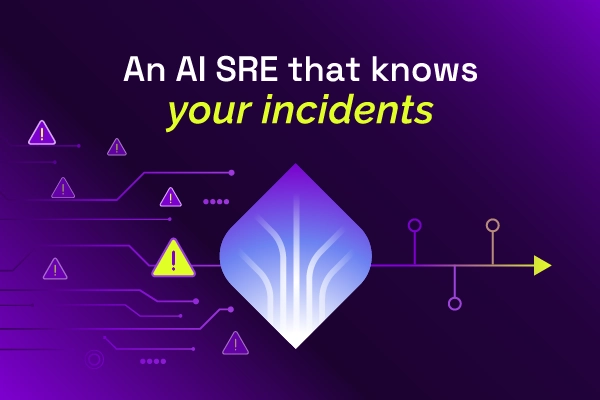
Most AI SREs are pattern matchers trained on public data. They know what a memory leak looks like in the abstract. They don't know that your payments-api has a flaky liveness probe everyone ignores, that the checkout team owns the retry policy, or that the last three "database incidents" were actually cache misconfigurations. That knowledge lives in your postmortems, your Slack channels, and the heads of two senior engineers.
Most vendors will tell you ITSM implementation takes six months to a year — but modern, configuration-first platforms have rewritten the math entirely. See what real implementations look like in 2026, and why a long rollout is now a choice, not a given.

.webp)
.webp)