




Blog
Insights & updates from our experts


Resolve plant floor and IT issues before they disrupt production.

Stay audit-ready while resolving issues and reducing operational risk.
Resolve issues quickly with an AI-powered system that automates ticketing.
Unifiy IT, HR, Facilities, Finance, and more on a single, AI-powered service platform.
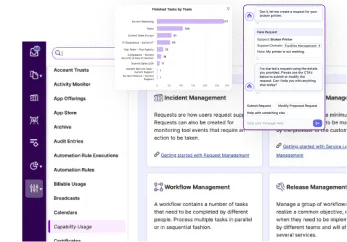
Simplify on-call scheduling, automate escalations, and reduce burnout.
Automate postmortems, AI summaries, and post-incident workflows
Create, organize, and continuously improve your knowledge base to find the right answers with Sera AI.
We're here to help

The integration with Atlassian Jira using the Xurrent Integration Service is

The integration with Atlassian Jira using the Xurrent Integration Service is

The integration with Atlassian Jira using the Xurrent Integration Service is

The integration with Atlassian Jira using the Xurrent Integration Service is

The integration with Atlassian Jira using the Xurrent Integration Service is

The integration with Atlassian Jira using the Xurrent Integration Service is

The integration with Atlassian Jira using the Xurrent Integration Service is

The integration with Atlassian Jira using the Xurrent Integration Service is
Resolve issues quickly with an AI-powered system that automates ticketing.
Unifiy IT, HR, Facilities, Finance, and more on a single, AI-powered service platform.
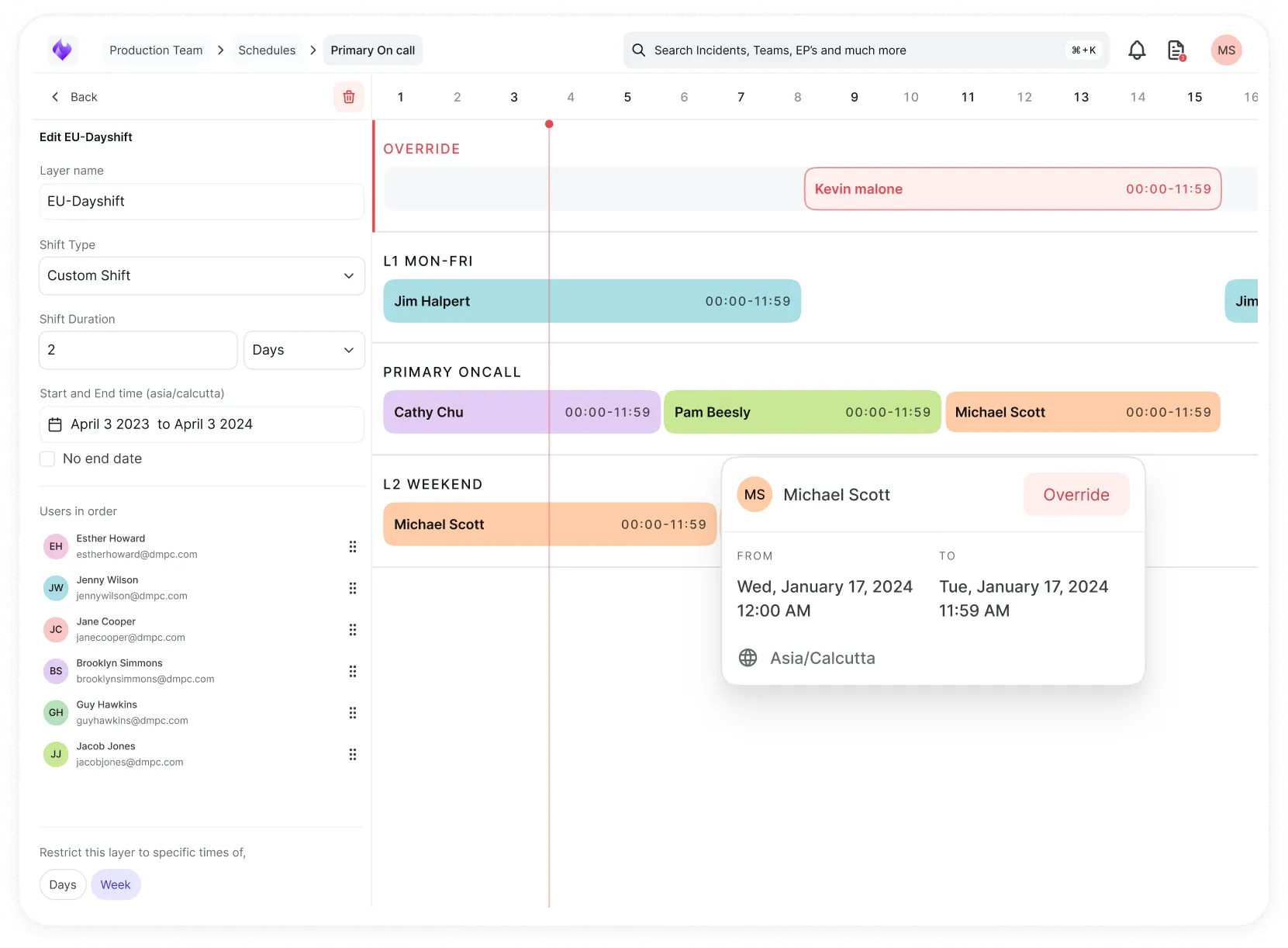
Simplify on-call scheduling, automate escalations, and reduce burnout.
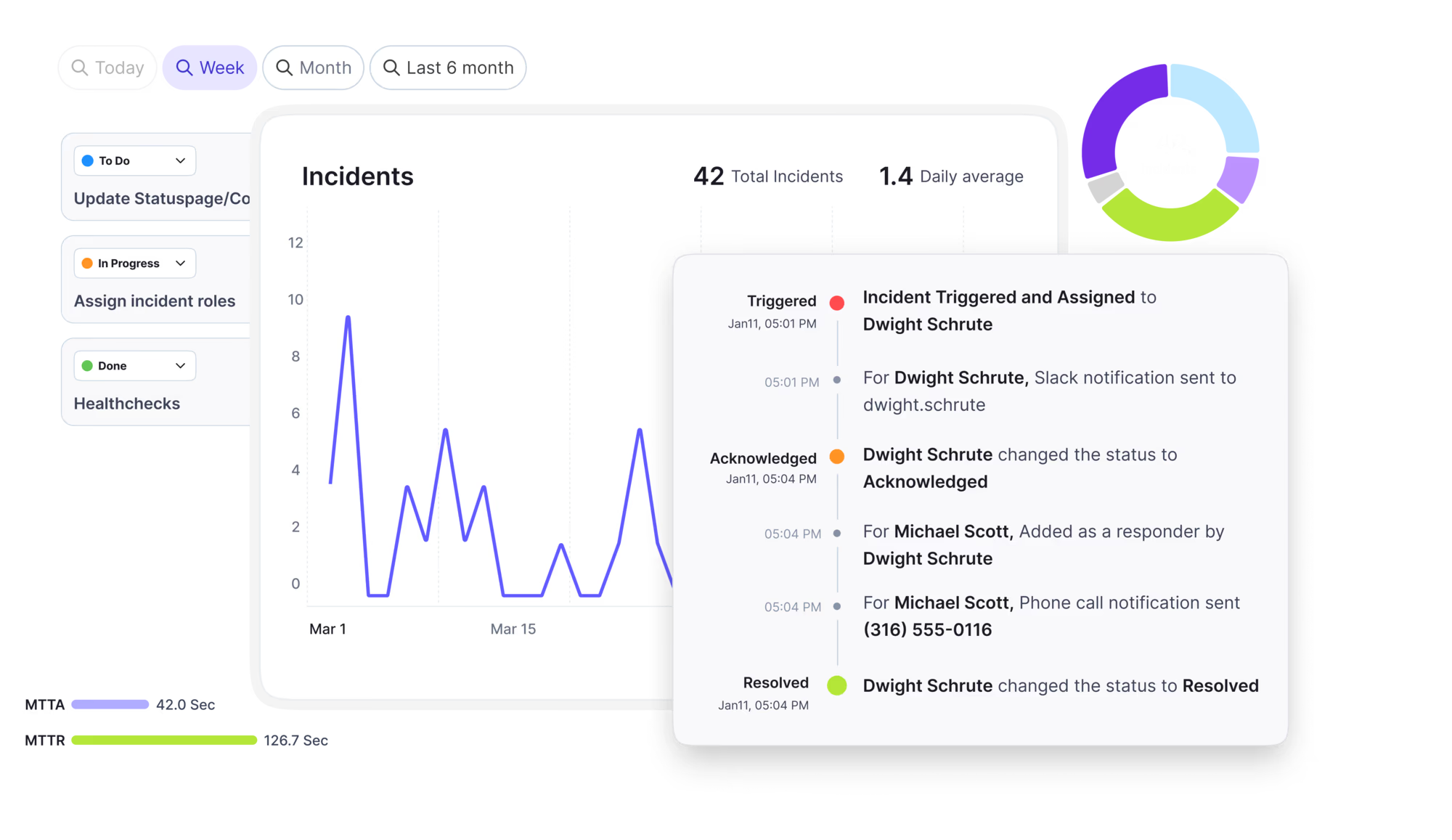
Automate postmortems, AI summaries, and post-incident workflows
Create, organize, and continuously improve your knowledge base to find the right answers with Sera AI.
Resolve plant floor and IT issues before they disrupt production.
Stay audit-ready while resolving issues and reducing operational risk.

Detect, respond, and resolve incidents fast to cut downtime and MTTR.

Keep your store online, even during your biggest sales moments.

Protect patient data and resolve issues fast, so care teams stay focused on care.

Standardize service delivery across every store and channel.

We are here to help 24/7

Connect with other Xurrent Users

Get insights and tips on how to get the most out of Xurrent

Apps, APIs, and updates

Xurrent service functionality

Eliminate manual tasks, optimize workflows, and deliver faster resolutions.
Learn how organizations have reduced downtime, improved 50% MTTA & MTTR, and cut costs with Xurrent IMR.
Discover Xurrent IMR's quick support, bidirectional integrations with Jira and Slack, and more cohesive incident response capabilities compared to Opsgenie.
Understand why users value Xurrent IMR for its intuitive interface, efficient incident alerting, customizable On-call schedules, and escalations.

Incidents rarely escalate because the issue is unfixable. It's the tooling and processes around the issue that slows everything down — and that's why they blow up.
What should be straightforward becomes a search for clues when tickets land in one system, runbooks sit in another, monitoring alerts live in yet another, and the actual conversation happens in Slack. It takes more time to piece the puzzle together than to find a solution.
It's stressful. It's distracting. And even worse, it adds unnecessary difficulty to every situation.
Fragmented toolchains and disconnected processes don't just drag down mean time to resolve (MTTR), they also negatively impact concentration, productivity, and team morale. Compounding all of this? Every single extra step in the process increases risk when downtime is at stake.
Still having trouble responding to incidents? Chances are, the tools don't work together, rather than the technical abilities of the team.
So what does that fragmentation actually look like?
When the incident management stack is scattered across multiple systems, the slowdown is felt immediately. The symptoms are painfully familiar:
None of this makes service more reliable. It just adds noise, confusion, and wasted cycles. And while the team is juggling disconnected workflows, the clock keeps ticking.
A fragmented toolchain doesn't just pull teams out of flow — it pushes teams into constant reactive mode and leaves little room for improvement work.
And the damage can compound quickly.
DevOps teams feel the impact of fragmentation immediately. Here's where it hits hardest:
1. Alert noise rules the day: When alerts hit every tool and every channel, everything looks urgent — even when it's not. It's easy to miss the one alert that actually matters because the team is drowning in the ones that don't.
Teams using unified platforms typically see significant reductions in alert noise and fatigue.
That's not a nice-to-have. That's the difference between reacting quickly and reacting late.
2. People end up doing the same work twice: When nobody has a shared system of record, two or three engineers can end up running the same investigation path. It's frustrating, it wastes valuable time, and it delays the real fix.
Consolidating tools eliminates redundant work and speeds up response times.
3. Communication breaks down at the worst possible time: During an incident, workflows shouldn't depend on watching the right channel at the right moment. But that's exactly what happens when updates, evidence, timelines, and decisions are spread across multiple tools.
A unified platform keeps the entire response visible, so no time is wasted waiting for an update that already happened or digging for information that should've been surfaced automatically.
This isn't just about speed — it's about reducing mental load to stay sharp when things go sideways.
That's the problem. Here's the path forward.
Unifying the toolchain doesn't mean throwing everything out. It means giving DevOps one connected workflow where alerts, context, communication, and ownership stay together from start to finish.
Many teams often start by:
Mapping what's being used and identifying the gaps by listing out every tool touched during an incident. Think: monitoring, chat, ticketing, on-call, status pages. The inefficiencies jump out fast.
Cutting the redundant stuff. Consolidating all tools that overlap. Every removed "hop" makes responses smoother, faster, more efficient.
Using a solution that connects the entire incident lifecycle. A modern incident management platform should bring monitoring, routing, escalation, runbooks, chat, and ticketing into one workflow. It should also reduce the manual stuff, which eliminates:
Xurrent IMR is built with this in mind. A home for DevOps. A unified place to resolve incidents with clear context, automated routing, and AI-supported workflows.
Automating the repetitive coordination through an automated alert routing and escalations, thus removing the guesswork. Automating updates keeps everyone aligned, while shared timelines help the team move as one.
Teams that make this shift see faster triage and response, fewer missed or stalled incidents, and less manual coordination.
Most importantly, the work stops feeling chaotic.
Fragmented tooling is frustrating. Every extra click, every lost alert, every duplicated investigation adds up … especially when in the heat of an incident.
Unified incident management removes that friction. It gives DevOps the calm, consistent environment necessary to stay focused, move faster, and close incidents without the chaos.
This is the direction forward for modern teams. It's what ITxM supports — and it's what Xurrent IMR is built to deliver: a singular place where incident work actually works the way DevOps teams need it to.
Fragmented tools create fragmented responses. Unified platforms create consistent outcomes. That's the core idea behind ITxM, and it's what Xurrent IMR is built to deliver.
Toolchains should make incident response faster, not harder. Xurrent IMR gives teams one place where alerts, context, and collaboration work together the way they should.
Get started with Xurrent today and learn how to cut the noise and focus on what matters.
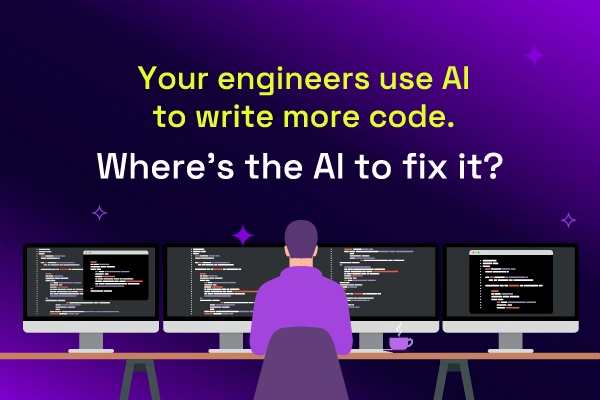
Google's 2025 DORA report found that 90% of technology professionals now use AI at work, and more than 80% say it has made them more productive. With code assistants and agents, the speed at which code gets written has changed more in eighteen months than in the decade before.
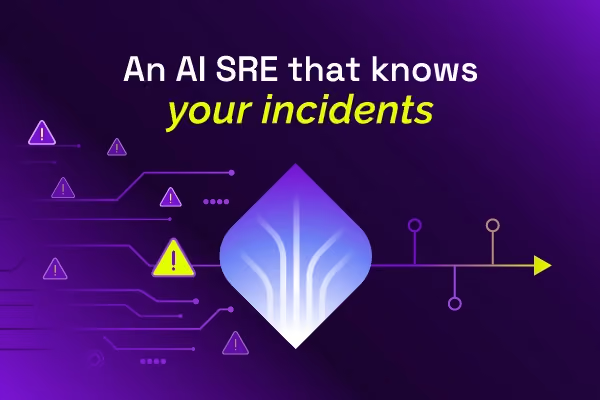
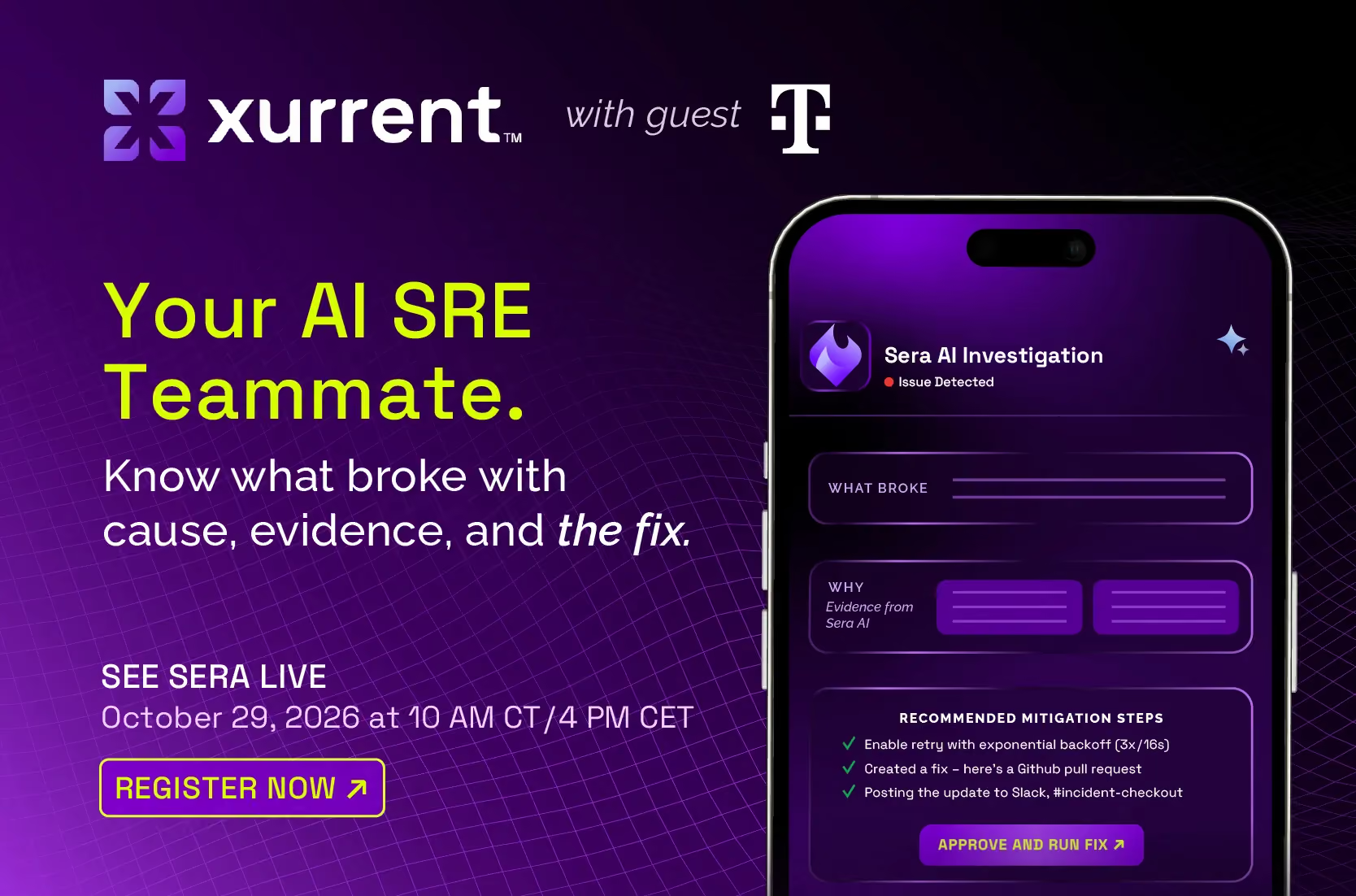
Most AI SREs are pattern matchers trained on public data. They know what a memory leak looks like in the abstract. They don't know that your payments-api has a flaky liveness probe everyone ignores, that the checkout team owns the retry policy, or that the last three "database incidents" were actually cache misconfigurations. That knowledge lives in your postmortems, your Slack channels, and the heads of two senior engineers.