




Blog
Insights & updates from our experts


Resolve plant floor and IT issues before they disrupt production.

Stay audit-ready while resolving issues and reducing operational risk.
Resolve issues quickly with an AI-powered system that automates ticketing.
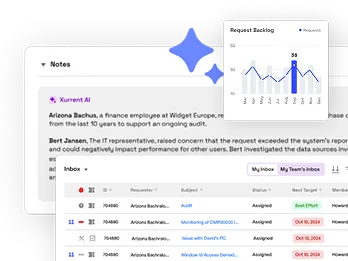
Unifiy IT, HR, Facilities, Finance, and more on a single, AI-powered service platform.
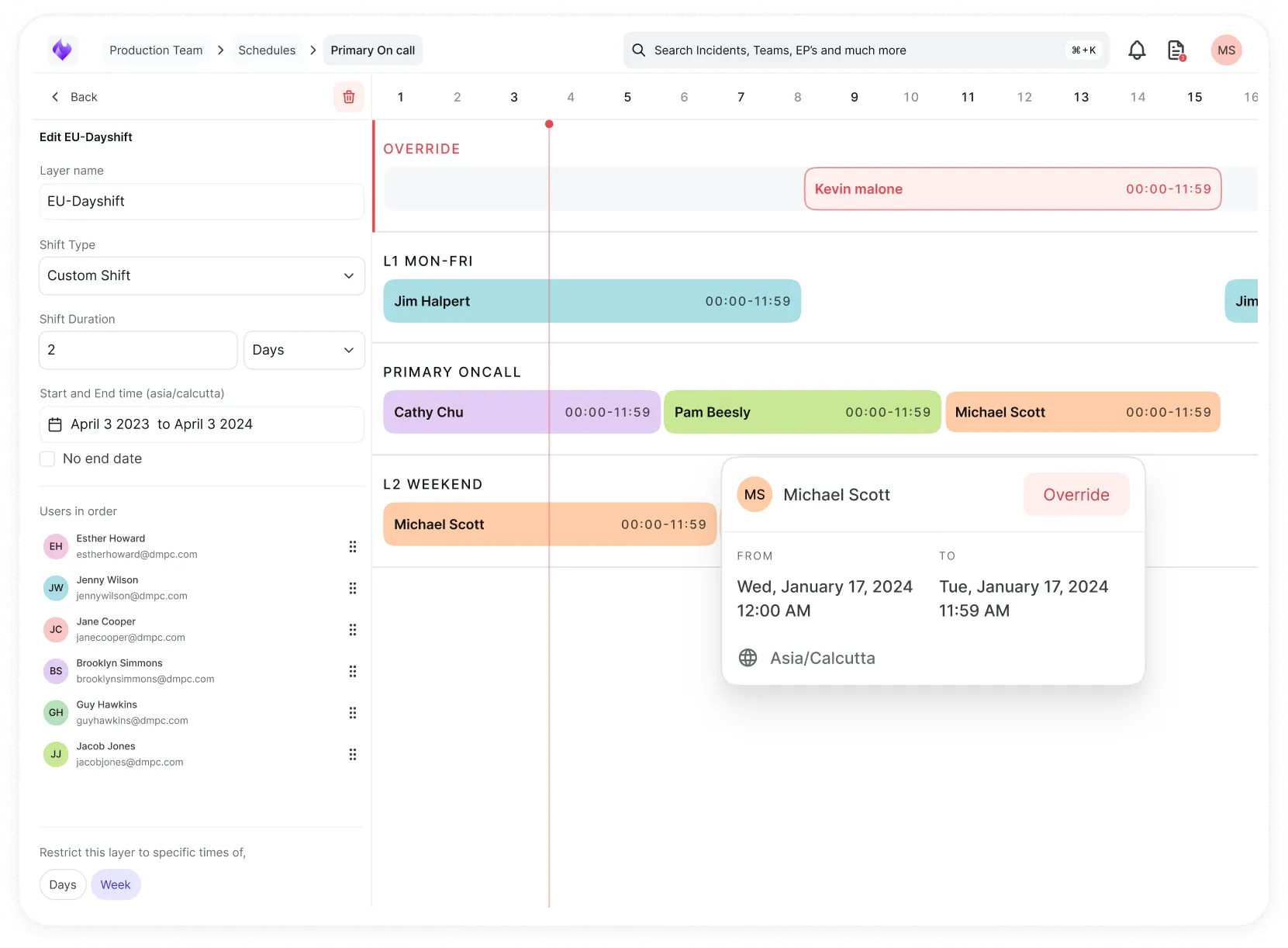
Simplify on-call scheduling, automate escalations, and reduce burnout.
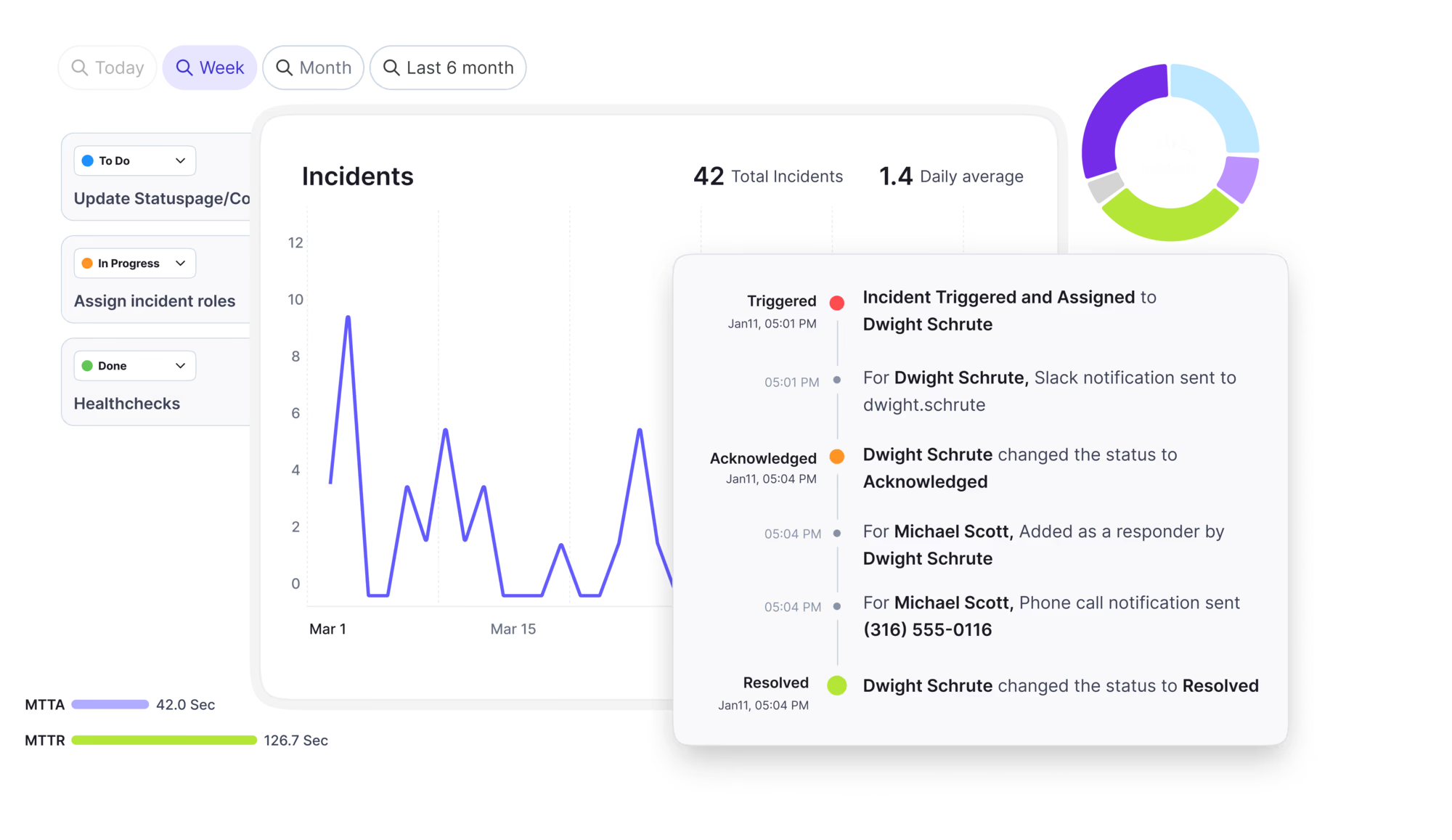
Automate postmortems, AI summaries, and post-incident workflows
Create, organize, and continuously improve your knowledge base to find the right answers with Sera AI.
We're here to help

The integration with Atlassian Jira using the Xurrent Integration Service is

The integration with Atlassian Jira using the Xurrent Integration Service is

The integration with Atlassian Jira using the Xurrent Integration Service is

The integration with Atlassian Jira using the Xurrent Integration Service is

The integration with Atlassian Jira using the Xurrent Integration Service is

The integration with Atlassian Jira using the Xurrent Integration Service is

The integration with Atlassian Jira using the Xurrent Integration Service is

The integration with Atlassian Jira using the Xurrent Integration Service is
Resolve issues quickly with an AI-powered system that automates ticketing.
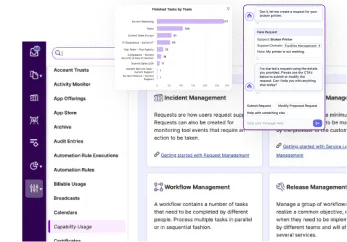
Unifiy IT, HR, Facilities, Finance, and more on a single, AI-powered service platform.
Simplify on-call scheduling, automate escalations, and reduce burnout.
Automate postmortems, AI summaries, and post-incident workflows
Create, organize, and continuously improve your knowledge base to find the right answers with Sera AI.
Resolve plant floor and IT issues before they disrupt production.
Stay audit-ready while resolving issues and reducing operational risk.

Detect, respond, and resolve incidents fast to cut downtime and MTTR.

Keep your store online, even during your biggest sales moments.

Protect patient data and resolve issues fast, so care teams stay focused on care.
Standardize service delivery across every store and channel.

We are here to help 24/7

Connect with other Xurrent Users

Get insights and tips on how to get the most out of Xurrent

Apps, APIs, and updates

Xurrent service functionality

Eliminate manual tasks, optimize workflows, and deliver faster resolutions.
Learn how organizations have reduced downtime, improved 50% MTTA & MTTR, and cut costs with Xurrent IMR.
Discover Xurrent IMR's quick support, bidirectional integrations with Jira and Slack, and more cohesive incident response capabilities compared to Opsgenie.
Understand why users value Xurrent IMR for its intuitive interface, efficient incident alerting, customizable On-call schedules, and escalations.
Your ticketing system touches every client interaction, every SLA commitment, and every technician's daily workflow. When it's slow, disconnected, or missing context, the friction compounds across your entire operation.
This guide breaks down the features that matter most for MSP ticketing, compares the top platforms for 2026, and walks through how to evaluate and implement the right system for your service delivery model.
The best MSP ticketing systems combine robust PSA (Professional Services Automation) and RMM (Remote Monitoring and Management) functionality into a single platform. Top contenders in 2026 include tools known for speed and AI capabilities, high-rated endpoint management, extensive customization, and modern AI-driven workflows.
So what exactly is an MSP ticketing system? It's software that centralizes client requests, incidents, and service tasks into one place. Unlike generic help desk tools, MSP ticketing platforms support multi-tenant environments—meaning you can manage dozens or even hundreds of clients from a single interface, each with their own SLAs and isolated data.
When tickets arrive via email, phone, and chat without a unified system, requests slip through the cracks. Automated ticket creation and assignment eliminates that problem by capturing every request and routing it to the right queue instantly.
Workflow automation also handles the repetitive stuff: acknowledgment emails, status updates, and escalation triggers. Your technicians spend less time managing tickets and more time actually solving problems.
Every client expects different response and resolution times based on their contract. SLA management features track these commitments automatically, flagging tickets that are approaching breach and escalating before deadlines pass.
Without this automation, you're relying on memory and spreadsheets. That's a recipe for missed deadlines and difficult client conversations.
Multi-tenancy means one platform instance serves all your clients while keeping their data completely separate. Technicians see only the clients they're assigned to, and reporting can be segmented or aggregated depending on what you're analyzing.
This architecture eliminates the overhead of maintaining separate environments for each client—a significant time saver as your client base grows.
When your RMM tool detects a failing disk or service outage, that alert can become a ticket automatically. The ticket arrives complete with device details, recent events, and client context, so your technician starts troubleshooting immediately instead of copying information between systems.
PSA integration connects tickets to the business side: contracts, billing, time tracking, and project management. This visibility helps you understand which clients are profitable and where you're spending untracked time.
AI reads incoming tickets and classifies them by type, urgency, and required expertise. Instead of a dispatcher manually reviewing every request, tickets flow to the right person or queue in seconds.
Over time, AI-powered systems learn from your team's patterns. They suggest resolutions based on similar past tickets and can even draft responses for common issues.
You can't improve what you don't measure. Live dashboards show ticket volume, resolution times, technician workload, and SLA performance across your entire client base.
This visibility helps you spot trends—like a client generating unusual ticket volume—before small issues become big problems.
Professional Services Automation platforms are the most common choice for MSPs. They combine ticketing with billing, time tracking, contracts, and project management in one system. Everything lives together, so you can see the full picture of each client relationship.
Lighter-weight tools focus purely on ticket tracking and support workflows. These work well for smaller operations or MSPs that already have separate billing and project management systems they don't want to replace.
Enterprise ITSM platforms bring formal service management practices—incident, problem, change, and release management—with ITIL alignment. ITIL (Information Technology Infrastructure Library) is a framework of best practices for IT service delivery. These platforms suit MSPs serving larger clients who expect structured processes and detailed audit trails.
Cloud deployment means no infrastructure to manage, automatic updates, and access from anywhere. For distributed MSP teams with technicians working remotely or across multiple locations, this flexibility is often essential.
When requests arrive via email, phone, chat, and portal without a unified system, tickets fall through cracks. A client follows up on something your team never saw, and trust erodes quickly.
Copying information between your RMM, ticketing system, and documentation platform wastes time and introduces errors. Every manual step is an opportunity for something to go wrong or get lost.
Missing a response deadline once might be forgiven. Missing them repeatedly—especially without proactive communication—drives clients to competitors who deliver on their promises.
Manual ticket triage, repetitive data entry, and constant context switching burn out your best people. They end up spending more time managing work than actually doing it.
Without reporting, you can't identify which clients consume disproportionate resources or which service types take longest to resolve. Business decisions happen without data to back them up.
Xurrent delivers ITIL-accredited service management with AI embedded throughout the platform—not bolted on as an afterthought. Sera AI handles classification, routing, and knowledge generation natively, while the platform maintains sub-350ms response times even under heavy load.
For MSPs, the multi-tenant architecture supports client-specific SLAs and isolated environments. Teams can go live in weeks rather than months with a configuration-focused deployment approach. Enterprise compliance comes standard with ISO 27001, SOC 2 Type II, and BYOK encryption.
SuperOps combines PSA and RMM in a single modern platform with Monica AI powering workflow automation. It's designed for MSPs who want everything unified without the complexity that often comes with legacy tools.
Zoho Desk offers strong value with context-aware ticket views and deep integration across the Zoho ecosystem. If you're already using Zoho CRM or other Zoho products, the connected experience adds significant efficiency.
Freshservice brings ITIL-aligned practices with intuitive automation capabilities. It's a solid choice for MSPs graduating from basic help desk tools to more formal service management processes.
HaloPSA offers extensive customization with integrated PSA, CRM, and project management. Mature MSPs with complex workflows appreciate the flexibility, though it requires more upfront configuration investment.
ConnectWise remains an industry standard for comprehensive ticket tracking and business management. The technical depth suits MSPs with sophisticated operational requirements and established processes.
Autotask PSA integrates tightly with Datto's RMM products. MSPs already invested in the Datto ecosystem benefit from seamless data flow between monitoring and ticketing.
Zendesk excels at omnichannel customer communication but lacks some MSP-specific functionality like multi-tenant management. It works well when client experience is the primary focus.
ManageEngine delivers enterprise ITSM with strong reporting and asset management. MSPs serving larger clients with complex infrastructure find the depth valuable for meeting enterprise expectations.
SolarWinds offers cloud-based ITSM with transparent, predictable pricing. It's straightforward to deploy without heavy customization requirements.
Ask whether the system can grow with your client base without performance degradation. True multi-tenancy matters—you don't want to manage separate instances as you add clients.
Check for pre-built connectors to your existing RMM, documentation, and communication tools. Custom integrations are possible but add cost and ongoing maintenance burden.
Look beyond per-technician pricing to implementation, training, and ongoing administration costs. Some platforms advertise low seat prices but require expensive professional services to configure properly.
MSPs handle sensitive client data across multiple organizations. Verify certifications like ISO 27001 and SOC 2 Type II, along with encryption standards and data residency options, before committing.
Evaluate how responsive the vendor is during the sales process—it's often a preview of post-sale support. Review the product roadmap to see if it aligns with where MSP operations are heading.
AI reads ticket content and routes requests to the right technician or queue instantly. Manual triage disappears, and tickets reach the right person in seconds rather than hours.
During resolution, AI suggests relevant knowledge articles. After resolution, it can draft new articles from the ticket—capturing institutional knowledge that would otherwise stay in one technician's head.
AI identifies patterns across your ticket data: recurring issues with specific client infrastructure, seasonal volume spikes, or emerging problems before they escalate into major incidents.
Automation handles acknowledgments, status updates, and routine responses. Your team focuses on complex problems that actually require human expertise and judgment.
Document your current processes and client-specific requirements before touching the new system. Understanding what you're trying to achieve prevents configuration rework later.
Start with active tickets and recent history. Archive older data separately to avoid overwhelming the new system or cluttering technician views with outdated information.
Invest in hands-on training that focuses on how workflows change, not just where buttons are located. Adoption depends on your team understanding why the new approach works better.
Use implementation as an opportunity to formalize or renegotiate service agreements. Clear expectations prevent disputes and help you staff appropriately for the workload.
Schedule regular reviews of ticket metrics and workflow efficiency. Adjust automation rules based on real performance data rather than assumptions about what works.
MSPs are high-value targets because compromising one provider can expose dozens of client environments. Your ticketing system holds sensitive information about client infrastructure, credentials, and business operations.
The best MSP ticketing systems combine PSA/RMM integration, AI automation, and multi-client support into a platform that scales with your business. When service requests, incidents, and operations flow through a connected workflow, your team resolves issues faster and your clients experience consistent, reliable service delivery.
For MSPs ready to unify their operational workflows, platforms like Xurrent bring ITIL-aligned service management with AI-native automation—without the implementation complexity of legacy tools.

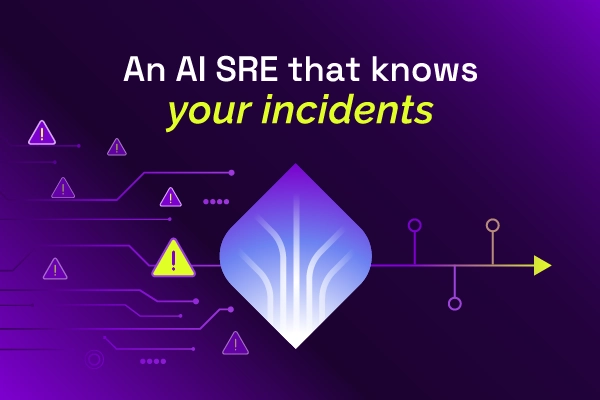
Most AI SREs are pattern matchers trained on public data. They know what a memory leak looks like in the abstract. They don't know that your payments-api has a flaky liveness probe everyone ignores, that the checkout team owns the retry policy, or that the last three "database incidents" were actually cache misconfigurations. That knowledge lives in your postmortems, your Slack channels, and the heads of two senior engineers.
Most vendors will tell you ITSM implementation takes six months to a year — but modern, configuration-first platforms have rewritten the math entirely. See what real implementations look like in 2026, and why a long rollout is now a choice, not a given.

.webp)
.webp)
.webp)