




Blog
Insights & updates from our experts


Resolve plant floor and IT issues before they disrupt production.

Stay audit-ready while resolving issues and reducing operational risk.
Resolve issues quickly with an AI-powered system that automates ticketing.
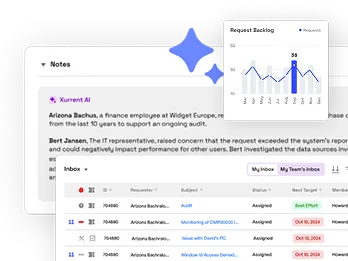
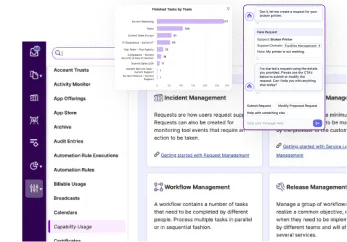
Unifiy IT, HR, Facilities, Finance, and more on a single, AI-powered service platform.
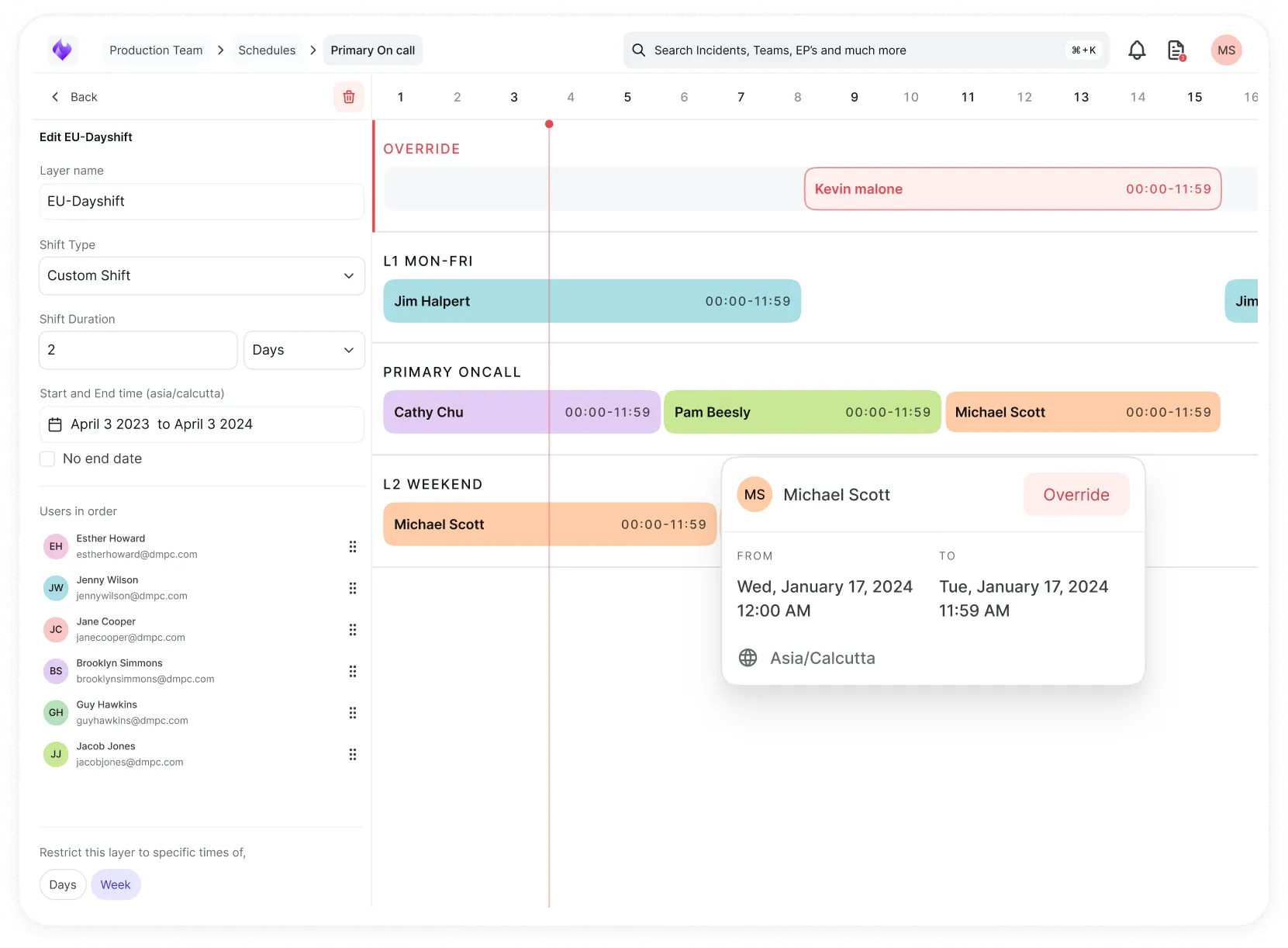
Simplify on-call scheduling, automate escalations, and reduce burnout.
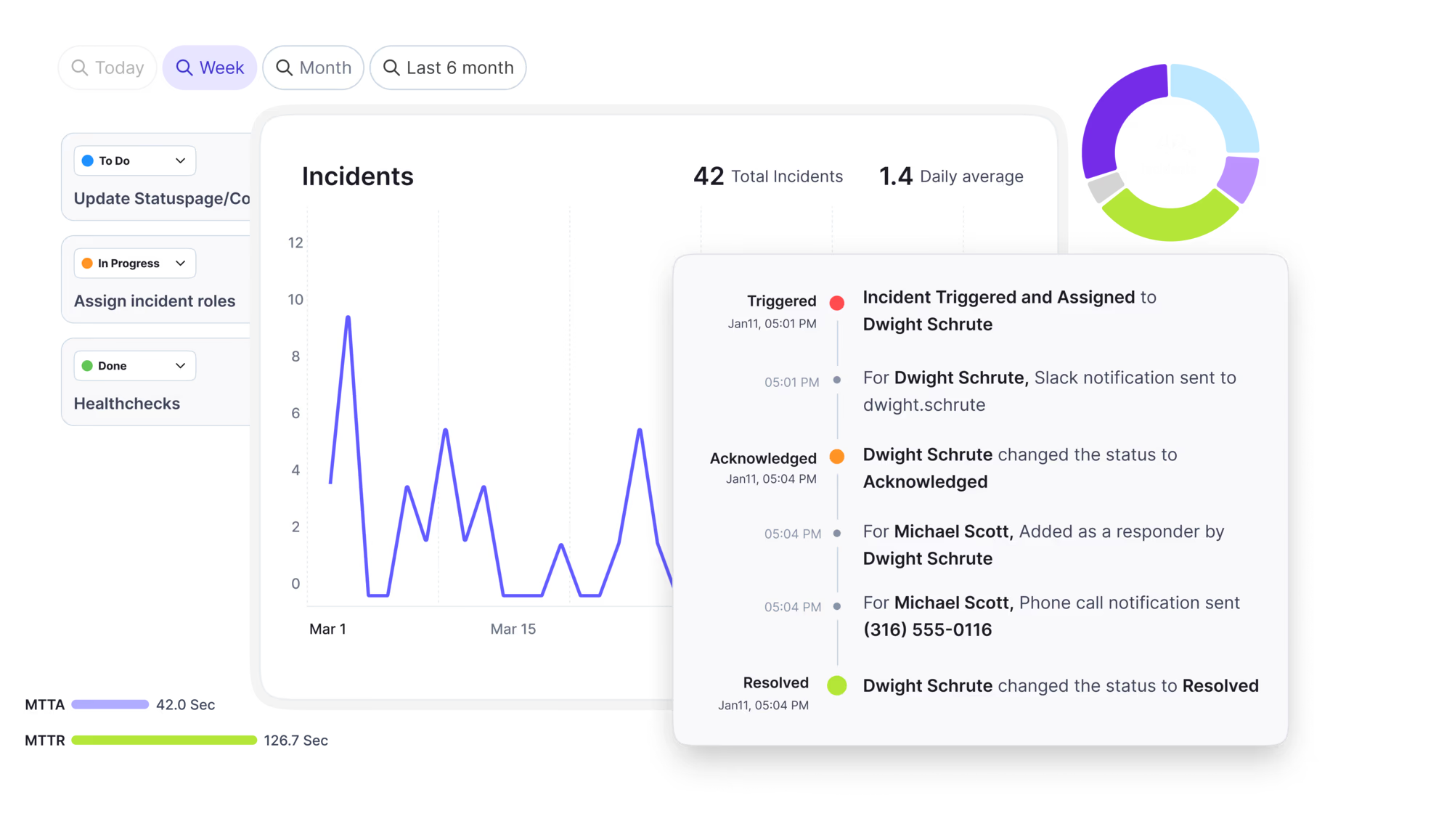
Automate postmortems, AI summaries, and post-incident workflows
Create, organize, and continuously improve your knowledge base to find the right answers with Sera AI.
We're here to help

The integration with Atlassian Jira using the Xurrent Integration Service is

The integration with Atlassian Jira using the Xurrent Integration Service is

The integration with Atlassian Jira using the Xurrent Integration Service is

The integration with Atlassian Jira using the Xurrent Integration Service is

The integration with Atlassian Jira using the Xurrent Integration Service is

The integration with Atlassian Jira using the Xurrent Integration Service is

The integration with Atlassian Jira using the Xurrent Integration Service is

The integration with Atlassian Jira using the Xurrent Integration Service is
Resolve issues quickly with an AI-powered system that automates ticketing.
Unifiy IT, HR, Facilities, Finance, and more on a single, AI-powered service platform.
Simplify on-call scheduling, automate escalations, and reduce burnout.
Automate postmortems, AI summaries, and post-incident workflows
Create, organize, and continuously improve your knowledge base to find the right answers with Sera AI.
Resolve plant floor and IT issues before they disrupt production.
Stay audit-ready while resolving issues and reducing operational risk.

Detect, respond, and resolve incidents fast to cut downtime and MTTR.

Keep your store online, even during your biggest sales moments.

Protect patient data and resolve issues fast, so care teams stay focused on care.
Standardize service delivery across every store and channel.

We are here to help 24/7

Connect with other Xurrent Users

Get insights and tips on how to get the most out of Xurrent

Apps, APIs, and updates

Xurrent service functionality

Eliminate manual tasks, optimize workflows, and deliver faster resolutions.
Learn how organizations have reduced downtime, improved 50% MTTA & MTTR, and cut costs with Xurrent IMR.
Discover Xurrent IMR's quick support, bidirectional integrations with Jira and Slack, and more cohesive incident response capabilities compared to Opsgenie.
Understand why users value Xurrent IMR for its intuitive interface, efficient incident alerting, customizable On-call schedules, and escalations.
Ivanti covers a lot of ground—ITSM, endpoint management, security, asset lifecycle—but that breadth comes with trade-offs. Configuration complexity, slow support cycles, and a fragmented product portfolio (the result of multiple acquisitions) leave many IT teams wondering if a more focused platform could deliver faster results with less overhead.
This guide breaks down why organizations are moving away from Ivanti, what to prioritize when evaluating alternatives, and how ten leading ITSM platforms compare on deployment speed, AI maturity, and unified service delivery.
Ivanti covers a lot of ground—ITSM, endpoint management, security, and more. That breadth sounds appealing until you're the one trying to configure it. Many IT teams find that Ivanti's platform takes longer to set up than expected, support responses lag when issues get complex, and the total cost ends up higher than the initial quote suggested. If you're exploring Ivanti alternatives, you're probably weighing whether a more focused platform could get you to value faster without the overhead.
Getting Ivanti workflows running the way you want often means bringing in consultants or dedicating weeks to training. The platform offers flexibility, but that flexibility comes with a learning curve that delays go-live timelines. Modern ITSM tools take a different approach—configuration over customization—so teams can deploy core processes in weeks rather than months.
When something breaks in production, waiting days for a support response isn't just frustrating—it's risky. Ivanti users frequently mention that escalations take longer than expected, especially for issues that require deep product knowledge. Fast, knowledgeable support is one of the first things teams look for in an alternative.
Ivanti's built-in reporting can feel rigid. If the default dashboards don't show what you care about, you're often stuck exporting data manually or layering on third-party tools. Teams evaluating alternatives typically prioritize platforms with flexible, pre-built analytics that surface actionable insights without workarounds.
Licensing is just the starting point. Add implementation, customization, and ongoing maintenance, and the total cost climbs quickly. Mid-market teams without dedicated platform administrators feel this most acutely. Predictable, transparent pricing is a common reason organizations start looking elsewhere. For a closer look at Ivanti’s pricing structure and what goes into the total cost.
Ivanti has grown through acquisitions—MobileIron, Pulse Secure, Cherwell, and others. While this expands capability on paper, it can create a disjointed experience across modules. Teams seeking a unified alternative to Ivanti often cite this fragmentation as a primary driver for change.
Before comparing vendors, it helps to define what actually matters for your team. The following criteria separate modern ITSM platforms from legacy suites.
There's a difference between AI that's bolted on as a chatbot and AI that's woven into every workflow. Look for platforms where machine learning handles ticket classification, routing, and knowledge suggestions automatically—without requiring you to build and maintain complex rules.
ITIL (Information Technology Infrastructure Library) is a framework of best practices for managing IT services. Platforms with certified ITIL coverage—Incident, Problem, Change, Request, Knowledge, and related practices—deliver process maturity out of the box. You're not building from scratch; you're configuring what's already there.
Heavy customization creates technical debt. Every custom script or workflow becomes something you have to maintain through upgrades. Configuration-first platforms use low-code workflows and pre-built templates to get core processes live quickly. Some modern tools can deploy in as few as four weeks.
Enterprise buyers expect ISO 27001, SOC 2 Type II, and BYOK (Bring Your Own Key) encryption as baseline requirements. AI data isolation matters too—if a vendor's models train on customer data, that introduces risk many organizations can't accept.
ITOM (IT Operations Management) handles infrastructure monitoring and automation. IMR (Incident Management and Response) coordinates resolution during outages. When these capabilities live in separate tools, handoffs slow down and context gets lost between teams. Unified platforms connect service requests, alerts, and incidents in one workflow—so IT and engineering operate from the same source of truth.
The following platforms represent the strongest Ivanti alternatives for IT service management in 2026. Each is evaluated for ITSM capabilities, deployment speed, and AI maturity.
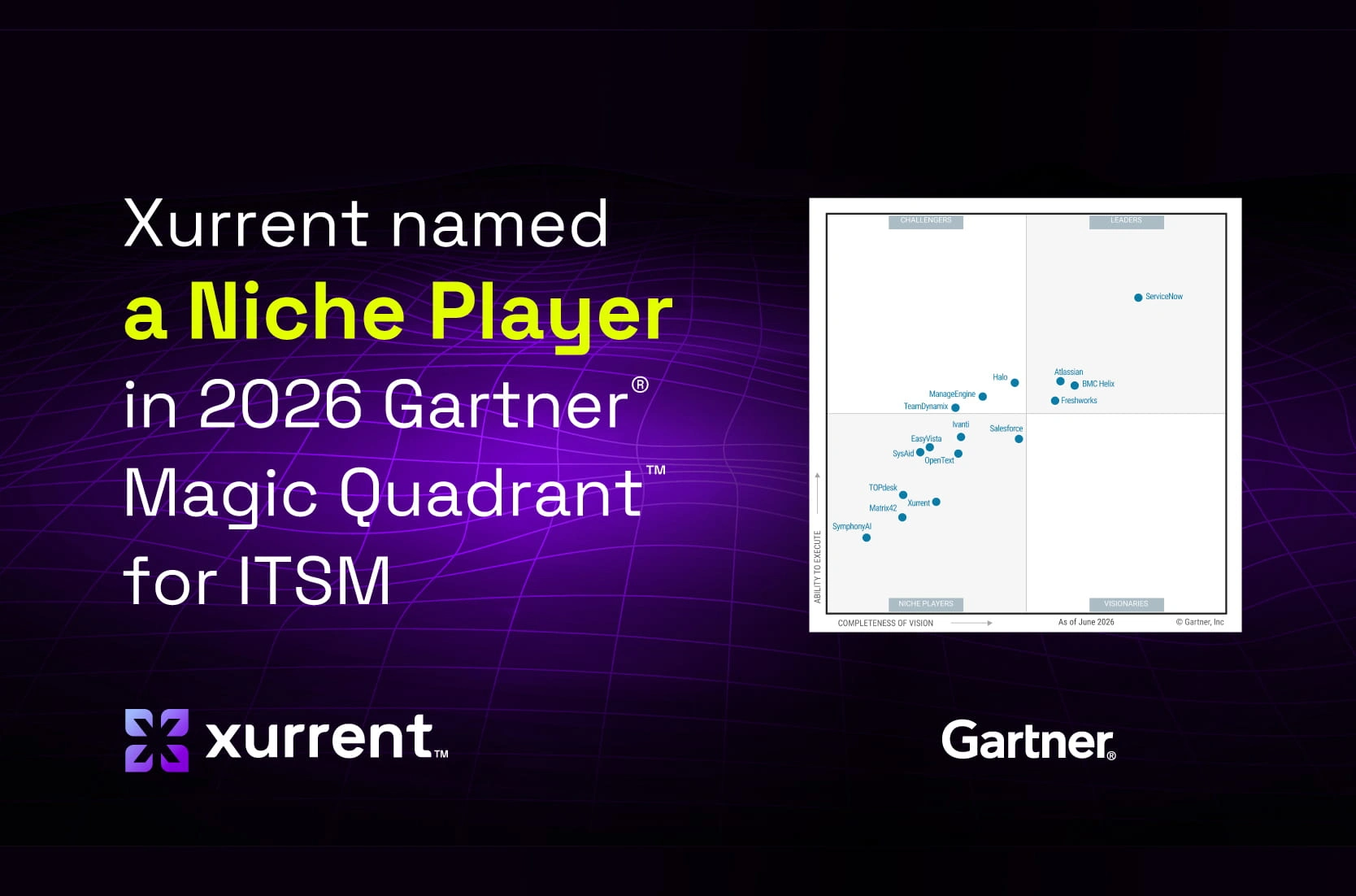
Xurrent brings ITSM, ITOM, and incident response together on one platform. With 19 ITIL-accredited practices, Sera AI embedded directly into workflows, and sub-350ms response times, Xurrent delivers enterprise-grade functionality without enterprise-grade complexity. Teams go live in as few as four weeks using configuration-first deployment.
ServiceNow dominates the enterprise ITSM market with broad capabilities spanning IT, HR, and customer service. That depth comes with complexity—implementations typically require dedicated platform teams and significant investment.
Jira Service Management appeals to engineering-centric teams already embedded in the Atlassian ecosystem. Tight DevOps integration makes it strong for incident response, though it offers less depth in traditional ITIL practices.
BMC Helix provides enterprise ITSM with strong ITIL coverage and AI-powered service management. Like other legacy platforms, it can be complex to implement and maintain.
Freshservice offers a user-friendly, cloud-native ITSM experience popular with mid-market teams. Solid automation and a clean interface make it accessible, though it may lack depth for complex enterprise service management.
SolarWinds Service Desk provides cost-effective ITSM with integrated IT operations monitoring. Recent security incidents have raised concerns for some buyers.
ManageEngine delivers broad feature coverage at competitive price points. The platform can require more manual configuration than modern AI-native alternatives.
HaloITSM is an emerging ITIL-aligned platform with competitive pricing and growing feature depth. Its ecosystem is smaller than established vendors, but it's gaining traction.
SysAid combines ITSM with built-in asset management and automation capabilities. AI features are less mature than newer entrants to the market.
TOPdesk originated in Europe and excels in facilities management and shared services. Ease of use is a strength, though deep ITOM integration is limited.
Matching your requirements to the right platform depends on team size, ITIL maturity, integration needs, and budget. The following questions can guide your evaluation.
Evaluation Criteria
Questions to Ask
Deployment speed
Can we go live in weeks, not months?
AI capabilities
Is AI embedded or a bolt-on add-on?
ITIL coverage
Which certified practices are included?
Total cost
What's included vs. add-on pricing?
Unified platform
Does it connect ITSM, ITOM, and incidents?
Teams with mature ITIL processes typically prioritize certified practice coverage and analytics depth. Organizations focused on speed often weight deployment timelines and configuration simplicity more heavily. And if your IT and engineering teams currently operate in separate systems, a unified platform can eliminate the handoffs that slow resolution.
Switching platforms doesn't have to be disruptive. A phased approach reduces risk and builds confidence before full rollout.
Start by documenting your current Ivanti configurations, automations, and third-party integrations. Understanding what exists today prevents surprises during migration and helps you identify which workflows to prioritize.
Decide which ITIL practices—Incident, Change, Request, Problem—go live first. Set measurable success criteria like MTTR (mean time to resolution), first-contact resolution rate, and ticket volume by channel.
Pilot the new platform with a single team or service before expanding. Configuration-first platforms let you validate workflows quickly without heavy development. This is also a good time to test integrations with monitoring tools and ChatOps.
Move tickets, assets, and knowledge articles in phases. Decommission Ivanti modules incrementally as teams adopt the new platform. A phased approach keeps operations stable while you transition.
The best Ivanti alternatives eliminate the fragmentation that slows teams down. When service requests, infrastructure alerts, and incident response flow through one connected platform, handoffs disappear and resolution accelerates.
Modern platforms built on configuration over customization let teams go live faster, while embedded AI reduces manual triage and keeps knowledge current. For organizations ready to move beyond legacy complexity, unified service management delivers the operational resilience that high-velocity teams require.

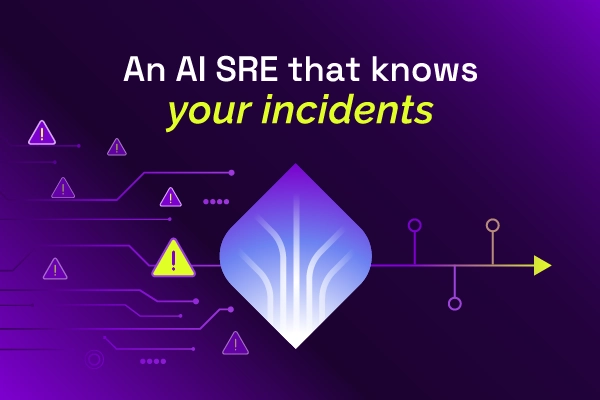
Most AI SREs are pattern matchers trained on public data. They know what a memory leak looks like in the abstract. They don't know that your payments-api has a flaky liveness probe everyone ignores, that the checkout team owns the retry policy, or that the last three "database incidents" were actually cache misconfigurations. That knowledge lives in your postmortems, your Slack channels, and the heads of two senior engineers.
Most vendors will tell you ITSM implementation takes six months to a year — but modern, configuration-first platforms have rewritten the math entirely. See what real implementations look like in 2026, and why a long rollout is now a choice, not a given.

.webp)
.webp)
.webp)