




Blog
Insights & updates from our experts


Resolve plant floor and IT issues before they disrupt production.

Stay audit-ready while resolving issues and reducing operational risk.
Resolve issues quickly with an AI-powered system that automates ticketing.
Unifiy IT, HR, Facilities, Finance, and more on a single, AI-powered service platform.
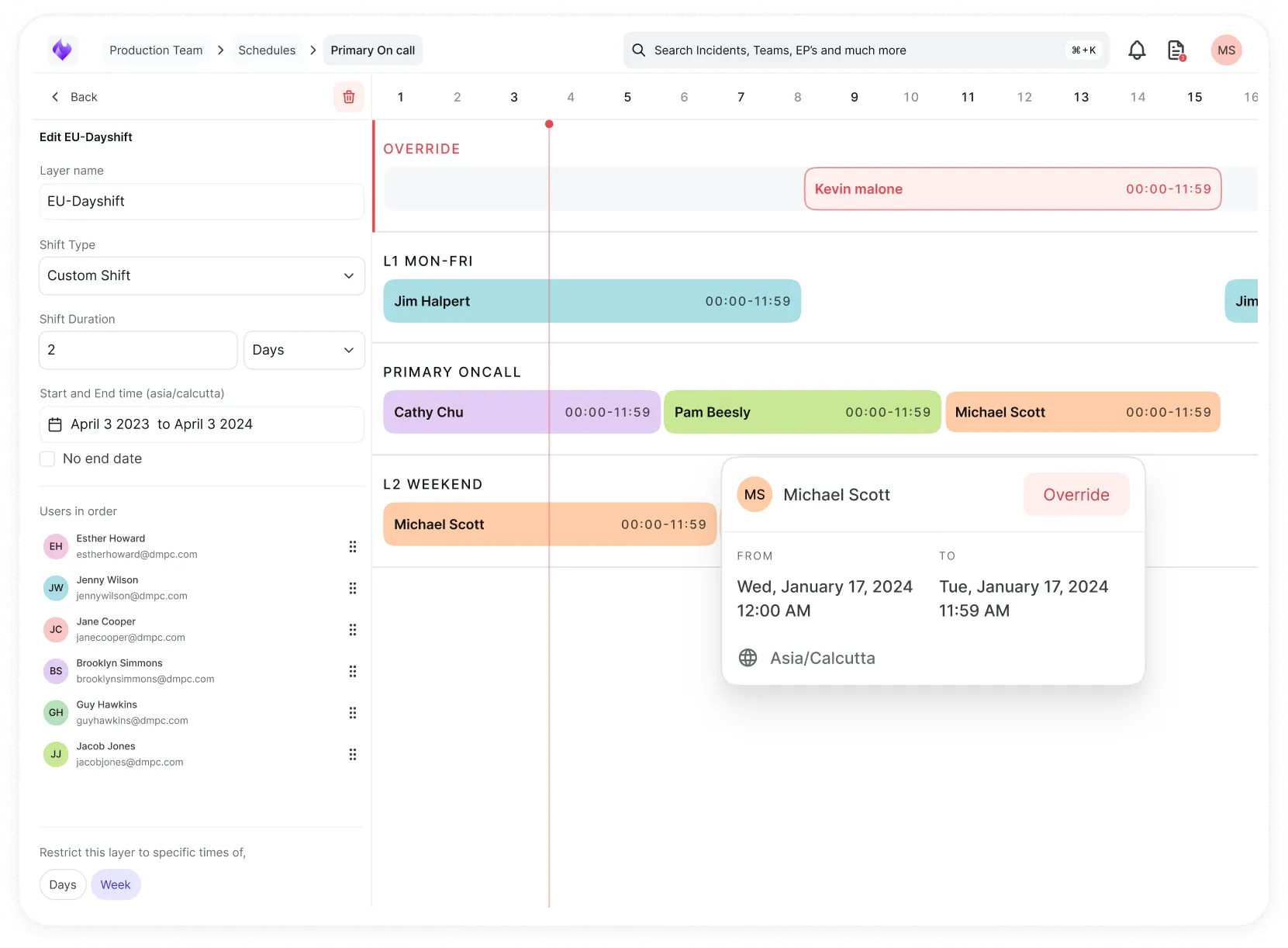
Simplify on-call scheduling, automate escalations, and reduce burnout.
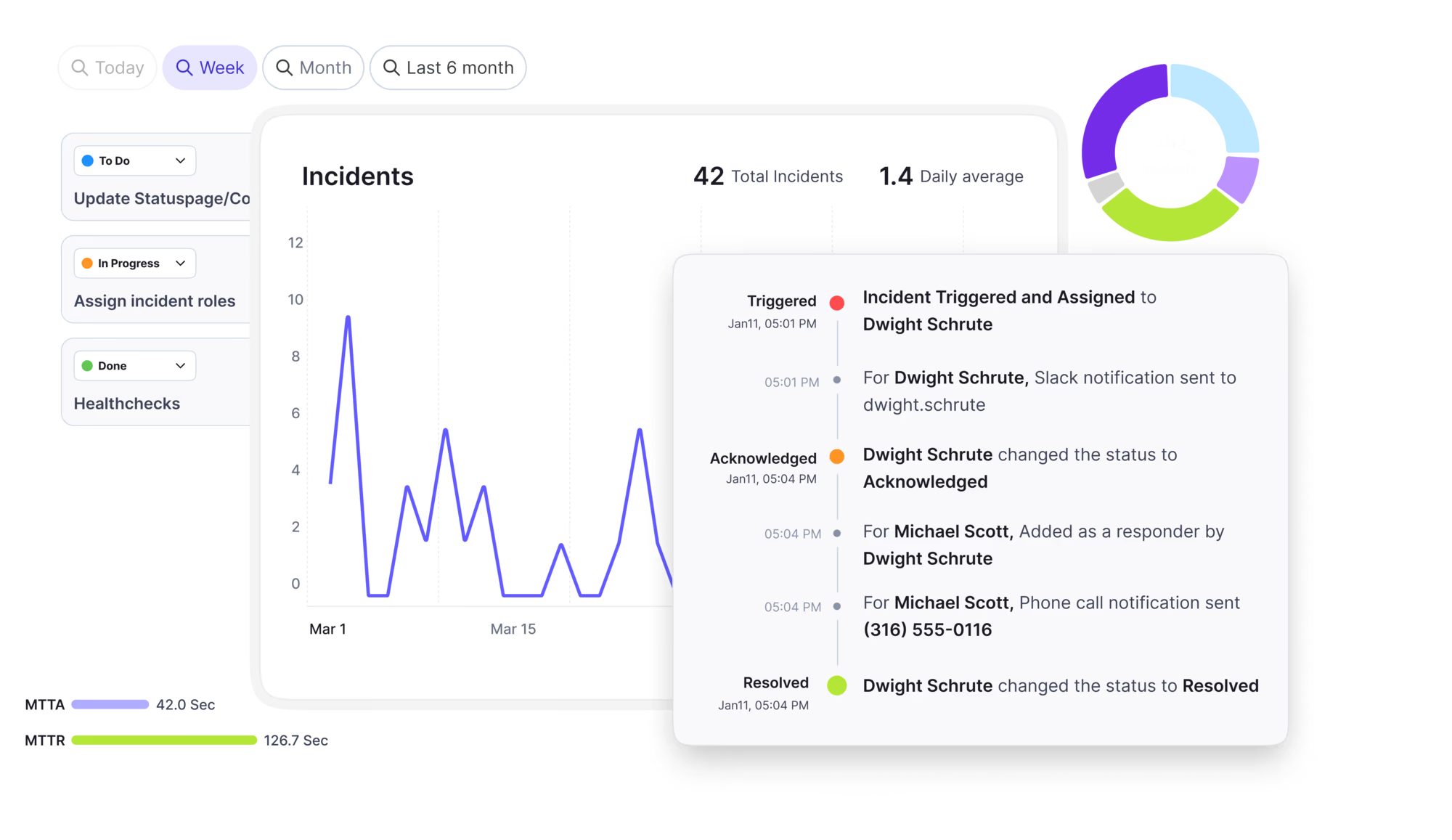
Automate postmortems, AI summaries, and post-incident workflows
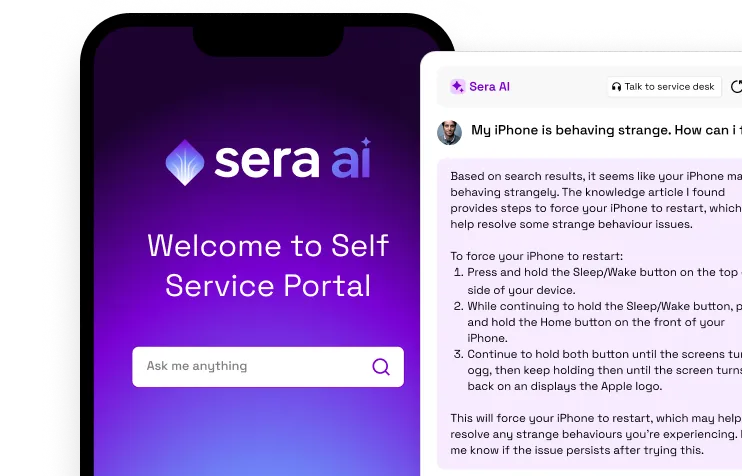
Create, organize, and continuously improve your knowledge base to find the right answers with Sera AI.
We're here to help

The integration with Atlassian Jira using the Xurrent Integration Service is

The integration with Atlassian Jira using the Xurrent Integration Service is

The integration with Atlassian Jira using the Xurrent Integration Service is

The integration with Atlassian Jira using the Xurrent Integration Service is

The integration with Atlassian Jira using the Xurrent Integration Service is

The integration with Atlassian Jira using the Xurrent Integration Service is

The integration with Atlassian Jira using the Xurrent Integration Service is

The integration with Atlassian Jira using the Xurrent Integration Service is
Resolve issues quickly with an AI-powered system that automates ticketing.
Unifiy IT, HR, Facilities, Finance, and more on a single, AI-powered service platform.
Simplify on-call scheduling, automate escalations, and reduce burnout.
Automate postmortems, AI summaries, and post-incident workflows
Create, organize, and continuously improve your knowledge base to find the right answers with Sera AI.
Resolve plant floor and IT issues before they disrupt production.
Stay audit-ready while resolving issues and reducing operational risk.

Detect, respond, and resolve incidents fast to cut downtime and MTTR.

Keep your store online, even during your biggest sales moments.

Protect patient data and resolve issues fast, so care teams stay focused on care.

Standardize service delivery across every store and channel.

We are here to help 24/7

Connect with other Xurrent Users

Get insights and tips on how to get the most out of Xurrent

Apps, APIs, and updates

Xurrent service functionality

Eliminate manual tasks, optimize workflows, and deliver faster resolutions.
Learn how organizations have reduced downtime, improved 50% MTTA & MTTR, and cut costs with Xurrent IMR.
Discover Xurrent IMR's quick support, bidirectional integrations with Jira and Slack, and more cohesive incident response capabilities compared to Opsgenie.
Understand why users value Xurrent IMR for its intuitive interface, efficient incident alerting, customizable On-call schedules, and escalations.

An incident response playbook is a tactical, step-by-step guide that documents exact procedures, roles, and communication protocols for handling specific cybersecurity or operational events. Its purpose is simple: when something breaks, your team follows a proven path instead of improvising under pressure.
The difference between a 20-minute resolution and a 4-hour scramble often comes down to whether someone documented what to do before the incident happened. This guide covers how playbooks work, what components they include, and how to build one that actually gets used when it matters.
An incident response playbook is a tactical, step-by-step guide that outlines exact procedures, roles, and communication protocols for handling specific cybersecurity or operational events. Think of it as a detailed recipe for responding to a particular type of incident—ransomware, phishing, data breach, or service outage—so your team knows exactly what to do when things go wrong.
The primary goal is straightforward: accelerate response times, minimize damage, and ensure a standardized, repeatable approach. When an incident hits at 2 AM and your most experienced engineer is on vacation, a playbook gives whoever's on call the same decision-making framework that expert would use.
Every playbook typically covers four core elements:
Without a playbook, teams default to improvisation. Someone forgets to preserve evidence. Another person isn't sure who has authority to take a server offline. Meanwhile, the incident spreads while everyone figures out what happens next.
Playbooks eliminate that guesswork. They reduce mean time to resolution (MTTR) because responders spend less time deciding and more time doing. Even junior team members can execute effectively when they have clear, documented steps to follow.
There's also a compliance angle. Frameworks like SOC 2, ISO 27001, and PCI DSS require documented incident response procedures. A well-maintained playbook satisfies auditors while actually helping your team perform better—not just checking a box.
People use these terms interchangeably, but they serve different purposes. Understanding the distinction helps you build the right documentation for each situation.
Most effective playbooks follow the NIST Incident Response Lifecycle, the most widely adopted framework for structuring response activities. NIST breaks incident response into distinct phases, and your playbook covers what happens at each stage for a specific incident type.
Preparation happens before any incident occurs. You're getting the team and environment ready so response goes smoothly when something breaks.
This phase includes defining roles using a RACI matrix (Responsible, Accountable, Consulted, Informed), maintaining an updated asset inventory, enabling logging across your environment, and running tabletop exercises. The goal is making sure everyone knows their part before the pressure hits.
Here you identify the threat and figure out how bad it is. Alert triage comes first—verifying whether the alert represents a real threat or a false positive.
Once you confirm something's wrong, you classify the incident by type (malware, unauthorized access, data exfiltration) and assign a severity level. A Critical incident might trigger the full IR team and executive notification, while a Medium incident could be handled by the core team alone. Severity classification drives how urgently you respond.
Containment stops the bleeding. Short-term containment happens immediately—isolating affected systems, revoking compromised credentials, blocking malicious IPs.
Long-term containment involves temporary fixes while you prepare for eradication. You might segment a compromised network area or add monitoring on affected systems while the investigation continues. The point is preventing the incident from spreading further.
Eradication removes the threat entirely: deleting malicious files, patching the vulnerability that allowed access, resetting all compromised credentials. Recovery brings systems back online from clean, verified backups.
A phased return to service works best here. Bring systems back gradually while watching for signs that eradication wasn't complete or that attackers left behind secondary access.
This phase is where learning happens. Conduct a post-mortem to document what happened, why it happened, and what could prevent it from happening again.
Review the response itself: where did the playbook work well, and where did it fall short? Update the playbook based on what you learned. This feedback loop separates mature incident response programs from teams that keep making the same mistakes.
Beyond following the NIST phases, effective playbooks share common building blocks that make them usable under pressure.
Every playbook defines who does what with zero ambiguity. When an incident is active, nobody has time to figure out who's in charge.
Document both internal communication (CISO, Legal, PR, executives) and external communication (customers, partners, regulators). Pre-drafted templates save critical time when you're in the middle of an active incident.
Escalation criteria specify what severity triggers executive notification, when to engage legal counsel, and when external parties like regulators require notification. Having this documented prevents awkward "should we tell the CEO?" debates at 3 AM.
Playbooks specify which tools get used at each phase—monitoring platforms, SIEM/SOAR systems, ticketing tools, and communication channels. Modern platforms can automate playbook steps like routing, timeline generation, and status updates, reducing manual work during high-stress situations.
Tip: Platforms that unify ITSM and incident management create a connected flow from detection to resolution. When service management and incident response share a single workflow, playbooks execute faster with consistent visibility across teams.
Building a playbook follows a logical sequence from scoping through testing.
Each playbook addresses one specific incident type. Document what events activate the playbook, what's in scope versus out of scope, and severity thresholds that determine response intensity. A ransomware playbook has different triggers than a DDoS playbook.
Document who handles each action. Define escalation authority—who can make critical decisions like taking production systems offline. Include backup assignments for when primary responders are unavailable.
Write out each step in sequence with clear decision points. Specify criteria for moving between phases and what success looks like at each stage. Vague guidance fails during real incidents; procedures need enough detail to execute under pressure.
Connect the playbook to your existing tooling—monitoring, ITSM, and communication platforms. Identify steps that can be automated: alert routing, status updates, timeline generation, and postmortem documentation.
Platforms with codeless integrations can connect playbooks to observability and collaboration tools without custom development, cutting the time from playbook creation to operational use.
Run tabletop exercises to validate the playbook before a real incident tests it for you. Identify gaps and unclear steps through simulation, then schedule regular reviews even when incidents don't occur. Playbooks are living documents, not one-time deliverables.
Free Analyst Report: Unlock EMA's Findings on Faster, Smarter Incident Response
Organizations typically maintain multiple playbooks for different incident types. Each follows the same structural framework but with scenario-specific procedures.
Service outages require coordinated incident and status communication. Platforms that sync incidents to status pages automatically reduce manual overhead when teams are already stretched thin.
Aligning to recognized frameworks ensures completeness and supports compliance requirements.
NIST Incident Response Lifecycle provides the four-phase model (Preparation, Detection & Analysis, Containment/Eradication/Recovery, Post-Incident Activity) referenced throughout this guide. NIST SP 800-61 is the source document.
SANS Incident Handling Process offers a six-step model that breaks phases slightly differently: Preparation, Identification, Containment, Eradication, Recovery, and Lessons Learned. Some teams prefer the more granular breakdown.
MITRE ATT&CK is a knowledge base of adversary tactics and techniques. Teams map playbooks to specific ATT&CK techniques for threat-specific response, which is particularly valuable for security-focused playbooks addressing sophisticated attacks.
Untested playbooks often fail when you actually need them. Testing methods range from low-effort to high-fidelity:
Maintenance requires updating after every real incident, scheduling periodic reviews even without incidents, and revising when tools, team members, or infrastructure changes. A playbook that reflects last year's environment won't help you respond to today's incidents.
Manual playbook execution introduces delays and errors. When IT and engineering operate in different systems, work slows down and teams spend more time coordinating than resolving.
Automation addresses the most time-consuming parts of incident response:
Platforms combining ITSM and incident management create a connected flow from detection to resolution with shared visibility. ChatOps integration brings playbook execution into Slack or Teams where teams already work, so responders don't have to context-switch between tools.
Most AI SREs are pattern matchers trained on public data. They know what a memory leak looks like in the abstract. They don't know that your payments-api has a flaky liveness probe everyone ignores, that the checkout team owns the retry policy, or that the last three "database incidents" were actually cache misconfigurations. That knowledge lives in your postmortems, your Slack channels, and the heads of two senior engineers.
Same incident, different shift, same lost time. See why legacy ITSM keeps costing manufacturing IT teams in rework and overtime, and how modern incident and knowledge management breaks the cycle.
Most AI SREs are pattern matchers trained on public data. They know what a memory leak looks like in the abstract. They don't know that your payments-api has a flaky liveness probe everyone ignores, that the checkout team owns the retry policy, or that the last three "database incidents" were actually cache misconfigurations. That knowledge lives in your postmortems, your Slack channels, and the heads of two senior engineers.
Most vendors will tell you ITSM implementation takes six months to a year — but modern, configuration-first platforms have rewritten the math entirely. See what real implementations look like in 2026, and why a long rollout is now a choice, not a given.

.webp)
.webp)
.webp)