




Blog
Insights & updates from our experts


Resolve plant floor and IT issues before they disrupt production.

Stay audit-ready while resolving issues and reducing operational risk.
Resolve issues quickly with an AI-powered system that automates ticketing.
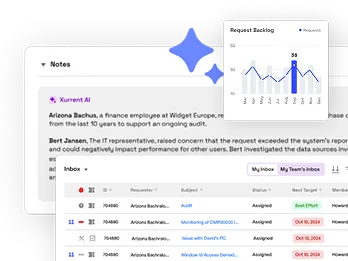
Unifiy IT, HR, Facilities, Finance, and more on a single, AI-powered service platform.
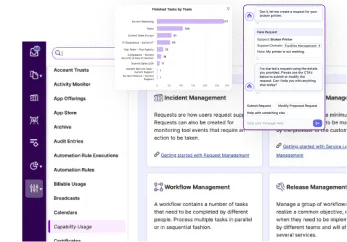
Simplify on-call scheduling, automate escalations, and reduce burnout.
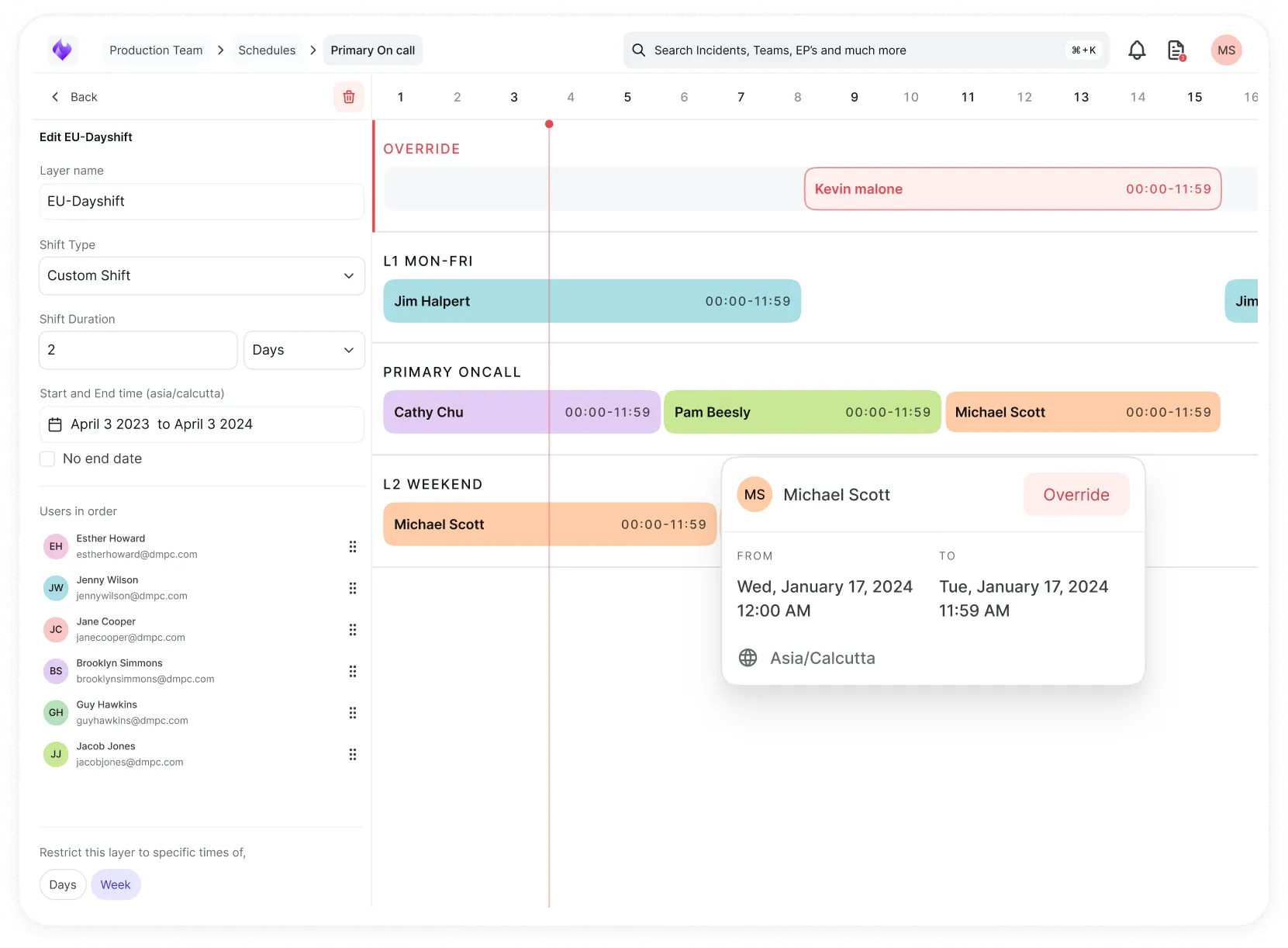
Automate postmortems, AI summaries, and post-incident workflows
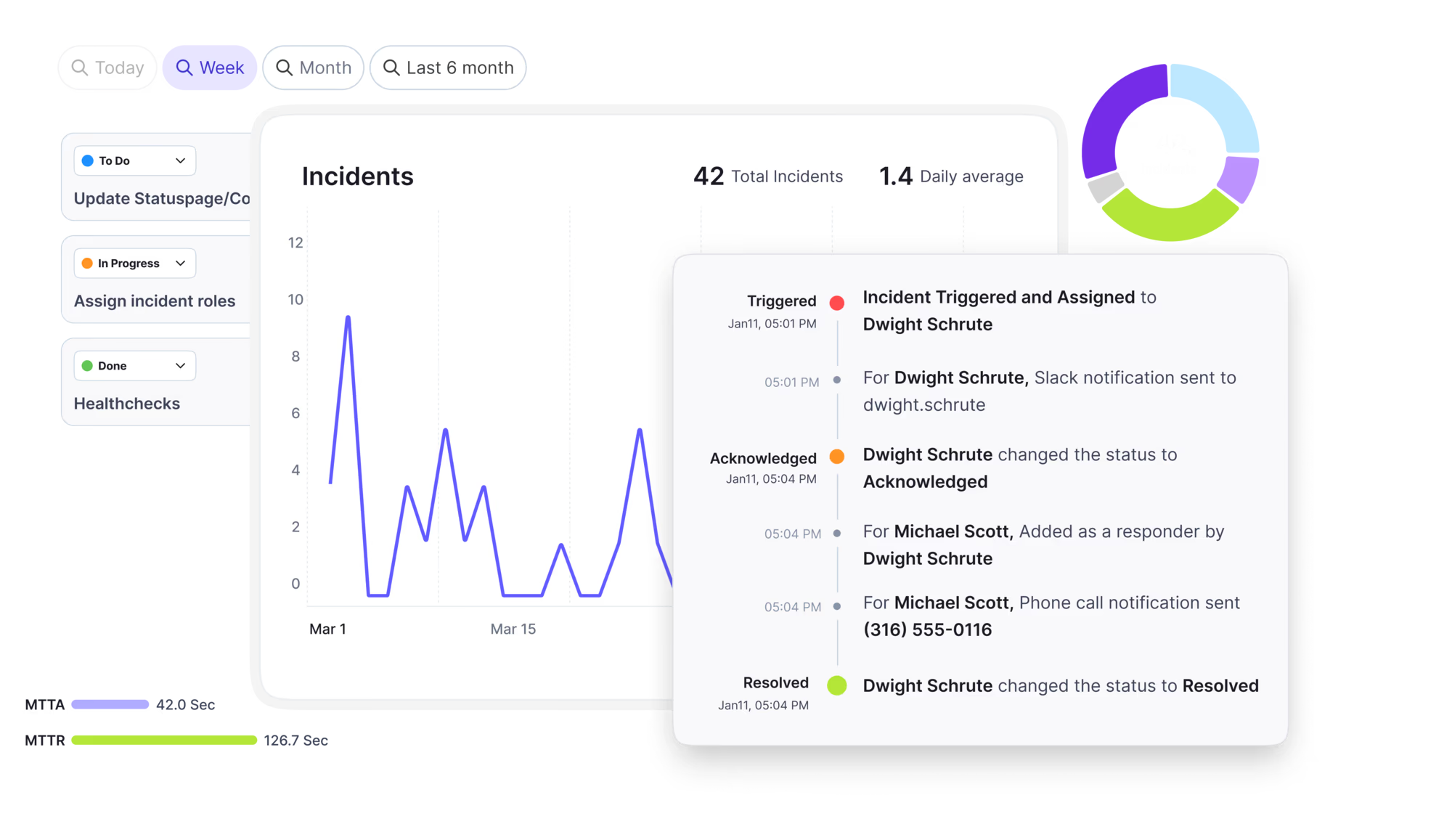
Create, organize, and continuously improve your knowledge base to find the right answers with Sera AI.
We're here to help

The integration with Atlassian Jira using the Xurrent Integration Service is

The integration with Atlassian Jira using the Xurrent Integration Service is

The integration with Atlassian Jira using the Xurrent Integration Service is

The integration with Atlassian Jira using the Xurrent Integration Service is

The integration with Atlassian Jira using the Xurrent Integration Service is

The integration with Atlassian Jira using the Xurrent Integration Service is

The integration with Atlassian Jira using the Xurrent Integration Service is

The integration with Atlassian Jira using the Xurrent Integration Service is
Resolve issues quickly with an AI-powered system that automates ticketing.
Unifiy IT, HR, Facilities, Finance, and more on a single, AI-powered service platform.
Simplify on-call scheduling, automate escalations, and reduce burnout.
Automate postmortems, AI summaries, and post-incident workflows
Create, organize, and continuously improve your knowledge base to find the right answers with Sera AI.
Resolve plant floor and IT issues before they disrupt production.
Stay audit-ready while resolving issues and reducing operational risk.

Detect, respond, and resolve incidents fast to cut downtime and MTTR.

Keep your store online, even during your biggest sales moments.

Protect patient data and resolve issues fast, so care teams stay focused on care.

Standardize service delivery across every store and channel.

We are here to help 24/7

Connect with other Xurrent Users

Get insights and tips on how to get the most out of Xurrent

Apps, APIs, and updates

Xurrent service functionality

Eliminate manual tasks, optimize workflows, and deliver faster resolutions.
Learn how organizations have reduced downtime, improved 50% MTTA & MTTR, and cut costs with Xurrent IMR.
Discover Xurrent IMR's quick support, bidirectional integrations with Jira and Slack, and more cohesive incident response capabilities compared to Opsgenie.
Understand why users value Xurrent IMR for its intuitive interface, efficient incident alerting, customizable On-call schedules, and escalations.
Fixing the same incident for the third time this month isn't just frustrating—it's a sign that something deeper is broken. Problem management software exists to break that cycle by helping teams find and fix root causes instead of endlessly treating symptoms.
This guide covers what problem management software actually does, the features that matter most, and how the top tools in 2026 compare across capabilities, AI maturity, and deployment speed.
Problem management software helps IT teams find the root causes behind repeated incidents so they can stop the same issues from happening again. Think of it this way: incident management is about putting out fires quickly, while problem management is about figuring out why fires keep starting in the first place.
Without dedicated problem management, teams often find themselves fixing the same issues over and over. You restore service, close the ticket, and move on—only to see the same symptom pop up next week. Problem management software breaks that cycle by linking related incidents to one root cause investigation, then tracking the permanent fix through to completion.
When you identify the actual root cause of an issue, you can fix it once and move on. Teams that rely only on incident management tend to stay stuck in reactive mode, handling the same problems repeatedly. Problem management shifts the focus from "how do we restore service right now" to "how do we make sure this never happens again."
Dedicated problem management tools give you structured workflows and historical data that speed up diagnosis. When multiple incidents link to a single problem record, patterns become obvious. Instead of piecing together information from scattered tickets, analysts can see connections immediately.
Fewer incidents and faster resolution mean less downtime and less time spent on repetitive troubleshooting. When your team isn't constantly firefighting, they can focus on improvements that prevent future issues entirely.
Stable services build trust. When disruptions become rare rather than routine, both internal users and external customers notice. People remember when things just work—and they definitely remember when they don't.
Incident-problem linking connects multiple incident tickets to a single underlying problem record. When three different teams report the same symptom, they all benefit from one coordinated root cause analysis instead of duplicating effort. This capability alone can dramatically reduce investigation time.
A known error database (KEDB) stores documented problems along with their workarounds or permanent fixes. When a familiar issue resurfaces, teams can resolve it quickly without starting from scratch. Over time, the KEDB becomes a living repository of institutional knowledge that survives staff turnover.
Modern problem management tools increasingly embed AI directly into workflows rather than bolting it on as a separate chatbot. AI can suggest root causes based on historical patterns, auto-prioritize tickets by business impact, and even predict service failures before they cause widespread disruption.
Reporting surfaces trends, measures how well fixes are working, and identifies recurring problem hotspots. Dashboards and historical data help teams understand where to focus improvement efforts and demonstrate progress over time.
ITIL-aligned or certified workflows standardize how teams handle incidents, problems, and changes. This consistency makes onboarding easier, maintains audit trails, and helps ensure nothing falls through the cracks during handoffs.
FeatureWhat It DoesWhy It MattersIncident-Problem LinkingConnects multiple incidents to one problemEliminates duplicate investigationKnown Error DatabaseStores documented problems and workaroundsSpeeds resolution of recurring issuesAI and AutomationSuggests root causes, auto-prioritizesReduces manual triage effortAnalytics and ReportingTracks trends and remediation successIdentifies problem hotspotsITIL AlignmentFollows standardized practicesEnsures consistent workflows
Selecting the right tool depends on your team's current maturity, integration requirements, and growth trajectory. A few key criteria to evaluate:
Xurrent unifies ITSM and incident response on a single platform with ITIL-certified problem management built in. Sera AI, embedded natively throughout the platform, suggests root causes, generates automated postmortems, and maintains knowledge bases without manual effort. The platform emphasizes configuration over customization, enabling deployments in as little as four weeks with sub-350ms response times. Enterprise security includes ISO 27001, SOC 2 Type II, C5 attestation, and BYOK encryption with AI data isolation.
ServiceNow offers a comprehensive enterprise ITSM platform with extensive automation across incident and problem lifecycles. The feature depth makes it well-suited for larger enterprises with complex requirements and dedicated platform teams. The learning curve can be steep, though the breadth of capabilities is substantial.
Jira Service Management integrates tightly with software development workflows and Confluence for knowledge sharing. The flexible incident and problem tracking capabilities make it a strong fit for engineering-centric teams already using the Atlassian ecosystem.
BMC Helix provides enterprise-grade ITSM with cognitive automation and AIOps capabilities. Multi-cloud support and predictive service management make it suited for large-scale IT operations with diverse infrastructure.
Freshservice is recognized for its user-friendly interface and robust ITIL modules. It serves as a good entry point for maturing IT teams that want structured problem management without overwhelming complexity.
SolarWinds Service Desk offers cloud-based ITSM with strong IT asset management integration. Automated incident-to-problem linking and detailed SLA tracking make it a solid choice for mid-market teams.
ManageEngine provides comprehensive ITSM with systematic problem handling and multi-tenant support. Workflow automation for problem-solving processes makes it particularly strong for managed service providers.
Ivanti Neurons combines ITSM with IT asset management and endpoint security through hyper-automation capabilities. The broad IT operations coverage suits enterprises seeking consolidated tooling.
SysAid emphasizes AI-first problem management with built-in Copilot for root cause analysis and relationship mapping. Teams prioritizing AI-driven workflows will find the focus on breaking recurring issue cycles compelling.
HaloITSM delivers ITIL-aligned workflows with straightforward implementation and competitive pricing. Mid-sized organizations often find the out-of-the-box capabilities sufficient without extensive configuration.
Traditional problem management relied heavily on experienced analysts who could recognize patterns across incidents. That expertise doesn't scale well, and it walks out the door when people leave. AI changes the equation.
The most effective problem management software now embeds AI directly into workflows rather than relying on separate tools. Platforms like Xurrent integrate Sera AI throughout the problem lifecycle, from initial detection through resolution and knowledge capture. Native AI can access full context across incidents, problems, and changes—making suggestions more accurate and automation more reliable.
Problem management doesn't exist in isolation. When a root cause is identified, implementing a permanent fix often requires a change to production systems. Unified platforms create a connected flow from incident detection to problem resolution to change implementation.
When IT and engineering operate in different systems, this flow breaks down. Handoffs slow, context gets lost, and teams end up reacting instead of anticipating. A centralized platform keeps everyone working from the same information.
Proactive problem identification reduces service outages and improves SLA performance over time. Mature problem management practices help teams anticipate issues instead of only reacting to them. This shift compounds as the known error database grows and AI models learn from historical patterns.
Operational resilience depends on this proactive stance. When teams can identify and address problems before they cause widespread impact, service stability becomes predictable rather than aspirational.
The difference between reactive and proactive IT operations often comes down to tooling. Teams stuck in firefighting mode typically lack the structured workflows, incident-problem linking, and historical visibility that make root cause analysis practical.
Modern problem management software unifies service, incident, and operations workflows so every request, alert, and update moves through a consistent process. When that foundation is in place, teams can finally shift from asking "what broke?" to asking "how do we prevent this from ever happening again?"

Most AI SREs are pattern matchers trained on public data. They know what a memory leak looks like in the abstract. They don't know that your payments-api has a flaky liveness probe everyone ignores, that the checkout team owns the retry policy, or that the last three "database incidents" were actually cache misconfigurations. That knowledge lives in your postmortems, your Slack channels, and the heads of two senior engineers.
Most vendors will tell you ITSM implementation takes six months to a year — but modern, configuration-first platforms have rewritten the math entirely. See what real implementations look like in 2026, and why a long rollout is now a choice, not a given.


.webp)
.webp)

.webp)