



Blog
Insights & updates from our experts


Resolve plant floor and IT issues before they disrupt production.

Stay audit-ready while resolving issues and reducing operational risk.
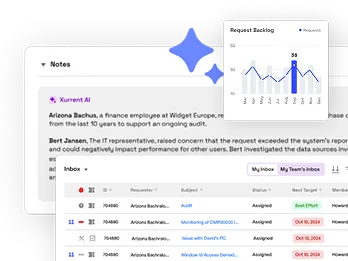
Resolve issues quickly with an AI-powered system that automates ticketing.
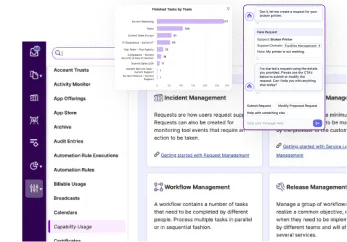
Unifiy IT, HR, Facilities, Finance, and more on a single, AI-powered service platform.
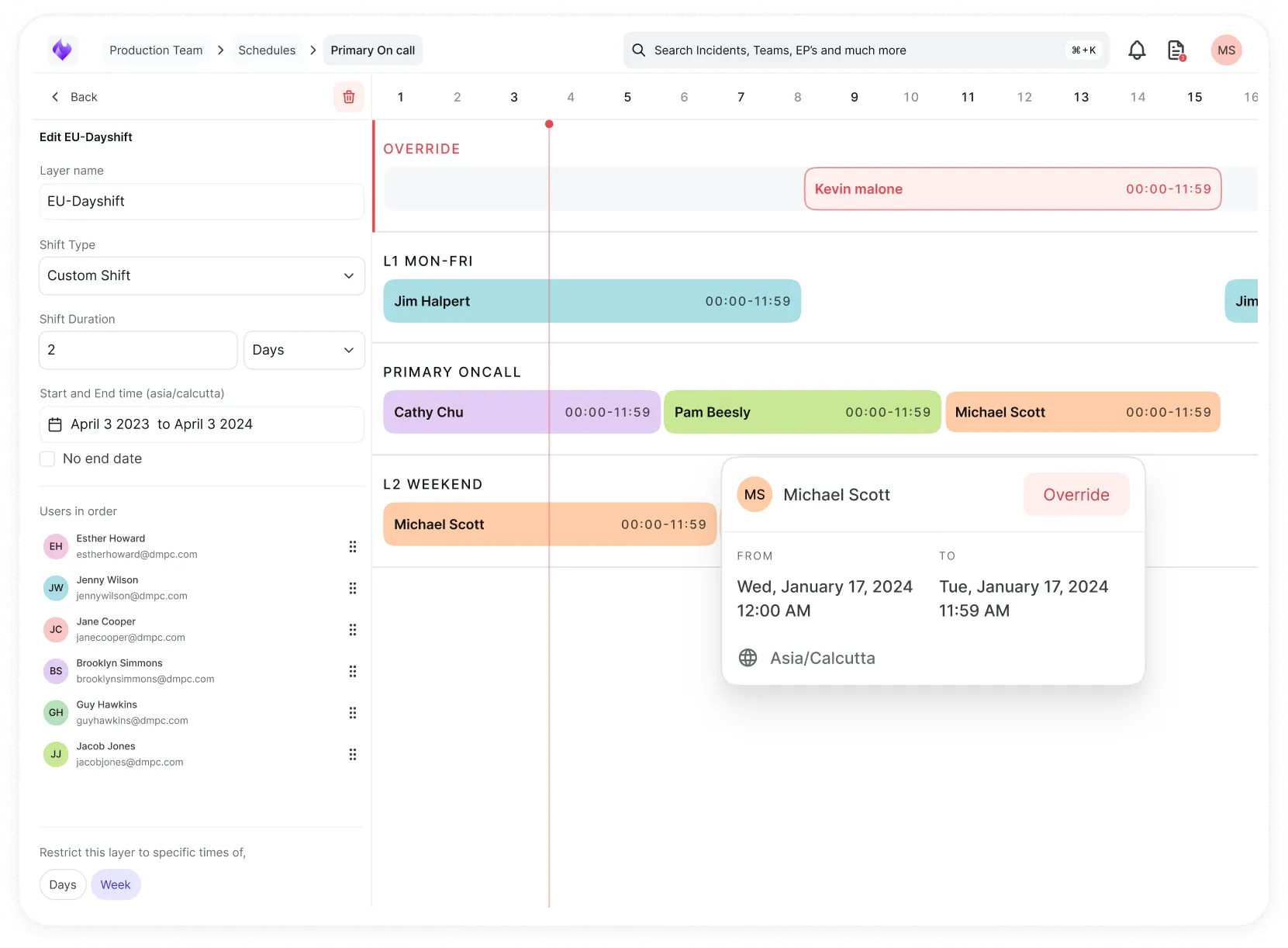
Simplify on-call scheduling, automate escalations, and reduce burnout.
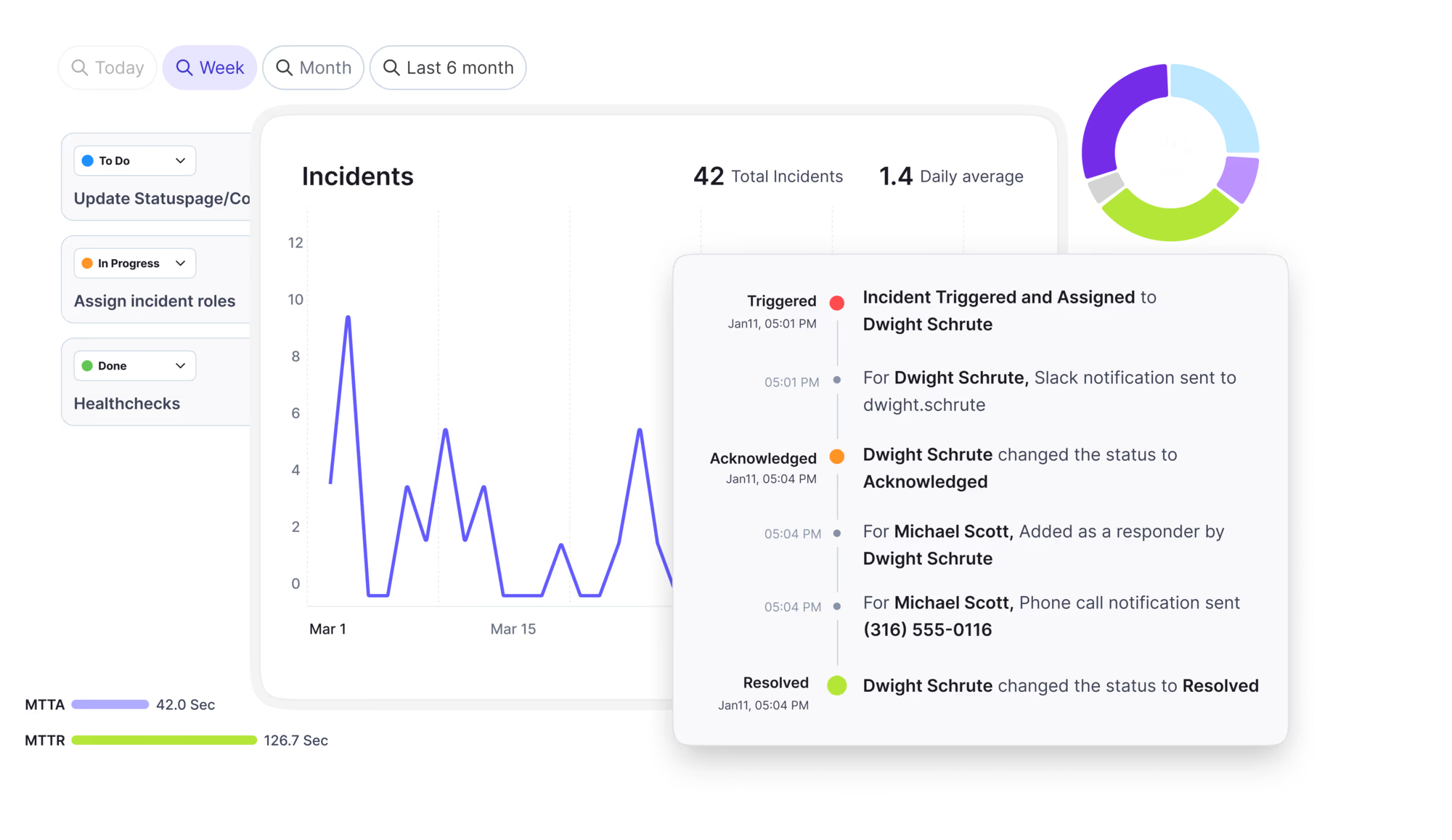
Automate postmortems, AI summaries, and post-incident workflows
Create, organize, and continuously improve your knowledge base to find the right answers with Sera AI.
We're here to help

The integration with Atlassian Jira using the Xurrent Integration Service is

The integration with Atlassian Jira using the Xurrent Integration Service is

The integration with Atlassian Jira using the Xurrent Integration Service is

The integration with Atlassian Jira using the Xurrent Integration Service is

The integration with Atlassian Jira using the Xurrent Integration Service is

The integration with Atlassian Jira using the Xurrent Integration Service is

The integration with Atlassian Jira using the Xurrent Integration Service is

The integration with Atlassian Jira using the Xurrent Integration Service is
Resolve issues quickly with an AI-powered system that automates ticketing.
Unifiy IT, HR, Facilities, Finance, and more on a single, AI-powered service platform.
Simplify on-call scheduling, automate escalations, and reduce burnout.
Automate postmortems, AI summaries, and post-incident workflows
Create, organize, and continuously improve your knowledge base to find the right answers with Sera AI.
Resolve plant floor and IT issues before they disrupt production.
Stay audit-ready while resolving issues and reducing operational risk.

Detect, respond, and resolve incidents fast to cut downtime and MTTR.

Keep your store online, even during your biggest sales moments.

Protect patient data and resolve issues fast, so care teams stay focused on care.
Standardize service delivery across every store and channel.

We are here to help 24/7

Connect with other Xurrent Users

Get insights and tips on how to get the most out of Xurrent

Apps, APIs, and updates

Xurrent service functionality

Eliminate manual tasks, optimize workflows, and deliver faster resolutions.
Learn how organizations have reduced downtime, improved 50% MTTA & MTTR, and cut costs with Xurrent IMR.
Discover Xurrent IMR's quick support, bidirectional integrations with Jira and Slack, and more cohesive incident response capabilities compared to Opsgenie.
Understand why users value Xurrent IMR for its intuitive interface, efficient incident alerting, customizable On-call schedules, and escalations.
Workflow Automation is the use of software to execute repeatable, rule-based tasks and multi-step processes without manual intervention, enabling IT and business teams to route work, trigger actions, update records, and enforce policies consistently across service delivery, incident response, and operational workflows. In ITSM and ESM contexts, workflow automation replaces manual ticket routing, approval chains, notification sequences, and status updates with logic-driven execution that responds to triggers such as ticket creation, field changes, SLA thresholds, or external system events. Modern workflow automation platforms combine low-code visual builders, conditional branching, integration APIs, and AI-assisted decision logic to orchestrate cross-functional processes spanning service desks, change management, asset provisioning, employee onboarding, and incident escalation without requiring custom code or constant human oversight.
Workflow automation differs from simple task automation by coordinating sequences of dependent actions across multiple systems and teams—for example, automatically creating a change ticket when an incident postmortem identifies a configuration issue, assigning it to the appropriate team based on CMDB data, notifying stakeholders via Slack, updating a status page, and scheduling a CAB review, all triggered by a single incident closure event. This orchestration capability transforms isolated manual steps into connected, auditable, and repeatable workflows that scale with organizational complexity.
Workflow automation directly reduces mean time to resolution (MTTR) by eliminating delays caused by manual handoffs, misrouted tickets, and forgotten follow-ups. When incidents, requests, and changes move through predefined workflows with automatic routing, escalation, and notification, teams resolve issues faster, meet SLAs more consistently, and reduce the volume of "where is my ticket?" inquiries that burden service desks. Organizations running high-volume service operations—handling thousands of requests per month across IT, HR, facilities, and finance—see measurable reductions in agent workload and first-contact resolution improvements when automation handles tier-0 tasks like password resets, access requests, and status updates.
Beyond speed, workflow automation enforces process consistency and compliance. Manual execution of ITIL processes like change management or problem management introduces variability—approvals get skipped, documentation is incomplete, and audit trails are fragmented. Automated workflows ensure every change follows the same approval path, every incident generates a linked problem ticket when thresholds are met, and every SLA breach triggers the correct escalation, creating the audit-ready documentation required for ISO 20000, SOC 2, and ITIL compliance. This consistency reduces risk, prevents costly errors, and provides leadership with reliable metrics on process performance.
Workflow automation also enables cross-functional service delivery at scale. When HR onboarding workflows automatically provision accounts in Active Directory, assign hardware via ITAM systems, create training tasks in LMS platforms, and notify managers in Slack—all from a single employee record—organizations eliminate the coordination overhead that slows ESM adoption. Without automation, extending service management beyond IT requires hiring more coordinators; with automation, the same team handles exponentially more work.
Workflow automation operates through a trigger-condition-action model executed by a workflow engine embedded in ITSM, ESM, or integration platforms. A trigger initiates the workflow—common triggers include ticket creation, field updates (e.g., status changed to "resolved"), time-based schedules (e.g., daily SLA reports), or inbound webhooks from external systems like monitoring tools or CI/CD pipelines. When a trigger fires, the workflow engine evaluates conditions defined in the workflow logic: if the ticket priority is "critical" and the category is "database," route to the DBA team; if the requester is in the finance department, apply the finance approval chain; if the incident affects more than 100 users, create a major incident ticket and notify executives.
Once conditions are met, the workflow executes actions in sequence or parallel. Actions include assigning tickets to specific teams or individuals, sending notifications via email, SMS, Slack, or Teams, updating ticket fields or linked records in the CMDB, creating child tickets or related tasks, calling external APIs to provision resources or update status pages, and logging audit entries for compliance tracking. Advanced workflows incorporate branching logic, loops, and wait states—for example, pausing a change workflow until CAB approval is received, then resuming to schedule the deployment window and notify affected users.
Modern workflow automation platforms provide low-code visual builders where administrators drag and drop triggers, conditions, and actions into flowcharts, reducing the need for scripting while maintaining flexibility for complex logic. Integration with AI and machine learning enables workflows to incorporate intelligent routing (automatically assigning tickets based on historical resolution patterns), predictive escalation (flagging tickets likely to breach SLA before they do), and dynamic knowledge suggestions (attaching relevant KB articles to tickets based on description analysis). Workflow engines also support error handling, retry logic, and rollback mechanisms to ensure reliability when external systems are unavailable or API calls fail.
- Automated Incident-to-Change Workflow in Financial Services : When a major incident is resolved at a multinational bank, the workflow automation system analyzes the postmortem notes and automatically creates a change request if the root cause involves configuration drift or missing patches. The change ticket is pre-populated with incident details, linked to affected CIs in the CMDB, assigned to the infrastructure team based on CI ownership, and scheduled for the next CAB meeting. Stakeholders receive automated notifications, and the status page is updated with planned maintenance details—all without manual coordination, reducing the time from incident closure to remediation from weeks to days.
- Cross-Department Onboarding Workflow for Global Manufacturers : A manufacturing company uses workflow automation to orchestrate employee onboarding across IT, HR, facilities, and legal. When HR creates a new employee record, the workflow triggers account provisioning in Active Directory and Okta, generates hardware requests in the ITAM system, schedules building access with facilities, assigns compliance training in the LMS, and notifies the hiring manager via Teams. Each step includes conditional logic—contractors receive limited access, remote employees skip building access, and executives trigger expedited hardware procurement—ensuring consistent onboarding regardless of employee type or location.
- SLA-Driven Escalation Workflow for MSPs : A managed service provider uses workflow automation to enforce tiered SLA escalation for client tickets. When a priority-1 ticket remains unassigned for 15 minutes, the workflow automatically escalates to the on-call engineer and sends SMS alerts. If unresolved after 1 hour, it escalates to the service delivery manager and updates the client-facing status page with an incident notice. After 2 hours, it triggers a conference bridge, notifies the VP of operations, and logs the breach in the SLA reporting dashboard. This automated escalation ensures no critical issue is overlooked, even during high-volume periods or off-hours.
- Incident Management
- Change Management
- Service Request Management
- Service Level Agreement
- ITIL (Information Technology Infrastructure Library)
---
.webp)
.webp)