


Blog
Insights & updates from our experts


Resolve plant floor and IT issues before they disrupt production.

Stay audit-ready while resolving issues and reducing operational risk.
Resolve issues quickly with an AI-powered system that automates ticketing.
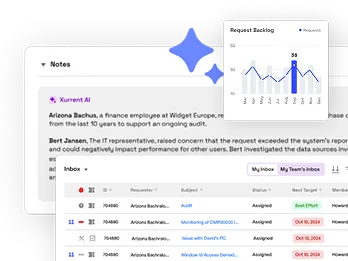
Unifiy IT, HR, Facilities, Finance, and more on a single, AI-powered service platform.
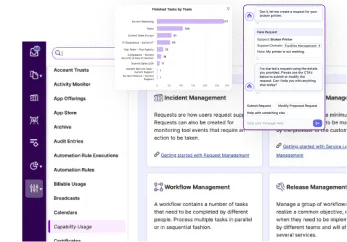
Simplify on-call scheduling, automate escalations, and reduce burnout.
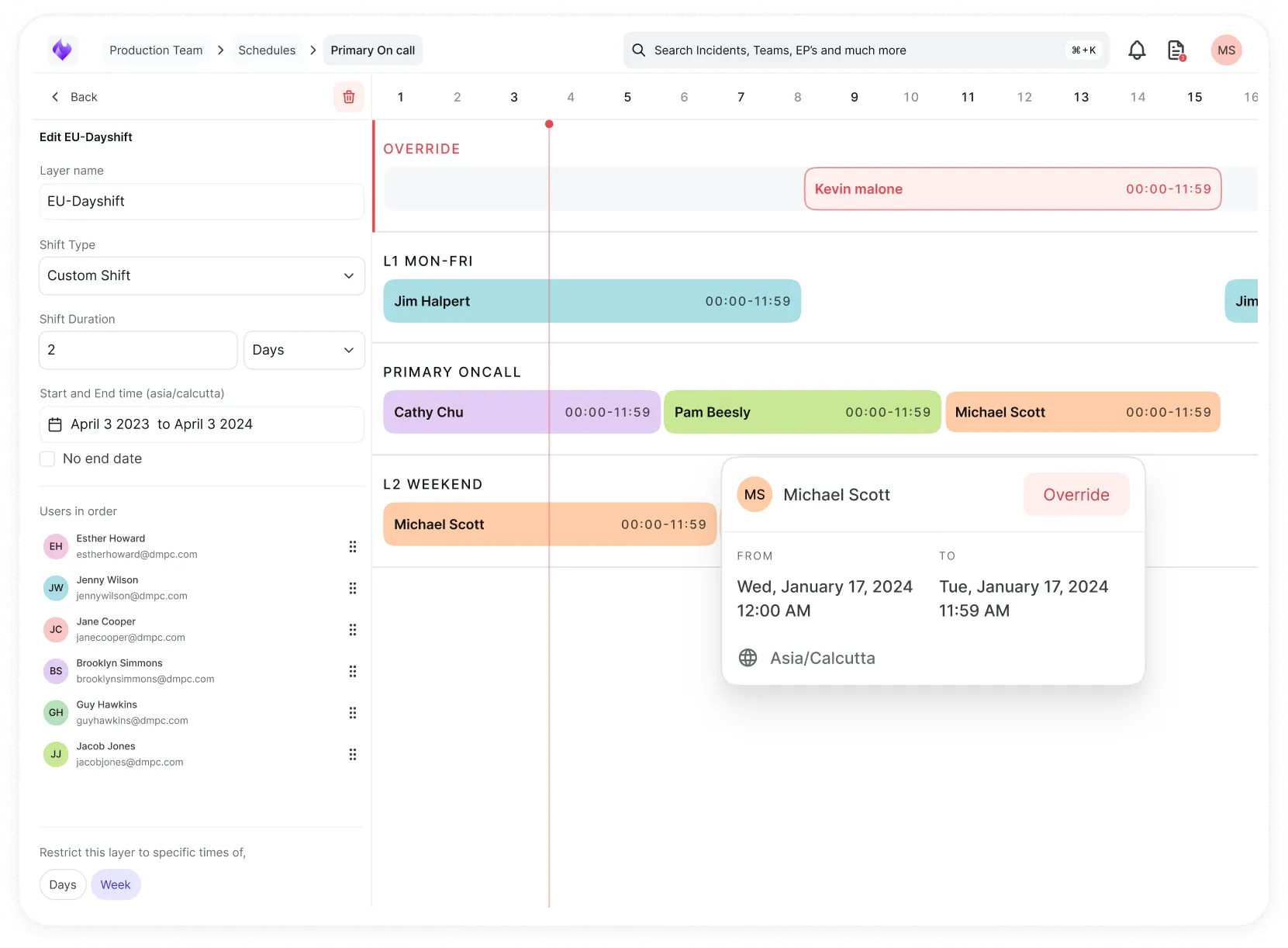
Automate postmortems, AI summaries, and post-incident workflows
Create, organize, and continuously improve your knowledge base to find the right answers with Sera AI.
We're here to help

The integration with Atlassian Jira using the Xurrent Integration Service is

The integration with Atlassian Jira using the Xurrent Integration Service is

The integration with Atlassian Jira using the Xurrent Integration Service is

The integration with Atlassian Jira using the Xurrent Integration Service is
The integration with Atlassian Jira using the Xurrent Integration Service is

The integration with Atlassian Jira using the Xurrent Integration Service is

The integration with Atlassian Jira using the Xurrent Integration Service is

The integration with Atlassian Jira using the Xurrent Integration Service is
Resolve issues quickly with an AI-powered system that automates ticketing.
Unifiy IT, HR, Facilities, Finance, and more on a single, AI-powered service platform.
Simplify on-call scheduling, automate escalations, and reduce burnout.
Automate postmortems, AI summaries, and post-incident workflows
Create, organize, and continuously improve your knowledge base to find the right answers with Sera AI.
Resolve plant floor and IT issues before they disrupt production.
Stay audit-ready while resolving issues and reducing operational risk.

Detect, respond, and resolve incidents fast to cut downtime and MTTR.

Keep your store online, even during your biggest sales moments.

Protect patient data and resolve issues fast, so care teams stay focused on care.

Standardize service delivery across every store and channel.

We are here to help 24/7

Connect with other Xurrent Users

Get insights and tips on how to get the most out of Xurrent

Apps, APIs, and updates

Xurrent service functionality

Eliminate manual tasks, optimize workflows, and deliver faster resolutions.
Learn how organizations have reduced downtime, improved 50% MTTA & MTTR, and cut costs with Xurrent IMR.
Discover Xurrent IMR's quick support, bidirectional integrations with Jira and Slack, and more cohesive incident response capabilities compared to Opsgenie.
Understand why users value Xurrent IMR for its intuitive interface, efficient incident alerting, customizable On-call schedules, and escalations.
A Service Level Agreement (SLA) is a documented contract between a service provider and a customer that defines the expected level of service, including measurable performance targets, responsibilities, and consequences for non-compliance. In ITSM and operations contexts, SLAs establish clear expectations for metrics like response time, resolution time, uptime percentage, and availability windows, creating accountability for both internal IT teams and external vendors. The agreement typically specifies what services are covered, how performance will be measured, who is responsible for delivery, and what remedies or penalties apply when targets are missed. SLAs serve as the operational backbone of service delivery, translating business requirements into technical commitments that can be monitored, reported, and enforced.
SLAs provide the framework that aligns IT service delivery with business expectations, ensuring that operational teams understand what "good service" means in measurable terms. Without defined SLAs, service teams operate without clear priorities, leading to inconsistent response times, misaligned effort, and frustrated users who have no basis for escalation when service falls short. For organizations managing multiple vendors or internal service providers, SLAs create a common language for accountability, enabling leadership to compare performance across teams and hold providers to contractual standards.
From a compliance and audit perspective, SLAs document commitments that support regulatory requirements, vendor management policies, and financial penalties tied to service failures. When incidents occur, SLA timers drive urgency and escalation workflows, ensuring that high-priority issues receive immediate attention while lower-priority requests are handled within agreed timeframes. For Managed Service Providers (MSPs), SLAs differentiate service tiers, justify pricing models, and protect against scope creep by clearly defining what is and isn't covered. Poorly designed or ignored SLAs result in missed expectations, eroded trust, unplanned costs, and operational chaos during outages when no one knows who is responsible or how quickly service must be restored.
An SLA begins with service definition, where the provider and customer agree on the scope of covered services, such as email support, network availability, or application uptime. Next, measurable targets are established using Service Level Indicators (SLIs)—specific metrics like "99.9% uptime" or "respond to Priority 1 incidents within 15 minutes"—and Service Level Objectives (SLOs), which set the target value or range for each SLI. The agreement then defines measurement methods, specifying how performance data will be collected, calculated, and reported, often through automated monitoring tools integrated with ITSM platforms.
Responsibilities are documented for both parties: the provider commits to delivering the service within defined parameters, while the customer agrees to provide necessary access, timely information, and adherence to usage policies. Escalation procedures outline what happens when SLA targets are at risk or breached, including notification chains, emergency response protocols, and management involvement. Remedies and penalties are specified, ranging from service credits and refunds to contract termination rights, depending on the severity and frequency of SLA violations.
SLA performance is tracked continuously through dashboards and automated alerts that notify teams when metrics approach thresholds. Regular reviews—monthly or quarterly—compare actual performance against targets, identify trends, and trigger process improvements or renegotiation of unrealistic commitments. In Xurrent, SLAs are defined at the service level and automatically applied to requests and incidents, with real-time tracking, breach warnings, and reporting that provide full visibility into service performance across IT, HR, facilities, and other departments.
- Enterprise IT Service Desk SLA : A multinational corporation defines an SLA for its internal service desk requiring Priority 1 incidents (complete service outages) to receive a response within 15 minutes and resolution within 4 hours, while Priority 3 requests (minor issues) must be responded to within 8 business hours and resolved within 5 business days. The SLA includes 99.5% uptime for the ticketing system itself and monthly reporting to IT leadership, with escalation to the CIO if resolution targets are missed on more than 5% of Priority 1 incidents in a given month.
- MSP Client SLA for Cloud Infrastructure : A Managed Service Provider offers tiered SLAs to a mid-market client running production workloads on AWS, committing to 99.95% uptime for critical application servers, 30-minute response time for infrastructure alerts, and 2-hour resolution for network connectivity issues. The SLA specifies maintenance windows, excludes downtime caused by third-party cloud provider outages, and includes monthly service credits of 10% of the contract value if uptime falls below 99.9% or if response time targets are breached more than twice in a quarter.
- HR Service Request SLA : An organization using Enterprise Service Management extends SLAs beyond IT to HR, defining that new employee onboarding requests must be acknowledged within 1 business day and completed 3 days before the start date, while benefits inquiries require a response within 4 hours during business hours. The SLA tracks first-contact resolution rates and employee satisfaction scores, with quarterly reviews to adjust targets based on hiring volume and process automation improvements driven by Sera AI workflows.
- Service Level Indicator
- Service Level Objective
- Service Level Management
- Operational Level Agreement
- Underpinning Contract
---

.webp)
.webp)