





Blog
Insights & updates from our experts


Resolve plant floor and IT issues before they disrupt production.

Stay audit-ready while resolving issues and reducing operational risk.
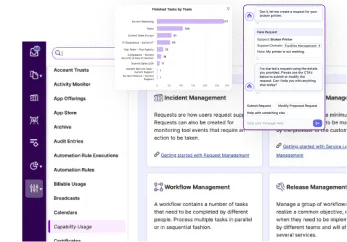
Resolve issues quickly with an AI-powered system that automates ticketing.
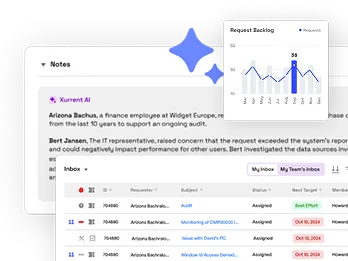
Unifiy IT, HR, Facilities, Finance, and more on a single, AI-powered service platform.
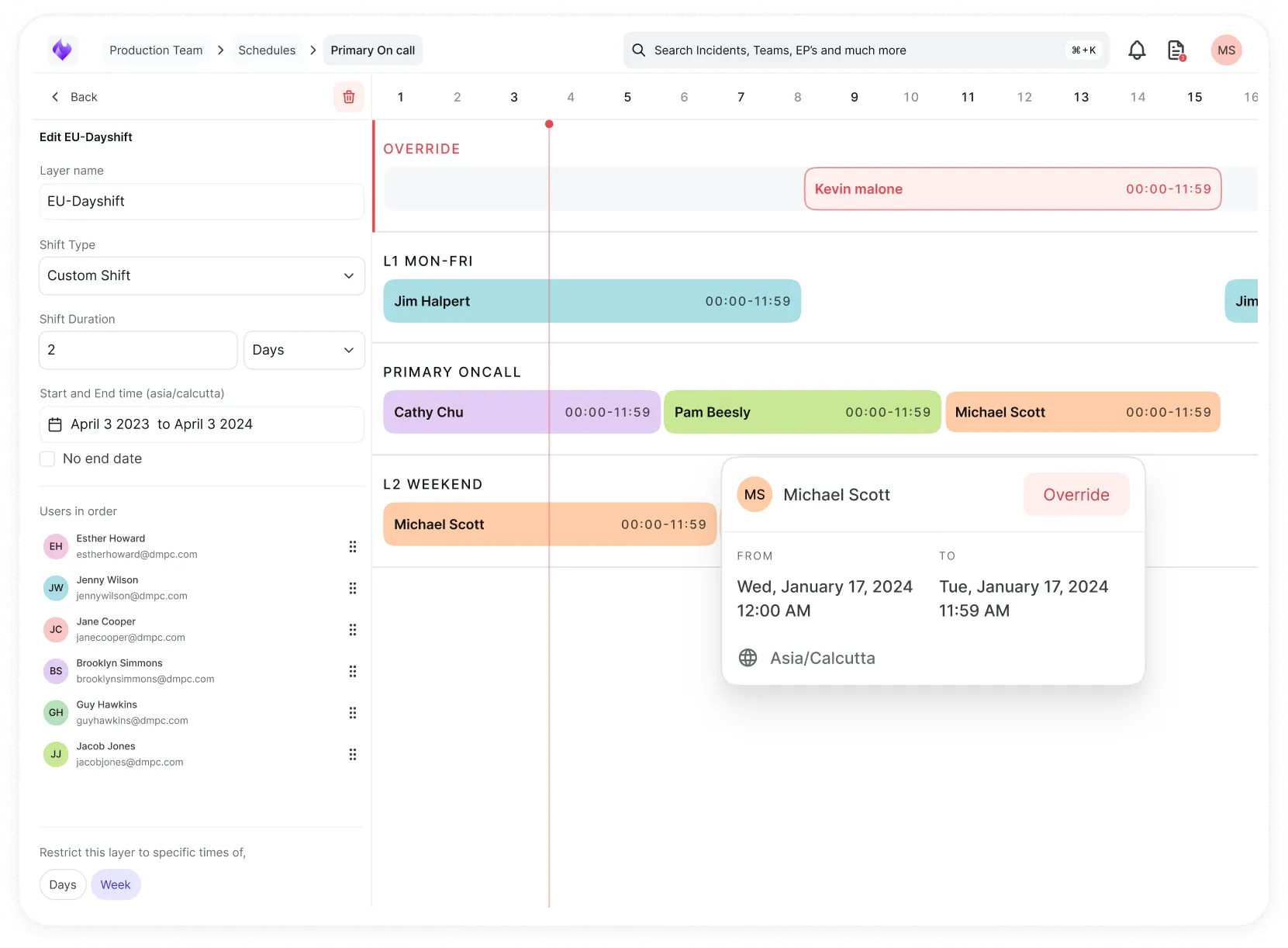
Simplify on-call scheduling, automate escalations, and reduce burnout.
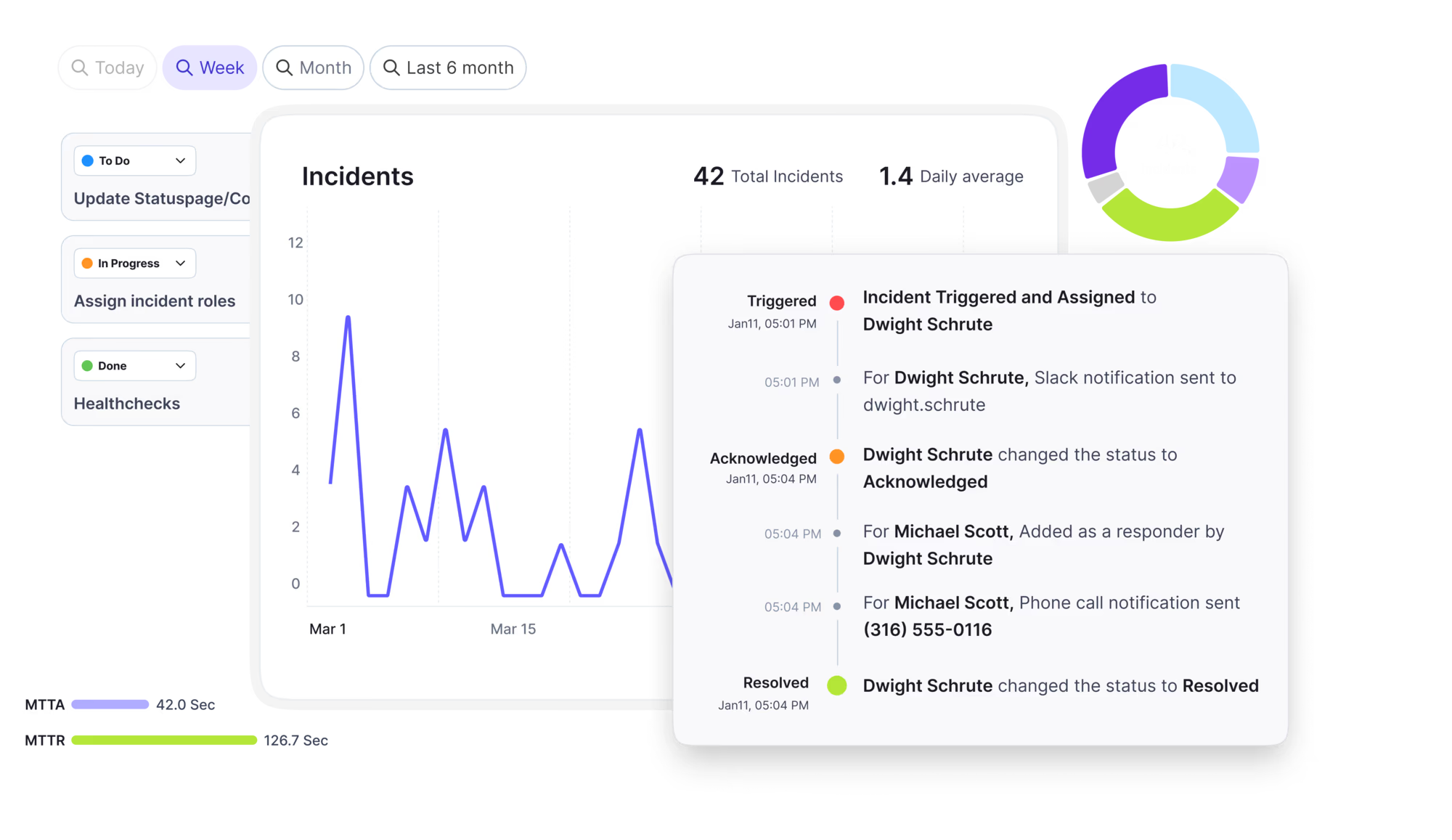
Automate postmortems, AI summaries, and post-incident workflows
Create, organize, and continuously improve your knowledge base to find the right answers with Sera AI.
We're here to help

The integration with Atlassian Jira using the Xurrent Integration Service is

The integration with Atlassian Jira using the Xurrent Integration Service is

The integration with Atlassian Jira using the Xurrent Integration Service is

The integration with Atlassian Jira using the Xurrent Integration Service is

The integration with Atlassian Jira using the Xurrent Integration Service is

The integration with Atlassian Jira using the Xurrent Integration Service is

The integration with Atlassian Jira using the Xurrent Integration Service is

The integration with Atlassian Jira using the Xurrent Integration Service is
Resolve issues quickly with an AI-powered system that automates ticketing.
Unifiy IT, HR, Facilities, Finance, and more on a single, AI-powered service platform.
Simplify on-call scheduling, automate escalations, and reduce burnout.
Automate postmortems, AI summaries, and post-incident workflows
Create, organize, and continuously improve your knowledge base to find the right answers with Sera AI.
Resolve plant floor and IT issues before they disrupt production.
Stay audit-ready while resolving issues and reducing operational risk.

Detect, respond, and resolve incidents fast to cut downtime and MTTR.

Keep your store online, even during your biggest sales moments.

Protect patient data and resolve issues fast, so care teams stay focused on care.

Standardize service delivery across every store and channel.

We are here to help 24/7

Connect with other Xurrent Users

Get insights and tips on how to get the most out of Xurrent

Apps, APIs, and updates

Xurrent service functionality

Eliminate manual tasks, optimize workflows, and deliver faster resolutions.
Learn how organizations have reduced downtime, improved 50% MTTA & MTTR, and cut costs with Xurrent IMR.
Discover Xurrent IMR's quick support, bidirectional integrations with Jira and Slack, and more cohesive incident response capabilities compared to Opsgenie.
Understand why users value Xurrent IMR for its intuitive interface, efficient incident alerting, customizable On-call schedules, and escalations.
Change Enablement (Management) is an ITIL 4 practice that ensures modifications to IT services, infrastructure, and systems are implemented with minimal risk and disruption to operations. Unlike the older "change management" terminology from ITIL v3, Change Enablement emphasizes enabling business velocity while maintaining control—balancing speed with stability through structured authorization, risk assessment, and coordinated deployment workflows. The practice governs all changes that could affect service delivery, from emergency patches and infrastructure upgrades to application releases and configuration adjustments, ensuring each change is evaluated, approved, scheduled, and tracked through a consistent lifecycle.
Change Enablement operates through defined change models—standard, normal, and emergency—that determine the level of review and approval required based on risk and impact. Standard changes follow pre-authorized templates for routine, low-risk modifications. Normal changes require evaluation by a Change Advisory Board (CAB) or designated change authority. Emergency changes bypass standard approval workflows to address critical incidents but are documented and reviewed post-implementation. Every change request captures what is being modified, why the change is necessary, who is responsible, when it will occur, and how success will be measured, creating an auditable record that supports compliance requirements and post-implementation review.
Change Enablement directly impacts service availability, security posture, and operational efficiency. Organizations without structured change control experience higher rates of change-related incidents—studies within ITIL-practicing organizations consistently show that 60–80% of unplanned outages stem from poorly planned or unauthorized changes. A functioning Change Enablement practice reduces this risk by ensuring changes are tested, dependencies are mapped, rollback plans exist, and stakeholders are informed before deployment.
The practice also enables faster, safer delivery of business value. By categorizing changes by risk and using pre-approved standard change templates for routine modifications, teams avoid bottlenecks while maintaining oversight on high-risk deployments. This is critical in environments where DevOps teams deploy multiple times per day—Change Enablement frameworks adapted for continuous delivery allow automated standard changes while preserving governance on infrastructure and architecture changes that carry broader risk.
From a compliance perspective, Change Enablement provides the audit trail required by ISO 20000, SOC 2, and industry-specific regulations. Every change is logged with timestamps, approvers, and outcomes, demonstrating that the organization maintains control over its production environment. Without this documentation, organizations face audit failures, regulatory penalties, and inability to diagnose root causes when incidents occur.
Change Enablement follows a structured lifecycle that begins when a change request is submitted—typically through an ITSM platform—and includes assessment, authorization, scheduling, implementation, and review stages.
Assessment involves evaluating the change's risk, impact, and resource requirements. The change requester documents the business justification, technical scope, affected services, implementation steps, testing plan, and rollback procedure. For normal changes, this request is reviewed by a CAB—a cross-functional group including service owners, technical leads, and business representatives—who assess whether the change should proceed, be modified, or be rejected based on risk to service availability and alignment with scheduled maintenance windows.
Authorization occurs when the appropriate change authority—either the CAB, an individual change manager, or an automated workflow for standard changes—approves the request. Emergency changes may receive verbal or expedited approval from a designated emergency change authority, with formal documentation completed afterward.
Scheduling coordinates the change with other planned activities, maintenance windows, and business priorities. Changes are placed in a forward schedule of change (FSC) that provides visibility across IT and business teams, preventing conflicts and ensuring resources are available.
Implementation follows the approved plan, with the change owner responsible for executing the modification, monitoring for issues, and confirming success criteria are met. For high-risk changes, implementation may include staged rollouts, canary deployments, or blue-green deployments to limit blast radius.
Post-implementation review evaluates whether the change achieved its objectives, caused any incidents, and followed the approved plan. Lessons learned feed back into change models and risk assessments, enabling continuous improvement of the Change Enablement practice itself.
- Financial services firm deploying a security patch : A bank's security team submits a normal change request to apply a critical OS patch across 200 production servers. The CAB reviews the change, confirms testing in the staging environment, approves a phased rollout during a weekend maintenance window, and requires a rollback plan. The change is implemented successfully with no service disruption, and the post-implementation review confirms patch coverage and documents the 4-hour deployment window.
- E-commerce platform using standard changes for feature flags : An online retailer pre-authorizes standard changes for enabling or disabling feature flags in its application code, allowing product teams to toggle new features without CAB approval. Each toggle is logged in the ITSM system with the feature name, toggle state, and responsible engineer. When a new checkout flow causes a spike in cart abandonment, the team disables the feature flag within minutes using the pre-approved standard change process, then submits a normal change request to re-enable it after fixing the issue.
- Healthcare provider executing an emergency change during an outage : A hospital's EHR system experiences a database failure at 2 AM, preventing clinicians from accessing patient records. The on-call DBA submits an emergency change request to restore from backup and apply a vendor-provided hotfix. The emergency change authority approves verbally, the change is implemented within 90 minutes, and a full post-implementation review is conducted the next business day to document the incident, change actions, and preventive measures for future occurrences.
- Change Advisory Board (CAB)
- Incident Management
- Release Management
- Configuration Management
- Problem Management
---


.webp)
.webp)