




Blog
Insights & updates from our experts


Resolve plant floor and IT issues before they disrupt production.

Stay audit-ready while resolving issues and reducing operational risk.
Resolve issues quickly with an AI-powered system that automates ticketing.
Unifiy IT, HR, Facilities, Finance, and more on a single, AI-powered service platform.
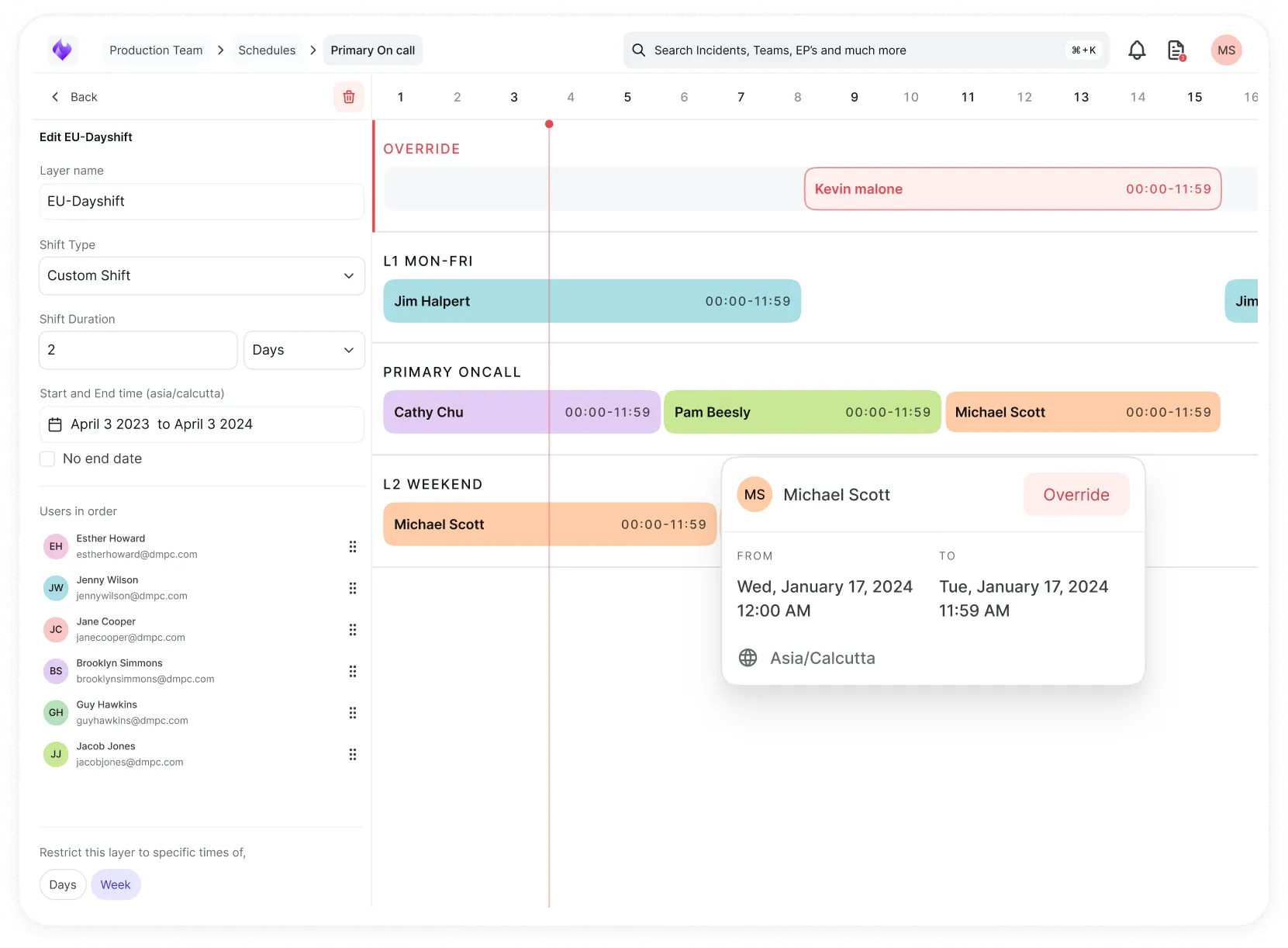
Simplify on-call scheduling, automate escalations, and reduce burnout.
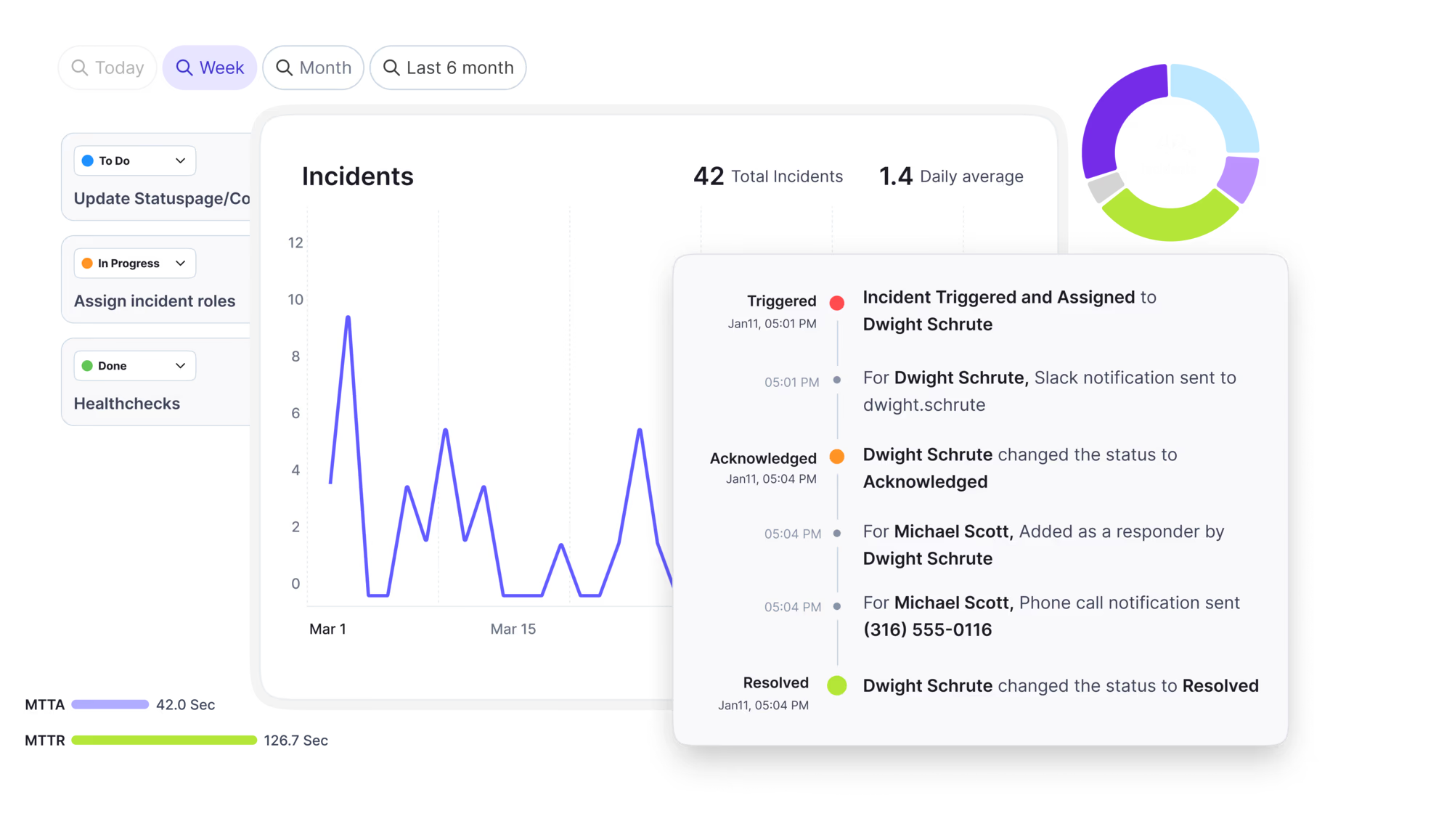
Automate postmortems, AI summaries, and post-incident workflows
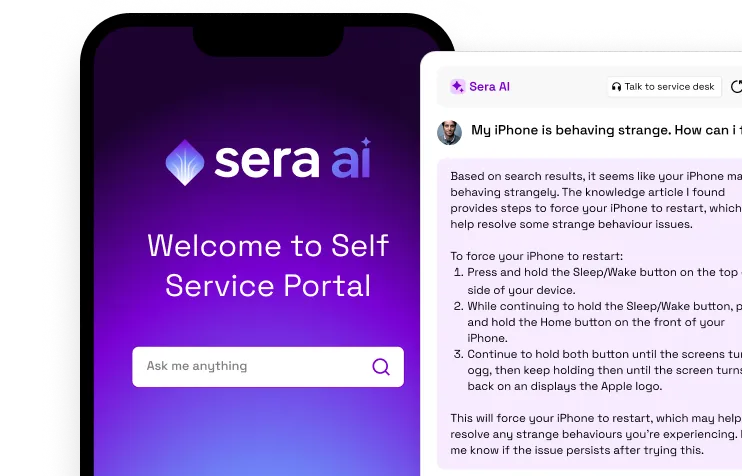
Create, organize, and continuously improve your knowledge base to find the right answers with Sera AI.
We're here to help

The integration with Atlassian Jira using the Xurrent Integration Service is

The integration with Atlassian Jira using the Xurrent Integration Service is

The integration with Atlassian Jira using the Xurrent Integration Service is

The integration with Atlassian Jira using the Xurrent Integration Service is

The integration with Atlassian Jira using the Xurrent Integration Service is

The integration with Atlassian Jira using the Xurrent Integration Service is

The integration with Atlassian Jira using the Xurrent Integration Service is

The integration with Atlassian Jira using the Xurrent Integration Service is
Resolve issues quickly with an AI-powered system that automates ticketing.
Unifiy IT, HR, Facilities, Finance, and more on a single, AI-powered service platform.
Simplify on-call scheduling, automate escalations, and reduce burnout.
Automate postmortems, AI summaries, and post-incident workflows
Create, organize, and continuously improve your knowledge base to find the right answers with Sera AI.
Resolve plant floor and IT issues before they disrupt production.
Stay audit-ready while resolving issues and reducing operational risk.

Detect, respond, and resolve incidents fast to cut downtime and MTTR.

Keep your store online, even during your biggest sales moments.

Protect patient data and resolve issues fast, so care teams stay focused on care.
Standardize service delivery across every store and channel.

We are here to help 24/7

Connect with other Xurrent Users

Get insights and tips on how to get the most out of Xurrent

Apps, APIs, and updates

Xurrent service functionality

Eliminate manual tasks, optimize workflows, and deliver faster resolutions.
Learn how organizations have reduced downtime, improved 50% MTTA & MTTR, and cut costs with Xurrent IMR.
Discover Xurrent IMR's quick support, bidirectional integrations with Jira and Slack, and more cohesive incident response capabilities compared to Opsgenie.
Understand why users value Xurrent IMR for its intuitive interface, efficient incident alerting, customizable On-call schedules, and escalations.
ITIL (Information Technology Infrastructure Library) is a framework of best practices for delivering IT services that aligns technology operations with business needs. Originally developed by the UK government in the 1980s and now maintained by Axelos, ITIL provides detailed guidance on key IT practices—including incident management, problem management, change enablement, service request fulfillment, and service level management—that help organizations standardize how they design, deliver, and improve IT services. The framework is process-oriented and service-centric, meaning it focuses on delivering IT as a measurable service rather than as disconnected technical tasks. ITIL is widely recognized across industries and serves as the foundation for ISO/IEC 20000, the international standard for IT service management. The current version, ITIL 4, introduced in 2019, modernized the framework by incorporating Agile, DevOps, and Lean principles while retaining the core disciplines that made earlier versions (particularly ITIL v3) the de facto standard for enterprise IT operations.
ITIL matters because it provides a common language and structured approach that reduces chaos, improves service quality, and makes IT operations measurable and repeatable. Without a framework like ITIL, IT teams often operate reactively—handling incidents without documenting root causes, making changes without impact assessments, or managing service levels without clear accountability. This leads to repeated outages, longer resolution times, and erosion of trust between IT and the business. ITIL addresses these problems by defining clear roles, workflows, and metrics that enable proactive management and continuous improvement. Organizations that adopt ITIL practices typically see faster incident resolution, fewer repeat issues, better change success rates, and stronger alignment between IT investments and business priorities. ITIL also supports compliance by establishing audit trails, enforcing approval workflows, and ensuring that service delivery meets contractual and regulatory requirements. For service desks, ITIL provides the structure needed to triage requests efficiently, escalate appropriately, and close tickets with documented resolutions. For leadership, it offers visibility into service performance through SLAs, KPIs, and trend analysis that inform strategic decisions.
ITIL works by organizing IT activities into a set of interconnected practices that span the entire service lifecycle. In ITIL 4, these practices are grouped into 34 management practices across three categories: general management (e.g., strategy, portfolio management), service management (e.g., incident, problem, change), and technical management (e.g., deployment, infrastructure). Each practice defines objectives, key activities, roles, and success metrics. For example, incident management focuses on restoring normal service operation as quickly as possible after a disruption, using defined priority levels, escalation paths, and communication protocols. Problem management identifies and addresses the root causes of incidents to prevent recurrence, often resulting in change requests that are evaluated through change enablement processes. Service request management handles routine user requests—such as password resets or access provisioning—through standardized workflows and a service catalog. ITIL also emphasizes continual improvement, encouraging teams to review performance data, conduct post-incident reviews, and implement lessons learned. The framework is designed to be adapted rather than adopted wholesale—organizations select and tailor the practices that fit their maturity level, industry requirements, and operational context. ITIL 4 introduced the Service Value System (SVS), which integrates guiding principles, governance, the service value chain, practices, and continual improvement into a holistic operating model.
- A multinational financial services firm implements ITIL incident and problem management practices to reduce repeat outages in its online banking platform. By documenting root causes in a problem database and linking them to change requests, the IT team cuts incident recurrence by 40% and improves MTTR by 25% over six months.
- A mid-sized healthcare provider adopts ITIL change enablement to manage updates to its electronic health record (EHR) system. The change advisory board (CAB) reviews all proposed changes, assesses risk, and schedules deployments during maintenance windows, resulting in a 90% change success rate and zero unplanned downtime during business hours.
- A managed service provider (MSP) supporting multiple enterprise clients uses ITIL service level management to define, track, and report on SLAs across client environments. Automated monitoring and reporting ensure SLA adherence is visible in real time, and any breaches trigger escalation workflows that keep clients informed and accountable teams engaged.
- ITSM (IT Service Management)
- Incident Management
- Problem Management
- Change Management
- Service Level Agreement (SLA)
---

.webp)
.webp)