





Blog
Insights & updates from our experts


Resolve plant floor and IT issues before they disrupt production.

Stay audit-ready while resolving issues and reducing operational risk.
Resolve issues quickly with an AI-powered system that automates ticketing.
Unifiy IT, HR, Facilities, Finance, and more on a single, AI-powered service platform.
Simplify on-call scheduling, automate escalations, and reduce burnout.
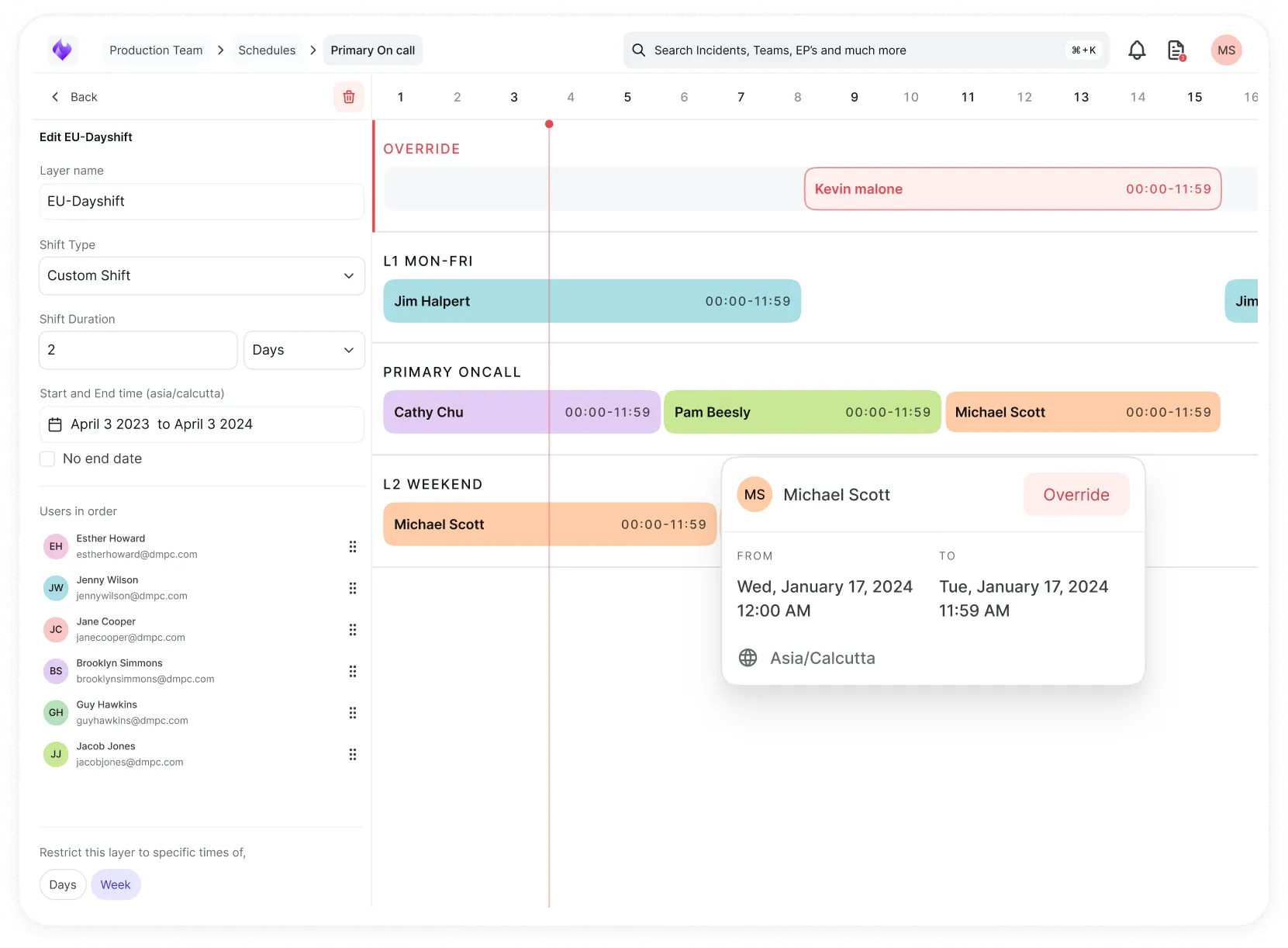
Automate postmortems, AI summaries, and post-incident workflows
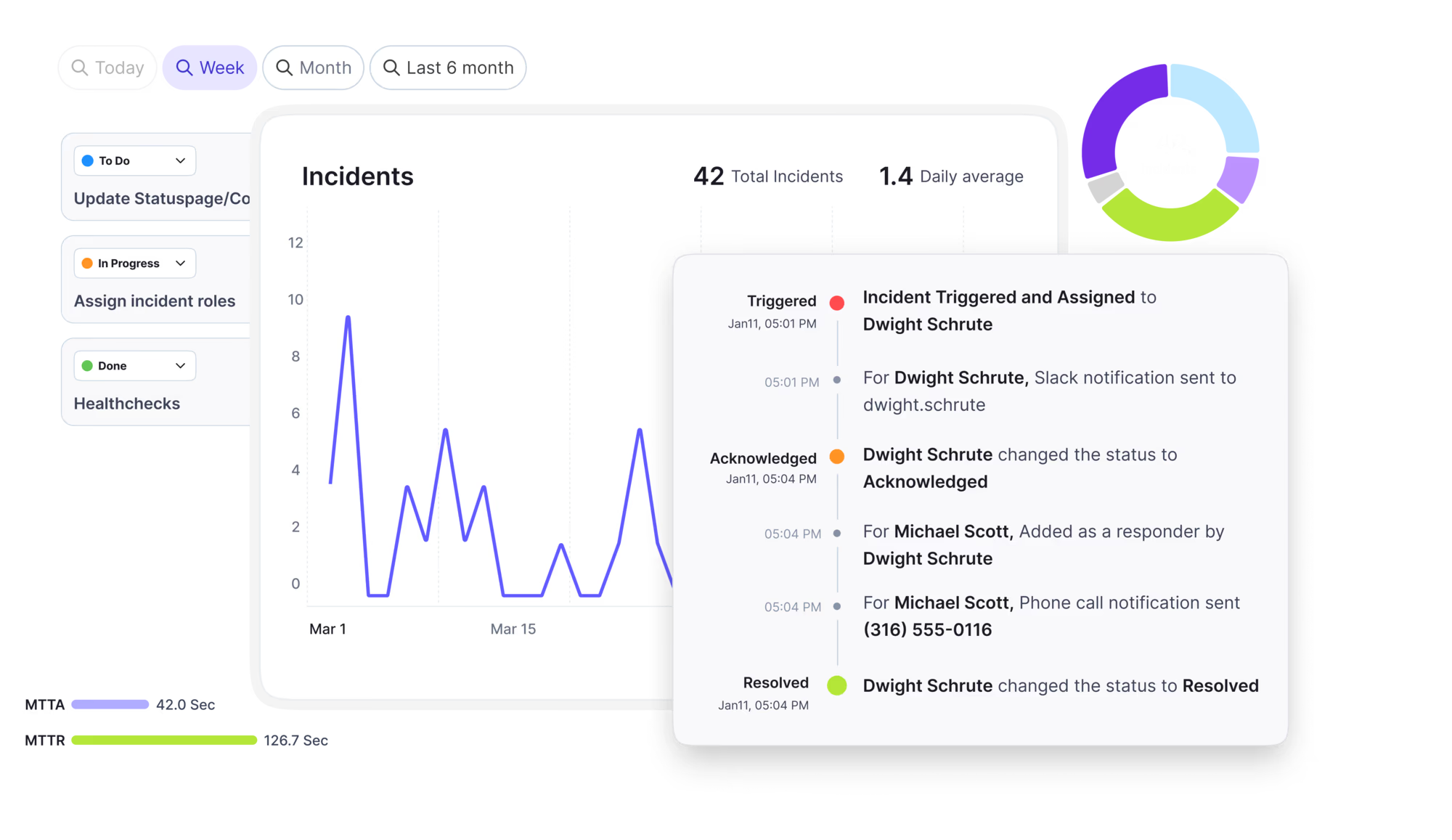
Create, organize, and continuously improve your knowledge base to find the right answers with Sera AI.
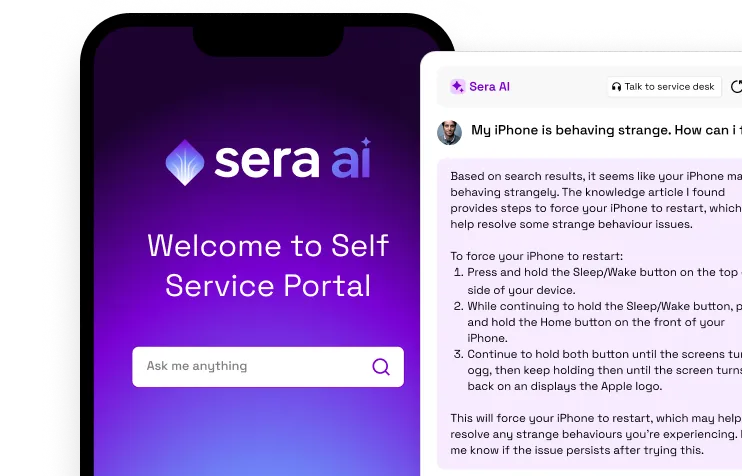
We're here to help

The integration with Atlassian Jira using the Xurrent Integration Service is

The integration with Atlassian Jira using the Xurrent Integration Service is

The integration with Atlassian Jira using the Xurrent Integration Service is

The integration with Atlassian Jira using the Xurrent Integration Service is

The integration with Atlassian Jira using the Xurrent Integration Service is

The integration with Atlassian Jira using the Xurrent Integration Service is

The integration with Atlassian Jira using the Xurrent Integration Service is

The integration with Atlassian Jira using the Xurrent Integration Service is
Resolve issues quickly with an AI-powered system that automates ticketing.
Unifiy IT, HR, Facilities, Finance, and more on a single, AI-powered service platform.
Simplify on-call scheduling, automate escalations, and reduce burnout.
Automate postmortems, AI summaries, and post-incident workflows
Create, organize, and continuously improve your knowledge base to find the right answers with Sera AI.
Resolve plant floor and IT issues before they disrupt production.
Stay audit-ready while resolving issues and reducing operational risk.

Detect, respond, and resolve incidents fast to cut downtime and MTTR.

Keep your store online, even during your biggest sales moments.

Protect patient data and resolve issues fast, so care teams stay focused on care.

Standardize service delivery across every store and channel.

We are here to help 24/7

Connect with other Xurrent Users

Get insights and tips on how to get the most out of Xurrent

Apps, APIs, and updates

Xurrent service functionality

Eliminate manual tasks, optimize workflows, and deliver faster resolutions.
Learn how organizations have reduced downtime, improved 50% MTTA & MTTR, and cut costs with Xurrent IMR.
Discover Xurrent IMR's quick support, bidirectional integrations with Jira and Slack, and more cohesive incident response capabilities compared to Opsgenie.
Understand why users value Xurrent IMR for its intuitive interface, efficient incident alerting, customizable On-call schedules, and escalations.
A Virtual Agent is an AI-powered conversational interface that automates service desk interactions by understanding user requests, answering questions, and executing actions without human intervention. In ITSM and ESM environments, a virtual agent operates as a front-line automation layer that handles password resets, access requests, knowledge retrieval, incident logging, and fulfillment workflows through natural language processing (NLP) and integration with backend systems. Unlike basic chatbots that follow rigid decision trees, modern virtual agents use machine learning to interpret intent, maintain context across multi-turn conversations, and route complex issues to human agents when automation reaches its limits. Virtual agents typically integrate with service catalogs, CMDBs, identity management systems, and workflow engines to perform actions such as provisioning accounts, updating tickets, or retrieving asset information in real time.
Virtual agents directly reduce service desk workload by deflecting 30–50% of repetitive Tier 1 requests, allowing human agents to focus on complex problem-solving and relationship management. Organizations deploying virtual agents see measurable improvements in first-contact resolution rates, 24/7 availability without staffing costs, and faster mean time to resolution for standard requests that previously required queue time and manual handoffs. For end users, virtual agents eliminate wait times for common tasks like password resets or software requests, improving satisfaction scores and reducing frustration during high-volume periods. In ESM scenarios—HR onboarding, facilities requests, finance approvals—virtual agents extend consistent service delivery across departments without requiring dedicated support staff in each function. The operational cost savings are significant: automating high-volume, low-complexity interactions reduces per-ticket handling costs and scales service capacity without proportional headcount growth. Poor virtual agent implementations that misunderstand requests, fail to escalate appropriately, or lack integration with fulfillment systems create user frustration, ticket duplication, and erosion of trust in self-service channels.
A virtual agent begins by receiving user input through a service portal, chat interface, or collaboration tool like Slack or Microsoft Teams. The NLP engine parses the input to identify intent (what the user wants) and extract entities (specific details like usernames, asset IDs, or dates). The agent matches the intent against a library of trained use cases—password reset, access request, incident report—and determines whether it can fulfill the request autonomously or requires human escalation. For fulfillable requests, the agent executes backend actions via API integrations: calling identity management systems to reset credentials, creating tickets in the ITSM platform, querying the CMDB for asset status, or triggering approval workflows. Throughout the interaction, the agent maintains conversational context, asks clarifying questions when information is missing, and provides status updates or confirmation messages. If the request exceeds the agent's capability—ambiguous language, complex troubleshooting, policy exceptions—it escalates to a human agent with full conversation history and context to avoid repetition. Machine learning models continuously improve by analyzing successful resolutions, failed interactions, and feedback, expanding the agent's ability to handle edge cases over time. Integration with knowledge management systems allows the agent to surface relevant articles, suggest solutions, and learn from documented resolutions to answer questions that don't require backend actions.
- IT service desk in a financial services firm : A virtual agent handles 60% of password reset requests, VPN access issues, and software installation queries during business hours and after-hours, reducing average ticket resolution time from 45 minutes to under 2 minutes for standard requests and cutting service desk call volume by 40%.
- HR onboarding in a manufacturing company : Employees submit PTO requests, benefits questions, and policy clarifications through a virtual agent integrated with the HR system, which automatically approves standard requests within policy limits, retrieves personalized benefits information from the employee database, and escalates complex cases to HR specialists with full context.
- Facilities management in a university : Students and staff use a virtual agent to report maintenance issues, reserve meeting rooms, and check building access hours; the agent creates work orders in the facilities system, confirms room availability against the scheduling database, and provides real-time status updates on open maintenance tickets without requiring facilities staff to field routine inquiries.
- Incident Management
- Service Request Management
- Knowledge Management
- Self-Service Portal
- NLP (Natural Language Processing)
---

.webp)
.webp)