





Blog
Insights & updates from our experts


Resolve plant floor and IT issues before they disrupt production.

Stay audit-ready while resolving issues and reducing operational risk.
Resolve issues quickly with an AI-powered system that automates ticketing.
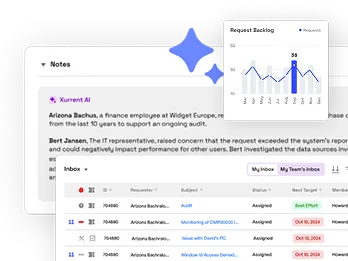
Unifiy IT, HR, Facilities, Finance, and more on a single, AI-powered service platform.
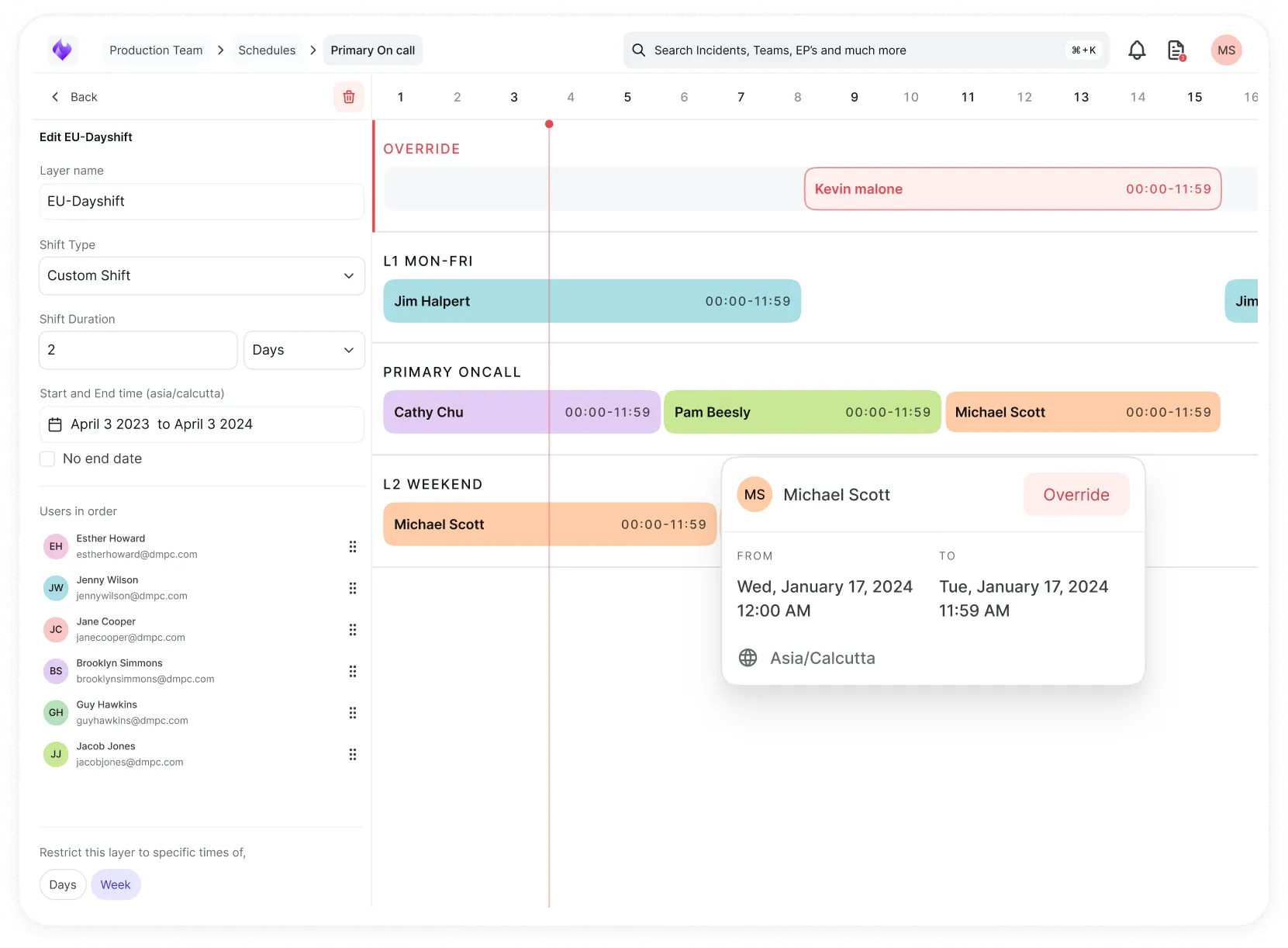
Simplify on-call scheduling, automate escalations, and reduce burnout.
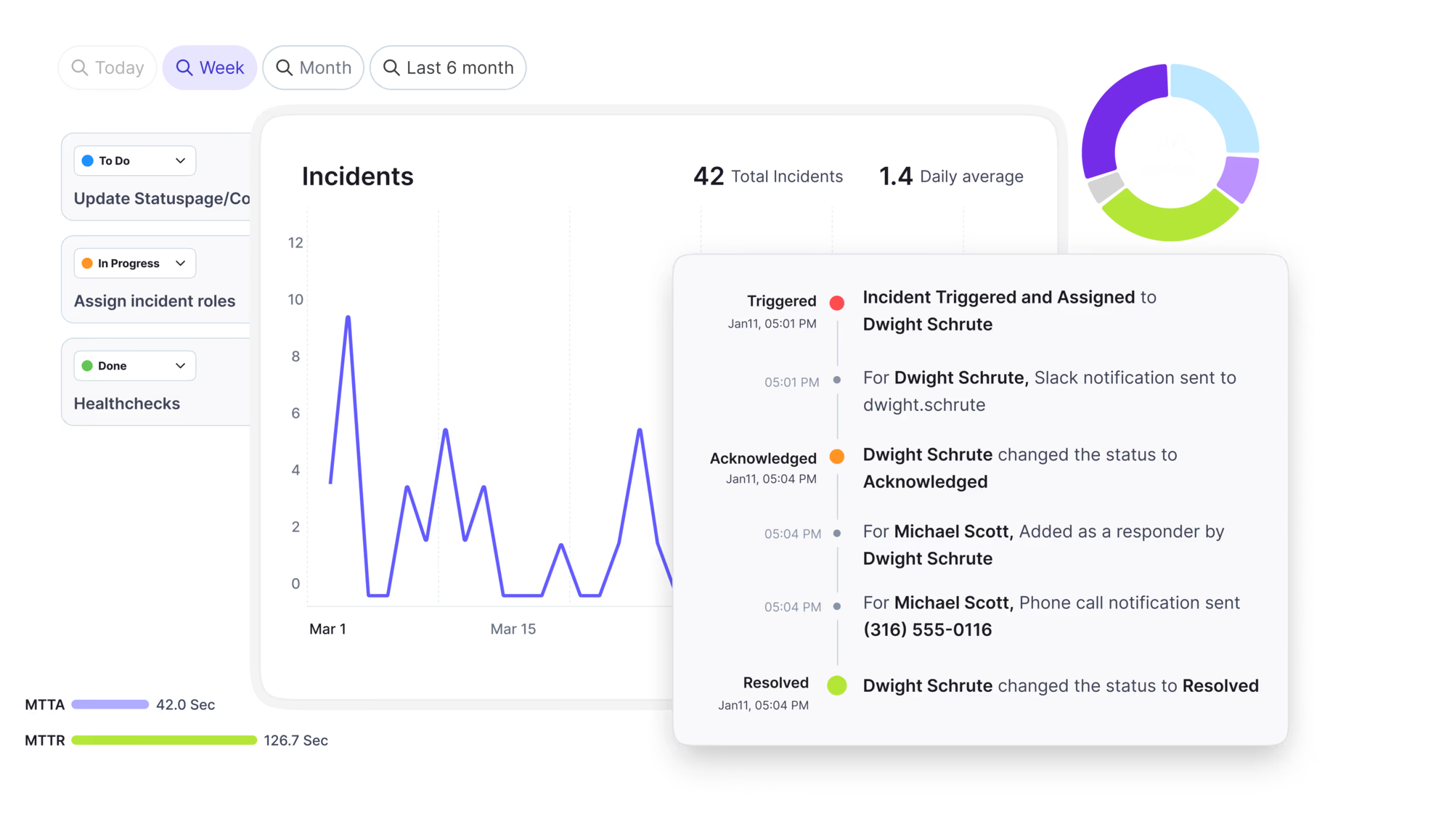
Automate postmortems, AI summaries, and post-incident workflows
Create, organize, and continuously improve your knowledge base to find the right answers with Sera AI.
We're here to help

The integration with Atlassian Jira using the Xurrent Integration Service is

The integration with Atlassian Jira using the Xurrent Integration Service is

The integration with Atlassian Jira using the Xurrent Integration Service is

The integration with Atlassian Jira using the Xurrent Integration Service is

The integration with Atlassian Jira using the Xurrent Integration Service is

The integration with Atlassian Jira using the Xurrent Integration Service is

The integration with Atlassian Jira using the Xurrent Integration Service is

The integration with Atlassian Jira using the Xurrent Integration Service is
Resolve issues quickly with an AI-powered system that automates ticketing.
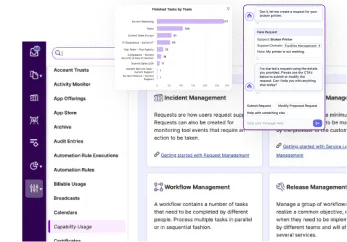
Unifiy IT, HR, Facilities, Finance, and more on a single, AI-powered service platform.
Simplify on-call scheduling, automate escalations, and reduce burnout.
Automate postmortems, AI summaries, and post-incident workflows
Create, organize, and continuously improve your knowledge base to find the right answers with Sera AI.
Resolve plant floor and IT issues before they disrupt production.
Stay audit-ready while resolving issues and reducing operational risk.

Detect, respond, and resolve incidents fast to cut downtime and MTTR.

Keep your store online, even during your biggest sales moments.

Protect patient data and resolve issues fast, so care teams stay focused on care.

Standardize service delivery across every store and channel.

We are here to help 24/7

Connect with other Xurrent Users

Get insights and tips on how to get the most out of Xurrent

Apps, APIs, and updates

Xurrent service functionality

Eliminate manual tasks, optimize workflows, and deliver faster resolutions.
Learn how organizations have reduced downtime, improved 50% MTTA & MTTR, and cut costs with Xurrent IMR.
Discover Xurrent IMR's quick support, bidirectional integrations with Jira and Slack, and more cohesive incident response capabilities compared to Opsgenie.
Understand why users value Xurrent IMR for its intuitive interface, efficient incident alerting, customizable On-call schedules, and escalations.
NLP (Natural Language Processing) is a branch of artificial intelligence that enables computers to understand, interpret, and generate human language. By combining computational linguistics with machine learning algorithms, NLP allows systems to process both written text and spoken language, extracting meaning, intent, and context from unstructured communication. In ITSM and incident management environments, NLP powers capabilities like automated ticket classification, sentiment analysis in user feedback, chatbot interactions, and knowledge article recommendations—transforming how service desks and operations teams handle the thousands of natural-language requests, alerts, and communications they receive daily.
NLP directly impacts service desk efficiency, incident response speed, and user satisfaction by automating the interpretation of human language at scale. Without NLP, service agents manually read, categorize, and route every ticket—a time-consuming process prone to misclassification and delays. NLP-powered systems can instantly analyze incoming requests, identify urgency and category, route to the correct team, and even suggest resolutions from historical data, reducing Mean Time to Repair (MTTR) and First Contact Resolution (FCR) rates. For incident management, NLP enables intelligent alert correlation by parsing log messages and error descriptions to surface root causes faster. In knowledge management, NLP improves search relevance and auto-suggests articles based on semantic understanding rather than keyword matching alone. Organizations that implement NLP see measurable improvements in agent productivity, reduced ticket backlog, and higher customer satisfaction scores because users receive faster, more accurate responses. Conversely, teams without NLP capabilities face mounting ticket volumes, inconsistent service quality, and agent burnout as manual language processing becomes unsustainable at enterprise scale.
NLP operates through a multi-stage pipeline that transforms raw language into structured, actionable data. First, text preprocessing breaks input into tokens (individual words or phrases), removes noise like punctuation or stop words, and normalizes variations (e.g., "login" and "log-in" become identical). Next, syntactic analysis examines sentence structure and grammar to understand relationships between words—identifying subjects, verbs, and objects. Semantic analysis then interprets meaning, using techniques like named entity recognition (identifying people, systems, or locations) and sentiment analysis (detecting positive, negative, or neutral tone). Machine learning models, often trained on labeled datasets of historical tickets or conversations, learn patterns that map language to categories, intents, or actions. Modern NLP increasingly relies on large language models (LLMs) like GPT or BERT, which use deep learning to understand context across entire documents rather than isolated sentences. In ITSM platforms, NLP engines continuously learn from agent corrections and resolutions, improving accuracy over time. When a user submits "Can't access email on mobile," NLP identifies the service (email), device (mobile), and issue type (access problem), automatically routing the ticket to the mobile support team with relevant context attached—all within milliseconds.
- Automated ticket classification in a global enterprise service desk : A multinational corporation's IT service desk receives 10,000+ tickets daily in multiple languages. NLP automatically categorizes each ticket by service area (network, hardware, software), priority level, and required skill set, routing 70% of requests without human intervention. The system detects phrases like "urgent production outage" and escalates immediately, while routine password resets are routed to self-service automation, reducing average resolution time by 35%.
- Intelligent incident correlation for SRE teams : A cloud infrastructure provider uses NLP to analyze thousands of monitoring alerts and log entries during incidents. The system parses error messages, stack traces, and alert descriptions to identify common patterns and group related alerts into a single incident record. By understanding that "connection timeout," "502 gateway error," and "upstream service unavailable" all describe the same underlying issue, NLP reduces alert noise by 60% and helps responders focus on root cause rather than symptom management.
- Knowledge article recommendation in virtual agent interactions : A healthcare IT organization deploys an AI-powered chatbot that uses NLP to understand user questions in natural language. When a clinician types "How do I reset my EHR password from home?", the system interprets intent, identifies relevant knowledge articles, and presents step-by-step instructions—resolving 45% of inquiries without agent involvement. The NLP engine learns from successful resolutions, continuously improving recommendation accuracy and reducing the need for live support escalation.
- Machine Learning
- Virtual Agent
- Knowledge Management
- LLM (Large Language Model)
- AIOps (Artificial Intelligence for IT Operations)
---

.webp)
.webp)