




Blog
Insights & updates from our experts


Resolve plant floor and IT issues before they disrupt production.

Stay audit-ready while resolving issues and reducing operational risk.
Resolve issues quickly with an AI-powered system that automates ticketing.
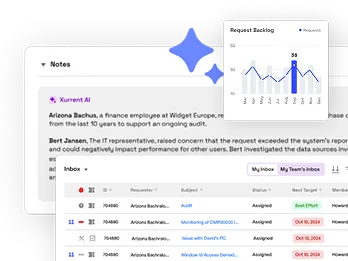
Unifiy IT, HR, Facilities, Finance, and more on a single, AI-powered service platform.
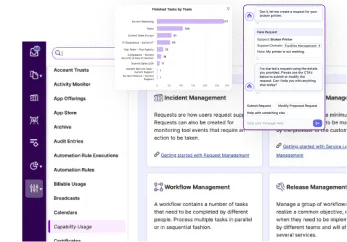
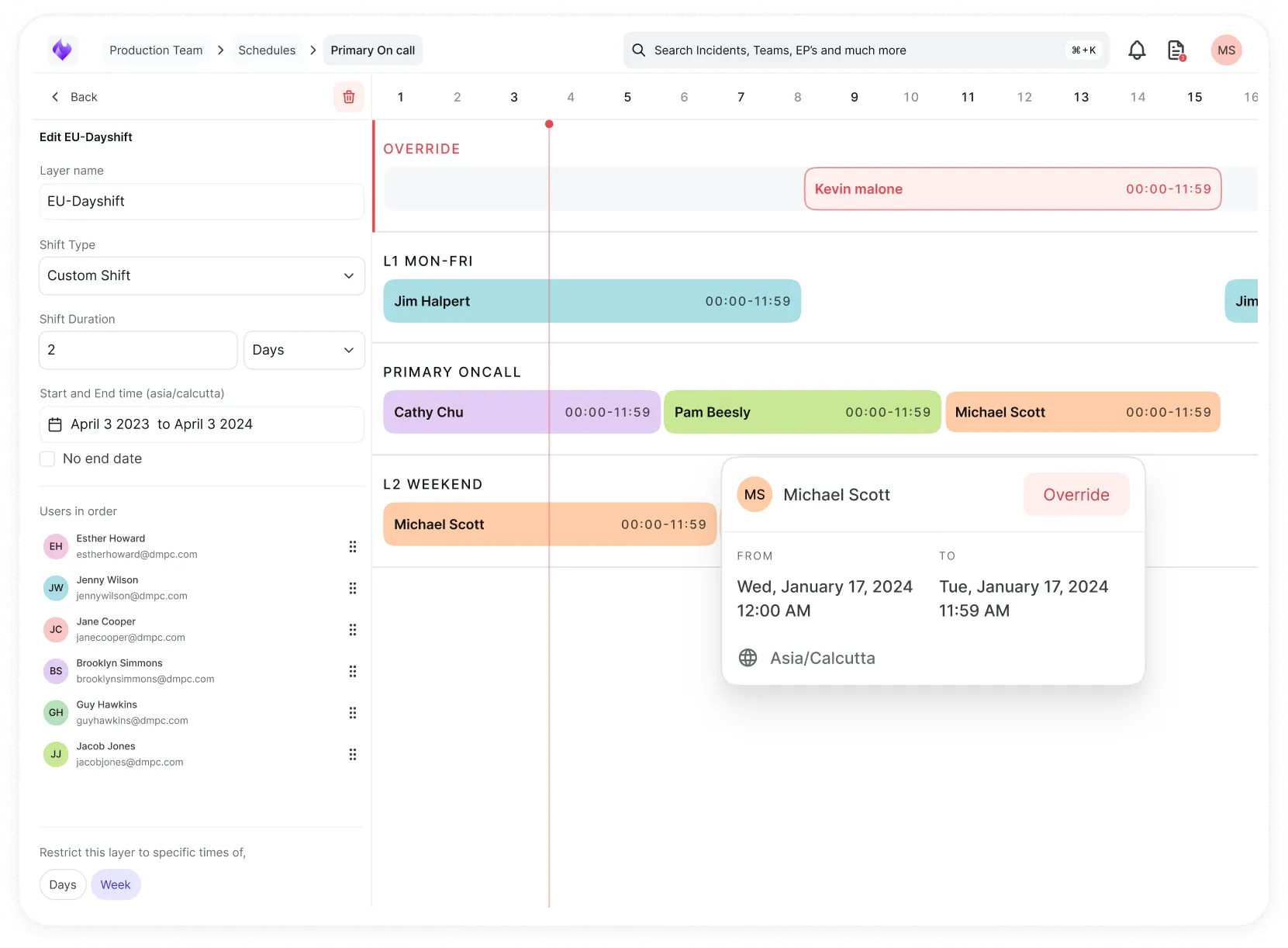
Simplify on-call scheduling, automate escalations, and reduce burnout.
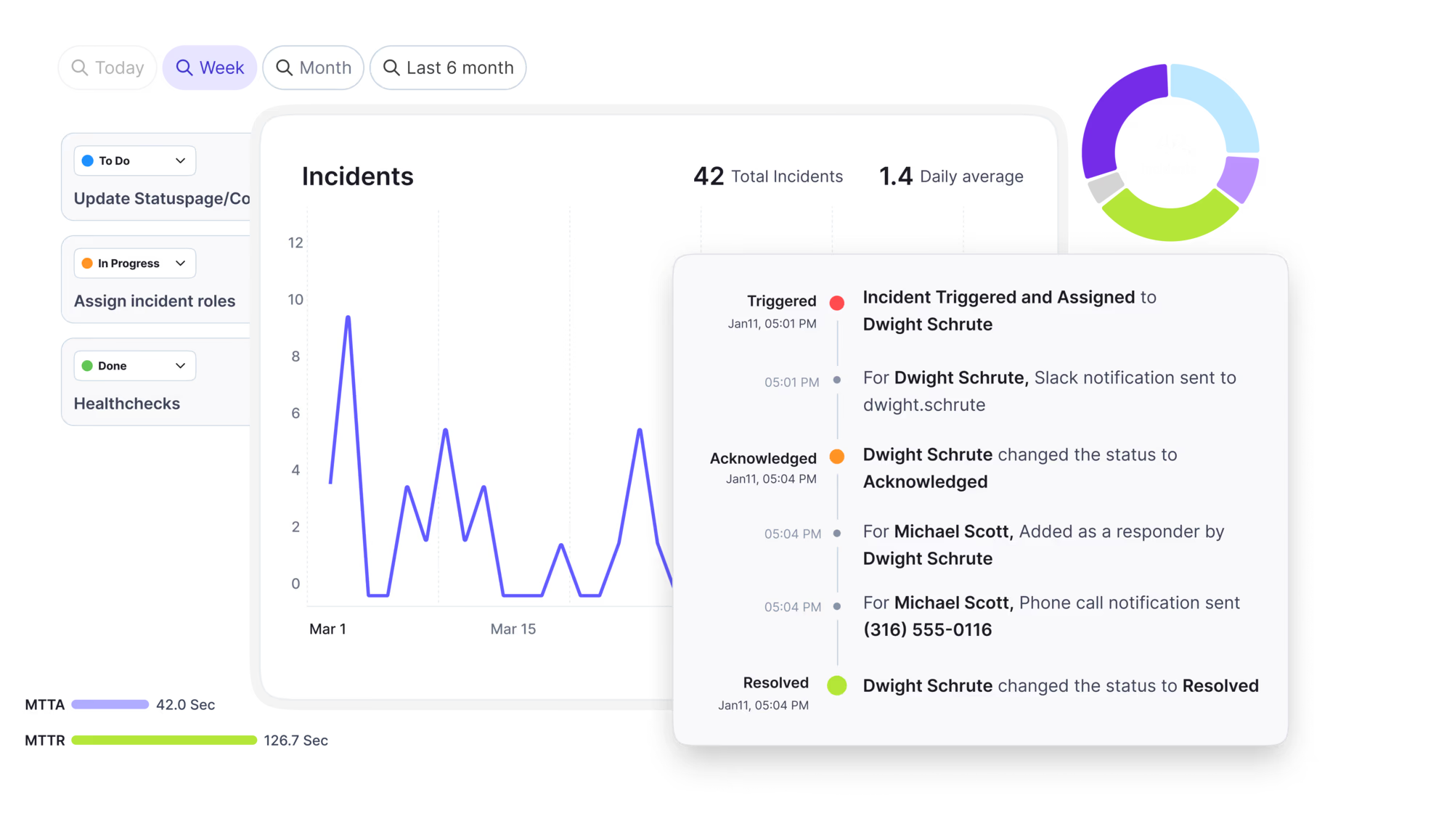
Automate postmortems, AI summaries, and post-incident workflows
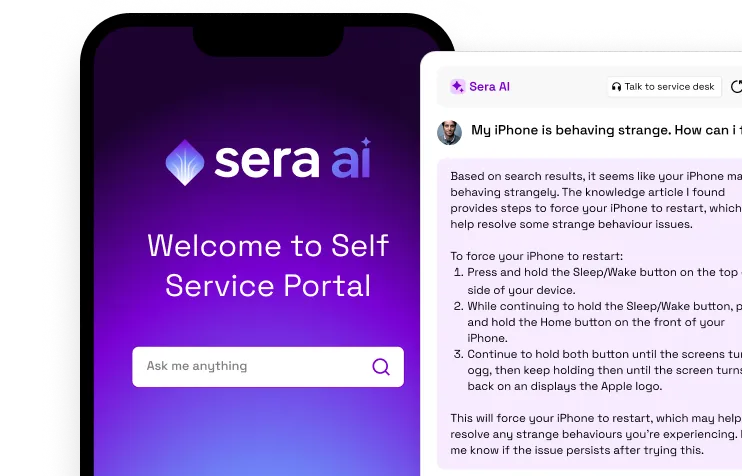
Create, organize, and continuously improve your knowledge base to find the right answers with Sera AI.
We're here to help

The integration with Atlassian Jira using the Xurrent Integration Service is

The integration with Atlassian Jira using the Xurrent Integration Service is

The integration with Atlassian Jira using the Xurrent Integration Service is

The integration with Atlassian Jira using the Xurrent Integration Service is

The integration with Atlassian Jira using the Xurrent Integration Service is

The integration with Atlassian Jira using the Xurrent Integration Service is

The integration with Atlassian Jira using the Xurrent Integration Service is

The integration with Atlassian Jira using the Xurrent Integration Service is
Resolve issues quickly with an AI-powered system that automates ticketing.
Unifiy IT, HR, Facilities, Finance, and more on a single, AI-powered service platform.
Simplify on-call scheduling, automate escalations, and reduce burnout.
Automate postmortems, AI summaries, and post-incident workflows
Create, organize, and continuously improve your knowledge base to find the right answers with Sera AI.
Resolve plant floor and IT issues before they disrupt production.
Stay audit-ready while resolving issues and reducing operational risk.

Detect, respond, and resolve incidents fast to cut downtime and MTTR.

Keep your store online, even during your biggest sales moments.

Protect patient data and resolve issues fast, so care teams stay focused on care.

Standardize service delivery across every store and channel.

We are here to help 24/7

Connect with other Xurrent Users

Get insights and tips on how to get the most out of Xurrent

Apps, APIs, and updates

Xurrent service functionality

Eliminate manual tasks, optimize workflows, and deliver faster resolutions.
Learn how organizations have reduced downtime, improved 50% MTTA & MTTR, and cut costs with Xurrent IMR.
Discover Xurrent IMR's quick support, bidirectional integrations with Jira and Slack, and more cohesive incident response capabilities compared to Opsgenie.
Understand why users value Xurrent IMR for its intuitive interface, efficient incident alerting, customizable On-call schedules, and escalations.
Total Cost of Ownership (TCO) is a financial calculation that captures the complete lifecycle expense of acquiring, deploying, operating, maintaining, and retiring an IT asset, service, or platform. In ITSM and incident management contexts, TCO extends beyond the initial license or purchase price to include implementation costs, training, ongoing support, integration work, infrastructure overhead, upgrade cycles, vendor management, and the hidden costs of downtime, technical debt, and operational inefficiency. Organizations use TCO analysis to compare platforms, justify budget decisions, and identify where apparent savings in upfront cost lead to higher long-term expense through customization debt, manual workarounds, or fragmented tooling that slows incident resolution and increases operational overhead.
TCO directly impacts budget predictability, operational efficiency, and the ability to scale service management and incident response without proportional cost increases. A platform with low initial licensing but high customization requirements, slow implementation timelines, or expensive add-on modules can carry a TCO two to three times higher than a solution with transparent pricing and rapid deployment. In incident management, TCO includes the cost of alert fatigue, slow MTTR caused by tool sprawl, and the labor hours spent maintaining integrations across siloed ITSM, monitoring, and collaboration systems. Organizations that fail to account for TCO often face budget overruns, extended go-live timelines, and operational friction that compounds over time—particularly when legacy platforms require costly professional services for every workflow change or integration. For IT leaders evaluating ITSM or IMR platforms, understanding TCO means recognizing that configuration-first platforms with embedded automation, unified workflows, and predictable licensing models reduce long-term cost and operational complexity compared to solutions that require extensive customization, separate modules for core capabilities, or ongoing vendor dependency for routine changes.
TCO calculation begins with direct costs: software licensing (per-user, per-incident, or tiered), implementation services, infrastructure (cloud hosting, database, storage), and initial training. It then incorporates indirect costs: internal labor for configuration and maintenance, integration development and upkeep, upgrade cycles and testing, vendor management overhead, and opportunity cost from delayed go-live or limited automation. For ITSM platforms, TCO includes the cost of maintaining custom workflows, managing change advisory board processes, and supporting service catalog updates. For incident management, TCO accounts for on-call scheduling complexity, manual postmortem documentation, and the labor cost of context-switching between monitoring, ticketing, and communication tools. Organizations calculate TCO over a three-to-five-year period, comparing total spend against measurable outcomes like MTTR reduction, ticket deflection rates, or FTE hours saved through automation. Platforms with high upfront cost but rapid implementation, low-code configuration, and unified service-incident-status workflows often deliver lower TCO than cheaper solutions requiring months of professional services, ongoing customization, and separate tools for core functions. TCO analysis also surfaces hidden costs: the expense of maintaining integrations when vendors change APIs, the productivity loss from tool sprawl, and the business impact of incidents prolonged by fragmented workflows and missing context.
- Mid-market SaaS company evaluating ITSM platforms : A 500-employee organization compares a legacy ITSM tool with $50K annual licensing but $200K in implementation services, ongoing customization costs, and six-month go-live timeline against a modern platform with $80K annual licensing, four-week implementation, and configuration-based workflows. Over three years, the legacy tool's TCO reaches $650K (licensing, services, maintenance, delayed value) while the modern platform's TCO is $320K, delivering faster time-to-value and eliminating customization debt.
- Enterprise IT operations team consolidating incident response tools : A 2,000-employee financial services firm runs separate tools for monitoring alerts, on-call scheduling, incident war rooms, and status pages, paying $120K annually in combined licensing plus $80K in integration maintenance and $150K in operational overhead from manual handoffs. Consolidating to a unified IMR platform with embedded status pages and ITSM integration reduces TCO by 40% over three years while cutting MTTR by 35% through automated workflows and shared context.
- Managed service provider (MSP) scaling multi-tenant service delivery : An MSP supporting 30 clients calculates TCO for a legacy ITSM platform requiring separate instances per client, manual onboarding workflows, and add-on licensing for automation and reporting. Annual TCO reaches $180K in licensing, $60K in onboarding labor, and $40K in reporting tool costs. Migrating to a secure multi-tenant platform with built-in automation, trust-based client segregation, and unified reporting reduces TCO to $110K annually while enabling faster client onboarding and consistent service delivery across all accounts.
- ITSM (IT Service Management)
- Incident Management
- Change Management
- Service Level Agreement
- ROI (Return on Investment)
---

.webp)
.webp)