



Blog
Insights & updates from our experts


Resolve plant floor and IT issues before they disrupt production.

Stay audit-ready while resolving issues and reducing operational risk.
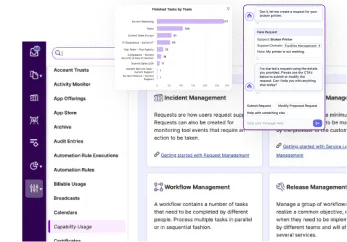
Resolve issues quickly with an AI-powered system that automates ticketing.
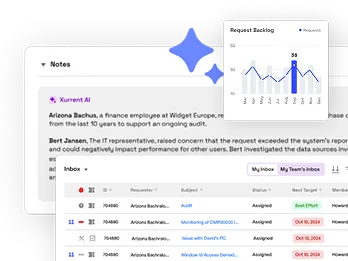
Unifiy IT, HR, Facilities, Finance, and more on a single, AI-powered service platform.
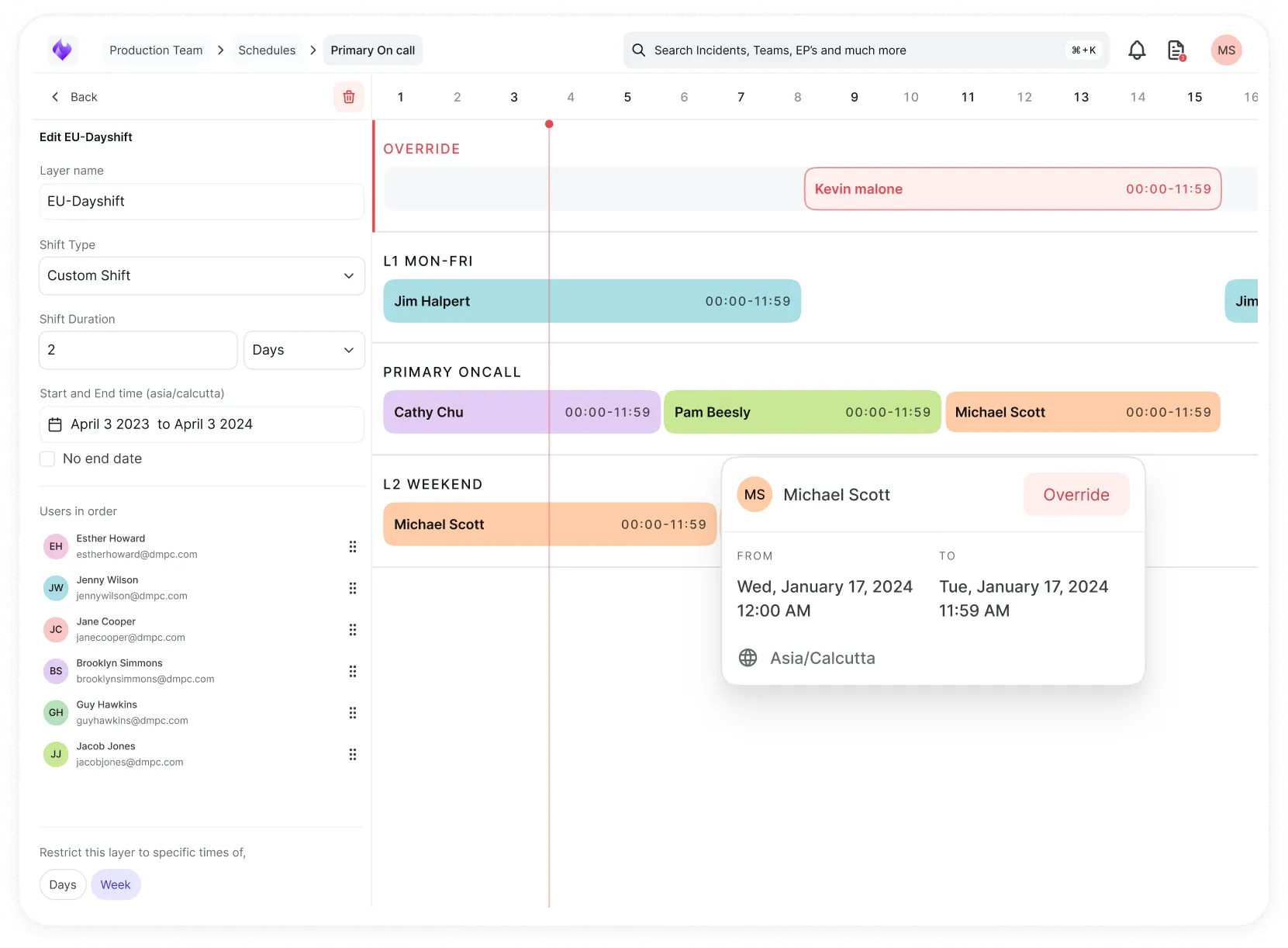
Simplify on-call scheduling, automate escalations, and reduce burnout.
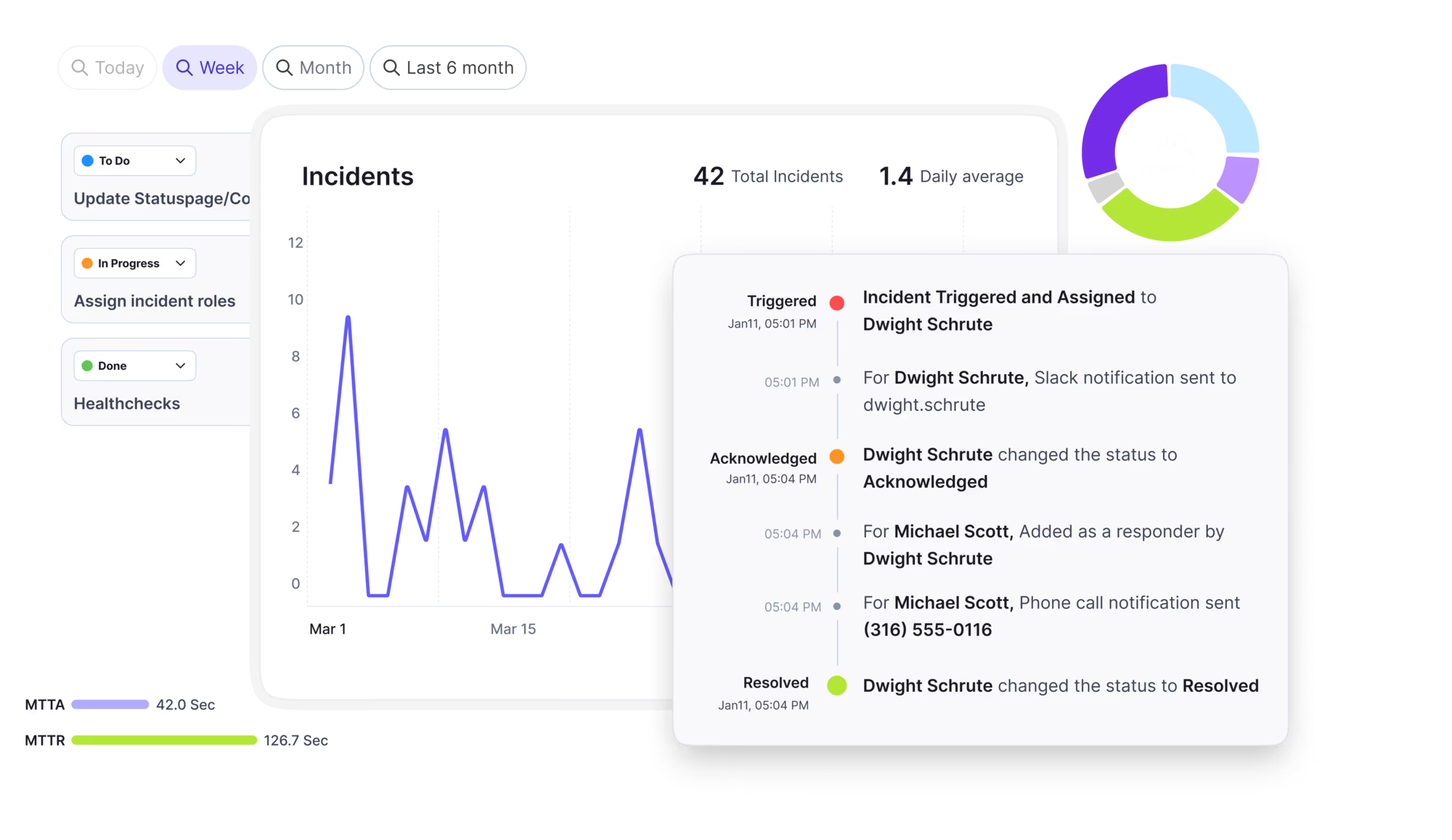
Automate postmortems, AI summaries, and post-incident workflows
Create, organize, and continuously improve your knowledge base to find the right answers with Sera AI.
We're here to help

The integration with Atlassian Jira using the Xurrent Integration Service is

The integration with Atlassian Jira using the Xurrent Integration Service is

The integration with Atlassian Jira using the Xurrent Integration Service is

The integration with Atlassian Jira using the Xurrent Integration Service is

The integration with Atlassian Jira using the Xurrent Integration Service is

The integration with Atlassian Jira using the Xurrent Integration Service is

The integration with Atlassian Jira using the Xurrent Integration Service is

The integration with Atlassian Jira using the Xurrent Integration Service is
Resolve issues quickly with an AI-powered system that automates ticketing.
Unifiy IT, HR, Facilities, Finance, and more on a single, AI-powered service platform.
Simplify on-call scheduling, automate escalations, and reduce burnout.
Automate postmortems, AI summaries, and post-incident workflows
Create, organize, and continuously improve your knowledge base to find the right answers with Sera AI.
Resolve plant floor and IT issues before they disrupt production.
Stay audit-ready while resolving issues and reducing operational risk.

Detect, respond, and resolve incidents fast to cut downtime and MTTR.

Keep your store online, even during your biggest sales moments.

Protect patient data and resolve issues fast, so care teams stay focused on care.

Standardize service delivery across every store and channel.

We are here to help 24/7

Connect with other Xurrent Users

Get insights and tips on how to get the most out of Xurrent

Apps, APIs, and updates

Xurrent service functionality

Eliminate manual tasks, optimize workflows, and deliver faster resolutions.
Learn how organizations have reduced downtime, improved 50% MTTA & MTTR, and cut costs with Xurrent IMR.
Discover Xurrent IMR's quick support, bidirectional integrations with Jira and Slack, and more cohesive incident response capabilities compared to Opsgenie.
Understand why users value Xurrent IMR for its intuitive interface, efficient incident alerting, customizable On-call schedules, and escalations.
A Service Level Agreement (SLA) is a documented contract between a service provider and a customer that defines measurable performance targets, response and resolution timeframes, and the scope of services to be delivered. SLAs establish clear expectations for service availability, incident response speed, and quality metrics—typically expressed as uptime percentages (e.g., 99.9%), maximum response times (e.g., 15 minutes for Priority 1 incidents), or resolution windows (e.g., 4 hours for critical issues). In ITSM and ESM contexts, SLAs govern internal IT service delivery and cross-departmental support; in incident management and operations, they define how quickly teams must acknowledge, escalate, and resolve production outages. SLAs translate business requirements into operational commitments, creating accountability between service desks, support teams, managed service providers, and the users or customers they serve.
SLAs provide the operational backbone for service accountability and performance measurement. Without defined SLAs, teams lack clear prioritization criteria, leading to inconsistent response times, misaligned expectations, and uncontrolled escalations. For service desks and IT operations, SLAs determine ticket routing logic, escalation triggers, and on-call schedules—directly impacting MTTR and customer satisfaction scores. In incident management, SLA clocks drive urgency: a P1 incident with a 15-minute response SLA forces immediate action, while a P3 request with a 24-hour resolution target allows for batching and planned work. SLA breaches carry business consequences—financial penalties in vendor contracts, reputational damage during customer-facing outages, and audit findings in regulated industries. Organizations use SLA compliance rates (e.g., 95% of incidents resolved within target) to measure team performance, justify staffing levels, and identify process bottlenecks. For MSPs, SLAs define the contractual obligations across multiple client environments, ensuring consistent service delivery and protecting against scope creep. Effective SLA management reduces firefighting, improves resource allocation, and builds trust through predictable, measurable service delivery.
SLAs operate through a lifecycle of definition, monitoring, enforcement, and reporting. First, service providers and customers negotiate and document specific metrics—availability targets (e.g., 99.95% uptime), response times (e.g., acknowledge within 30 minutes), resolution times (e.g., restore service within 4 hours), and support hours (e.g., 24/7 or business hours only). These targets are tied to service tiers or priority levels: Priority 1 incidents receive immediate response, Priority 4 requests may have multi-day resolution windows. Once defined, SLAs are configured in ITSM platforms, which automatically start timers when tickets are created, track elapsed time against targets, and trigger escalations when thresholds are approaching or breached. Automated workflows route high-priority tickets to on-call engineers, send notifications to managers when SLA breach risk exceeds a threshold (e.g., 80% of time elapsed), and pause clocks during customer wait time or scheduled maintenance windows. SLA reporting dashboards display real-time compliance rates, breach trends, and performance by team, service, or priority level. Organizations review SLA performance monthly or quarterly to identify systemic issues—repeated breaches may indicate understaffing, inadequate tooling, or unrealistic targets. SLA renegotiation occurs when business needs change, new services launch, or historical data reveals that targets are consistently missed or too easily met. Operational Level Agreements (OLAs) and Underpinning Contracts (UCs) support SLA delivery by defining internal team commitments and third-party vendor obligations that feed into customer-facing SLA performance.
- Enterprise IT Service Desk : A global manufacturing company defines a 15-minute response SLA and 4-hour resolution SLA for Priority 1 incidents affecting production systems, with 24/7 coverage. Priority 2 incidents (departmental impact) receive 1-hour response and 8-hour resolution SLAs during business hours. The ITSM platform automatically escalates tickets to senior engineers when 75% of SLA time has elapsed, and monthly reports show 97% compliance, justifying current staffing levels and identifying recurring issues in specific applications.
- Managed Service Provider (MSP) : An MSP supports 50 mid-market clients with tiered SLA packages—Bronze (next business day response, 48-hour resolution), Silver (4-hour response, 24-hour resolution), and Gold (1-hour response, 8-hour resolution with 24/7 coverage). Each client's SLA is tracked separately in a multi-tenant ITSM platform, with automated breach notifications sent to account managers. Quarterly business reviews include SLA compliance dashboards, and consistent overperformance on Bronze-tier accounts prompts upsell conversations to Silver-tier service.
- SaaS Platform Incident Management : A cloud-based SaaS company commits to 99.9% uptime in customer contracts, translating to maximum 43 minutes of unplanned downtime per month. Internal SLAs require incident response teams to acknowledge P1 incidents within 5 minutes and restore service within 2 hours. The incident management platform tracks SLA compliance in real time, automatically updates public status pages, and generates postmortem reports showing SLA performance, root causes of breaches, and corrective actions to prevent recurrence.
- Service Level Management
- OLA (Operational Level Agreement)
- Incident Management
- Service Desk
- MTTR (Mean Time to Repair)
---


.webp)
.webp)