



Blog
Insights & updates from our experts


Resolve plant floor and IT issues before they disrupt production.

Stay audit-ready while resolving issues and reducing operational risk.
Resolve issues quickly with an AI-powered system that automates ticketing.
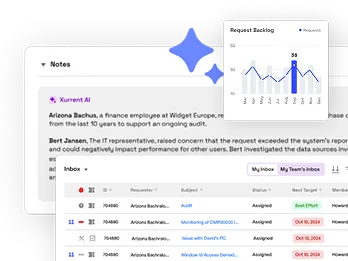
Unifiy IT, HR, Facilities, Finance, and more on a single, AI-powered service platform.
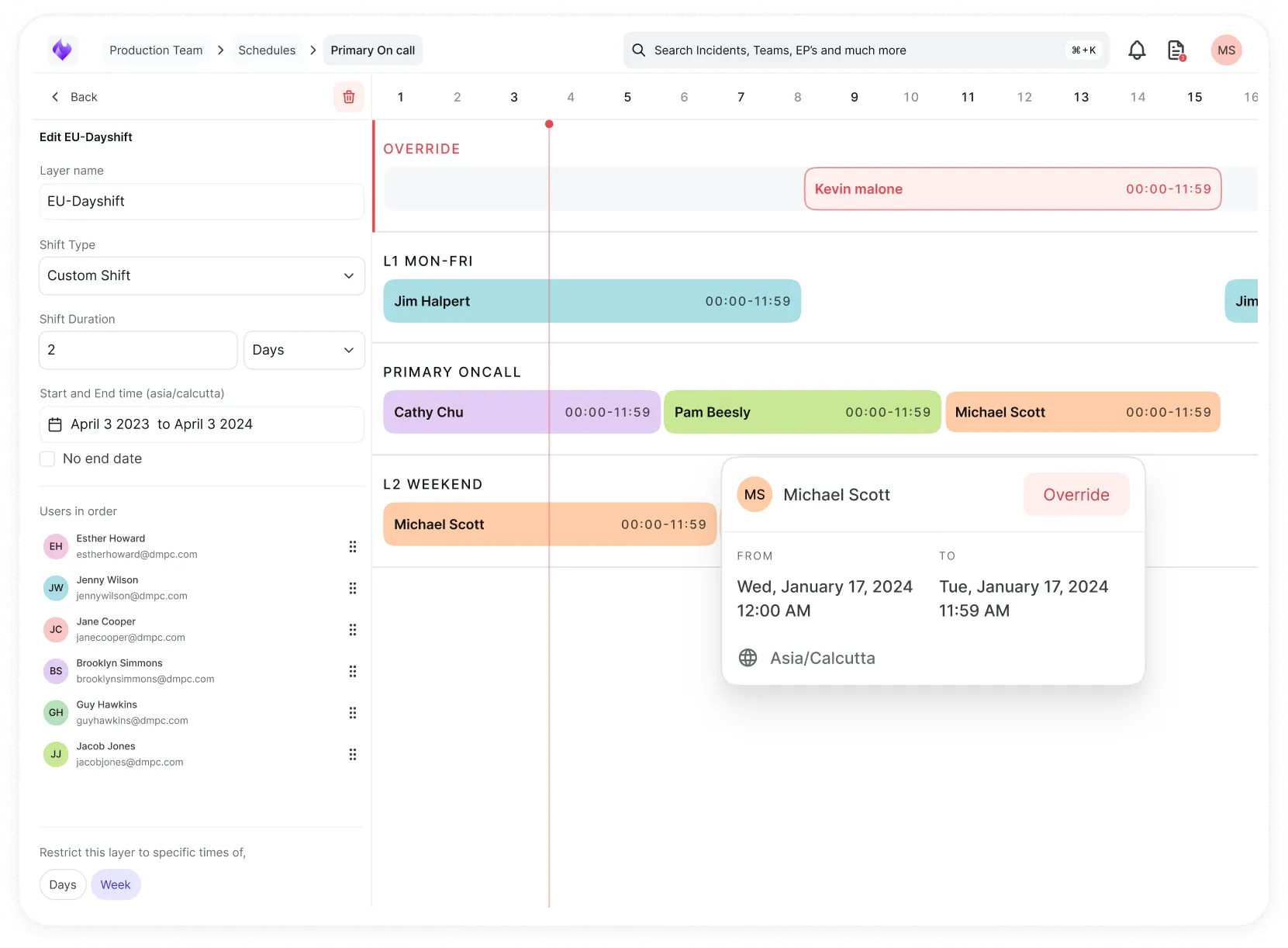
Simplify on-call scheduling, automate escalations, and reduce burnout.
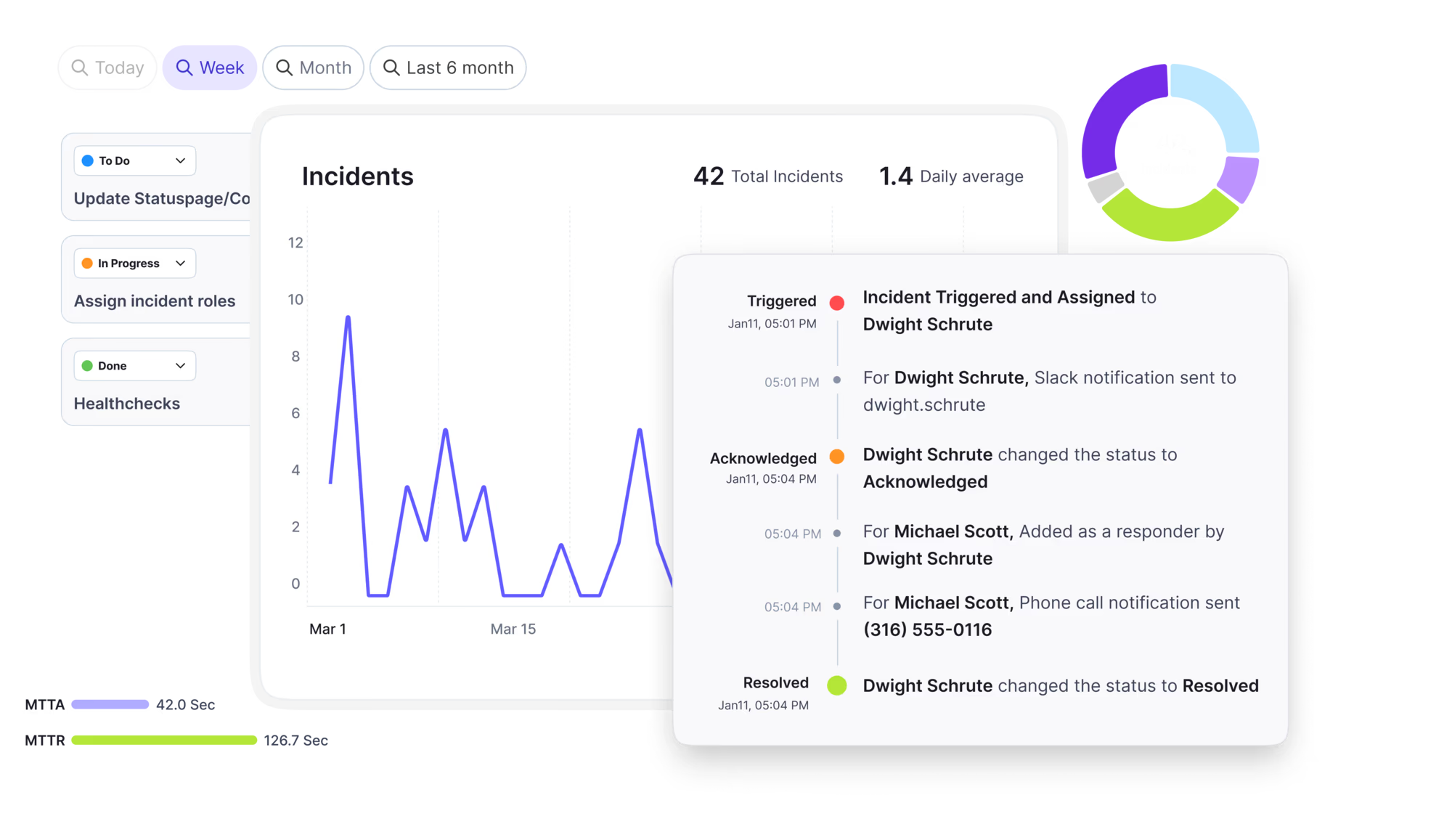
Automate postmortems, AI summaries, and post-incident workflows
Create, organize, and continuously improve your knowledge base to find the right answers with Sera AI.
We're here to help

The integration with Atlassian Jira using the Xurrent Integration Service is

The integration with Atlassian Jira using the Xurrent Integration Service is

The integration with Atlassian Jira using the Xurrent Integration Service is

The integration with Atlassian Jira using the Xurrent Integration Service is

The integration with Atlassian Jira using the Xurrent Integration Service is

The integration with Atlassian Jira using the Xurrent Integration Service is

The integration with Atlassian Jira using the Xurrent Integration Service is

The integration with Atlassian Jira using the Xurrent Integration Service is
Resolve issues quickly with an AI-powered system that automates ticketing.
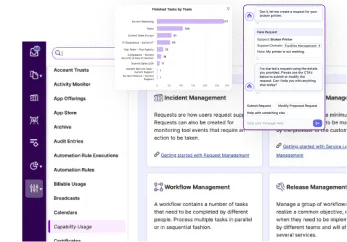
Unifiy IT, HR, Facilities, Finance, and more on a single, AI-powered service platform.
Simplify on-call scheduling, automate escalations, and reduce burnout.
Automate postmortems, AI summaries, and post-incident workflows
Create, organize, and continuously improve your knowledge base to find the right answers with Sera AI.
Resolve plant floor and IT issues before they disrupt production.
Stay audit-ready while resolving issues and reducing operational risk.

Detect, respond, and resolve incidents fast to cut downtime and MTTR.

Keep your store online, even during your biggest sales moments.

Protect patient data and resolve issues fast, so care teams stay focused on care.
Standardize service delivery across every store and channel.

We are here to help 24/7

Connect with other Xurrent Users

Get insights and tips on how to get the most out of Xurrent

Apps, APIs, and updates

Xurrent service functionality

Eliminate manual tasks, optimize workflows, and deliver faster resolutions.
Learn how organizations have reduced downtime, improved 50% MTTA & MTTR, and cut costs with Xurrent IMR.
Discover Xurrent IMR's quick support, bidirectional integrations with Jira and Slack, and more cohesive incident response capabilities compared to Opsgenie.
Understand why users value Xurrent IMR for its intuitive interface, efficient incident alerting, customizable On-call schedules, and escalations.
ITSM (IT Service Management) refers to the entirety of activities—directed by policies, organized and structured in processes and supporting procedures—that are performed by an organization to design, plan, deliver, operate, and control information technology services offered to customers. ITSM shifts the focus from managing technology for its own sake to delivering IT as a service that meets the needs of the business and its users. The discipline is process-oriented, utilizing defined best practices to manage IT services effectively, and is typically guided by frameworks such as ITIL (Information Technology Infrastructure Library), COBIT, and ISO/IEC 20000. Core ITSM processes include incident management (restoring normal service operation as quickly as possible after disruptions), problem management (identifying and addressing the root causes of incidents), change management (managing changes to IT services to minimize impact and ensure alignment with business goals), and the service desk (acting as a single point of contact for users to report issues and request services). ITSM is fundamentally service-centric, treating IT as a provider of business value rather than a collection of infrastructure components.
ITSM matters because it directly impacts how quickly IT teams can restore service during outages, how efficiently they can fulfill user requests, and how well they can align IT operations with business objectives. Organizations without structured ITSM practices face longer resolution times, inconsistent service quality, and difficulty tracking SLA compliance, which translates to lost productivity, higher operational costs, and frustrated users. ITSM provides the framework for standardizing processes such as incident, problem, and change management, ensuring that every request, incident, and change follows a consistent workflow with clear accountability. This standardization reduces errors, accelerates service delivery, and minimizes the risk of human error in repetitive tasks. ITSM also enables comprehensive visibility into service performance through real-time dashboards and reporting tools, allowing IT leaders to monitor SLAs, track improvements, and make data-driven decisions. For enterprises managing sensitive IT service data, ITSM supports compliance with industry standards such as GDPR, ISO 20000, and SOC 2, helping organizations meet their regulatory obligations. The consequences of neglecting ITSM include fragmented service delivery, lack of visibility into operational health, and an inability to scale IT operations as the organization grows.
ITSM works by organizing IT service delivery into structured, repeatable processes that span the entire service lifecycle. The service desk serves as the single point of contact where users submit requests, report incidents, or seek information, logging each interaction into a centralized ITSM platform. Incident management processes then prioritize and route these tickets to the appropriate teams, with the goal of restoring normal service operation as quickly as possible. When incidents recur, problem management investigates the underlying root causes and implements fixes to prevent future occurrences. Change management ensures that any modifications to IT services—whether infrastructure updates, software deployments, or configuration changes—are evaluated, approved, and implemented with minimal risk and disruption, often through a Change Advisory Board (CAB) that reviews proposed changes. Service level management defines, tracks, and manages Service Level Agreements (SLAs) across all services, with automated monitoring and reporting to ensure that SLAs are adhered to and any breaches are promptly addressed. ITSM platforms automate various workflows, including ticket routing, approvals, notifications, and reporting, reducing manual effort and accelerating service delivery. Real-time dashboards and analytics provide visibility into service performance, incident trends, and areas for improvement, enabling continuous improvement and strategic planning. ITSM platforms also integrate with other enterprise systems—such as ERP, CRM, and monitoring tools—through APIs and pre-built connectors, ensuring that data flows smoothly across systems and enhancing overall operational efficiency.
- Enterprise IT service desk : A multinational corporation uses an ITSM platform to centralize all employee IT requests—from password resets to hardware provisioning—routing tickets automatically to the appropriate support teams based on request type and priority. The platform tracks SLA compliance in real time, ensuring that critical incidents are resolved within agreed timeframes, and provides executives with dashboards showing service performance, resolution times, and user satisfaction scores.
- Managed Service Provider (MSP) client management : An MSP supporting multiple clients uses ITSM with secure multi-tenancy to manage service requests, incidents, and changes across dozens of customer environments. Each client's data remains isolated and compliant, while the MSP gains centralized visibility into service performance, enabling them to deliver consistent, high-quality services while reducing manual effort and strengthening client relationships.
- Healthcare system incident and change coordination : A regional healthcare network uses ITSM to manage incidents affecting electronic health records (EHR) systems, lab interfaces, and patient portals. When an EHR outage occurs, the ITSM platform automatically creates an incident ticket, notifies on-call staff, and tracks resolution progress. Change management workflows ensure that any updates to clinical systems are reviewed by a Change Advisory Board, tested in staging environments, and deployed during maintenance windows to minimize patient care disruption.
- Incident Management
- Problem Management
- Change Management
- Service Desk
- ESM (Enterprise Service Management)
---
.webp)
.webp)