




Blog
Insights & updates from our experts


Resolve plant floor and IT issues before they disrupt production.

Stay audit-ready while resolving issues and reducing operational risk.
Resolve issues quickly with an AI-powered system that automates ticketing.
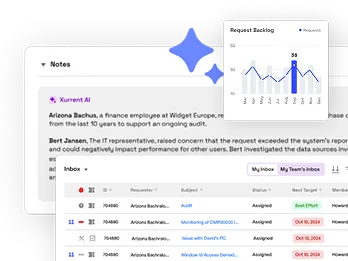
Unifiy IT, HR, Facilities, Finance, and more on a single, AI-powered service platform.
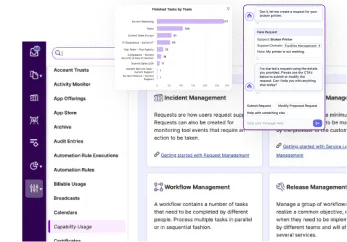
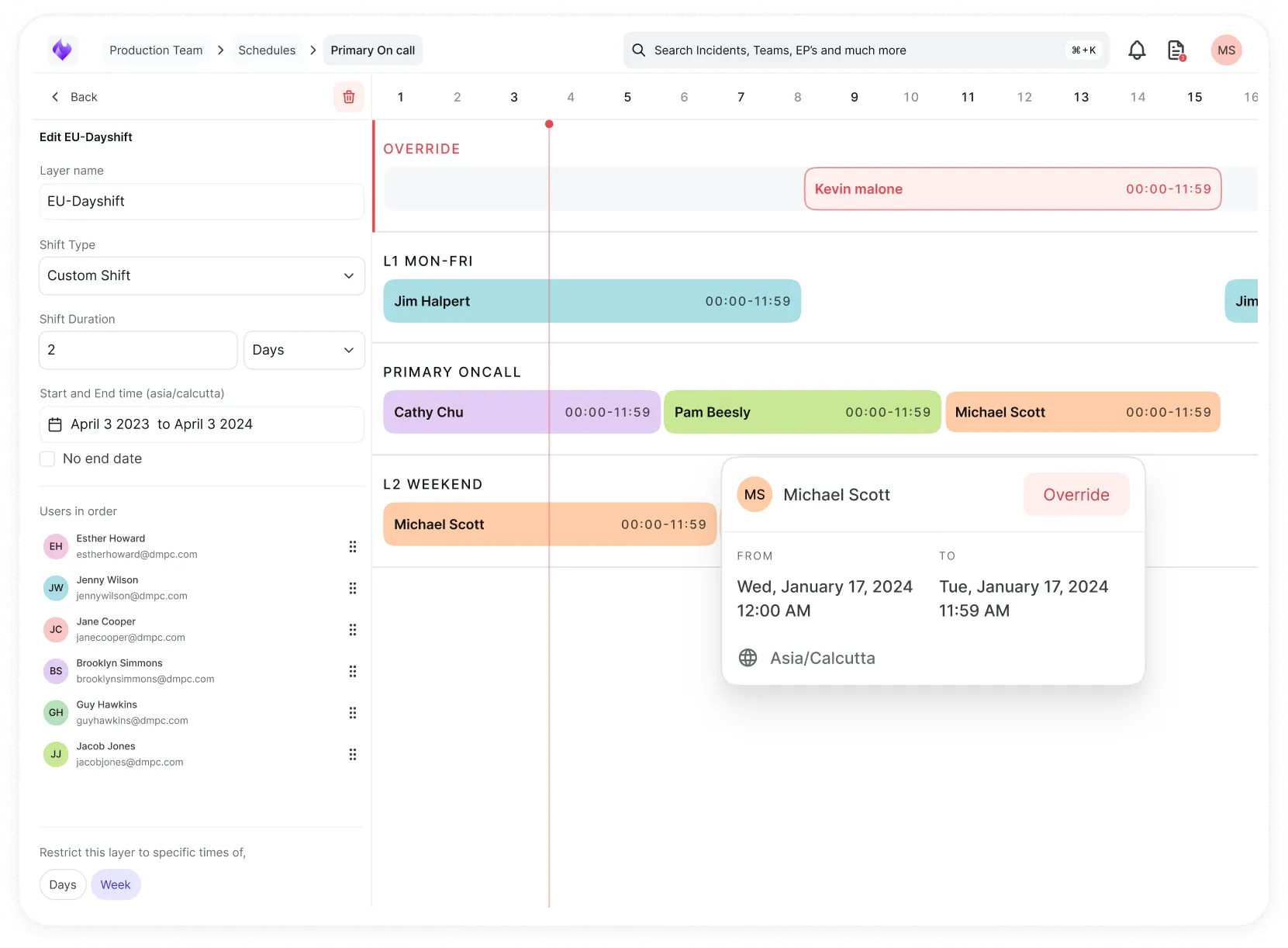
Simplify on-call scheduling, automate escalations, and reduce burnout.
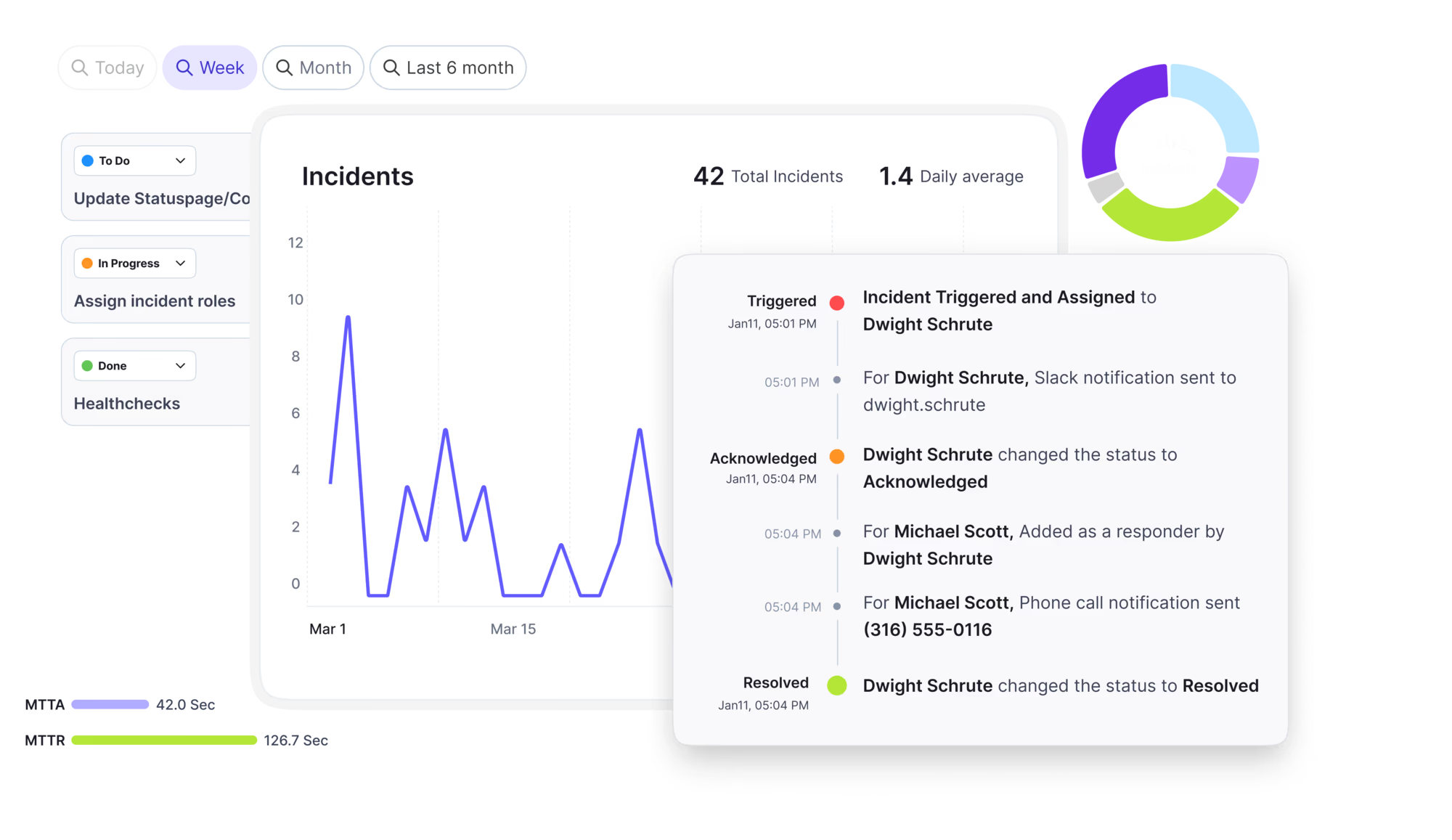
Automate postmortems, AI summaries, and post-incident workflows
Create, organize, and continuously improve your knowledge base to find the right answers with Sera AI.
We're here to help

The integration with Atlassian Jira using the Xurrent Integration Service is

The integration with Atlassian Jira using the Xurrent Integration Service is

The integration with Atlassian Jira using the Xurrent Integration Service is

The integration with Atlassian Jira using the Xurrent Integration Service is

The integration with Atlassian Jira using the Xurrent Integration Service is

The integration with Atlassian Jira using the Xurrent Integration Service is

The integration with Atlassian Jira using the Xurrent Integration Service is

The integration with Atlassian Jira using the Xurrent Integration Service is
Resolve issues quickly with an AI-powered system that automates ticketing.
Unifiy IT, HR, Facilities, Finance, and more on a single, AI-powered service platform.
Simplify on-call scheduling, automate escalations, and reduce burnout.
Automate postmortems, AI summaries, and post-incident workflows
Create, organize, and continuously improve your knowledge base to find the right answers with Sera AI.
Resolve plant floor and IT issues before they disrupt production.
Stay audit-ready while resolving issues and reducing operational risk.

Detect, respond, and resolve incidents fast to cut downtime and MTTR.

Keep your store online, even during your biggest sales moments.

Protect patient data and resolve issues fast, so care teams stay focused on care.

Standardize service delivery across every store and channel.

We are here to help 24/7

Connect with other Xurrent Users

Get insights and tips on how to get the most out of Xurrent

Apps, APIs, and updates

Xurrent service functionality

Eliminate manual tasks, optimize workflows, and deliver faster resolutions.
Learn how organizations have reduced downtime, improved 50% MTTA & MTTR, and cut costs with Xurrent IMR.
Discover Xurrent IMR's quick support, bidirectional integrations with Jira and Slack, and more cohesive incident response capabilities compared to Opsgenie.
Understand why users value Xurrent IMR for its intuitive interface, efficient incident alerting, customizable On-call schedules, and escalations.
Return on Investment (ROI) is a financial metric that measures the profitability of an investment by comparing the net gain or loss relative to its cost, expressed as a percentage. In ITSM, ESM, and ITOM contexts, ROI quantifies the value delivered by service management platforms, automation initiatives, incident response tools, and operational improvements by calculating the ratio of benefits—such as reduced labor costs, faster resolution times, improved uptime, and avoided downtime expenses—to the total cost of implementation, licensing, training, and ongoing maintenance. IT leaders use ROI to justify platform investments, prioritize initiatives, and demonstrate how service management capabilities translate into measurable business outcomes, typically calculating ROI as [(Net Benefit - Total Cost) / Total Cost] × 100, where net benefit includes both hard savings (labor reduction, license consolidation) and soft savings (productivity gains, risk mitigation).
ROI provides the financial justification required to secure budget approval for ITSM platforms, incident management tools, and automation projects in organizations where IT spending competes with other business priorities. Without clear ROI, IT leaders struggle to defend service management investments against skepticism from finance teams and executive stakeholders who demand proof that operational improvements deliver bottom-line value. Accurate ROI calculations help prioritize competing initiatives by revealing which projects—whether implementing AI-driven ticket routing, consolidating vendor tools, or deploying automated incident response—will deliver the fastest payback and highest long-term value. Organizations that track ROI continuously can identify underperforming investments early, adjust implementation strategies, and demonstrate accountability for IT spending, building credibility that supports future funding requests. Poor ROI tracking leads to budget cuts, stalled modernization efforts, and missed opportunities to quantify wins like reduced MTTR, eliminated manual work, and improved service availability that directly impact revenue and customer satisfaction.
ROI calculation begins with defining the investment scope—including software licensing, implementation services, training, integration costs, and ongoing support—to establish the total cost baseline. Teams then identify and quantify expected benefits across multiple categories: hard cost savings such as reduced headcount needs, eliminated legacy tool licenses, and lower incident-related downtime costs; efficiency gains measured through time saved on manual tasks, faster ticket resolution, and reduced escalations; and risk mitigation benefits like improved compliance, reduced security incidents, and better SLA adherence. Organizations typically project benefits over a 3-5 year period, accounting for the time required to achieve full adoption and realize cumulative gains. The ROI formula divides net benefit (total benefits minus total costs) by total costs, producing a percentage that indicates return—for example, a 150% ROI means the investment generated $1.50 in value for every dollar spent. Sophisticated ROI models incorporate time-to-value metrics, discount future benefits to present value, and separate one-time gains from recurring annual benefits to provide a complete financial picture. Tracking actual ROI post-implementation requires measuring real outcomes against projections, using metrics like tickets resolved per agent, hours saved through automation, reduction in P1 incident duration, and percentage decrease in total cost of ownership compared to previous solutions.
- Nuclear energy provider implementing Xurrent ITSM : With a $60K fully loaded FTE benchmark, the organization avoided approximately 4,300 hours of manual work annually—equivalent to 2+ FTEs—through automated workflows and AI-driven ticket routing, while achieving 96% user satisfaction and resolving nearly half of all requests without manual intervention, delivering measurable ROI through labor cost avoidance and productivity gains.
- Global manufacturing company consolidating service management tools : A multinational manufacturer replaced three separate ITSM, monitoring, and communication platforms with a unified service management solution, reducing annual licensing costs by $180K, eliminating 1,200 hours of manual work in six months through automation, and cutting average ticket resolution time by 35%, achieving positive ROI within 16 weeks of go-live while improving service quality across 14 countries.
- Mid-market SaaS company deploying incident management platform : A 500-employee technology company implemented automated incident response to address alert fatigue and slow MTTR, reducing mean time to acknowledge from 12 minutes to 3 minutes, cutting P1 incident duration by 40%, and avoiding an estimated $2.4M in annual revenue loss from downtime, achieving 320% ROI in the first year through improved availability and reduced on-call burden.
- MTTR (Mean Time to Repair)
- Total Cost of Ownership
- KPI (Key Performance Indicator)
- Service Level Agreement
- Automation
---

.webp)
.webp)