




Blog
Insights & updates from our experts


Resolve plant floor and IT issues before they disrupt production.

Stay audit-ready while resolving issues and reducing operational risk.
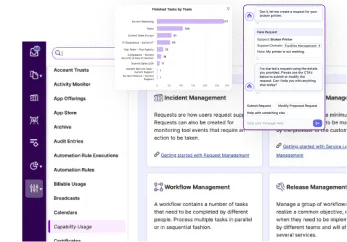
Resolve issues quickly with an AI-powered system that automates ticketing.
Unifiy IT, HR, Facilities, Finance, and more on a single, AI-powered service platform.
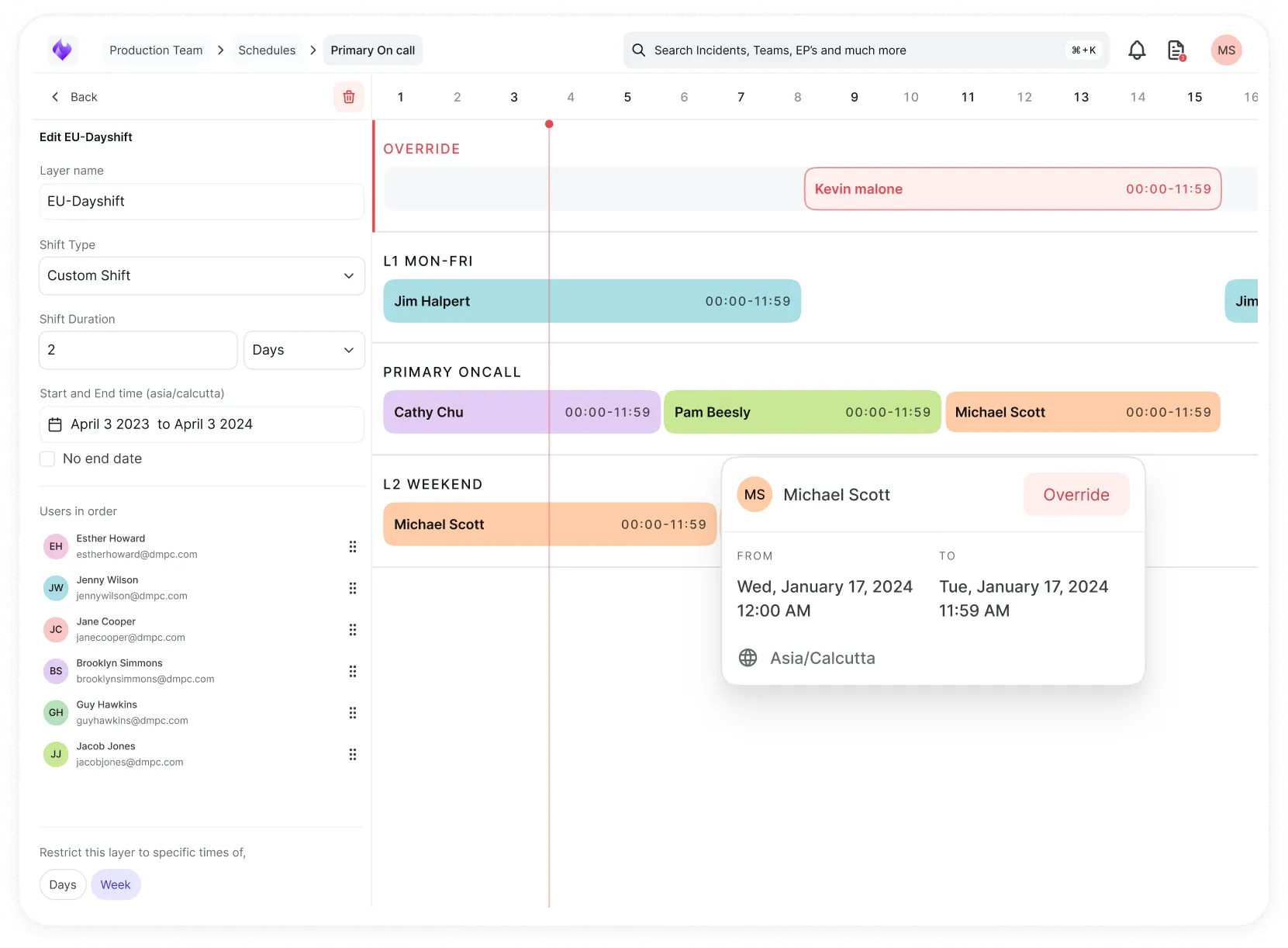
Simplify on-call scheduling, automate escalations, and reduce burnout.
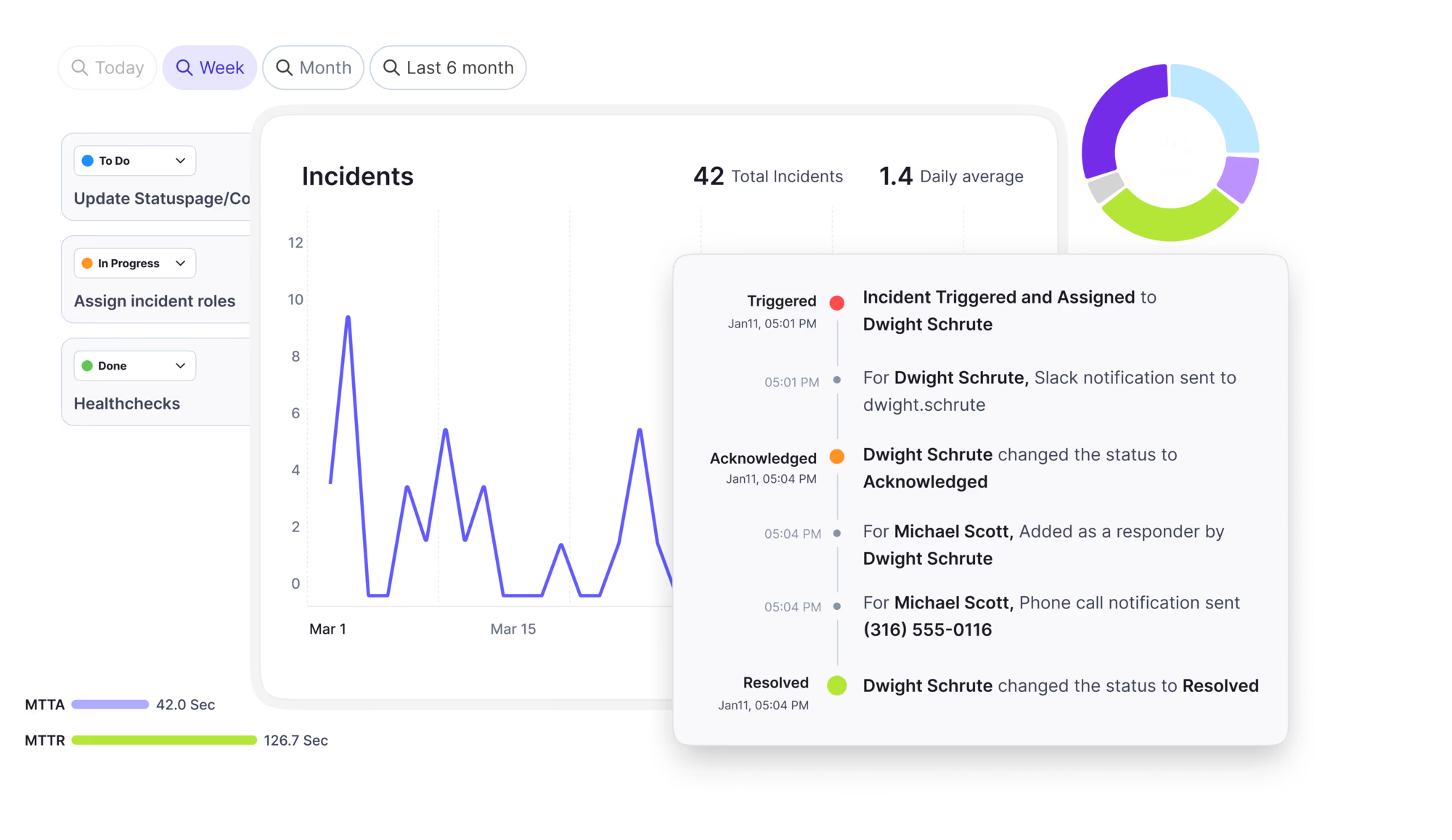
Automate postmortems, AI summaries, and post-incident workflows
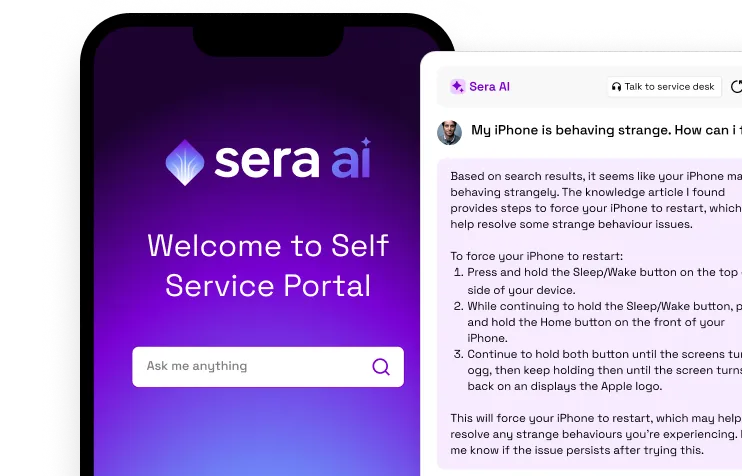
Create, organize, and continuously improve your knowledge base to find the right answers with Sera AI.
We're here to help

The integration with Atlassian Jira using the Xurrent Integration Service is

The integration with Atlassian Jira using the Xurrent Integration Service is

The integration with Atlassian Jira using the Xurrent Integration Service is

The integration with Atlassian Jira using the Xurrent Integration Service is

The integration with Atlassian Jira using the Xurrent Integration Service is

The integration with Atlassian Jira using the Xurrent Integration Service is

The integration with Atlassian Jira using the Xurrent Integration Service is

The integration with Atlassian Jira using the Xurrent Integration Service is
Resolve issues quickly with an AI-powered system that automates ticketing.
Unifiy IT, HR, Facilities, Finance, and more on a single, AI-powered service platform.
Simplify on-call scheduling, automate escalations, and reduce burnout.
Automate postmortems, AI summaries, and post-incident workflows
Create, organize, and continuously improve your knowledge base to find the right answers with Sera AI.
Resolve plant floor and IT issues before they disrupt production.
Stay audit-ready while resolving issues and reducing operational risk.

Detect, respond, and resolve incidents fast to cut downtime and MTTR.

Keep your store online, even during your biggest sales moments.

Protect patient data and resolve issues fast, so care teams stay focused on care.

Standardize service delivery across every store and channel.

We are here to help 24/7

Connect with other Xurrent Users

Get insights and tips on how to get the most out of Xurrent

Apps, APIs, and updates

Xurrent service functionality

Eliminate manual tasks, optimize workflows, and deliver faster resolutions.
Learn how organizations have reduced downtime, improved 50% MTTA & MTTR, and cut costs with Xurrent IMR.
Discover Xurrent IMR's quick support, bidirectional integrations with Jira and Slack, and more cohesive incident response capabilities compared to Opsgenie.
Understand why users value Xurrent IMR for its intuitive interface, efficient incident alerting, customizable On-call schedules, and escalations.
RAG (Retrieval-Augmented Generation) is an AI architecture that enhances large language model (LLM) outputs by connecting the model to external, organization-specific data sources during inference. Instead of relying solely on the static knowledge embedded during training, RAG retrieves relevant information from live knowledge bases, documentation repositories, ticket histories, or configuration databases at query time, then uses that context to generate accurate, up-to-date responses. This approach addresses a core limitation of standalone LLMs: they cannot access information created after their training cutoff or reference proprietary data they were never trained on. In ITSM and incident management contexts, RAG enables AI assistants to answer questions using current runbooks, recent incident postmortems, active SLA definitions, or real-time CMDB records rather than generic or outdated information.
RAG (Retrieval-Augmented Generation) directly impacts service desk efficiency, incident resolution speed, and knowledge accuracy. Without RAG, AI-powered virtual agents and chatbots generate responses based only on their training data, leading to hallucinations—plausible-sounding but incorrect answers—or outdated guidance that no longer reflects current procedures, configurations, or policies. This erodes user trust, increases ticket escalations, and forces agents to manually verify every AI-generated suggestion. RAG eliminates these risks by grounding responses in authoritative, current sources: when a service desk agent asks an AI assistant how to reset a specific application password, RAG retrieves the exact procedure from the live knowledge base rather than inventing steps. For incident responders, RAG accelerates root cause identification by surfacing relevant past incidents, known issues, and configuration details tied to the affected service. Organizations that implement RAG see measurable improvements in first-contact resolution rates, reduced MTTR, and higher CSAT scores because responses are both contextually relevant and factually correct. The alternative—manually searching documentation or relying on institutional memory—introduces delays, inconsistency, and knowledge gaps that directly extend downtime and degrade service quality.
RAG (Retrieval-Augmented Generation) operates through a two-stage process: retrieval and generation. When a user submits a query, the system first converts the question into a vector embedding—a numerical representation of its semantic meaning—and searches a vector database containing embeddings of all indexed documents, tickets, articles, and records. The retrieval engine identifies the most semantically similar content, typically returning the top 3–10 most relevant passages or records based on similarity scores. These retrieved documents are then injected into the LLM's prompt as context, alongside the original user question. The LLM generates a response using both its pre-trained knowledge and the specific, current information provided in the retrieved context. Crucially, the LLM never modifies the source data; it only synthesizes and formats the retrieved information into a coherent answer. In Xurrent's implementation, RAG connects to ITSM knowledge bases, incident histories, CMDB records, and workflow documentation, ensuring that AI-generated responses reflect live operational data. The vector database is continuously updated as new articles are published, incidents are resolved, or configurations change, keeping the retrieval layer current without requiring model retraining. This architecture also supports citation: responses can reference the specific knowledge article, incident ticket, or configuration item used to generate the answer, enabling users to verify sources and maintain audit trails.
- Service Desk Knowledge Retrieval : A service desk agent receives a ticket about a VPN connection failure and asks the AI assistant for troubleshooting steps. RAG retrieves the most recent VPN troubleshooting article from the knowledge base, which was updated two weeks ago to reflect a new authentication method, and generates step-by-step instructions that match the current configuration. Without RAG, the assistant might provide outdated steps referencing the old authentication system, wasting time and escalating the ticket unnecessarily.
- Incident Response Context : During a production outage affecting the payment processing service, an SRE queries the incident management platform for similar past incidents. RAG searches historical incident records, retrieves three prior outages with matching symptoms and affected services, and summarizes their root causes, resolution steps, and postmortem action items. This context accelerates diagnosis by highlighting a known database connection pool exhaustion issue that was previously resolved by scaling the connection limit, reducing MTTR by 40%.
- Compliance and Policy Guidance : An IT manager needs to verify data retention requirements for customer support tickets before configuring an automated archival workflow. RAG retrieves the organization's current data retention policy document, the relevant ISO 27001 control requirements, and recent audit findings related to records management, then generates a summary confirming the 7-year retention period and highlighting encryption requirements for archived data. This ensures the workflow configuration meets compliance standards without requiring manual policy review across multiple systems.
- LLM (Large Language Model)
- Knowledge Management
- Virtual Agent
- AIOps (Artificial Intelligence for IT Operations)
- NLP (Natural Language Processing)
---

.webp)
.webp)