




Blog
Insights & updates from our experts


Resolve plant floor and IT issues before they disrupt production.

Stay audit-ready while resolving issues and reducing operational risk.
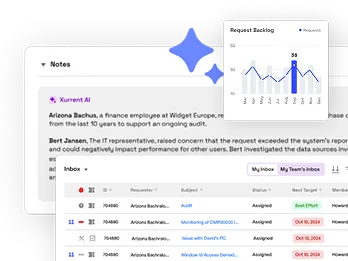
Resolve issues quickly with an AI-powered system that automates ticketing.
Unifiy IT, HR, Facilities, Finance, and more on a single, AI-powered service platform.
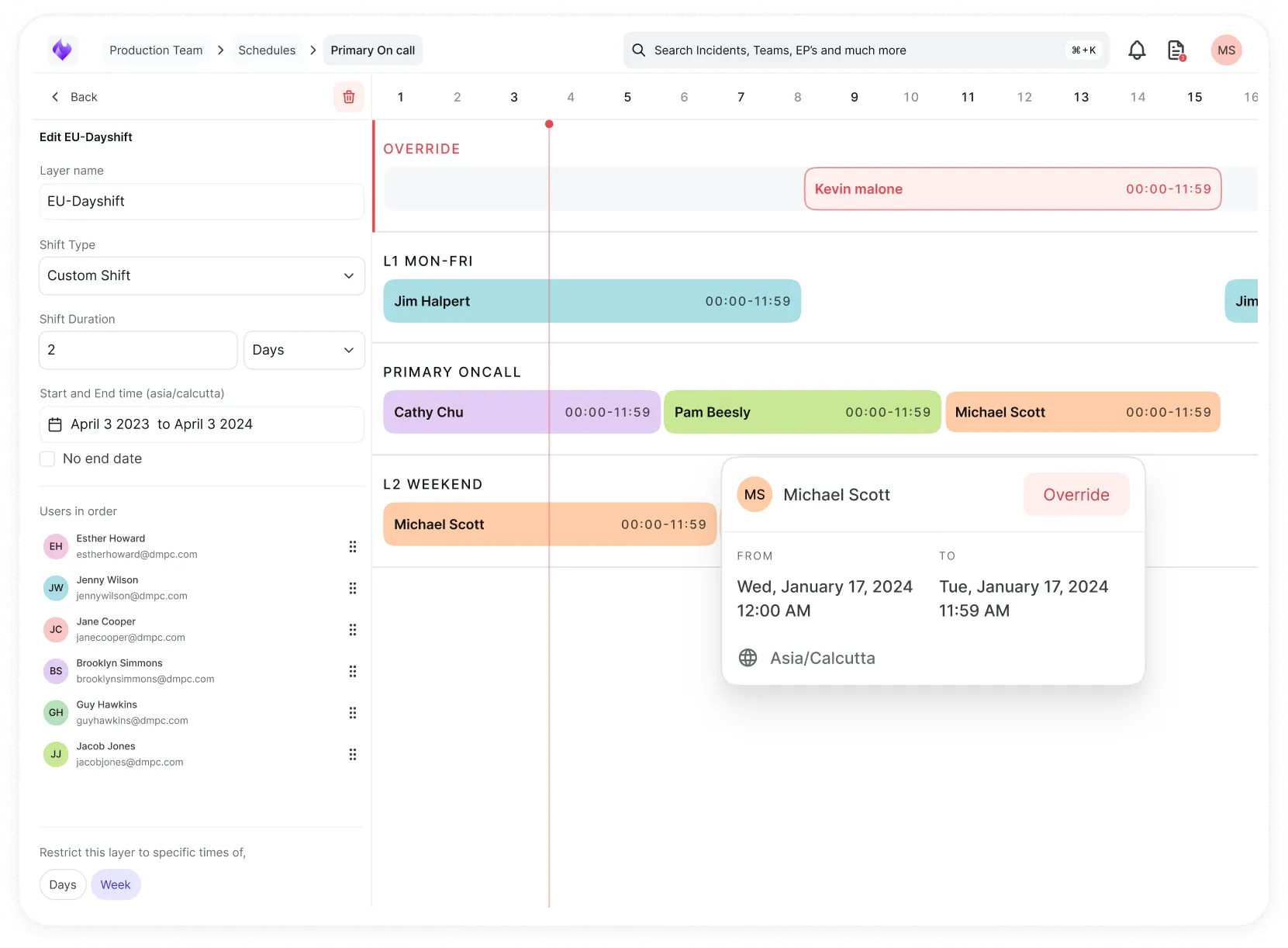
Simplify on-call scheduling, automate escalations, and reduce burnout.
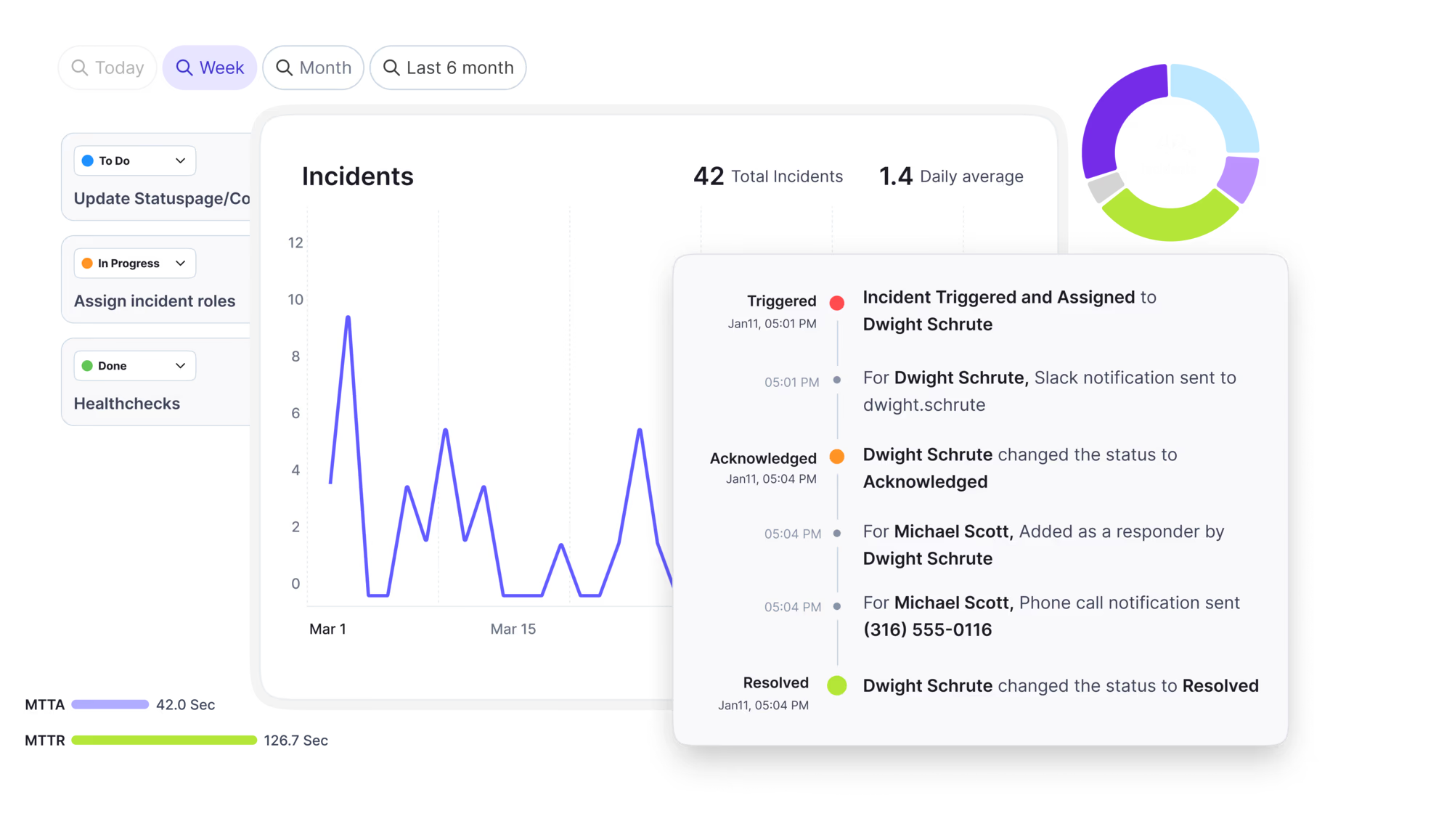
Automate postmortems, AI summaries, and post-incident workflows
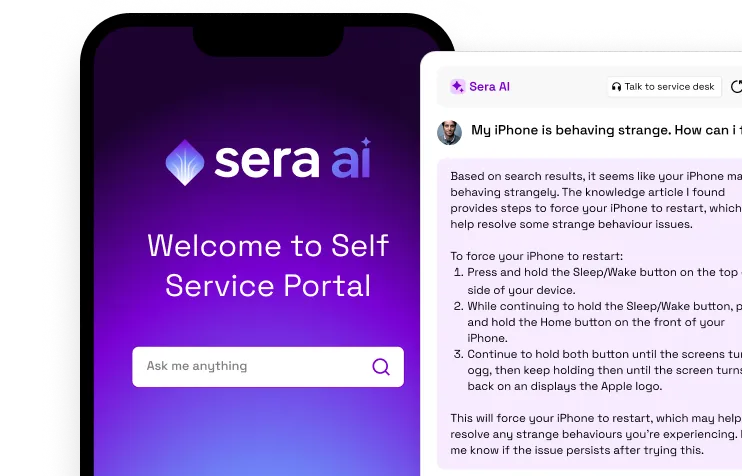
Create, organize, and continuously improve your knowledge base to find the right answers with Sera AI.
We're here to help

The integration with Atlassian Jira using the Xurrent Integration Service is

The integration with Atlassian Jira using the Xurrent Integration Service is

The integration with Atlassian Jira using the Xurrent Integration Service is

The integration with Atlassian Jira using the Xurrent Integration Service is

The integration with Atlassian Jira using the Xurrent Integration Service is

The integration with Atlassian Jira using the Xurrent Integration Service is

The integration with Atlassian Jira using the Xurrent Integration Service is

The integration with Atlassian Jira using the Xurrent Integration Service is
Resolve issues quickly with an AI-powered system that automates ticketing.
Unifiy IT, HR, Facilities, Finance, and more on a single, AI-powered service platform.
Simplify on-call scheduling, automate escalations, and reduce burnout.
Automate postmortems, AI summaries, and post-incident workflows
Create, organize, and continuously improve your knowledge base to find the right answers with Sera AI.
Resolve plant floor and IT issues before they disrupt production.
Stay audit-ready while resolving issues and reducing operational risk.

Detect, respond, and resolve incidents fast to cut downtime and MTTR.

Keep your store online, even during your biggest sales moments.

Protect patient data and resolve issues fast, so care teams stay focused on care.
Standardize service delivery across every store and channel.

We are here to help 24/7

Connect with other Xurrent Users

Get insights and tips on how to get the most out of Xurrent

Apps, APIs, and updates

Xurrent service functionality

Eliminate manual tasks, optimize workflows, and deliver faster resolutions.
Learn how organizations have reduced downtime, improved 50% MTTA & MTTR, and cut costs with Xurrent IMR.
Discover Xurrent IMR's quick support, bidirectional integrations with Jira and Slack, and more cohesive incident response capabilities compared to Opsgenie.
Understand why users value Xurrent IMR for its intuitive interface, efficient incident alerting, customizable On-call schedules, and escalations.
AIOps (Artificial Intelligence for IT Operations) applies machine learning, analytics, and artificial intelligence to automate and enhance IT operations processes, including event correlation, anomaly detection, root cause analysis, and incident prediction. Originally coined by Gartner, the term describes platforms that ingest large volumes of operational data—logs, metrics, events, and traces—from monitoring tools, observability systems, and infrastructure components, then use algorithms to identify patterns, filter noise, and surface actionable insights that human operators would struggle to detect manually. AIOps platforms combine big data processing with supervised and unsupervised machine learning to reduce alert fatigue, accelerate mean time to resolution (MTTR), and enable proactive incident prevention across complex, distributed IT environments.
Modern IT environments generate thousands of alerts daily from monitoring and observability tools, overwhelming operations teams with noise and making it difficult to identify genuine incidents before they impact users. AIOps (Artificial Intelligence for IT Operations) matters because it automates the correlation of related events, suppresses duplicate or low-priority alerts, and routes critical incidents to the right responders with relevant context—capabilities that directly reduce MTTR and prevent alert fatigue. Organizations running cloud-native architectures, microservices, or hybrid infrastructure depend on AIOps to maintain visibility and control as system complexity scales beyond human capacity to manually triage and diagnose issues. Without intelligent automation, teams face longer outages, higher operational costs, repeated incidents from unresolved root causes, and burnout from constant firefighting. AIOps enables IT and SRE teams to shift from reactive troubleshooting to proactive reliability engineering by surfacing trends, predicting failures, and automating remediation workflows.
AIOps (Artificial Intelligence for IT Operations) platforms collect telemetry data from multiple sources—application performance monitoring (APM) tools, infrastructure monitoring systems, log aggregators, ticketing platforms, and configuration management databases (CMDBs)—then normalize and enrich that data to create a unified operational view. Machine learning models analyze historical and real-time data to establish baselines for normal behavior, detect anomalies when metrics deviate from expected patterns, and correlate related events across systems to identify probable root causes. Event correlation engines group alerts that share common attributes—such as timeframe, affected services, or infrastructure dependencies—reducing hundreds of individual alerts into a single actionable incident. Natural language processing (NLP) may be applied to unstructured log data and incident descriptions to extract meaningful signals and suggest remediation steps based on past resolutions. Advanced AIOps implementations use predictive analytics to forecast capacity constraints, performance degradation, or component failures before they trigger outages, and some platforms integrate with automation tools to execute remediation workflows—such as restarting services, scaling resources, or rolling back deployments—without human intervention.
- E-commerce platform incident response : An online retailer's AIOps platform correlates a spike in API latency alerts, database connection errors, and increased customer complaint tickets, automatically creating a single high-priority incident, paging the on-call SRE with full context, and suggesting a recent deployment as the probable cause—reducing diagnosis time from 45 minutes to under 5 minutes.
- Financial services anomaly detection : A bank's AIOps system detects an unusual pattern in transaction processing times across multiple data centers, flags the anomaly before customers report issues, and triggers an automated runbook that scales compute resources and notifies the infrastructure team, preventing a service degradation that would have affected thousands of transactions.
- Healthcare IT proactive maintenance : A hospital network's AIOps platform analyzes historical data from medical device monitoring systems, predicts an impending storage failure on a critical imaging server based on disk I/O trends, and generates a change request for preemptive hardware replacement during a scheduled maintenance window, avoiding unplanned downtime in a patient care environment.
- Incident Management
- MTTR (Mean Time to Repair)
- Monitoring and Event Management
- Machine Learning
- Problem Management
---

.webp)
.webp)