


Blog
Insights & updates from our experts


Resolve plant floor and IT issues before they disrupt production.

Stay audit-ready while resolving issues and reducing operational risk.
Resolve issues quickly with an AI-powered system that automates ticketing.
Unifiy IT, HR, Facilities, Finance, and more on a single, AI-powered service platform.
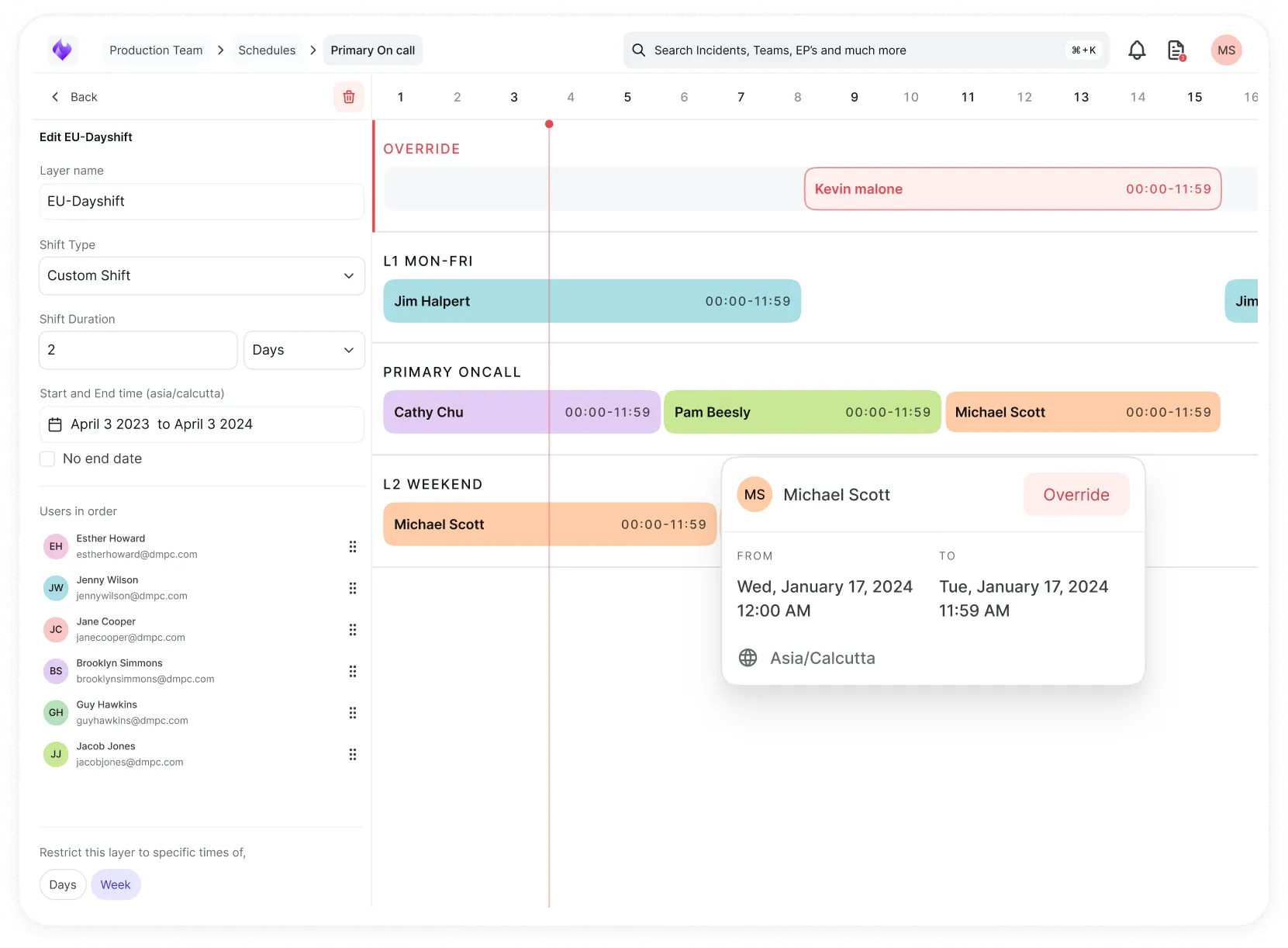
Simplify on-call scheduling, automate escalations, and reduce burnout.
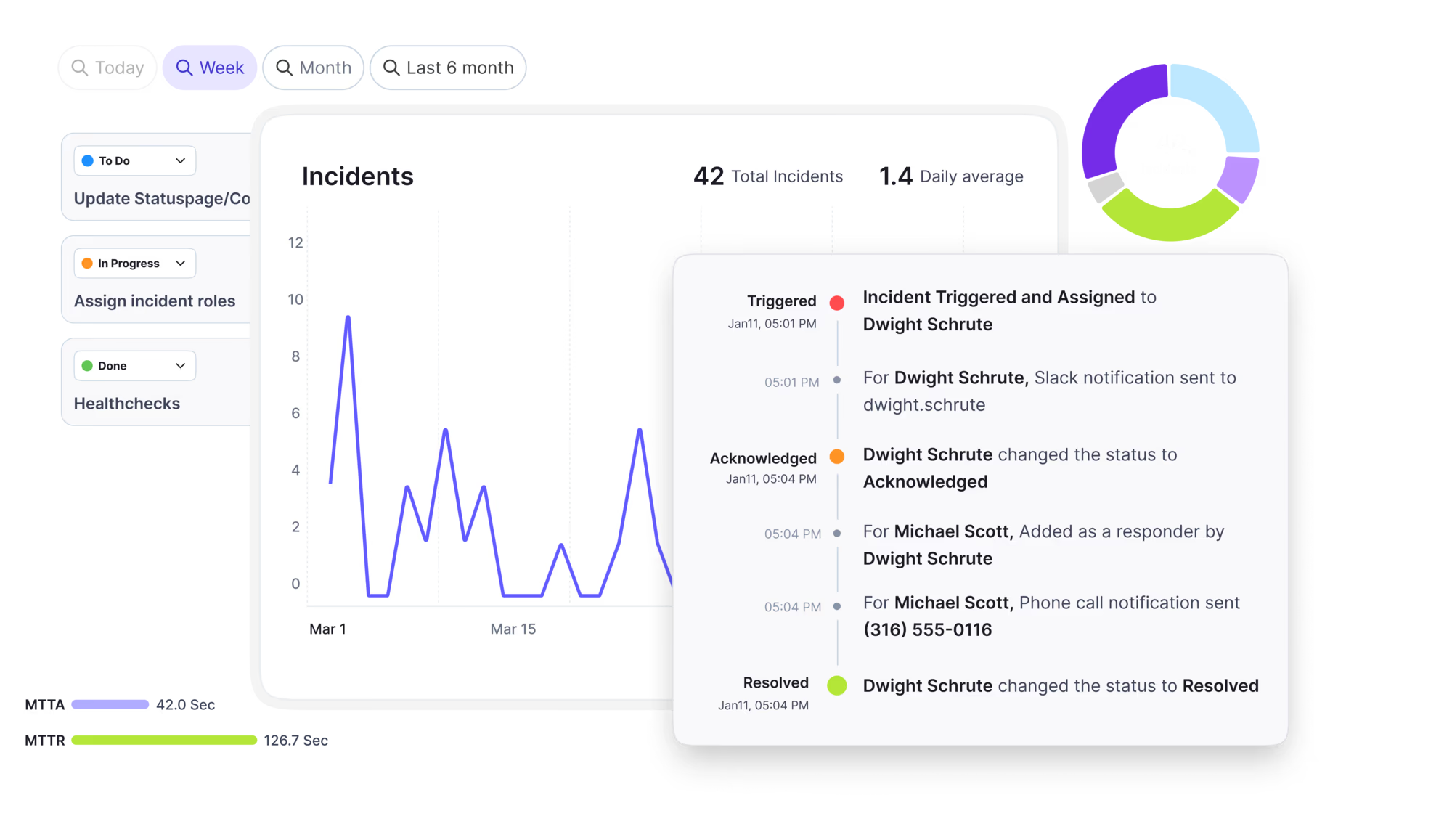
Automate postmortems, AI summaries, and post-incident workflows
Create, organize, and continuously improve your knowledge base to find the right answers with Sera AI.
We're here to help

The integration with Atlassian Jira using the Xurrent Integration Service is

The integration with Atlassian Jira using the Xurrent Integration Service is

The integration with Atlassian Jira using the Xurrent Integration Service is

The integration with Atlassian Jira using the Xurrent Integration Service is

The integration with Atlassian Jira using the Xurrent Integration Service is

The integration with Atlassian Jira using the Xurrent Integration Service is

The integration with Atlassian Jira using the Xurrent Integration Service is

The integration with Atlassian Jira using the Xurrent Integration Service is
Resolve issues quickly with an AI-powered system that automates ticketing.
Unifiy IT, HR, Facilities, Finance, and more on a single, AI-powered service platform.
Simplify on-call scheduling, automate escalations, and reduce burnout.
Automate postmortems, AI summaries, and post-incident workflows
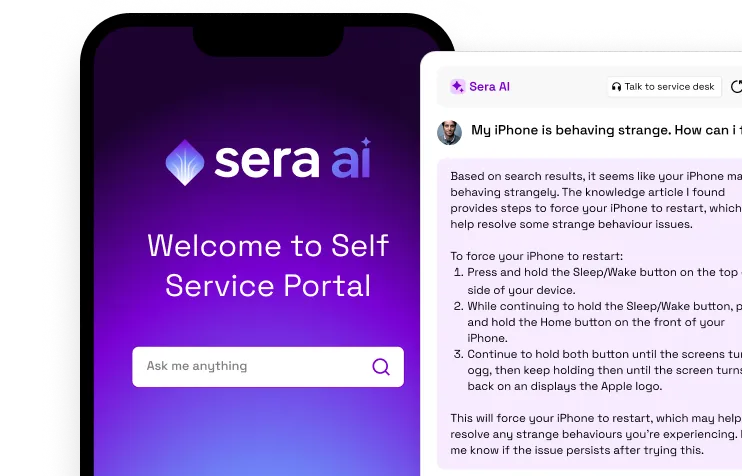
Create, organize, and continuously improve your knowledge base to find the right answers with Sera AI.
Resolve plant floor and IT issues before they disrupt production.
Stay audit-ready while resolving issues and reducing operational risk.

Detect, respond, and resolve incidents fast to cut downtime and MTTR.

Keep your store online, even during your biggest sales moments.

Protect patient data and resolve issues fast, so care teams stay focused on care.

Standardize service delivery across every store and channel.

We are here to help 24/7

Connect with other Xurrent Users

Get insights and tips on how to get the most out of Xurrent

Apps, APIs, and updates

Xurrent service functionality

Eliminate manual tasks, optimize workflows, and deliver faster resolutions.
Learn how organizations have reduced downtime, improved 50% MTTA & MTTR, and cut costs with Xurrent IMR.
Discover Xurrent IMR's quick support, bidirectional integrations with Jira and Slack, and more cohesive incident response capabilities compared to Opsgenie.
Understand why users value Xurrent IMR for its intuitive interface, efficient incident alerting, customizable On-call schedules, and escalations.
An OLA (Operational Level Agreement) is an internal agreement between support teams or departments within the same organization that defines how they will work together to deliver services and meet external Service Level Agreements (SLAs). Unlike SLAs, which govern commitments to customers or end users, OLAs establish the interdependencies, response times, handoff procedures, and responsibilities between internal groups—such as between the service desk and network operations, or between application support and database administration. OLAs ensure that each internal team understands its role in the service delivery chain and commits to performance targets that enable the organization to honor its customer-facing SLAs. In ITIL and ISO/IEC 20000 frameworks, OLAs are documented agreements that support service level management by clarifying who does what, when, and to what standard across internal boundaries.
OLAs prevent internal service breakdowns that cascade into customer-facing SLA breaches. When a service desk logs an incident requiring network team intervention, an OLA specifies how quickly the network team must respond and begin troubleshooting—ensuring the overall incident resolution stays within the SLA window. Without OLAs, internal teams operate with unclear expectations, leading to finger-pointing during outages, delayed escalations, and uncoordinated responses that extend MTTR and damage service reliability. OLAs also create accountability: when an SLA is missed, OLA metrics reveal which internal handoff or response failed, enabling root cause analysis and process improvement. For organizations managing multi-tier support, external service providers, or cross-functional service delivery (IT, facilities, HR), OLAs provide the operational scaffolding that keeps complex service chains functioning predictably. They reduce ambiguity, improve coordination during incidents, and ensure that internal performance aligns with external commitments—protecting both customer satisfaction and operational efficiency.
An OLA is negotiated and documented between internal teams as part of service level management. The process begins by mapping service dependencies: identifying which internal groups must collaborate to deliver a specific service and where handoffs occur. Each team's responsibilities are defined—such as the service desk logging and categorizing incidents, the application team diagnosing software issues, and the infrastructure team resolving server or network problems. The OLA then specifies measurable commitments for each team: response times (e.g., network team acknowledges escalated incidents within 15 minutes), resolution targets (e.g., database team restores backup within 2 hours), availability windows (e.g., change management team processes emergency changes within 30 minutes), and communication protocols (e.g., status updates every hour during major incidents). These internal targets are designed to roll up into external SLAs—if the SLA promises 4-hour incident resolution, the OLA might allocate 30 minutes for service desk triage, 2 hours for technical team diagnosis, 1 hour for fix implementation, and 30 minutes for verification and closure. OLAs are monitored through the same ITSM platform that tracks SLAs, with dashboards showing whether internal teams met their commitments. When OLA breaches occur, they trigger reviews to determine whether the agreement needs adjustment, additional resources are required, or process changes are necessary. OLAs are living documents, reviewed quarterly or after major incidents, and updated as services evolve or team structures change.
- Service Desk to Network Operations OLA : A financial services company's service desk commits to escalate network-related incidents to the network operations team within 10 minutes of identification, and the network team commits to acknowledge within 5 minutes and provide an initial diagnosis within 30 minutes. This OLA ensures that connectivity issues affecting online banking are addressed rapidly enough to meet the 1-hour customer SLA for critical service restoration.
- Application Support to Database Administration OLA : A healthcare provider's application support team and database administration team establish an OLA where application support logs database performance issues with specific diagnostic data (query plans, error logs, affected tables) within 15 minutes of detection, and the DBA team commits to begin investigation within 20 minutes and provide a resolution or workaround within 2 hours. This internal coordination supports the hospital's 3-hour SLA for restoring electronic health record system functionality.
- Change Management to Release Management OLA : An e-commerce platform's change management team commits to review and approve standard change requests within 4 business hours, and the release management team commits to deploy approved changes to production within 8 hours during business days. This OLA enables the organization to meet its 24-hour SLA for implementing customer-requested feature updates while maintaining change control and minimizing deployment risk.
- SLA (Service Level Agreement)
- Service Level Management
- Underpinning Contract
- Incident Management
- Change Management
---


.webp)
.webp)