



Blog
Insights & updates from our experts


Resolve plant floor and IT issues before they disrupt production.

Stay audit-ready while resolving issues and reducing operational risk.
Resolve issues quickly with an AI-powered system that automates ticketing.
Unifiy IT, HR, Facilities, Finance, and more on a single, AI-powered service platform.
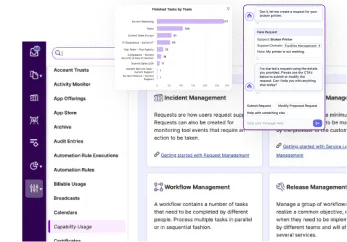
Simplify on-call scheduling, automate escalations, and reduce burnout.
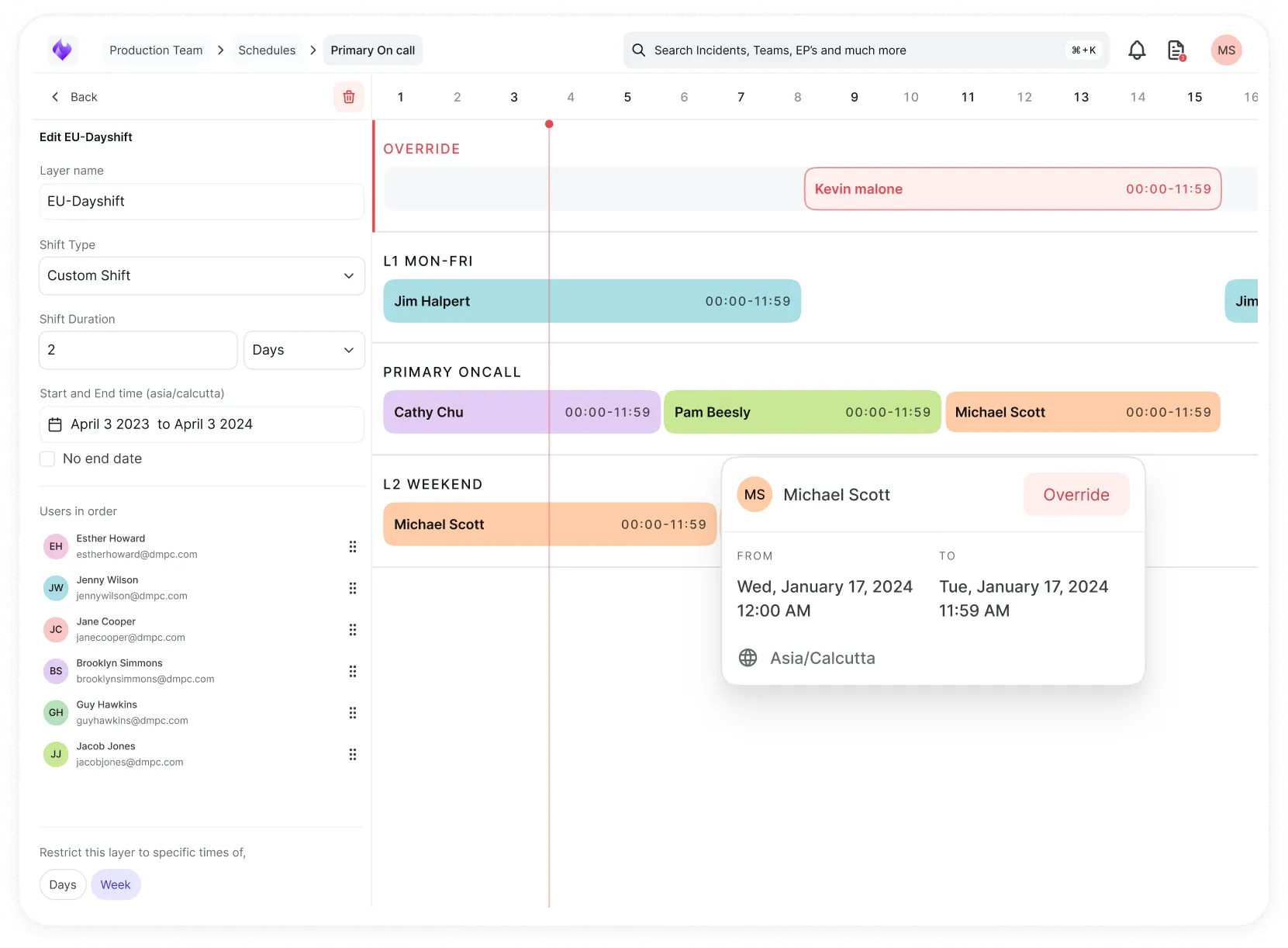
Automate postmortems, AI summaries, and post-incident workflows
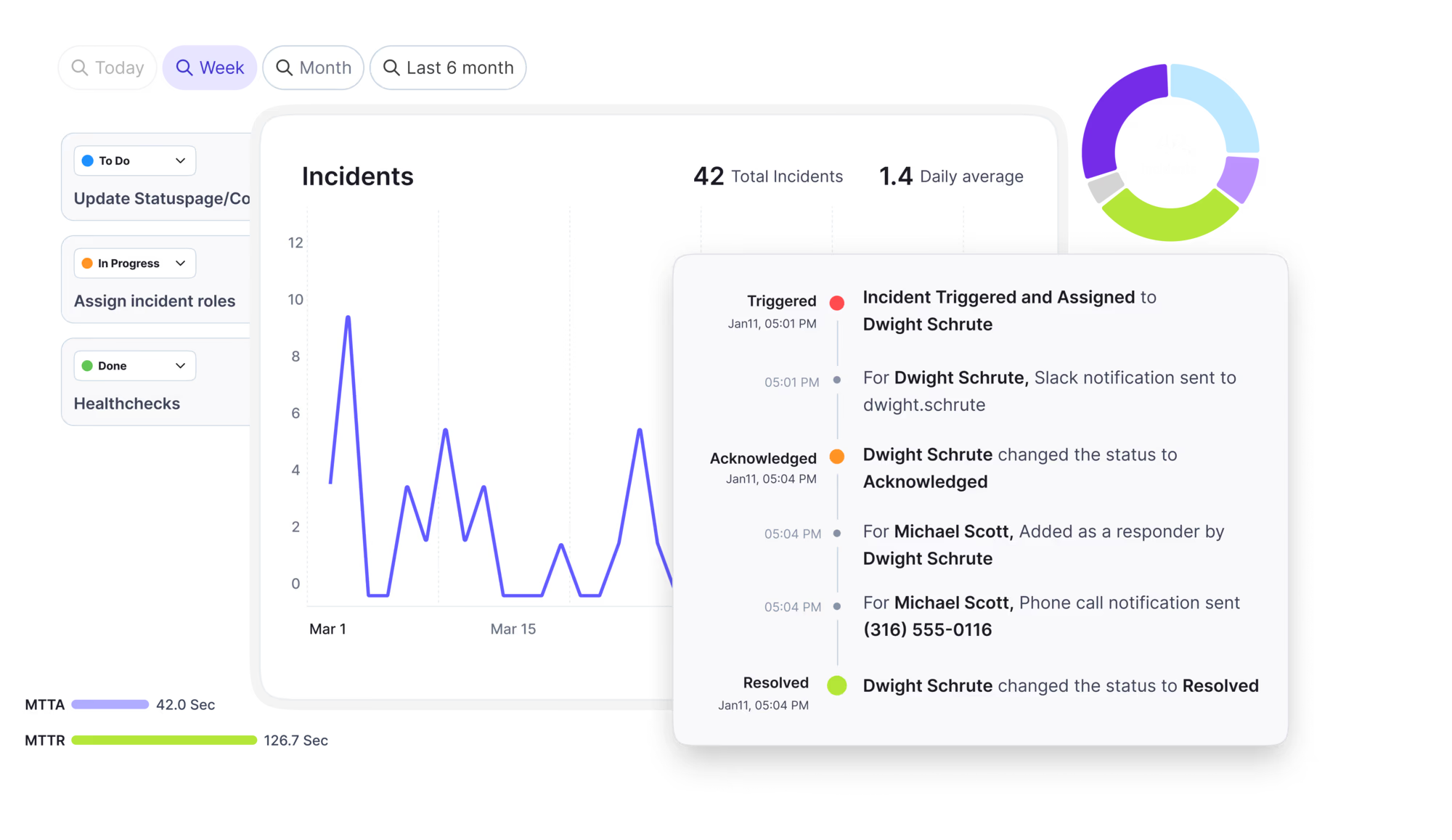
Create, organize, and continuously improve your knowledge base to find the right answers with Sera AI.
We're here to help

The integration with Atlassian Jira using the Xurrent Integration Service is

The integration with Atlassian Jira using the Xurrent Integration Service is

The integration with Atlassian Jira using the Xurrent Integration Service is

The integration with Atlassian Jira using the Xurrent Integration Service is

The integration with Atlassian Jira using the Xurrent Integration Service is

The integration with Atlassian Jira using the Xurrent Integration Service is

The integration with Atlassian Jira using the Xurrent Integration Service is

The integration with Atlassian Jira using the Xurrent Integration Service is
Resolve issues quickly with an AI-powered system that automates ticketing.
Unifiy IT, HR, Facilities, Finance, and more on a single, AI-powered service platform.
Simplify on-call scheduling, automate escalations, and reduce burnout.
Automate postmortems, AI summaries, and post-incident workflows
Create, organize, and continuously improve your knowledge base to find the right answers with Sera AI.
Resolve plant floor and IT issues before they disrupt production.
Stay audit-ready while resolving issues and reducing operational risk.

Detect, respond, and resolve incidents fast to cut downtime and MTTR.

Keep your store online, even during your biggest sales moments.

Protect patient data and resolve issues fast, so care teams stay focused on care.
Standardize service delivery across every store and channel.

We are here to help 24/7

Connect with other Xurrent Users

Get insights and tips on how to get the most out of Xurrent

Apps, APIs, and updates

Xurrent service functionality

Eliminate manual tasks, optimize workflows, and deliver faster resolutions.
Learn how organizations have reduced downtime, improved 50% MTTA & MTTR, and cut costs with Xurrent IMR.
Discover Xurrent IMR's quick support, bidirectional integrations with Jira and Slack, and more cohesive incident response capabilities compared to Opsgenie.
Understand why users value Xurrent IMR for its intuitive interface, efficient incident alerting, customizable On-call schedules, and escalations.
An Underpinning Contract (UC) is a formal agreement between an IT service provider and an external third-party supplier that defines the goods, services, and performance levels the supplier must deliver to support the provider's Service Level Agreements (SLAs) with end customers. Underpinning Contracts establish the scope, targets, responsibilities, and remedies that ensure external vendors meet the commitments the service provider has made downstream. In ITIL-based service management, UCs sit beneath customer-facing SLAs and work in parallel with internal Operational Level Agreements (OLAs) to form a complete chain of accountability across the service delivery ecosystem.
Unlike SLAs—which govern the relationship between the service provider and the business or end users—Underpinning Contracts govern supplier relationships and codify the specific deliverables, response times, availability windows, and escalation paths that external parties must honor. These contracts translate business-level service commitments into enforceable vendor obligations, ensuring that third-party dependencies do not become single points of failure in service delivery.
Underpinning Contracts protect service providers from the risk of SLA breaches caused by supplier underperformance. When an organization commits to 99.9% uptime or four-hour incident resolution, those promises often depend on hardware vendors, cloud providers, telecom carriers, or managed service partners. Without a UC that mirrors or exceeds the internal SLA, the service provider has no contractual recourse when a supplier fails to deliver, leaving the organization exposed to financial penalties, reputational damage, and customer churn.
UCs also enable accurate cost forecasting and risk management. By defining supplier performance metrics, penalties for non-compliance, and remediation procedures in advance, service managers can model the true cost of service delivery and identify which external dependencies pose the greatest operational risk. Organizations that neglect to align UCs with SLAs frequently discover gaps during incidents—when a critical vendor lacks the contractual obligation to meet the required response time, leaving the service desk unable to restore service within agreed windows.
For Managed Service Providers (MSPs) and enterprises operating multi-vendor environments, Underpinning Contracts are essential for maintaining end-to-end service visibility and accountability. They ensure that every link in the service chain—from infrastructure hosting to software licensing to break-fix support—is contractually bound to performance standards that roll up into customer-facing commitments.
Underpinning Contracts are negotiated and structured to support specific SLAs. The process begins with SLA analysis: service managers identify which customer commitments depend on external suppliers, then map those dependencies to required vendor capabilities. For example, if an SLA promises 24/7 support with two-hour response times, the UC with the hardware vendor must guarantee on-site technician dispatch within 90 minutes to leave margin for internal triage and escalation.
The UC defines measurable targets—uptime percentages, mean time to repair (MTTR), incident response windows, change request turnaround—that align with or exceed the corresponding SLA metrics. It also specifies reporting cadence, escalation procedures, and financial remedies for non-performance. Many UCs include tiered service levels (e.g., Severity 1 incidents require 30-minute response, Severity 3 allows four hours) that mirror the internal incident classification scheme.
Once active, UCs are monitored through supplier performance reviews. Service Level Management teams track whether vendors meet contractual targets, log breaches, and invoke penalty clauses or service credits when performance falls short. This data feeds into continuous improvement cycles and informs contract renewals or vendor changes. In mature ITSM environments, UC performance is integrated into the same dashboards and reporting tools used to monitor SLAs and OLAs, providing a unified view of service health across internal and external contributors.
- Cloud Infrastructure Provider : A SaaS company commits to 99.95% application uptime in its customer SLA. Its Underpinning Contract with AWS specifies 99.99% compute availability, automated failover within 60 seconds, and four-hour maximum resolution time for Severity 1 infrastructure incidents. The UC includes monthly service credits if AWS falls below these thresholds, protecting the SaaS provider from financial exposure when cloud outages breach customer SLAs.
- Hardware Maintenance Vendor : An enterprise IT department promises four-hour on-site response for Priority 1 server failures in its internal SLA to business units. The UC with the hardware vendor mandates two-hour dispatch of a certified technician, on-site spare parts inventory, and 24/7 phone support. The contract includes penalty clauses for missed response windows and requires the vendor to provide monthly performance reports showing compliance with response time targets.
- Telecom Carrier for MSP : A Managed Service Provider guarantees 99.9% network uptime to mid-market clients. Its Underpinning Contract with the fiber provider specifies 99.95% circuit availability, 15-minute notification of outages, and four-hour mean time to repair. The UC requires the carrier to maintain redundant paths and provide real-time network monitoring dashboards accessible to the MSP's NOC, ensuring the MSP can proactively manage customer expectations during carrier-side incidents.
- Service Level Agreement (SLA)
- Operational Level Agreement (OLA)
- Service Level Management
- Supplier Management
- Service Desk
---

.webp)
.webp)