




Blog
Insights & updates from our experts


Resolve plant floor and IT issues before they disrupt production.

Stay audit-ready while resolving issues and reducing operational risk.
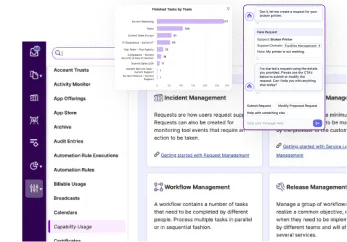
Resolve issues quickly with an AI-powered system that automates ticketing.
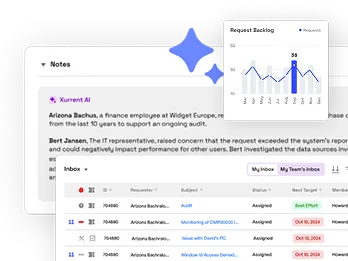
Unifiy IT, HR, Facilities, Finance, and more on a single, AI-powered service platform.
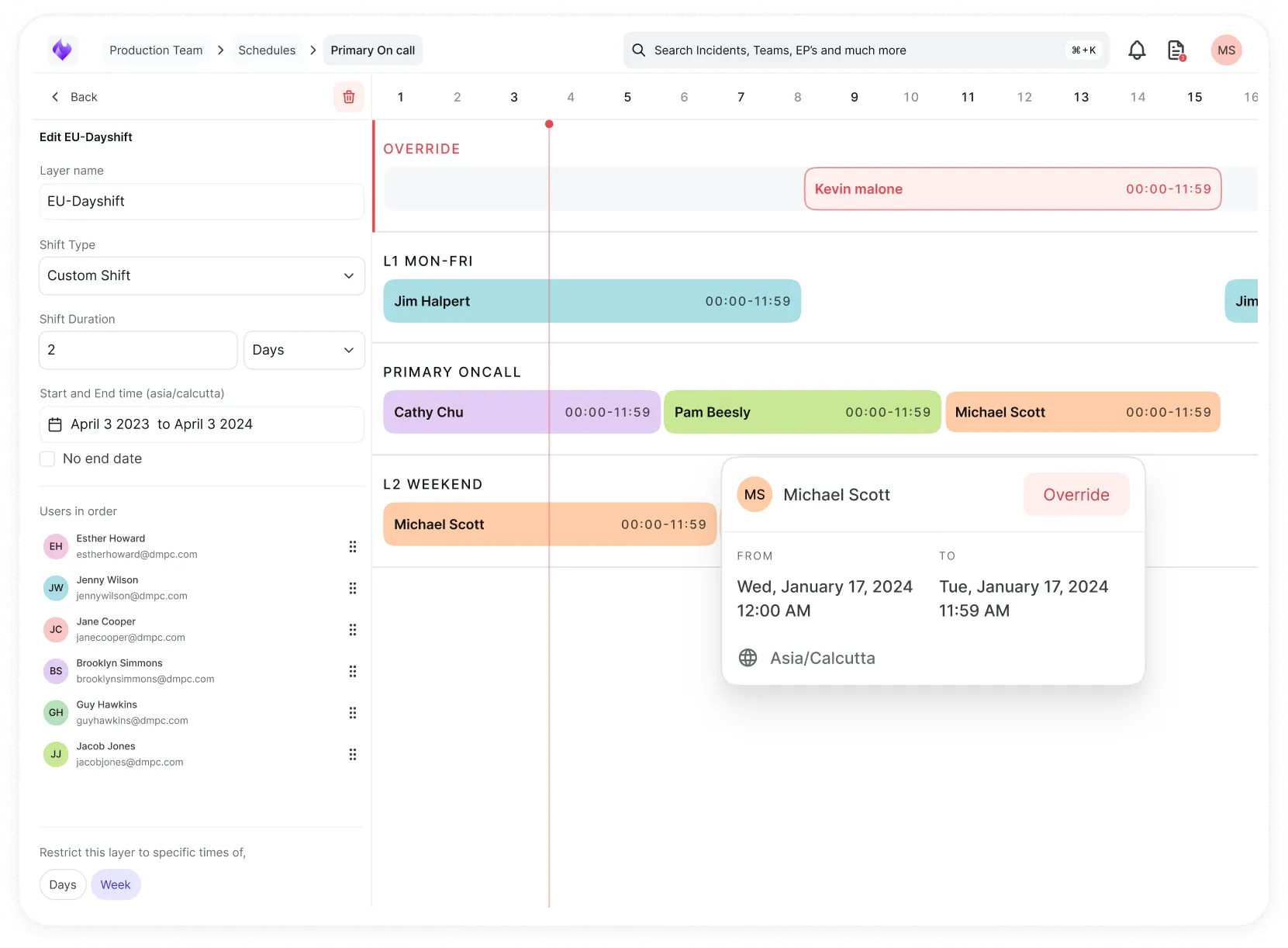
Simplify on-call scheduling, automate escalations, and reduce burnout.
Automate postmortems, AI summaries, and post-incident workflows
Create, organize, and continuously improve your knowledge base to find the right answers with Sera AI.
We're here to help

The integration with Atlassian Jira using the Xurrent Integration Service is

The integration with Atlassian Jira using the Xurrent Integration Service is

The integration with Atlassian Jira using the Xurrent Integration Service is

The integration with Atlassian Jira using the Xurrent Integration Service is

The integration with Atlassian Jira using the Xurrent Integration Service is

The integration with Atlassian Jira using the Xurrent Integration Service is

The integration with Atlassian Jira using the Xurrent Integration Service is

The integration with Atlassian Jira using the Xurrent Integration Service is
Resolve issues quickly with an AI-powered system that automates ticketing.
Unifiy IT, HR, Facilities, Finance, and more on a single, AI-powered service platform.
Simplify on-call scheduling, automate escalations, and reduce burnout.
Automate postmortems, AI summaries, and post-incident workflows
Create, organize, and continuously improve your knowledge base to find the right answers with Sera AI.
Resolve plant floor and IT issues before they disrupt production.
Stay audit-ready while resolving issues and reducing operational risk.

Detect, respond, and resolve incidents fast to cut downtime and MTTR.

Keep your store online, even during your biggest sales moments.

Protect patient data and resolve issues fast, so care teams stay focused on care.

Standardize service delivery across every store and channel.

We are here to help 24/7

Connect with other Xurrent Users

Get insights and tips on how to get the most out of Xurrent

Apps, APIs, and updates

Xurrent service functionality

Eliminate manual tasks, optimize workflows, and deliver faster resolutions.
Learn how organizations have reduced downtime, improved 50% MTTA & MTTR, and cut costs with Xurrent IMR.
Discover Xurrent IMR's quick support, bidirectional integrations with Jira and Slack, and more cohesive incident response capabilities compared to Opsgenie.
Understand why users value Xurrent IMR for its intuitive interface, efficient incident alerting, customizable On-call schedules, and escalations.
Service Level Management is the ITSM practice of defining, negotiating, monitoring, and reporting on service level agreements (SLAs) to ensure IT services consistently meet agreed-upon performance targets and business requirements. It establishes measurable commitments between service providers and customers—whether internal business units or external clients—covering availability, response times, resolution times, and service quality. Service Level Management operates as a continuous cycle: setting realistic targets based on business needs and technical capabilities, tracking actual performance against those targets, identifying gaps, and driving improvement actions. The practice encompasses not only customer-facing SLAs but also operational level agreements (OLAs) with internal support teams and underpinning contracts (UCs) with external suppliers, creating a chain of accountability that ensures every layer of service delivery aligns with the commitments made to end users.
Service Level Management translates abstract IT capabilities into concrete business commitments that executives, customers, and regulators can understand and measure. Without it, IT operates reactively—teams respond to complaints without clear priorities, business units lack visibility into what they can expect, and service quality becomes subjective and inconsistent. Effective Service Level Management prevents SLA breaches that trigger financial penalties, damage customer trust, and erode internal credibility. It provides the data foundation for capacity planning, budget justification, and vendor management by showing where services meet expectations and where investment is needed. For service desk teams, clear SLAs eliminate ambiguity about priority and escalation, reducing ticket churn and improving first-contact resolution. For SREs and DevOps teams, Service Level Management bridges the gap between operational metrics (uptime, latency, error rates) and business outcomes, ensuring reliability engineering efforts focus on what actually matters to users. In regulated industries, documented SLAs and performance reports satisfy audit requirements and demonstrate due diligence. Organizations that skip or underinvest in Service Level Management face chronic firefighting, misaligned expectations, and an inability to demonstrate IT's value to the business.
Service Level Management begins with service catalog definition—identifying which services require formal commitments and understanding the business criticality of each. Service owners work with business stakeholders to negotiate realistic SLA targets that balance user expectations with technical feasibility and cost. Targets are expressed as measurable service level indicators (SLIs)—specific metrics like "99.9% uptime during business hours" or "95% of Priority 1 incidents resolved within 4 hours"—and bundled into service level objectives (SLOs) that define acceptable performance ranges. Once SLAs are agreed and documented, automated monitoring tools track actual performance in real time, comparing SLIs against SLO thresholds and flagging potential breaches before they occur. Service Level Management includes regular service review meetings where performance data is presented to stakeholders, trends are analyzed, and improvement actions are agreed. When SLA breaches occur, root cause analysis determines whether the failure was due to capacity constraints, process gaps, or external dependencies, and corrective actions are tracked through change management. The practice also manages the supporting agreements: OLAs ensure internal teams (network, database, application support) deliver the performance needed to meet customer SLAs, while UCs hold external vendors accountable for their contributions. Service Level Management maintains a continuous improvement loop—reviewing SLA relevance as business needs evolve, retiring obsolete commitments, and adjusting targets based on historical performance and changing technology capabilities.
- Enterprise service desk managing multi-tier SLAs : A global financial services company defines four service tiers—Platinum for trading systems (15-minute response, 1-hour resolution), Gold for customer-facing applications (1-hour response, 4-hour resolution), Silver for internal productivity tools (4-hour response, next-business-day resolution), and Bronze for non-critical systems (best-effort). Service Level Management tracks performance across 12,000 monthly incidents, automatically escalates tickets approaching SLA breach, generates monthly scorecards for each business unit, and uses breach trend analysis to identify recurring infrastructure bottlenecks that require capacity investment.
- SaaS provider using SLOs to drive reliability engineering : A cloud-based CRM platform commits to 99.95% uptime and sub-200ms API response times in customer contracts. Service Level Management translates these into internal SLOs with tighter thresholds (99.97% uptime, 150ms response) to provide error budget headroom. SRE teams monitor SLIs in real time through observability platforms, consume error budget during planned maintenance and feature releases, and halt new deployments when error budget is exhausted. Quarterly SLA reports to customers include uptime percentages, incident summaries, and credits issued for breaches, while internal postmortems feed continuous improvement.
- Managed service provider coordinating multi-vendor delivery : An MSP supporting 40 mid-market clients maintains SLAs covering service desk response, infrastructure availability, and security patching. Service Level Management tracks OLAs with internal NOC and security teams, UCs with cloud providers and ISPs, and customer SLAs that depend on both. When a client SLA breach occurs due to ISP downtime, Service Level Management documentation proves the failure was external, triggers UC penalty clauses against the ISP, and provides the client with transparent root cause reporting that preserves trust despite the outage.
- SLA (Service Level Agreement)
- Service Level Indicator
- Service Level Objective
- Operational Level Agreement
- Underpinning Contract
---


.webp)
.webp)