



Blog
Insights & updates from our experts


Resolve plant floor and IT issues before they disrupt production.

Stay audit-ready while resolving issues and reducing operational risk.
Resolve issues quickly with an AI-powered system that automates ticketing.
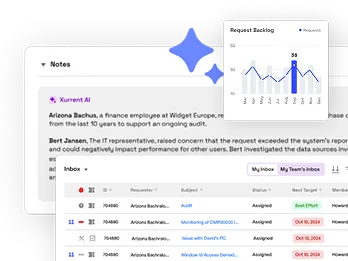
Unifiy IT, HR, Facilities, Finance, and more on a single, AI-powered service platform.
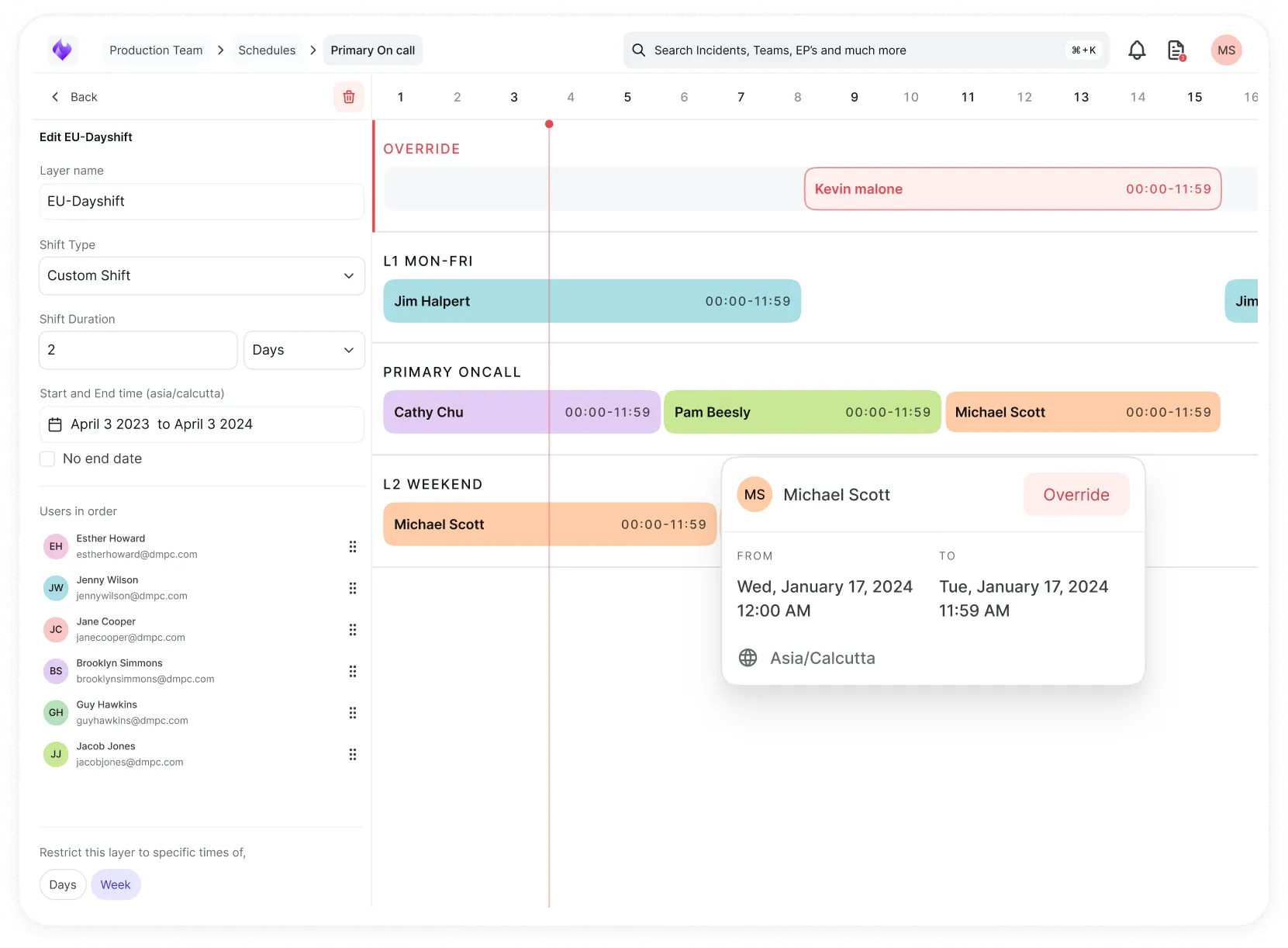
Simplify on-call scheduling, automate escalations, and reduce burnout.
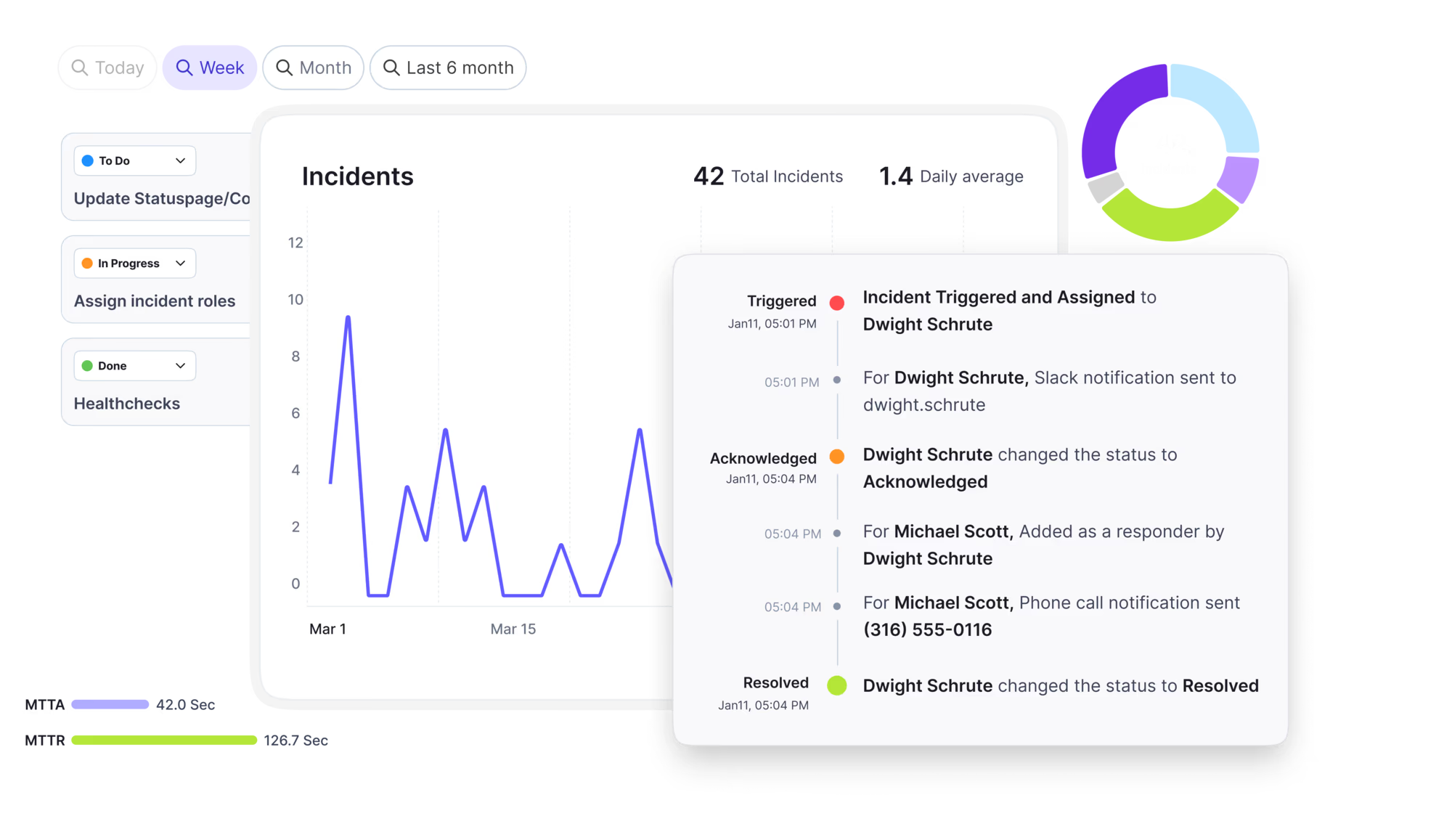
Automate postmortems, AI summaries, and post-incident workflows
Create, organize, and continuously improve your knowledge base to find the right answers with Sera AI.
We're here to help

The integration with Atlassian Jira using the Xurrent Integration Service is

The integration with Atlassian Jira using the Xurrent Integration Service is

The integration with Atlassian Jira using the Xurrent Integration Service is

The integration with Atlassian Jira using the Xurrent Integration Service is

The integration with Atlassian Jira using the Xurrent Integration Service is

The integration with Atlassian Jira using the Xurrent Integration Service is

The integration with Atlassian Jira using the Xurrent Integration Service is

The integration with Atlassian Jira using the Xurrent Integration Service is
Resolve issues quickly with an AI-powered system that automates ticketing.
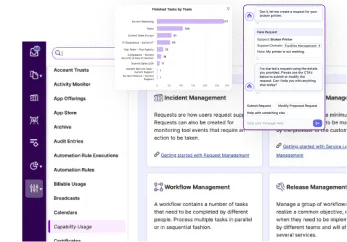
Unifiy IT, HR, Facilities, Finance, and more on a single, AI-powered service platform.
Simplify on-call scheduling, automate escalations, and reduce burnout.
Automate postmortems, AI summaries, and post-incident workflows
Create, organize, and continuously improve your knowledge base to find the right answers with Sera AI.
Resolve plant floor and IT issues before they disrupt production.
Stay audit-ready while resolving issues and reducing operational risk.

Detect, respond, and resolve incidents fast to cut downtime and MTTR.

Keep your store online, even during your biggest sales moments.

Protect patient data and resolve issues fast, so care teams stay focused on care.

Standardize service delivery across every store and channel.

We are here to help 24/7

Connect with other Xurrent Users

Get insights and tips on how to get the most out of Xurrent

Apps, APIs, and updates

Xurrent service functionality

Eliminate manual tasks, optimize workflows, and deliver faster resolutions.
Learn how organizations have reduced downtime, improved 50% MTTA & MTTR, and cut costs with Xurrent IMR.
Discover Xurrent IMR's quick support, bidirectional integrations with Jira and Slack, and more cohesive incident response capabilities compared to Opsgenie.
Understand why users value Xurrent IMR for its intuitive interface, efficient incident alerting, customizable On-call schedules, and escalations.
An Operational Level Agreement (OLA) is an internal agreement between IT support teams or departments that defines the responsibilities, response times, and handoff procedures required to meet customer-facing Service Level Agreements (SLAs). Unlike SLAs, which govern commitments between a service provider and external customers, OLAs coordinate the internal dependencies that make those customer commitments achievable—specifying who does what, by when, and how information flows between teams like the service desk, network operations, database administration, or application support.
OLAs document the operational commitments that underpin service delivery: if the SLA promises a 4-hour resolution for Priority 1 incidents, the OLA might specify that the service desk must escalate to Level 2 within 15 minutes, that Level 2 must acknowledge within 10 minutes, and that infrastructure teams must provide diagnostic data within 30 minutes. These agreements create accountability across silos, ensuring that each team understands its role in the resolution chain and that delays or gaps in handoffs don't cascade into SLA breaches.
In ITIL and ISO/IEC 20000 frameworks, OLAs are a core component of [Service Level Management](/glossary)—the discipline that aligns internal capacity with external commitments. They're particularly critical in organizations with complex service architectures, where a single incident may touch multiple teams, or in managed service provider (MSP) environments where client-facing SLAs depend on coordination between internal delivery teams and third-party vendors governed by Underpinning Contracts.
OLAs matter because SLAs fail without them. Customer-facing service commitments are only as strong as the internal coordination that supports them—and when teams operate without clear agreements on response times, escalation paths, or data-sharing protocols, incidents stall, resolution times stretch, and SLA breaches multiply. OLAs make internal dependencies explicit, turning vague expectations into measurable commitments that can be monitored, enforced, and improved.
Without OLAs, service delivery becomes reactive and fragmented. The service desk doesn't know when to escalate or to whom; Level 2 teams don't know how quickly they're expected to respond; infrastructure teams don't know what diagnostic data is needed or when. Handoffs slow down, context gets lost, and incidents that should resolve in hours take days. OLAs eliminate this ambiguity by defining the operational contract between teams, creating a shared understanding of who owns what and when action is required.
OLAs also enable accountability and continuous improvement. When internal commitments are documented and tracked, it becomes possible to identify where delays occur—whether the service desk is escalating too slowly, whether Level 2 is missing acknowledgment windows, or whether infrastructure teams lack the tools to meet diagnostic timelines. This visibility supports root cause analysis, process optimization, and targeted training, driving down MTTR and improving first-contact resolution rates. In organizations pursuing ITIL maturity or ISO 20000 certification, OLAs provide the evidence that internal processes are controlled, measured, and aligned with service objectives.
OLAs work by translating customer-facing SLA commitments into internal operational requirements, then assigning those requirements to specific teams with measurable targets. The process begins with SLA decomposition: if an SLA promises 4-hour resolution for Priority 1 incidents, the service level manager works backward to determine what each internal team must deliver to meet that commitment—escalation speed, acknowledgment time, diagnostic turnaround, fix deployment, and verification.
Each team's responsibilities are then documented in the OLA, specifying response times, escalation triggers, communication protocols, and data-sharing requirements. For example, an OLA might state that the service desk must escalate Priority 1 incidents to the network team within 15 minutes, that the network team must acknowledge within 10 minutes and provide initial diagnostics within 30 minutes, and that the application team must be engaged if network diagnostics rule out infrastructure issues. These commitments are time-bound, measurable, and tied to the overall SLA clock.
OLAs are monitored through the same service management platform that tracks SLAs, with automated alerts when internal targets are at risk. If the network team hasn't acknowledged an escalation within 10 minutes, the system notifies the team lead and escalates to management if the delay continues. This real-time visibility ensures that internal delays are caught early, before they cascade into SLA breaches. Regular OLA performance reviews—typically monthly or quarterly—analyze adherence rates, identify bottlenecks, and drive process improvements or resource adjustments.
In multi-team or MSP environments, OLAs often cascade: a top-level OLA between the service desk and Level 2 support may be supported by sub-OLAs between Level 2 and specialized teams (database, storage, security), each defining the handoff points and response times required to keep the overall resolution chain on track. This layered structure ensures that every dependency is covered and that accountability extends all the way from initial contact to final resolution.
- Enterprise IT service desk and infrastructure teams : The service desk OLA requires escalation of Priority 1 incidents to the network operations center within 10 minutes, with the network team committing to acknowledge within 5 minutes and provide initial diagnostics (link status, bandwidth utilization, error logs) within 20 minutes. If the issue isn't network-related, the OLA specifies handoff to the server team within 5 minutes, with the server team committing to acknowledge and begin diagnostics within 10 minutes. This cascading structure ensures that the 4-hour SLA for Priority 1 incidents remains achievable even when multiple teams are involved.
- Managed service provider supporting multiple clients : An MSP's internal OLA between the client services team and the technical operations team specifies that all client-reported incidents must be logged in the ITSM platform within 5 minutes, with Priority 1 incidents escalated to the on-call engineer within 10 minutes. The operations team commits to acknowledge escalations within 5 minutes and provide status updates every 30 minutes until resolution. This OLA ensures that the MSP's client-facing SLAs (which vary by client and service tier) are consistently supported by standardized internal response protocols.
- DevOps and SRE teams supporting production services : An OLA between the platform engineering team and the application SRE team defines responsibilities for incident response: platform engineering owns infrastructure alerts (compute, storage, networking) and commits to acknowledge within 5 minutes and provide root cause analysis within 1 hour; application SREs own service-level alerts (latency, error rates, throughput) and commit to acknowledge within 3 minutes and deploy fixes or rollbacks within 30 minutes. The OLA also specifies that both teams will participate in joint postmortems within 48 hours of any Priority 1 incident, with action items tracked in the [Change Management](/glossary) system to ensure follow-through.
- SLA (Service Level Agreement)
- Service Level Management
- Incident Management
- Underpinning Contract
- ITIL (Information Technology Infrastructure Library)
---


.webp)
.webp)