





Blog
Insights & updates from our experts


Resolve plant floor and IT issues before they disrupt production.

Stay audit-ready while resolving issues and reducing operational risk.
Resolve issues quickly with an AI-powered system that automates ticketing.
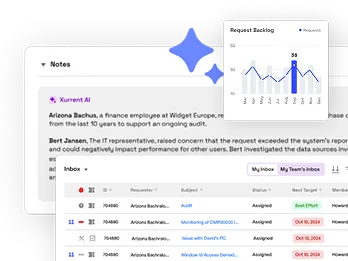
Unifiy IT, HR, Facilities, Finance, and more on a single, AI-powered service platform.
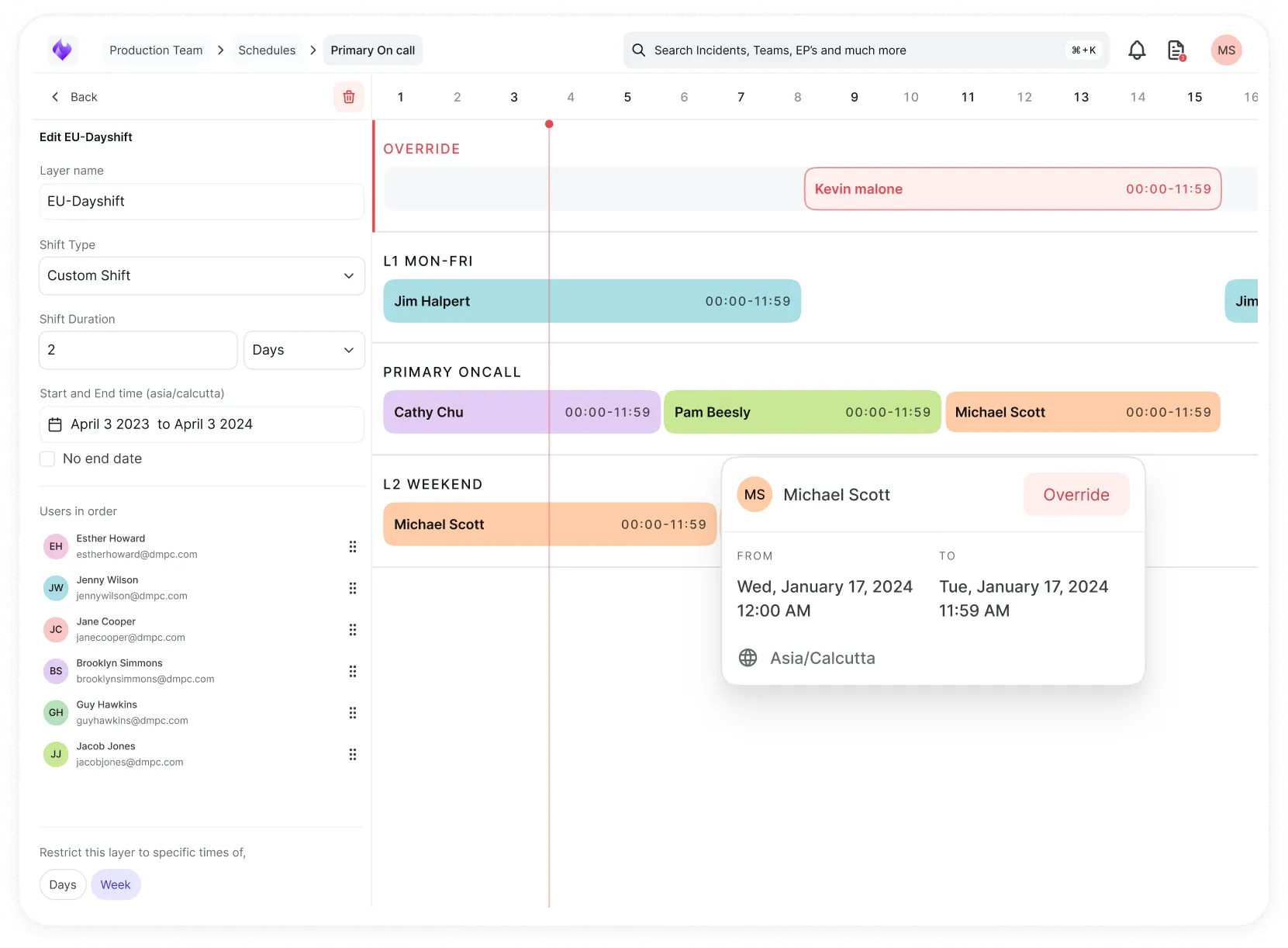
Simplify on-call scheduling, automate escalations, and reduce burnout.
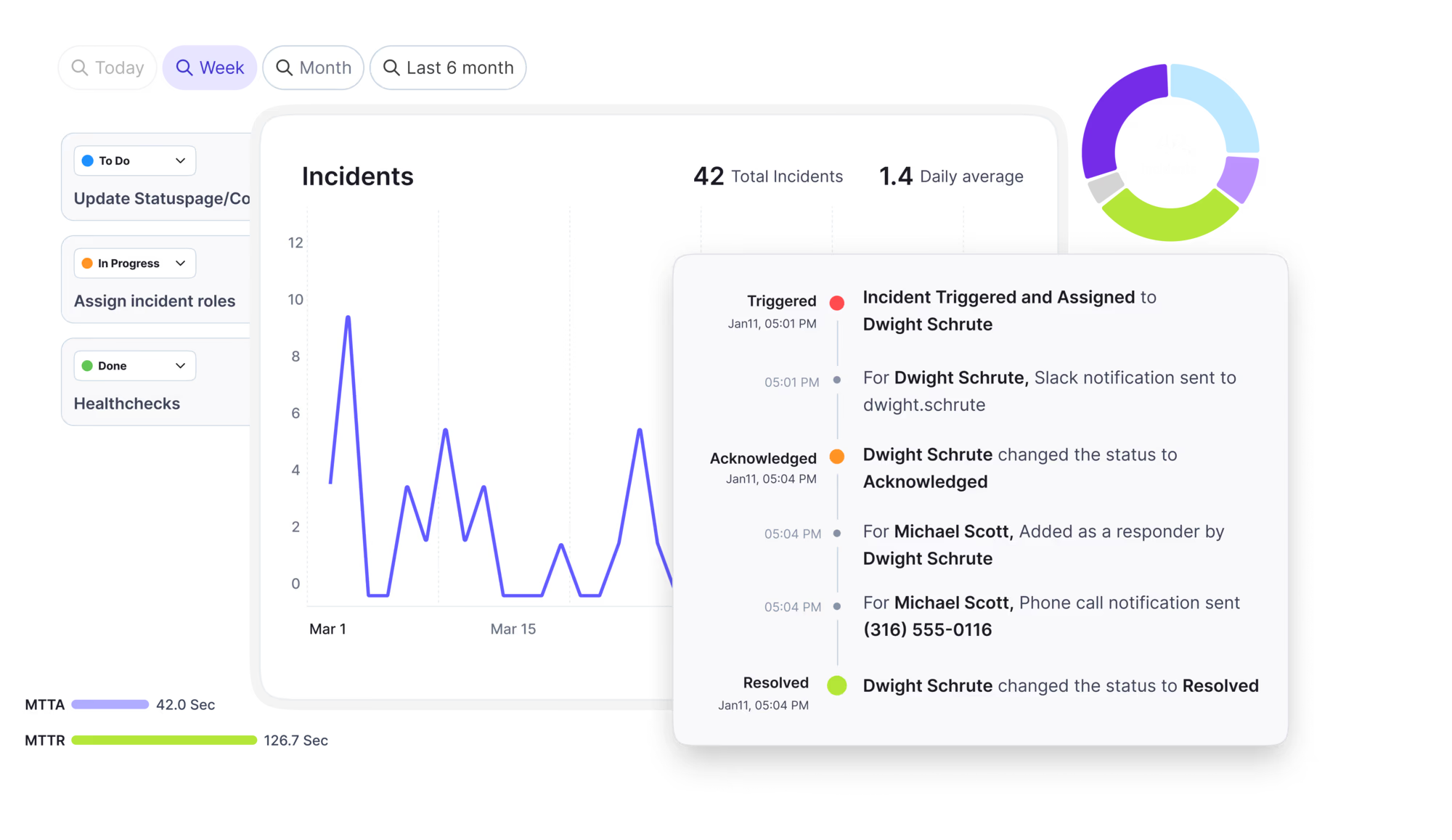
Automate postmortems, AI summaries, and post-incident workflows
Create, organize, and continuously improve your knowledge base to find the right answers with Sera AI.
We're here to help

The integration with Atlassian Jira using the Xurrent Integration Service is

The integration with Atlassian Jira using the Xurrent Integration Service is

The integration with Atlassian Jira using the Xurrent Integration Service is

The integration with Atlassian Jira using the Xurrent Integration Service is

The integration with Atlassian Jira using the Xurrent Integration Service is

The integration with Atlassian Jira using the Xurrent Integration Service is

The integration with Atlassian Jira using the Xurrent Integration Service is

The integration with Atlassian Jira using the Xurrent Integration Service is
Resolve issues quickly with an AI-powered system that automates ticketing.
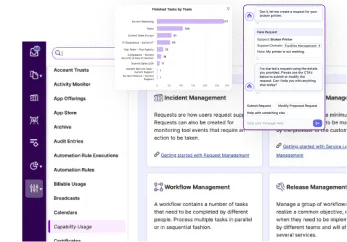
Unifiy IT, HR, Facilities, Finance, and more on a single, AI-powered service platform.
Simplify on-call scheduling, automate escalations, and reduce burnout.
Automate postmortems, AI summaries, and post-incident workflows
Create, organize, and continuously improve your knowledge base to find the right answers with Sera AI.
Resolve plant floor and IT issues before they disrupt production.
Stay audit-ready while resolving issues and reducing operational risk.

Detect, respond, and resolve incidents fast to cut downtime and MTTR.

Keep your store online, even during your biggest sales moments.

Protect patient data and resolve issues fast, so care teams stay focused on care.

Standardize service delivery across every store and channel.

We are here to help 24/7

Connect with other Xurrent Users

Get insights and tips on how to get the most out of Xurrent

Apps, APIs, and updates

Xurrent service functionality

Eliminate manual tasks, optimize workflows, and deliver faster resolutions.
Learn how organizations have reduced downtime, improved 50% MTTA & MTTR, and cut costs with Xurrent IMR.
Discover Xurrent IMR's quick support, bidirectional integrations with Jira and Slack, and more cohesive incident response capabilities compared to Opsgenie.
Understand why users value Xurrent IMR for its intuitive interface, efficient incident alerting, customizable On-call schedules, and escalations.
Machine Learning is a subset of artificial intelligence where algorithms analyze historical data to identify patterns, make predictions, and improve decision-making without being explicitly programmed for each specific task. In ITSM, ESM, and incident management contexts, machine learning enables platforms to automatically classify tickets, predict incident severity, route requests to the correct resolver groups, and surface relevant knowledge articles by learning from past resolution patterns and outcomes. Unlike rule-based automation that requires manual configuration of every condition, machine learning models train on labeled datasets—such as resolved tickets, incident timelines, or service request histories—and continuously refine their accuracy as new data becomes available.
Machine learning directly impacts operational efficiency by reducing manual triage work, accelerating mean time to resolution (MTTR), and improving first-contact resolution (FCR) rates. Service desks handling thousands of requests monthly use machine learning to automatically categorize and prioritize incoming tickets, eliminating the bottleneck of manual sorting and ensuring high-priority incidents reach the right engineers immediately. For incident management teams, machine learning models trained on alert data can distinguish genuine service degradation from transient noise, reducing alert fatigue and allowing SREs to focus on actionable signals rather than false positives.
Without machine learning, organizations rely on static rules that require constant maintenance as services evolve, leading to misrouted tickets, delayed escalations, and knowledge articles that remain buried in search results. In high-velocity environments where service catalogs expand and team structures shift frequently, machine learning adapts automatically, maintaining routing accuracy and knowledge relevance without manual reconfiguration. This adaptability is critical for enterprises scaling ESM across HR, Finance, and Facilities, where request patterns vary significantly by department and change seasonally.
Machine learning also strengthens continuous improvement by surfacing root cause patterns across incidents, identifying recurring problems that manual analysis might miss, and recommending preventive actions based on historical resolution data. For compliance-driven organizations, machine learning ensures audit trails remain complete by flagging anomalies in ticket handling and detecting deviations from SLA commitments before breaches occur.
Machine learning in ITSM and incident management platforms operates through supervised, unsupervised, or reinforcement learning approaches depending on the use case. Supervised learning—the most common method for ticket classification and routing—requires a labeled training dataset where historical tickets are tagged with correct categories, priorities, and resolver groups. The algorithm learns the relationship between ticket content (description, subject, attachments) and the correct classification, then applies this learned mapping to new incoming requests.
The training process involves feature extraction, where the model identifies relevant attributes such as keywords, user roles, service affected, and time of submission. Algorithms like decision trees, random forests, or neural networks process these features to build a predictive model. As the model encounters new tickets, it calculates confidence scores for each possible classification and routes the ticket accordingly. When service desk agents correct misclassifications, the model incorporates this feedback to improve future accuracy.
Unsupervised learning techniques, such as clustering and anomaly detection, analyze unlabeled data to identify patterns without predefined categories. In incident management, unsupervised models group similar alerts to detect emerging patterns, correlate related events across monitoring tools, and flag unusual system behavior that deviates from baseline performance. This approach is particularly valuable for identifying novel incident types that don't match historical patterns.
Natural language processing (NLP)—a specialized branch of machine learning—enables platforms to understand unstructured text in ticket descriptions, chat conversations, and knowledge articles. NLP models extract intent, sentiment, and entities (such as application names or error codes) to improve search relevance, suggest knowledge articles, and generate automated responses. Advanced implementations use retrieval-augmented generation (RAG) architectures to combine machine learning with live knowledge bases, ensuring recommendations remain current as documentation updates.
- Automated Ticket Routing in Enterprise Service Desk : A multinational manufacturing company uses machine learning to classify 15,000 monthly service requests across IT, HR, and Facilities. The model analyzes ticket descriptions in multiple languages, identifies the affected service from the CMDB, and routes requests to the correct resolver group with 92% accuracy. Misrouted tickets are flagged for manual review, and corrections feed back into the model to improve classification for similar future requests, reducing average routing time from 45 minutes to under 10 seconds.
- Incident Severity Prediction for SRE Teams : A SaaS provider's incident management platform uses machine learning trained on two years of incident data to predict severity levels when new alerts arrive. The model considers alert source, affected services, time of day, recent deployment activity, and historical impact patterns to assign P1, P2, or P3 severity. This automated triage ensures critical incidents trigger immediate escalation to on-call engineers, while lower-severity alerts queue for business-hours review, reducing false-positive pages by 60% and improving on-call team satisfaction.
- Knowledge Article Recommendations During Incident Resolution : A healthcare IT operations team leverages machine learning to surface relevant knowledge articles as engineers work on active incidents. The model analyzes incident descriptions, error logs, and affected configuration items, then matches them against a corpus of 3,000+ resolution guides. Engineers see the top three most relevant articles directly in the incident workspace, reducing time spent searching documentation and improving MTTR by 25% for incidents with documented solutions.
- AIOps (Artificial Intelligence for IT Operations)
- Generative AI
- NLP (Natural Language Processing)
- Supervised Machine Learning
- Unsupervised Machine Learning
---

.webp)
.webp)