





Blog
Insights & updates from our experts


Resolve plant floor and IT issues before they disrupt production.

Stay audit-ready while resolving issues and reducing operational risk.
Resolve issues quickly with an AI-powered system that automates ticketing.
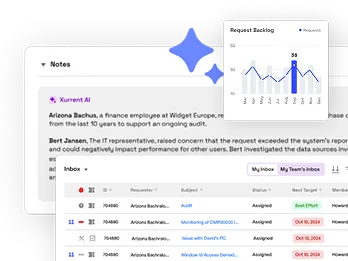
Unifiy IT, HR, Facilities, Finance, and more on a single, AI-powered service platform.
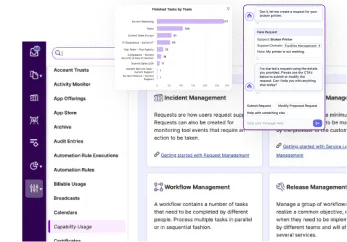
Simplify on-call scheduling, automate escalations, and reduce burnout.
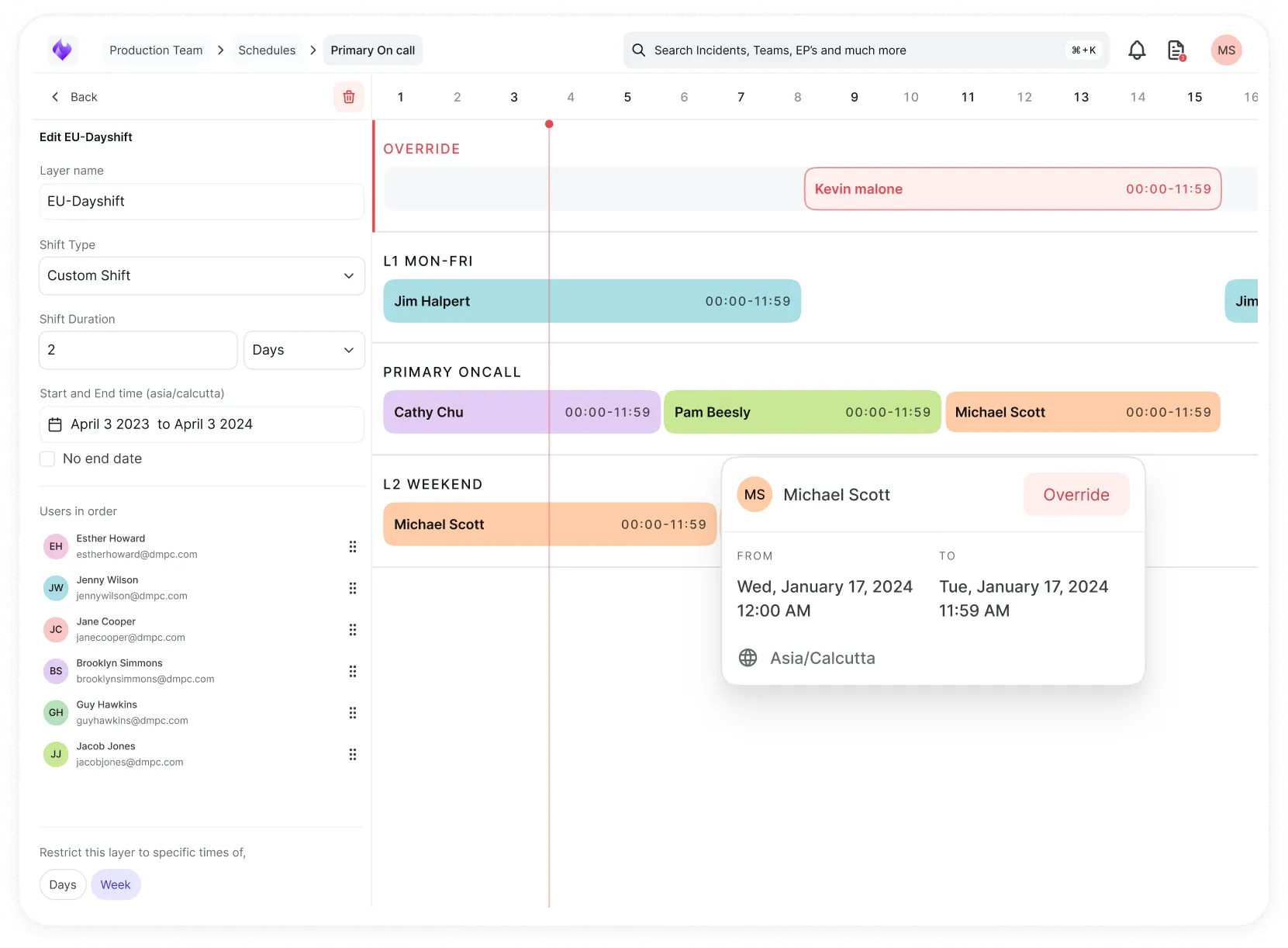
Automate postmortems, AI summaries, and post-incident workflows
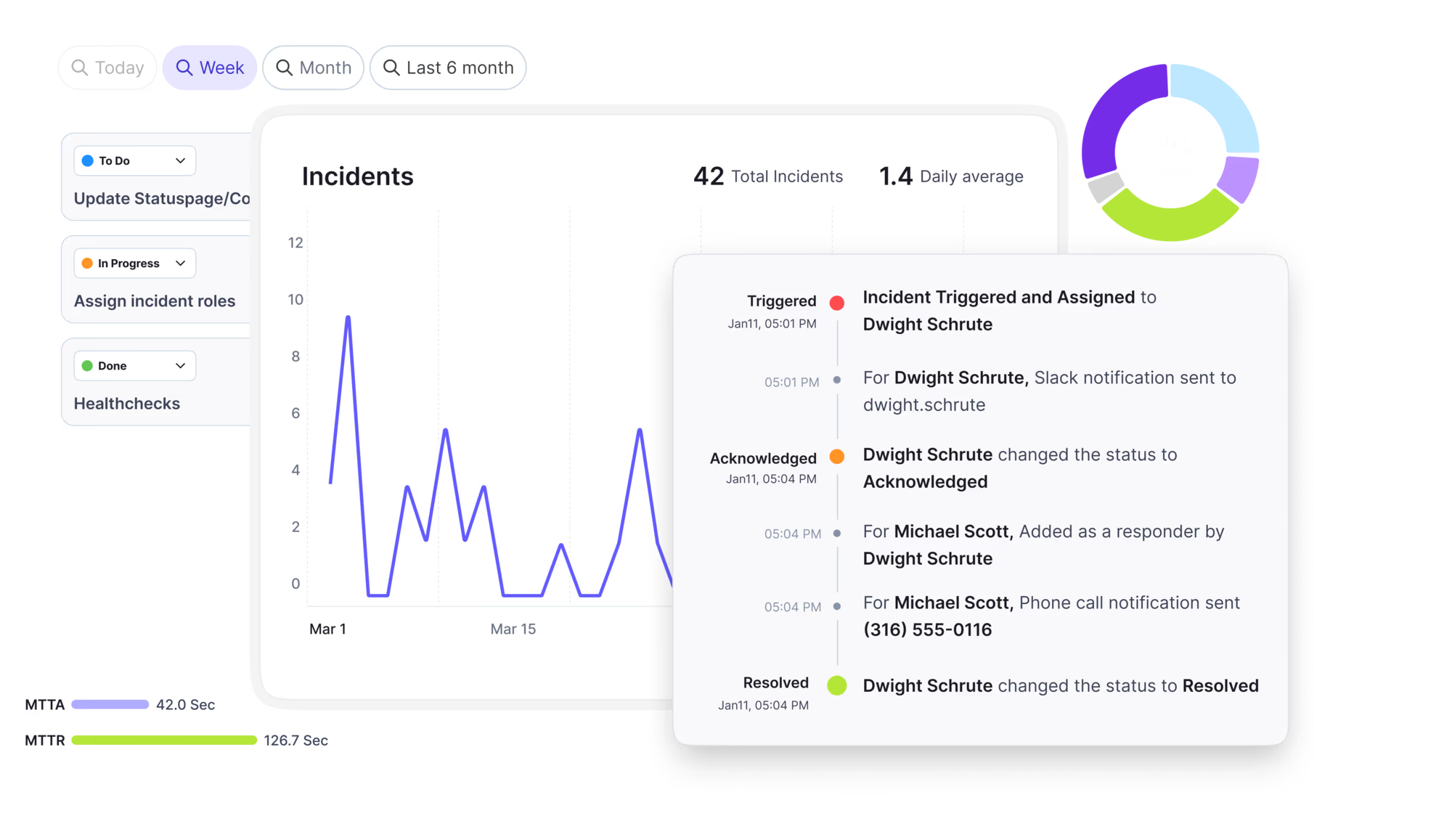
Create, organize, and continuously improve your knowledge base to find the right answers with Sera AI.
We're here to help

The integration with Atlassian Jira using the Xurrent Integration Service is

The integration with Atlassian Jira using the Xurrent Integration Service is

The integration with Atlassian Jira using the Xurrent Integration Service is

The integration with Atlassian Jira using the Xurrent Integration Service is

The integration with Atlassian Jira using the Xurrent Integration Service is

The integration with Atlassian Jira using the Xurrent Integration Service is

The integration with Atlassian Jira using the Xurrent Integration Service is

The integration with Atlassian Jira using the Xurrent Integration Service is
Resolve issues quickly with an AI-powered system that automates ticketing.
Unifiy IT, HR, Facilities, Finance, and more on a single, AI-powered service platform.
Simplify on-call scheduling, automate escalations, and reduce burnout.
Automate postmortems, AI summaries, and post-incident workflows
Create, organize, and continuously improve your knowledge base to find the right answers with Sera AI.
Resolve plant floor and IT issues before they disrupt production.
Stay audit-ready while resolving issues and reducing operational risk.

Detect, respond, and resolve incidents fast to cut downtime and MTTR.

Keep your store online, even during your biggest sales moments.

Protect patient data and resolve issues fast, so care teams stay focused on care.

Standardize service delivery across every store and channel.

We are here to help 24/7

Connect with other Xurrent Users

Get insights and tips on how to get the most out of Xurrent

Apps, APIs, and updates

Xurrent service functionality

Eliminate manual tasks, optimize workflows, and deliver faster resolutions.
Learn how organizations have reduced downtime, improved 50% MTTA & MTTR, and cut costs with Xurrent IMR.
Discover Xurrent IMR's quick support, bidirectional integrations with Jira and Slack, and more cohesive incident response capabilities compared to Opsgenie.
Understand why users value Xurrent IMR for its intuitive interface, efficient incident alerting, customizable On-call schedules, and escalations.
CSI (Continual Service Improvement) is an ITIL lifecycle stage and ongoing practice that systematically identifies, prioritizes, and implements improvements to IT services, processes, and organizational capabilities. CSI uses structured methods—including the Deming Cycle (Plan-Do-Check-Act), gap analysis, and metrics-driven reviews—to learn from operational data, incident trends, and user feedback, then translate those insights into actionable changes that increase service quality, reduce costs, and align IT delivery with evolving business needs.
Unlike reactive fixes or one-time optimization projects, CSI operates as a continuous loop embedded across the service lifecycle. It captures baseline measurements (current state), defines improvement targets (desired state), executes changes, measures outcomes, and feeds lessons learned back into service strategy, design, transition, and operation. CSI applies to every ITSM process—incident management, problem management, change enablement, service level management—and extends to ESM functions like HR case handling or facilities workflows, ensuring that service delivery matures over time rather than stagnating.
Without CSI, organizations repeat the same incidents, tolerate inefficient workflows, and lose alignment between IT capabilities and business priorities. Services degrade incrementally—MTTR creeps upward, SLA breaches become routine, manual workarounds proliferate—because no formal mechanism exists to identify root causes, measure improvement opportunities, or hold teams accountable for closing the loop after incidents or changes.
CSI directly impacts operational resilience and cost efficiency. By analyzing incident patterns and problem records, CSI surfaces recurring issues that consume disproportionate support effort, enabling teams to eliminate root causes rather than restore service repeatedly. It drives measurable outcomes: reduced ticket volume through better self-service knowledge, faster resolution via optimized routing rules, lower change failure rates through improved testing protocols, and higher user satisfaction as services become more reliable and responsive.
For compliance and audit readiness, CSI provides the documented evidence that processes are monitored, reviewed, and improved—meeting ISO 20000, ITIL, and SOC 2 requirements for continual improvement. For leadership, CSI translates operational data into business value, demonstrating how IT investments reduce downtime, improve productivity, and support strategic initiatives.
CSI follows a structured improvement cycle, typically aligned with the Deming Cycle or the ITIL CSI seven-step improvement process:
1. Define what you should measure. Identify services, processes, or outcomes tied to business objectives—availability targets, resolution times, change success rates, user satisfaction scores—and establish baselines using current performance data from ITSM tools, monitoring platforms, and service reports.
2. Define what you can measure. Assess available data sources—incident records, SLA dashboards, CMDB accuracy metrics, survey responses—and determine which measurements are practical, reliable, and actionable given current tooling and process maturity.
3. Gather the data. Collect metrics continuously through automated reporting, service desk analytics, post-incident reviews, and periodic audits. Ensure data quality by validating ticket categorization, timestamp accuracy, and completeness of records.
4. Process the data. Aggregate, normalize, and analyze metrics to identify trends, outliers, and gaps. Use techniques like Pareto analysis to find high-impact improvement areas (e.g., 20% of incident categories cause 80% of user impact) and root cause analysis to trace problems to underlying process or configuration weaknesses.
5. Analyze the information. Compare current performance against targets and historical baselines. Identify improvement opportunities—automate repetitive tasks, refine escalation policies, update knowledge articles, retrain staff—and prioritize based on business impact, feasibility, and resource availability.
6. Present and use the information. Communicate findings to stakeholders through dashboards, executive summaries, and improvement roadmaps. Translate technical metrics into business language (e.g., "reducing P1 incident MTTR by 15 minutes saves $X per quarter in lost productivity").
7. Implement improvement. Execute changes through formal change management, update documentation and training, and monitor results. Measure post-implementation performance to confirm the improvement delivered expected value, then feed lessons learned back into the next CSI cycle.
CSI is not a one-time project—it operates continuously, with regular review cadences (monthly service reviews, quarterly process audits, annual maturity assessments) and integration points across all ITSM practices. Incident postmortems feed CSI with root cause data; problem management generates improvement tasks; change management tracks success rates; service level management highlights SLA trends requiring corrective action.
- Enterprise IT reducing repeat incidents: A financial services company analyzes six months of incident data and discovers that 40% of P2 incidents stem from a misconfigured load balancer rule. Through CSI, the problem management team documents the root cause, the change team implements a permanent fix, and knowledge management publishes a runbook. Over the next quarter, incidents in that category drop by 65%, freeing the service desk to focus on higher-value work and improving user satisfaction scores by 12 points.
- MSP optimizing onboarding workflows: A managed service provider uses CSI to review new client onboarding timelines and identifies that manual account provisioning adds an average of four days to go-live. The CSI process prioritizes automation of Active Directory setup, email configuration, and access requests through low-code workflows. Post-implementation measurement shows onboarding time reduced from 14 to 7 days, enabling the MSP to scale client acquisition without proportional headcount increases.
- Healthcare organization improving change success rates: A hospital IT department tracks change failure rates and finds that 18% of changes to EHR integrations fail during deployment, causing service disruptions. CSI analysis reveals insufficient pre-production testing and unclear rollback procedures. The team implements mandatory test environment validation, updates change templates with rollback checklists, and retrains staff. Change failure rates drop to 6% within two quarters, reducing unplanned downtime and improving clinician trust in IT.
- Incident Management
- Problem Management
- Change Enablement (Management)
- Service Level Management
- Knowledge Management
---


.webp)
.webp)