





Blog
Insights & updates from our experts


Resolve plant floor and IT issues before they disrupt production.

Stay audit-ready while resolving issues and reducing operational risk.
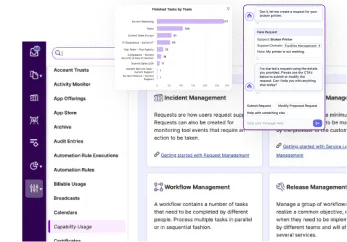
Resolve issues quickly with an AI-powered system that automates ticketing.
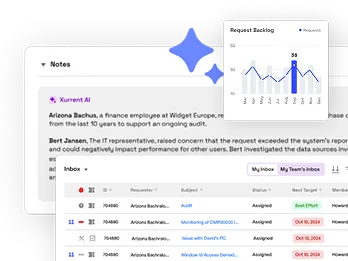
Unifiy IT, HR, Facilities, Finance, and more on a single, AI-powered service platform.
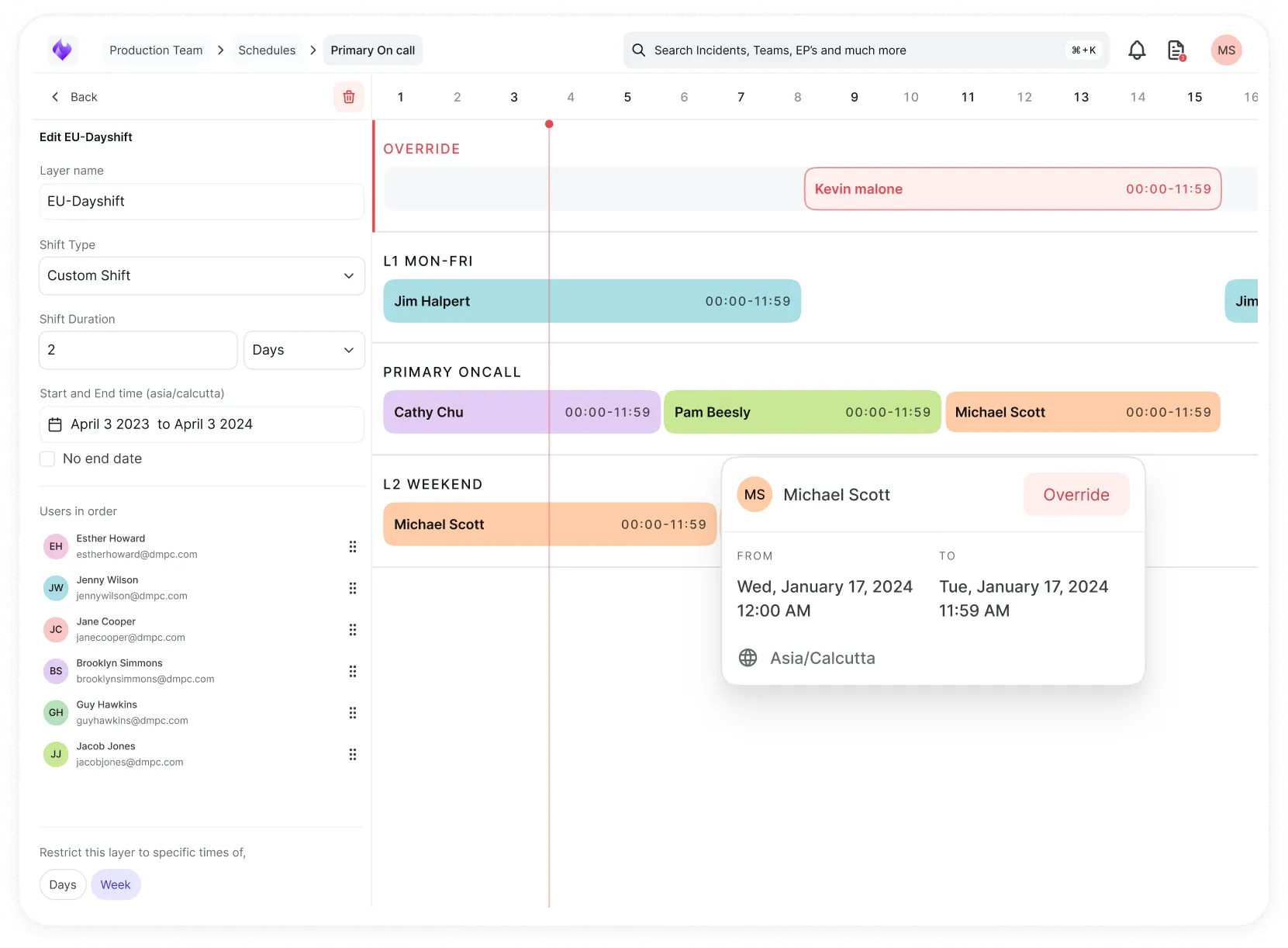
Simplify on-call scheduling, automate escalations, and reduce burnout.
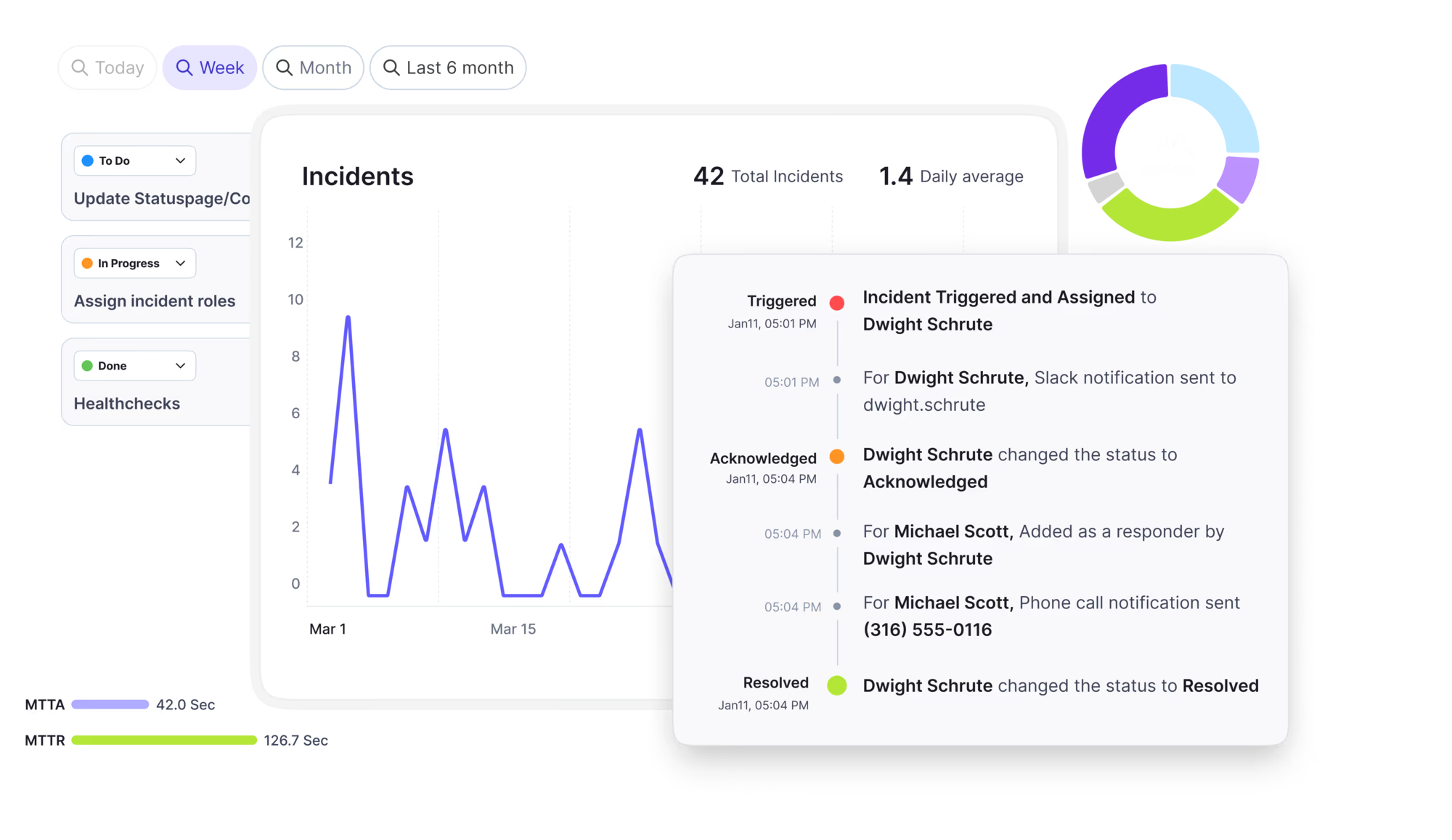
Automate postmortems, AI summaries, and post-incident workflows
Create, organize, and continuously improve your knowledge base to find the right answers with Sera AI.
We're here to help

The integration with Atlassian Jira using the Xurrent Integration Service is

The integration with Atlassian Jira using the Xurrent Integration Service is

The integration with Atlassian Jira using the Xurrent Integration Service is

The integration with Atlassian Jira using the Xurrent Integration Service is

The integration with Atlassian Jira using the Xurrent Integration Service is

The integration with Atlassian Jira using the Xurrent Integration Service is

The integration with Atlassian Jira using the Xurrent Integration Service is

The integration with Atlassian Jira using the Xurrent Integration Service is
Resolve issues quickly with an AI-powered system that automates ticketing.
Unifiy IT, HR, Facilities, Finance, and more on a single, AI-powered service platform.
Simplify on-call scheduling, automate escalations, and reduce burnout.
Automate postmortems, AI summaries, and post-incident workflows
Create, organize, and continuously improve your knowledge base to find the right answers with Sera AI.
Resolve plant floor and IT issues before they disrupt production.
Stay audit-ready while resolving issues and reducing operational risk.

Detect, respond, and resolve incidents fast to cut downtime and MTTR.

Keep your store online, even during your biggest sales moments.

Protect patient data and resolve issues fast, so care teams stay focused on care.
Standardize service delivery across every store and channel.

We are here to help 24/7

Connect with other Xurrent Users

Get insights and tips on how to get the most out of Xurrent

Apps, APIs, and updates

Xurrent service functionality

Eliminate manual tasks, optimize workflows, and deliver faster resolutions.
Learn how organizations have reduced downtime, improved 50% MTTA & MTTR, and cut costs with Xurrent IMR.
Discover Xurrent IMR's quick support, bidirectional integrations with Jira and Slack, and more cohesive incident response capabilities compared to Opsgenie.
Understand why users value Xurrent IMR for its intuitive interface, efficient incident alerting, customizable On-call schedules, and escalations.
Continual Improvement is the ongoing, structured effort to enhance IT services, processes, and operational practices by systematically identifying inefficiencies, analyzing performance data, and implementing incremental changes that align with evolving business needs. In ITSM frameworks like ITIL 4, Continual Improvement is formalized as a practice that ensures services remain effective, efficient, and responsive to user expectations and organizational objectives. Unlike one-time optimization projects, Continual Improvement operates as a persistent cycle—often following a Plan-Do-Check-Act (PDCA) or similar model—where teams regularly review metrics such as incident resolution times, SLA compliance, change success rates, and user satisfaction scores to identify opportunities for refinement. The practice applies across all service lifecycle stages, from service design and transition to operation and support, and extends beyond IT to enterprise service management (ESM) functions like HR, facilities, and finance. Continual Improvement is not about perfection; it's about creating a culture where small, evidence-based adjustments accumulate into measurable gains in service quality, cost efficiency, and operational resilience.
Continual Improvement directly impacts an organization's ability to maintain competitive service delivery, reduce operational costs, and prevent recurring incidents that erode user trust and consume engineering time. Without structured Continual Improvement, IT teams react to problems rather than anticipate them, leading to repeated outages, unaddressed root causes, and mounting technical debt. Research shows that over 80% of incidents are repeats—failures that could have been prevented if postmortem action items had been tracked, prioritized, and completed. Continual Improvement closes this gap by embedding accountability into workflows, ensuring that lessons learned from incidents, problems, and changes are documented, assigned, and integrated into future planning. For service desks, this means fewer duplicate tickets and faster first-contact resolution. For SREs and DevOps teams, it means lower MTTR, reduced alert noise, and more time for strategic work. For executives, it means transparent progress toward SLOs, better alignment between IT investments and business outcomes, and demonstrable ROI from service management initiatives. Organizations that formalize Continual Improvement also achieve stronger compliance postures, as audit-ready documentation and process standardization become natural byproducts of the practice.
Continual Improvement operates through a repeating cycle that begins with establishing a baseline—capturing current performance through metrics like MTTR, change failure rates, ticket backlog, or CSAT scores. Teams then identify improvement opportunities by analyzing trends, reviewing incident postmortems, soliciting user feedback, and benchmarking against industry standards or internal SLAs. Once a target area is selected, a hypothesis is formed (e.g., "Automating tier-1 password resets will reduce ticket volume by 20%"), and a small-scale improvement initiative is planned with clear success criteria and ownership. The initiative is implemented, often as a pilot or phased rollout, and its impact is measured against the baseline. If successful, the change is standardized and embedded into operational procedures; if not, the team iterates or pivots based on what was learned. This cycle repeats continuously, with each iteration informed by data from dashboards, reports, and stakeholder input. In ITIL 4, the Continual Improvement practice is supported by a seven-step model: identify the strategy for improvement, define what you will measure, gather the data, process the data, analyze the information, present and use the information, and implement improvement. Modern platforms like Xurrent automate much of this workflow by synchronizing incident, change, and problem records across ITSM and IMR systems, surfacing actionable insights through analytics, and creating accountability by automatically generating follow-up tasks from postmortems that feed directly into change management queues.
- Reducing Repeat Incidents in Financial Services : A regional bank's SRE team noticed that 60% of their critical incidents stemmed from database connection pool exhaustion. Through Continual Improvement, they analyzed postmortem data, identified a configuration drift issue, and implemented automated monitoring with dynamic scaling. Over six months, repeat incidents dropped by 75%, and MTTR for database-related alerts fell from 45 minutes to under 10 minutes.
- Improving Service Desk Efficiency in Manufacturing : A global manufacturing company used Continual Improvement to address low first-contact resolution rates. By reviewing ticket data and agent feedback, they discovered that 40% of requests were for software access that required manual approvals. They automated the approval workflow and integrated it with their service catalog, increasing FCR from 55% to 82% and cutting average resolution time by 35%.
- Optimizing Change Success Rates in SaaS Operations : A mid-sized SaaS provider tracked a 15% change failure rate that was causing unplanned downtime. Through Continual Improvement, they introduced pre-change automated testing, peer review checkpoints, and rollback runbooks. Within three release cycles, their change success rate improved to 97%, and deployment-related incidents decreased by 60%, allowing the team to accelerate feature delivery without sacrificing stability.
- Incident Management
- Problem Management
- Change Enablement (Management)
- Service Level Management
- Knowledge Management
---


.webp)
.webp)