





Blog
Insights & updates from our experts


Resolve plant floor and IT issues before they disrupt production.

Stay audit-ready while resolving issues and reducing operational risk.
Resolve issues quickly with an AI-powered system that automates ticketing.
Unifiy IT, HR, Facilities, Finance, and more on a single, AI-powered service platform.
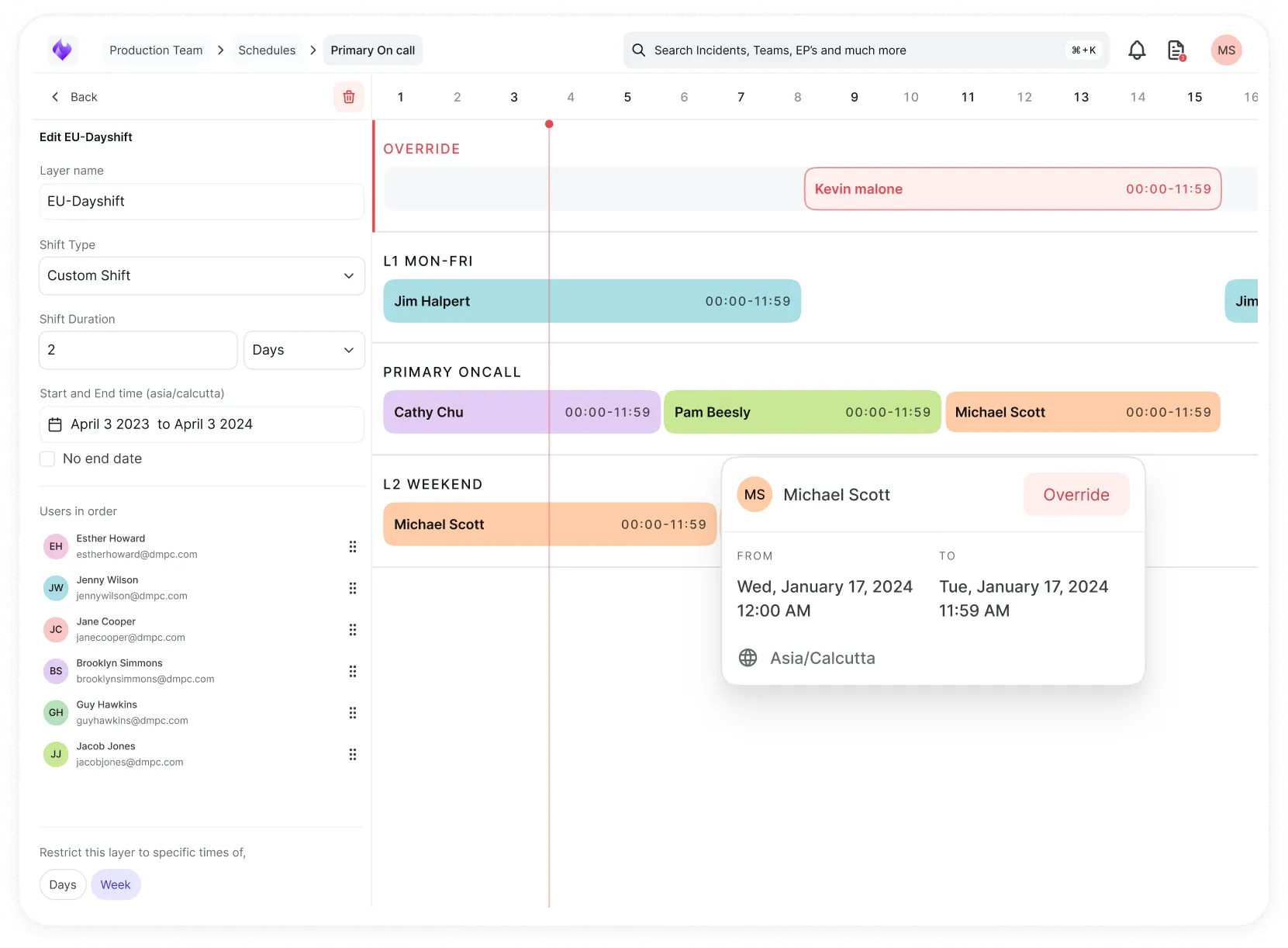
Simplify on-call scheduling, automate escalations, and reduce burnout.
Automate postmortems, AI summaries, and post-incident workflows
Create, organize, and continuously improve your knowledge base to find the right answers with Sera AI.
We're here to help

The integration with Atlassian Jira using the Xurrent Integration Service is

The integration with Atlassian Jira using the Xurrent Integration Service is

The integration with Atlassian Jira using the Xurrent Integration Service is

The integration with Atlassian Jira using the Xurrent Integration Service is

The integration with Atlassian Jira using the Xurrent Integration Service is

The integration with Atlassian Jira using the Xurrent Integration Service is

The integration with Atlassian Jira using the Xurrent Integration Service is

The integration with Atlassian Jira using the Xurrent Integration Service is
Resolve issues quickly with an AI-powered system that automates ticketing.
Unifiy IT, HR, Facilities, Finance, and more on a single, AI-powered service platform.
Simplify on-call scheduling, automate escalations, and reduce burnout.
Automate postmortems, AI summaries, and post-incident workflows
Create, organize, and continuously improve your knowledge base to find the right answers with Sera AI.
Resolve plant floor and IT issues before they disrupt production.
Stay audit-ready while resolving issues and reducing operational risk.

Detect, respond, and resolve incidents fast to cut downtime and MTTR.

Keep your store online, even during your biggest sales moments.

Protect patient data and resolve issues fast, so care teams stay focused on care.

Standardize service delivery across every store and channel.

We are here to help 24/7

Connect with other Xurrent Users

Get insights and tips on how to get the most out of Xurrent

Apps, APIs, and updates

Xurrent service functionality

Eliminate manual tasks, optimize workflows, and deliver faster resolutions.
Learn how organizations have reduced downtime, improved 50% MTTA & MTTR, and cut costs with Xurrent IMR.
Discover Xurrent IMR's quick support, bidirectional integrations with Jira and Slack, and more cohesive incident response capabilities compared to Opsgenie.
Understand why users value Xurrent IMR for its intuitive interface, efficient incident alerting, customizable On-call schedules, and escalations.
A Change Manager is the person accountable for overseeing the change management process within an IT organization, ensuring that changes to IT services, infrastructure, and systems are implemented with minimal disruption and proper risk assessment. The Change Manager coordinates change requests, facilitates Change Advisory Board (CAB) meetings, maintains the change schedule, and ensures that all changes follow established policies and procedures aligned with frameworks like ITIL. This role acts as the central point of control for the change lifecycle—from initial request through implementation and post-implementation review—balancing the need for business agility with operational stability and compliance requirements.
The Change Manager role directly impacts service availability, security posture, and operational risk. Without effective change management oversight, organizations experience higher rates of failed changes, unplanned outages, and incidents caused by poorly coordinated deployments. A skilled Change Manager reduces change-related incidents by ensuring proper impact analysis, scheduling conflicts are avoided, and rollback plans exist before changes reach production.
This role matters because it bridges technical teams and business stakeholders. The Change Manager translates technical change details into business risk language for executives while ensuring engineers understand approval requirements and compliance constraints. In regulated industries, the Change Manager maintains audit trails that demonstrate due diligence during compliance reviews for SOC 2, ISO 27001, or industry-specific standards.
Organizations that underinvest in change management see cascading failures during peak business periods, conflicts between simultaneous changes, and repeated incidents from the same root causes. The Change Manager prevents these outcomes by maintaining visibility across all planned changes, identifying dependencies, and enforcing change windows that protect critical business operations.
The Change Manager operates as the orchestrator of the change management process. When a change request enters the system—whether from IT operations, development teams, or business units—the Change Manager reviews it for completeness, categorizes it by risk and impact, and routes it through the appropriate approval workflow. Standard changes with pre-approved templates may bypass full CAB review, while normal and emergency changes require different levels of scrutiny.
For changes requiring CAB approval, the Change Manager schedules and facilitates meetings where technical experts, service owners, and business representatives assess risk, resource requirements, and scheduling. The Change Manager documents decisions, tracks action items, and maintains the forward schedule of change (FSC)—a calendar showing all approved changes and their implementation windows.
During implementation, the Change Manager monitors progress, coordinates communication between teams, and ensures that changes proceed according to plan. If issues arise, the Change Manager activates rollback procedures or escalates to incident management as needed. After implementation, the Change Manager conducts post-implementation reviews to verify success criteria were met and captures lessons learned.
The Change Manager also maintains change management metrics—success rates, lead times, emergency change frequency, and change-related incidents—using this data to identify process improvements and demonstrate the value of controlled change practices to leadership.
- Financial services firm : The Change Manager coordinates a major database upgrade across multiple applications, scheduling the change during a maintenance window, ensuring all dependent teams have tested their components, arranging for on-call support during implementation, and conducting a post-implementation review that captures configuration drift issues for future prevention.
- Healthcare provider : The Change Manager facilitates emergency change approval for a critical security patch on patient record systems, convening a virtual CAB within two hours, documenting the risk assessment and approval decision for compliance auditors, and ensuring the change is implemented with minimal disruption to clinical staff workflows.
- E-commerce company : The Change Manager identifies a conflict between two planned infrastructure changes scheduled for the same weekend, works with both teams to reschedule one change to a different window, updates the FSC to reflect the new schedule, and prevents a potential outage that would have occurred if both changes had proceeded simultaneously.
- Change Advisory Board
- Change Enablement (Management)
- Configuration Manager
- Incident Manager
- Problem Manager
---

.webp)
.webp)