





Blog
Insights & updates from our experts


Resolve plant floor and IT issues before they disrupt production.

Stay audit-ready while resolving issues and reducing operational risk.
Resolve issues quickly with an AI-powered system that automates ticketing.
Unifiy IT, HR, Facilities, Finance, and more on a single, AI-powered service platform.
Simplify on-call scheduling, automate escalations, and reduce burnout.
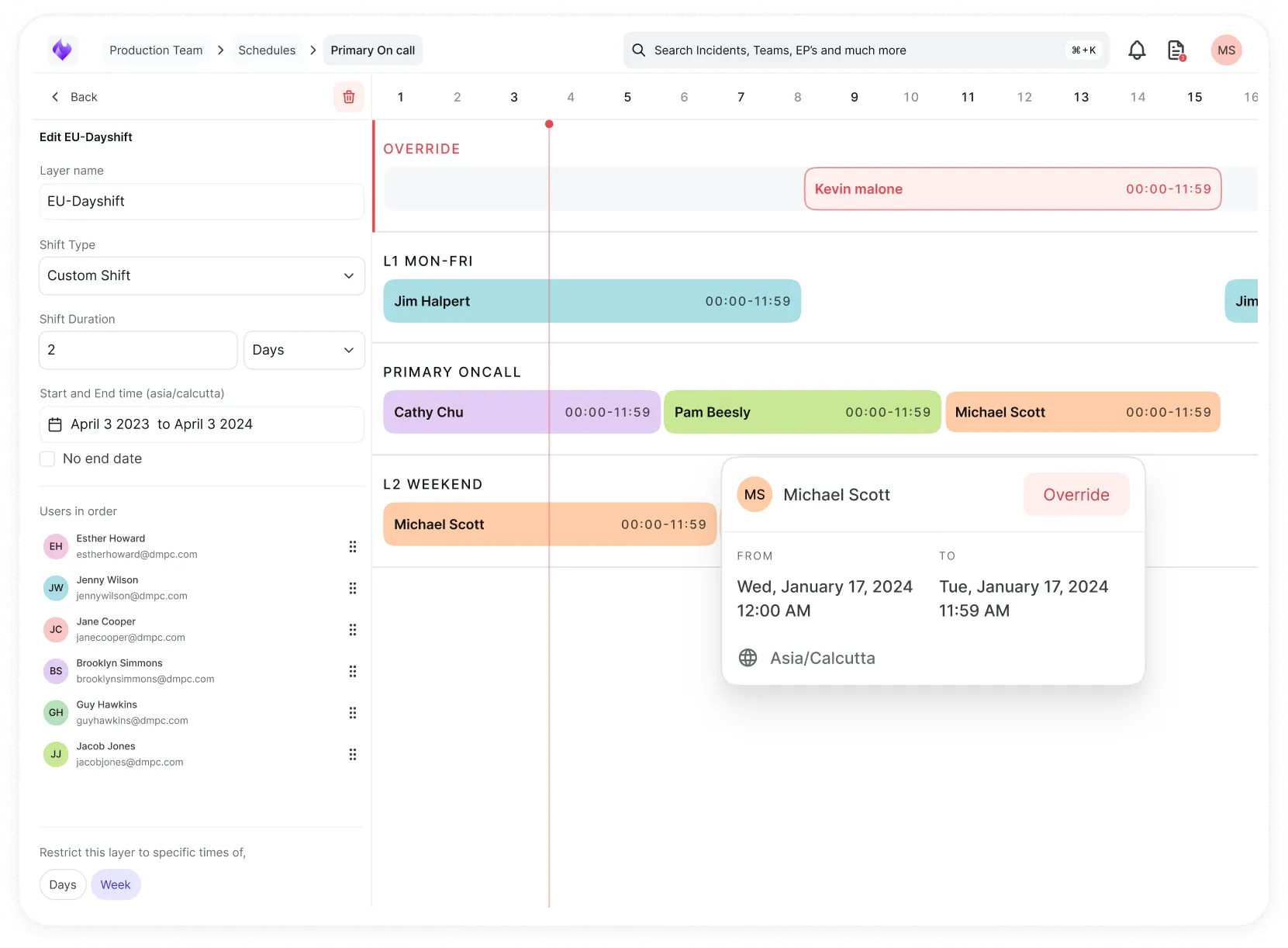
Automate postmortems, AI summaries, and post-incident workflows
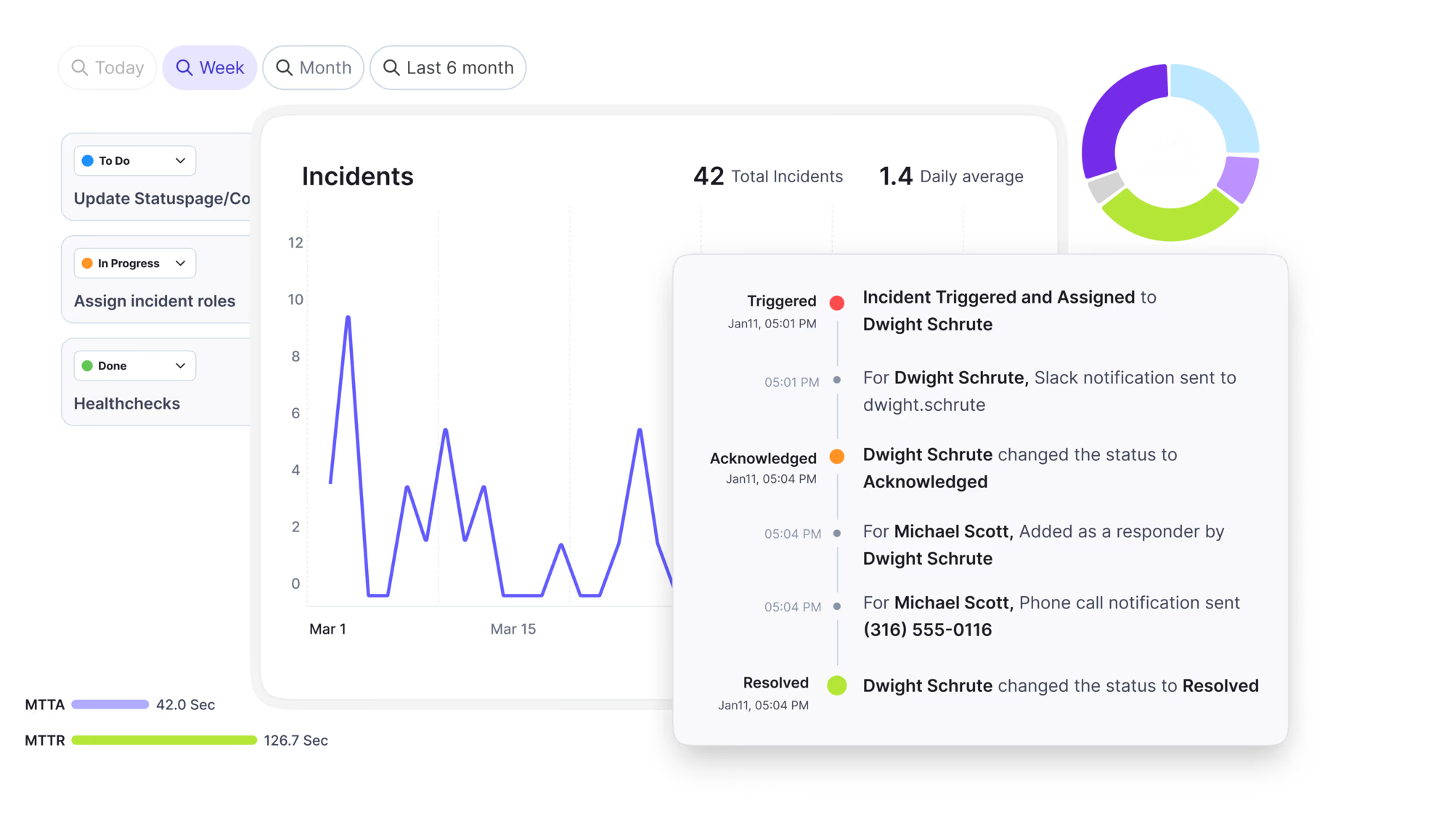
Create, organize, and continuously improve your knowledge base to find the right answers with Sera AI.
We're here to help

The integration with Atlassian Jira using the Xurrent Integration Service is

The integration with Atlassian Jira using the Xurrent Integration Service is

The integration with Atlassian Jira using the Xurrent Integration Service is

The integration with Atlassian Jira using the Xurrent Integration Service is

The integration with Atlassian Jira using the Xurrent Integration Service is

The integration with Atlassian Jira using the Xurrent Integration Service is

The integration with Atlassian Jira using the Xurrent Integration Service is

The integration with Atlassian Jira using the Xurrent Integration Service is
Resolve issues quickly with an AI-powered system that automates ticketing.
Unifiy IT, HR, Facilities, Finance, and more on a single, AI-powered service platform.
Simplify on-call scheduling, automate escalations, and reduce burnout.
Automate postmortems, AI summaries, and post-incident workflows
Create, organize, and continuously improve your knowledge base to find the right answers with Sera AI.
Resolve plant floor and IT issues before they disrupt production.
Stay audit-ready while resolving issues and reducing operational risk.

Detect, respond, and resolve incidents fast to cut downtime and MTTR.

Keep your store online, even during your biggest sales moments.

Protect patient data and resolve issues fast, so care teams stay focused on care.

Standardize service delivery across every store and channel.

We are here to help 24/7

Connect with other Xurrent Users

Get insights and tips on how to get the most out of Xurrent

Apps, APIs, and updates

Xurrent service functionality

Eliminate manual tasks, optimize workflows, and deliver faster resolutions.
Learn how organizations have reduced downtime, improved 50% MTTA & MTTR, and cut costs with Xurrent IMR.
Discover Xurrent IMR's quick support, bidirectional integrations with Jira and Slack, and more cohesive incident response capabilities compared to Opsgenie.
Understand why users value Xurrent IMR for its intuitive interface, efficient incident alerting, customizable On-call schedules, and escalations.
A Problem Manager is the IT professional accountable for overseeing the entire lifecycle of problems within an organization's IT infrastructure, from identification and analysis through resolution and closure. Operating within the ITIL Problem Management practice, the Problem Manager coordinates root cause investigations, ensures that underlying causes of recurring incidents are identified and eliminated, and maintains the Known Error Database (KEDB) to prevent future disruptions. This role bridges reactive incident response and proactive service improvement by transforming incident patterns into permanent fixes, reducing the volume of repeat incidents that burden service desk teams and degrade user experience.
The Problem Manager owns the problem record from creation to closure, directing cross-functional teams through root cause analysis, coordinating with Change Management to implement fixes, and tracking the effectiveness of workarounds and permanent solutions. Unlike an Incident Manager who focuses on restoring service as quickly as possible, the Problem Manager investigates why the incident occurred in the first place and ensures the organization learns from each disruption.
The Problem Manager role directly impacts organizational resilience and operational cost. Without dedicated problem ownership, IT teams fall into a reactive cycle where the same incidents recur month after month, consuming service desk capacity, eroding user trust, and delaying strategic initiatives. Research indicates that over 80% of incidents are repeats of previously resolved issues—a pattern that Problem Managers are specifically tasked with breaking.
By identifying and eliminating root causes, Problem Managers reduce Mean Time to Repair (MTTR) across the environment, lower ticket volume, and free engineering teams to focus on innovation rather than firefighting. They also strengthen compliance and audit readiness by maintaining documented evidence of how problems were investigated, what fixes were applied, and how the organization prevents recurrence. In regulated industries or high-availability environments, the Problem Manager ensures that postmortem actions translate into actual change requests rather than forgotten to-do lists, creating accountability that prevents the same outage from happening six months later.
Organizations that lack a Problem Manager often see fragmented ownership, where incident responders restore service but no one ensures the underlying defect is fixed. This gap leads to alert fatigue, on-call burnout, and a growing backlog of technical debt that eventually manifests as major outages.
The Problem Manager operates through a structured lifecycle aligned with ITIL Problem Management practices. The process begins with problem identification, either triggered by recurring incident patterns, proactive trend analysis, or direct escalation from the service desk. The Problem Manager logs the problem record, assigns priority based on business impact and frequency, and initiates a root cause analysis, often coordinating subject matter experts from infrastructure, application, and operations teams.
During investigation, the Problem Manager facilitates structured techniques such as the 5 Whys, Fishbone diagrams, or Kepner-Tregoe analysis to isolate the underlying cause. If a permanent fix cannot be implemented immediately, the Problem Manager documents a workaround in the KEDB and ensures it is accessible to service desk agents and on-call responders. This workaround reduces resolution time for future incidents while the permanent solution is developed.
Once the root cause is confirmed, the Problem Manager collaborates with the Change Manager to schedule and implement the fix, ensuring it follows proper change control procedures to avoid introducing new risks. After deployment, the Problem Manager verifies that the problem is resolved, monitors for recurrence, and updates the problem record with closure details and lessons learned. Throughout the lifecycle, the Problem Manager maintains communication with stakeholders, provides status updates to leadership, and tracks metrics such as problem backlog size, time to resolution, and reduction in related incidents.
Effective Problem Managers also drive continuous improvement by analyzing trends across the problem database, identifying systemic weaknesses in infrastructure or processes, and recommending strategic investments to prevent entire classes of problems.
- Financial services firm : The Problem Manager identifies that 40% of service desk tickets relate to VPN disconnections. After coordinating a cross-team root cause analysis, the team discovers outdated firmware on network appliances. The Problem Manager works with Change Management to schedule a phased firmware upgrade, documents the workaround in the KEDB, and tracks a 65% reduction in VPN-related incidents over the following quarter.
- Healthcare provider : Following a critical EHR system outage, the Problem Manager leads a blameless postmortem and discovers that database connection pool limits were never adjusted after a recent application update. The Problem Manager creates a problem record, assigns tasks to the database and application teams, and ensures the fix is deployed through the change process. The postmortem actions are tracked in the change system, preventing the issue from being deprioritized.
- SaaS company : The Problem Manager notices a pattern of API timeout incidents occurring every Monday morning. Investigation reveals that a weekly batch job saturates database resources during peak user login times. The Problem Manager coordinates with DevOps to reschedule the batch job and implements query optimization, eliminating the Monday incident spike and improving overall API response times by 30%.
- Problem Management
- Incident Manager
- Change Manager
- Known Error Database
- Root Cause Analysis
---


.webp)
.webp)