





Blog
Insights & updates from our experts


Resolve plant floor and IT issues before they disrupt production.

Stay audit-ready while resolving issues and reducing operational risk.
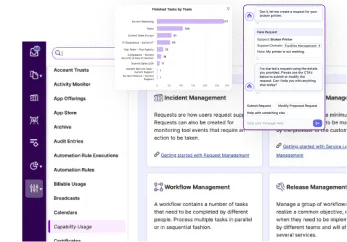
Resolve issues quickly with an AI-powered system that automates ticketing.
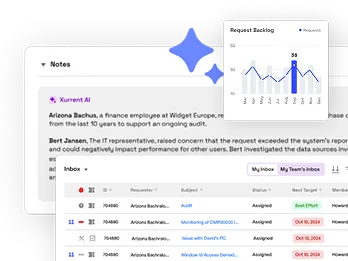
Unifiy IT, HR, Facilities, Finance, and more on a single, AI-powered service platform.
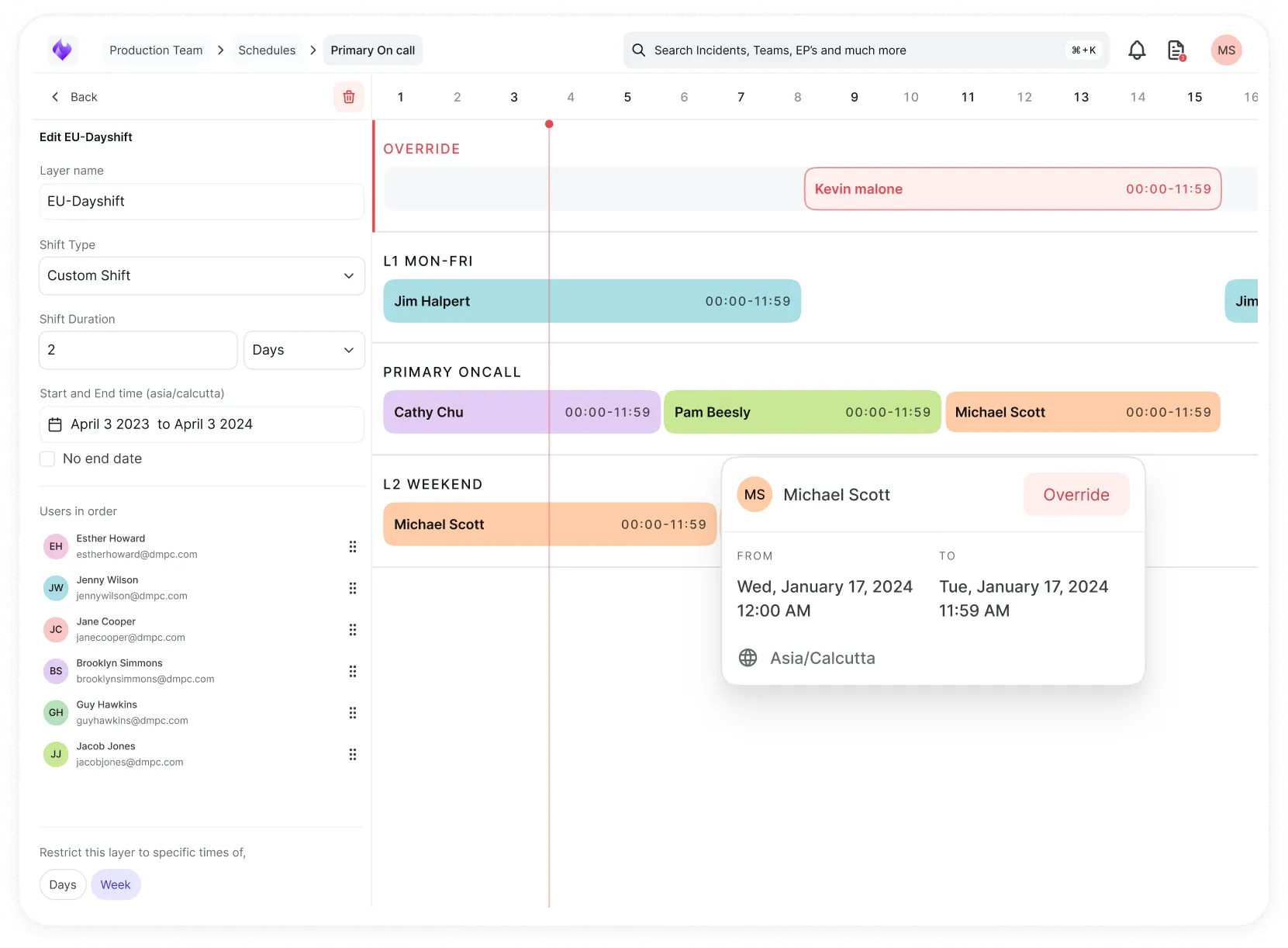
Simplify on-call scheduling, automate escalations, and reduce burnout.
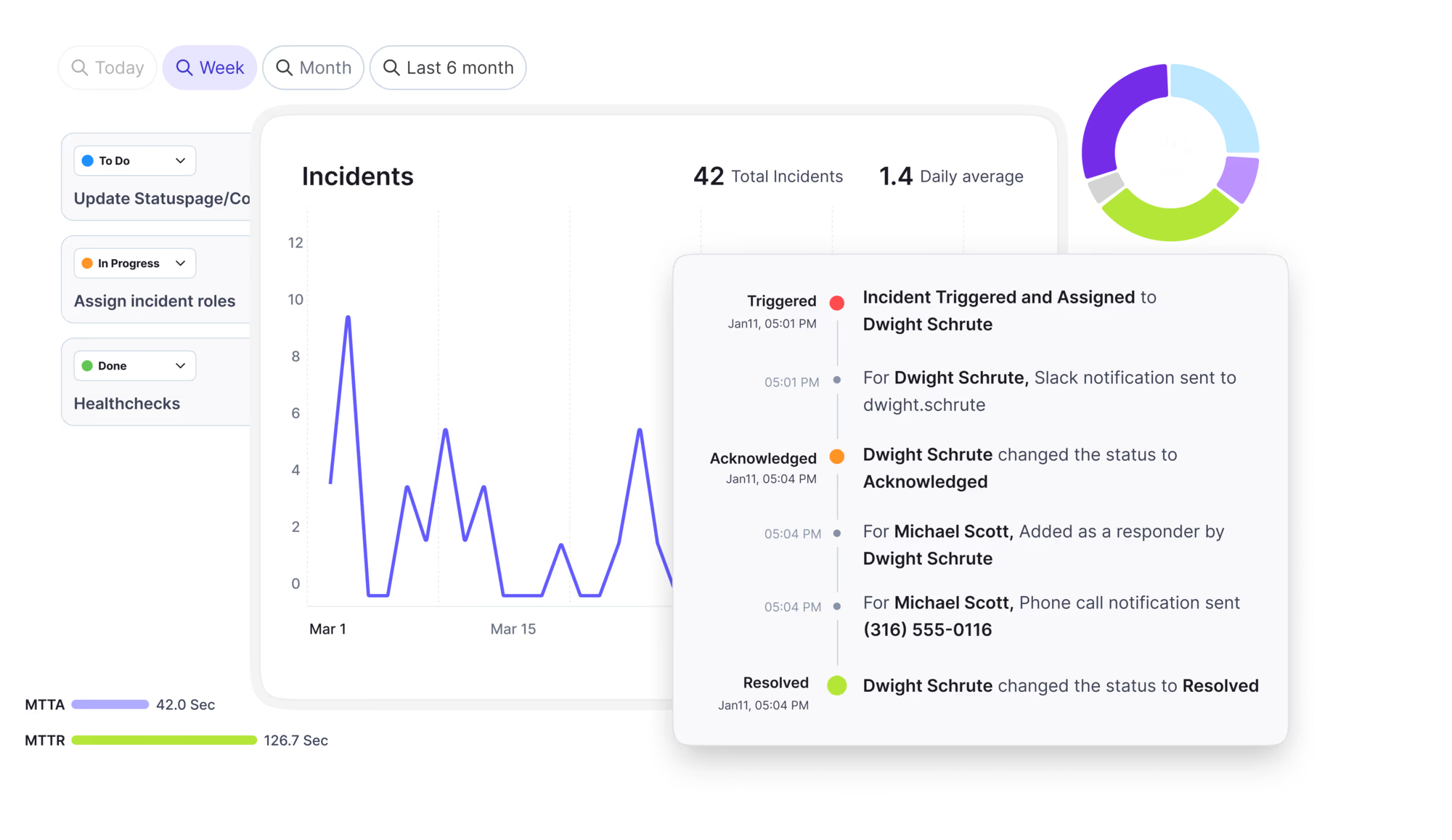
Automate postmortems, AI summaries, and post-incident workflows
Create, organize, and continuously improve your knowledge base to find the right answers with Sera AI.

We're here to help

The integration with Atlassian Jira using the Xurrent Integration Service is

The integration with Atlassian Jira using the Xurrent Integration Service is

The integration with Atlassian Jira using the Xurrent Integration Service is

The integration with Atlassian Jira using the Xurrent Integration Service is

The integration with Atlassian Jira using the Xurrent Integration Service is

The integration with Atlassian Jira using the Xurrent Integration Service is

The integration with Atlassian Jira using the Xurrent Integration Service is

The integration with Atlassian Jira using the Xurrent Integration Service is
Resolve issues quickly with an AI-powered system that automates ticketing.
Unifiy IT, HR, Facilities, Finance, and more on a single, AI-powered service platform.
Simplify on-call scheduling, automate escalations, and reduce burnout.
Automate postmortems, AI summaries, and post-incident workflows
Create, organize, and continuously improve your knowledge base to find the right answers with Sera AI.
Resolve plant floor and IT issues before they disrupt production.
Stay audit-ready while resolving issues and reducing operational risk.

Detect, respond, and resolve incidents fast to cut downtime and MTTR.

Keep your store online, even during your biggest sales moments.

Protect patient data and resolve issues fast, so care teams stay focused on care.

Standardize service delivery across every store and channel.

We are here to help 24/7

Connect with other Xurrent Users

Get insights and tips on how to get the most out of Xurrent

Apps, APIs, and updates

Xurrent service functionality

Eliminate manual tasks, optimize workflows, and deliver faster resolutions.
Learn how organizations have reduced downtime, improved 50% MTTA & MTTR, and cut costs with Xurrent IMR.
Discover Xurrent IMR's quick support, bidirectional integrations with Jira and Slack, and more cohesive incident response capabilities compared to Opsgenie.
Understand why users value Xurrent IMR for its intuitive interface, efficient incident alerting, customizable On-call schedules, and escalations.
Configuration Manager is the role responsible for maintaining the accuracy, integrity, and completeness of configuration data across an organization's IT infrastructure. This individual establishes and enforces the processes that identify, control, track, and audit configuration items (CIs)—the hardware, software, documentation, and other components required to deliver IT services—ensuring that the Configuration Management Database (CMDB) remains a reliable single source of truth. The Configuration Manager defines what gets tracked, how changes to CIs are recorded, who can modify configuration records, and how relationships between CIs are documented, enabling teams to understand dependencies, assess change impact, and troubleshoot incidents with accurate asset and service context.
In ITIL-aligned organizations, the Configuration Manager oversees Configuration Management as a formal practice, coordinating with Change Management, Incident Management, and Problem Management to ensure that configuration data supports decision-making across the service lifecycle. They work closely with IT Asset Management (ITAM) to reconcile physical and logical asset inventories, with Change Managers to verify that approved changes are reflected in the CMDB, and with Incident and Problem Managers to provide dependency maps and historical configuration states during investigations. The role requires both technical understanding of IT infrastructure and process discipline to prevent configuration drift, duplicate records, and stale data that undermine service reliability.
Configuration Manager is the linchpin that transforms raw asset data into actionable service intelligence. Without disciplined configuration management, organizations lose visibility into what they own, how components connect, and which services depend on which infrastructure—leading to failed changes, prolonged outages, and uncontrolled sprawl. A capable Configuration Manager ensures that when an incident occurs, responders immediately see which CIs are affected, which teams own them, and which upstream or downstream services may be impacted, cutting mean time to resolution (MTTR) by eliminating guesswork and manual discovery.
The role directly supports compliance and audit readiness by maintaining accurate records of software licenses, hardware warranties, security patches, and configuration baselines. Auditors and security teams rely on the CMDB to verify that only authorized software runs in production, that end-of-life systems are identified and remediated, and that change history is traceable. Poor configuration management exposes organizations to security vulnerabilities, license violations, and failed audits, while strong configuration management enables proactive risk mitigation and cost control.
For Change Advisory Boards (CABs) and release teams, the Configuration Manager provides the dependency maps and impact assessments that determine whether a proposed change is safe to deploy. By documenting relationships between CIs—such as which applications run on which servers, which databases support which services, and which network segments connect which locations—the Configuration Manager enables informed change decisions and reduces the risk of unintended service disruption. In high-velocity DevOps and SRE environments, automated configuration discovery and CI relationship mapping become critical to maintaining situational awareness as infrastructure scales and changes rapidly.
The Configuration Manager begins by defining the scope of configuration management: which CIs will be tracked, at what level of detail, and with what attributes. This involves classifying CIs by type (servers, applications, network devices, databases, documentation), establishing naming conventions, and determining which relationships (dependencies, ownership, location) must be captured. The Configuration Manager then selects or configures discovery tools—automated scanners, API integrations, agent-based collectors—that populate the CMDB with accurate, up-to-date CI data, and establishes reconciliation processes to resolve conflicts between discovered data and manually entered records.
Once the CMDB is populated, the Configuration Manager enforces change control procedures that ensure every authorized change to a CI is recorded. This includes integrating the CMDB with Change Management workflows so that approved changes automatically update CI records, and establishing audit trails that log who modified which CI, when, and why. The Configuration Manager also defines CI lifecycle states (planned, active, retired) and ensures that CIs move through these states in a controlled manner, preventing orphaned records and ensuring that decommissioned assets are properly removed from the CMDB.
Ongoing governance is central to the role. The Configuration Manager conducts regular audits to verify that CMDB data matches physical reality, investigates discrepancies, and corrects errors. They establish data quality metrics—such as CI completeness, relationship accuracy, and staleness thresholds—and report these metrics to IT leadership to demonstrate the health of configuration data. They also train teams on proper CMDB usage, enforce data entry standards, and continuously refine discovery and reconciliation processes as the IT environment evolves. In mature organizations, the Configuration Manager collaborates with automation engineers to integrate CMDB data into incident response workflows, change impact analysis tools, and service mapping platforms, ensuring that configuration intelligence flows seamlessly to the teams that need it.
- A financial services company's Configuration Manager maintains a CMDB that tracks every server, database instance, and application supporting online banking services, documenting dependencies between web servers, application servers, and backend databases. When a critical database server requires patching, the Configuration Manager provides the Change Advisory Board with a complete impact assessment showing which applications and customer-facing services will be affected, enabling the team to schedule the change during a low-traffic window and notify stakeholders in advance, preventing unplanned downtime.
- A healthcare provider's Configuration Manager integrates automated discovery tools with the CMDB to continuously scan the network for new devices, ensuring that medical equipment, workstations, and mobile devices are accurately inventoried and linked to the clinical services they support. During a ransomware incident, the Configuration Manager provides the incident response team with a real-time map of affected CIs, their locations, and their service dependencies, enabling rapid isolation of compromised systems and prioritized recovery of critical patient care applications.
- A managed service provider's Configuration Manager maintains separate CMDB instances for each client, enforcing strict data segregation and access controls to ensure that configuration data remains confidential and audit-ready. The Configuration Manager establishes standardized CI templates and automated workflows that populate client CMDBs with accurate asset and service data, enabling the MSP's support teams to quickly identify the root cause of incidents, assess change impact, and demonstrate compliance with client SLAs and regulatory requirements.
- Configuration Item
- Configuration Management Database
- Configuration Management
- Change Manager
- IT Asset Management (ITAM)
---


.webp)
.webp)