




Blog
Insights & updates from our experts


Resolve plant floor and IT issues before they disrupt production.

Stay audit-ready while resolving issues and reducing operational risk.
Resolve issues quickly with an AI-powered system that automates ticketing.
Unifiy IT, HR, Facilities, Finance, and more on a single, AI-powered service platform.
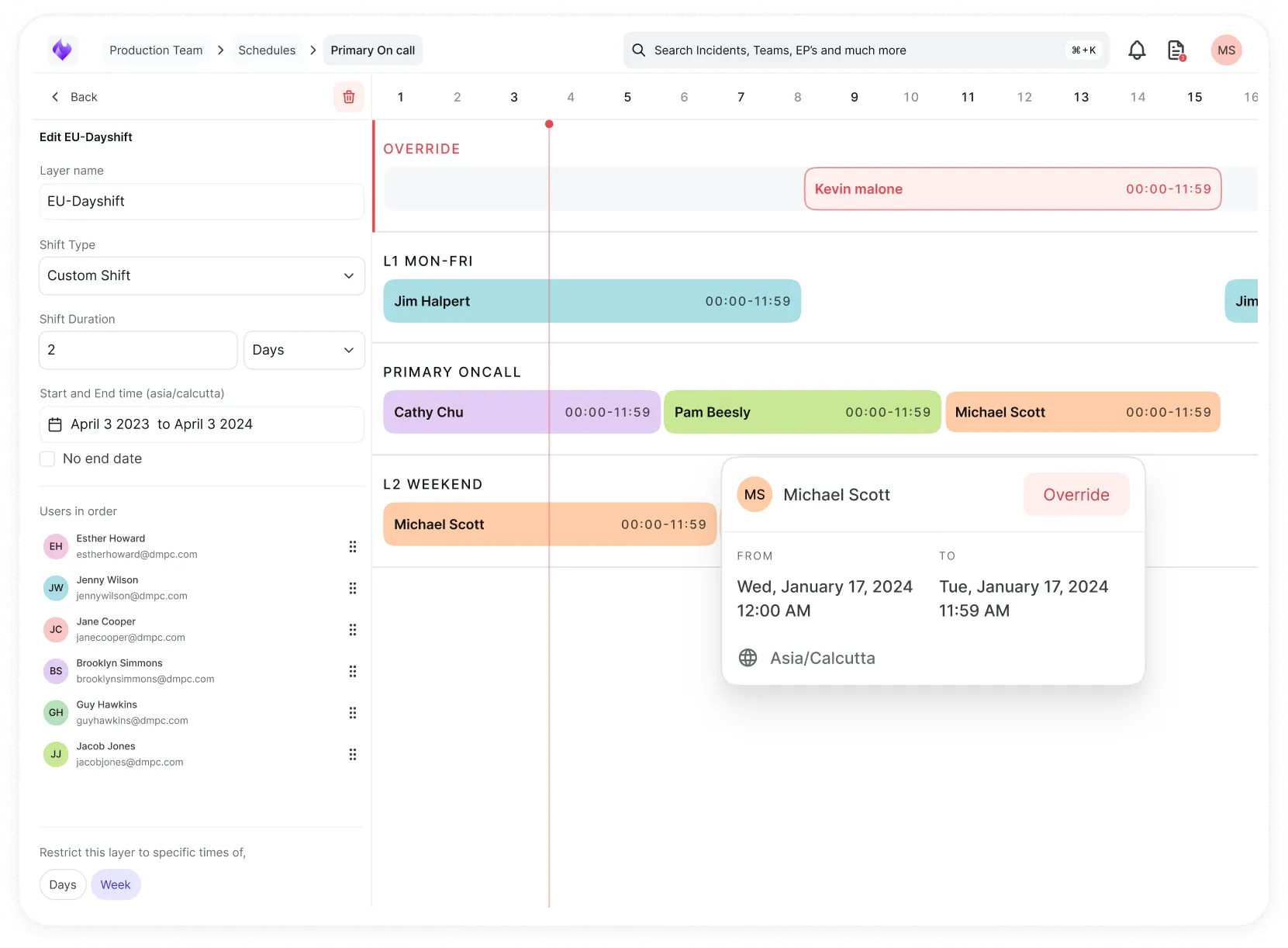
Simplify on-call scheduling, automate escalations, and reduce burnout.
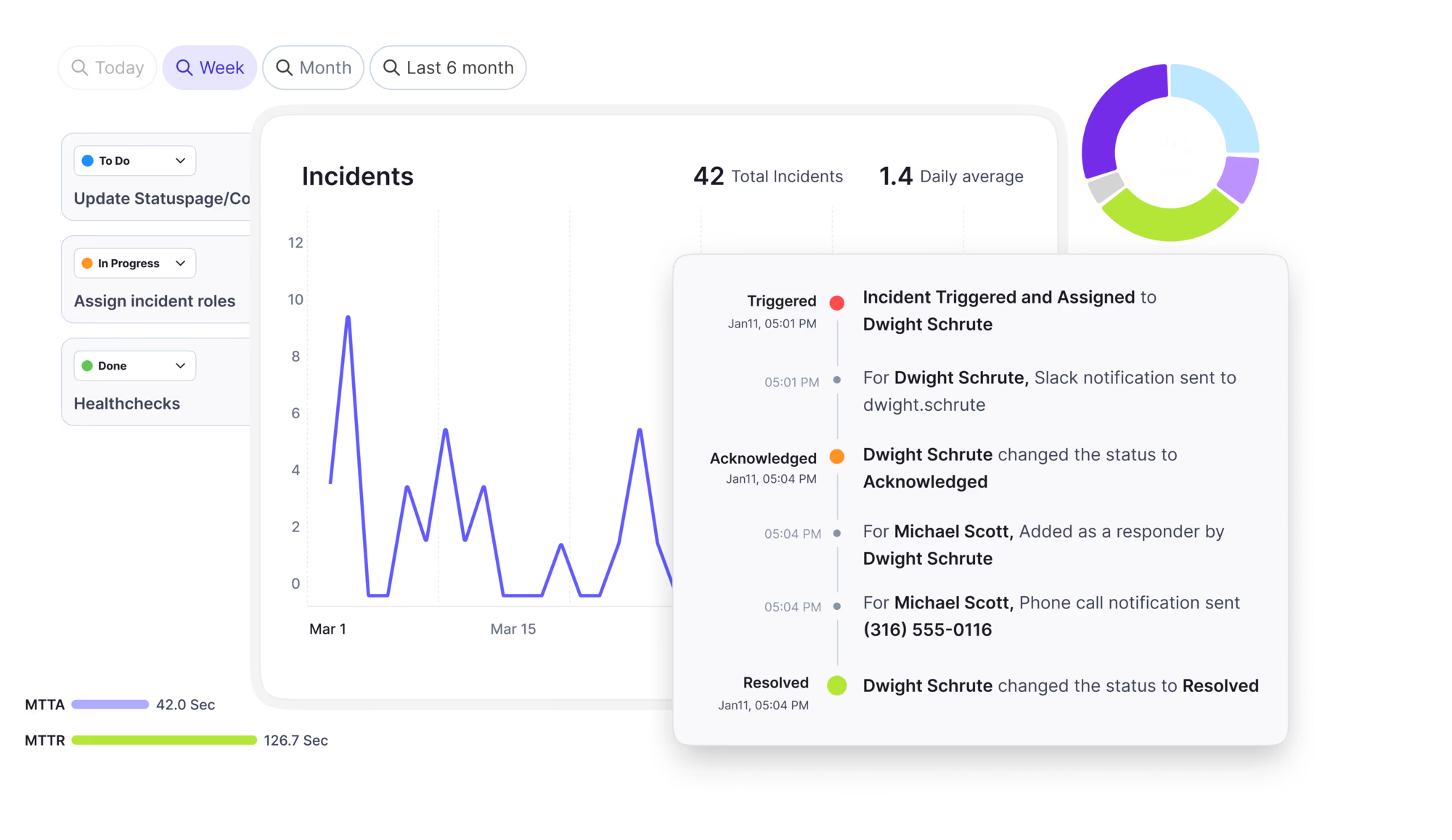
Automate postmortems, AI summaries, and post-incident workflows
Create, organize, and continuously improve your knowledge base to find the right answers with Sera AI.
We're here to help

The integration with Atlassian Jira using the Xurrent Integration Service is

The integration with Atlassian Jira using the Xurrent Integration Service is

The integration with Atlassian Jira using the Xurrent Integration Service is

The integration with Atlassian Jira using the Xurrent Integration Service is

The integration with Atlassian Jira using the Xurrent Integration Service is

The integration with Atlassian Jira using the Xurrent Integration Service is

The integration with Atlassian Jira using the Xurrent Integration Service is

The integration with Atlassian Jira using the Xurrent Integration Service is
Resolve issues quickly with an AI-powered system that automates ticketing.
Unifiy IT, HR, Facilities, Finance, and more on a single, AI-powered service platform.
Simplify on-call scheduling, automate escalations, and reduce burnout.
Automate postmortems, AI summaries, and post-incident workflows
Create, organize, and continuously improve your knowledge base to find the right answers with Sera AI.
Resolve plant floor and IT issues before they disrupt production.
Stay audit-ready while resolving issues and reducing operational risk.

Detect, respond, and resolve incidents fast to cut downtime and MTTR.

Keep your store online, even during your biggest sales moments.

Protect patient data and resolve issues fast, so care teams stay focused on care.

Standardize service delivery across every store and channel.

We are here to help 24/7

Connect with other Xurrent Users

Get insights and tips on how to get the most out of Xurrent

Apps, APIs, and updates

Xurrent service functionality

Eliminate manual tasks, optimize workflows, and deliver faster resolutions.
Learn how organizations have reduced downtime, improved 50% MTTA & MTTR, and cut costs with Xurrent IMR.
Discover Xurrent IMR's quick support, bidirectional integrations with Jira and Slack, and more cohesive incident response capabilities compared to Opsgenie.
Understand why users value Xurrent IMR for its intuitive interface, efficient incident alerting, customizable On-call schedules, and escalations.
A Change Advisory Board (CAB) is a cross-functional group that evaluates, prioritizes, and approves or rejects proposed changes to IT services, infrastructure, and applications before implementation. The CAB reviews change requests to assess technical feasibility, business impact, resource requirements, and risk, ensuring changes align with service level commitments and organizational objectives. Membership typically includes the change manager (who chairs meetings), service owners, technical specialists, application owners, and representatives from affected business units. The CAB operates as a governance checkpoint within the change management process, providing collective expertise and accountability that individual approvers cannot deliver alone.
In ITIL-aligned organizations, the CAB functions as an advisory body—it recommends approval or rejection, but final authority often rests with a designated change manager or change authority. For high-risk or emergency changes, organizations may convene an Emergency CAB (ECAB), a smaller subset with authority to make rapid decisions outside regular meeting schedules.
Why Change Advisory Board (CAB) Matters
The Change Advisory Board reduces the risk of service disruption by subjecting changes to structured peer review before deployment. When changes bypass CAB evaluation, organizations face higher rates of failed changes, unplanned outages, and cascading incidents that impact SLA performance and customer trust. CAB review ensures that dependencies, rollback plans, and communication strategies are documented and validated, preventing common failure modes like conflicting changes, insufficient testing, or inadequate resource allocation.
CAB meetings also create cross-team visibility into the change pipeline, allowing infrastructure, application, security, and business teams to identify conflicts, coordinate maintenance windows, and align on priorities. This coordination is critical in environments where multiple teams deploy changes to shared infrastructure—without CAB oversight, simultaneous changes can trigger incidents that are difficult to diagnose and resolve.
For compliance-driven industries (financial services, healthcare, regulated utilities), CAB documentation provides an auditable record of change decisions, demonstrating due diligence and adherence to internal controls. Auditors routinely review CAB minutes, change records, and approval workflows to verify that changes followed documented procedures and received appropriate authorization.
How Change Advisory Board (CAB) Works
The CAB process begins when a change request is submitted through the change management system. The change manager reviews incoming requests for completeness, categorizes them by risk and impact, and schedules them for CAB review based on urgency and complexity. Standard changes—low-risk, pre-approved changes with documented procedures—typically bypass CAB review and follow automated approval workflows.
During CAB meetings, the change requester presents each change, describing the business justification, technical approach, affected services, implementation timeline, testing results, and rollback plan. CAB members ask questions, identify risks, and assess whether the change is ready for implementation. The CAB may approve the change as submitted, request additional information or testing, defer the change to a later date, or reject it outright if risks outweigh benefits.
Approved changes receive a scheduled implementation window, and the change manager tracks execution, verifying that changes are implemented according to plan and that post-implementation reviews are completed. If a change fails or causes an incident, the CAB reviews the failure during the next meeting, identifying root causes and recommending process improvements to prevent recurrence.
Modern CAB implementations increasingly use asynchronous review workflows for routine changes, reserving synchronous meetings for high-risk or complex changes that require real-time discussion. This hybrid model reduces meeting overhead while maintaining governance rigor where it matters most.
Examples of Change Advisory Board (CAB)
- Financial services firm deploying a core banking upgrade : The CAB includes representatives from application development, database administration, network operations, information security, and retail banking operations. The board reviews the change over three meetings, requiring additional load testing after identifying potential performance degradation during peak transaction periods. Final approval includes a phased rollout plan with go/no-go checkpoints after each phase.
- Healthcare provider implementing EHR system patch : The CAB evaluates the change request against active clinical workflows, identifying a conflict with a scheduled imaging system maintenance window. The board defers the EHR patch by one week to avoid overlapping changes that could disrupt patient care. The change manager coordinates with both teams to ensure non-overlapping implementation and on-call coverage.
- SaaS company managing microservices deployments : The CAB operates asynchronously via a dedicated Slack channel, reviewing change requests for services that touch shared infrastructure or customer-facing APIs. Standard service updates follow automated approval workflows, but changes affecting authentication, billing, or data storage require CAB review. The board rejected a database schema change after identifying missing rollback procedures and insufficient testing in the staging environment.
Related Terms
- Change Enablement (Management)
- Change Manager
- Emergency Change
- Standard Change
- Post-Implementation Review
---
Frequently Asked Questions


.webp)
.webp)