




Blog
Insights & updates from our experts


Resolve plant floor and IT issues before they disrupt production.

Stay audit-ready while resolving issues and reducing operational risk.
Resolve issues quickly with an AI-powered system that automates ticketing.
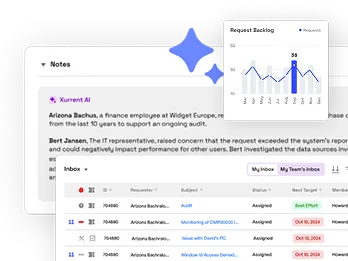
Unifiy IT, HR, Facilities, Finance, and more on a single, AI-powered service platform.
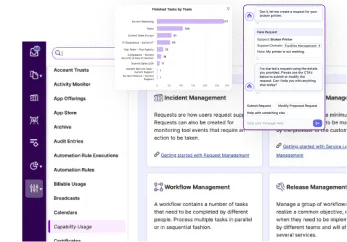
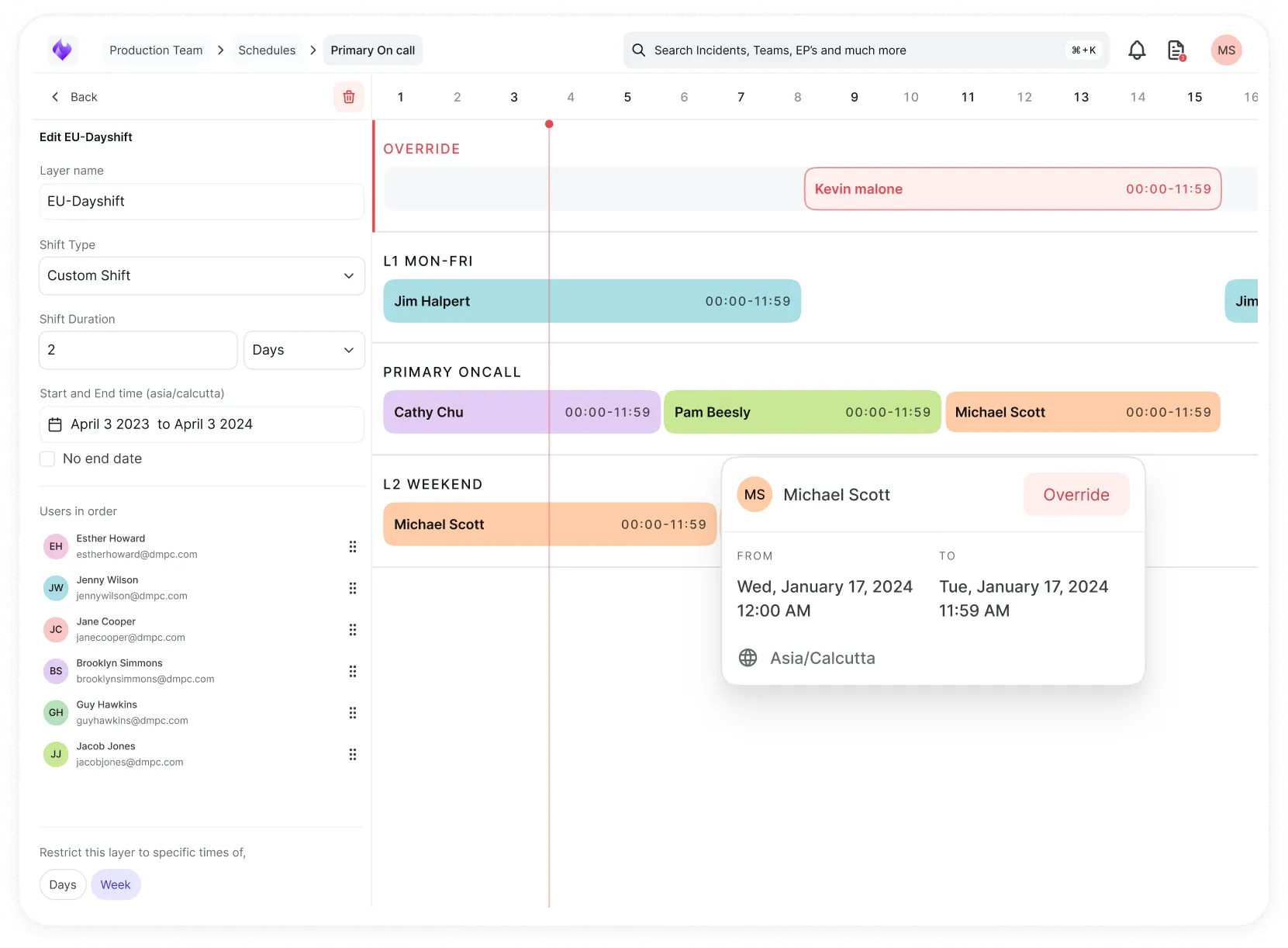
Simplify on-call scheduling, automate escalations, and reduce burnout.
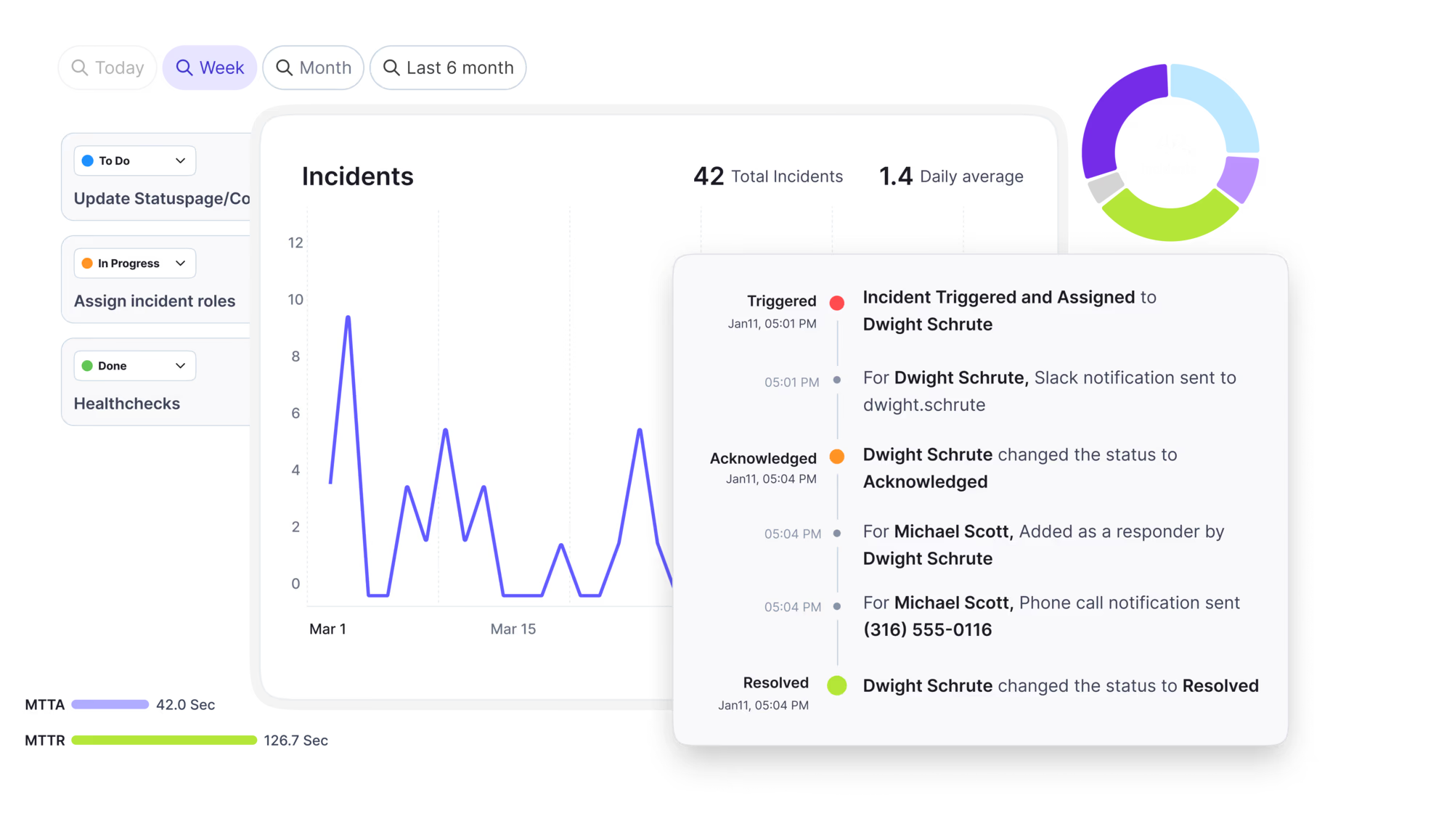
Automate postmortems, AI summaries, and post-incident workflows
Create, organize, and continuously improve your knowledge base to find the right answers with Sera AI.
We're here to help

The integration with Atlassian Jira using the Xurrent Integration Service is

The integration with Atlassian Jira using the Xurrent Integration Service is

The integration with Atlassian Jira using the Xurrent Integration Service is

The integration with Atlassian Jira using the Xurrent Integration Service is

The integration with Atlassian Jira using the Xurrent Integration Service is

The integration with Atlassian Jira using the Xurrent Integration Service is

The integration with Atlassian Jira using the Xurrent Integration Service is

The integration with Atlassian Jira using the Xurrent Integration Service is
Resolve issues quickly with an AI-powered system that automates ticketing.
Unifiy IT, HR, Facilities, Finance, and more on a single, AI-powered service platform.
Simplify on-call scheduling, automate escalations, and reduce burnout.
Automate postmortems, AI summaries, and post-incident workflows
Create, organize, and continuously improve your knowledge base to find the right answers with Sera AI.
Resolve plant floor and IT issues before they disrupt production.
Stay audit-ready while resolving issues and reducing operational risk.

Detect, respond, and resolve incidents fast to cut downtime and MTTR.

Keep your store online, even during your biggest sales moments.

Protect patient data and resolve issues fast, so care teams stay focused on care.
Standardize service delivery across every store and channel.

We are here to help 24/7

Connect with other Xurrent Users

Get insights and tips on how to get the most out of Xurrent

Apps, APIs, and updates

Xurrent service functionality

Eliminate manual tasks, optimize workflows, and deliver faster resolutions.
Learn how organizations have reduced downtime, improved 50% MTTA & MTTR, and cut costs with Xurrent IMR.
Discover Xurrent IMR's quick support, bidirectional integrations with Jira and Slack, and more cohesive incident response capabilities compared to Opsgenie.
Understand why users value Xurrent IMR for its intuitive interface, efficient incident alerting, customizable On-call schedules, and escalations.
Change is the addition, modification, or removal of anything that could affect IT services. In ITSM and ITIL frameworks, a change represents a planned alteration to the IT environment—whether infrastructure, applications, documentation, processes, or configurations—that must be assessed, approved, and tracked to minimize service disruption and maintain operational stability. Changes range from routine patches and configuration updates to major system migrations and architectural overhauls, and each carries inherent risk that must be weighed against business need.
The scope of what constitutes a change varies by organization, but the underlying principle remains consistent: any modification to the production environment or service delivery model that could impact availability, performance, security, or user experience requires formal change control. This includes not only technical alterations but also procedural updates, vendor contract modifications, and shifts in service level agreements that affect how IT delivers value to the business.
Change is the primary mechanism through which IT evolves to meet business demands, yet it is also the leading cause of unplanned outages and service degradation. Industry data consistently shows that 60–80% of major incidents stem from poorly planned, inadequately tested, or improperly communicated changes. When change processes fail, the consequences cascade: extended downtime, revenue loss, compliance violations, eroded customer trust, and teams forced into reactive firefighting mode instead of strategic work.
Effective change management reduces MTTR by ensuring that responders have complete context when incidents occur—knowing what changed, when, and by whom accelerates root cause identification and rollback decisions. It also protects audit readiness: regulated industries require documented evidence that changes follow approved procedures, maintain separation of duties, and preserve data integrity. Organizations that treat change as an afterthought face not only operational instability but also regulatory penalties and failed audits.
Beyond risk mitigation, disciplined change control enables velocity. When teams trust that changes move through a predictable, transparent workflow with appropriate review gates, they can deploy faster without sacrificing safety. Automation of standard changes—pre-approved, low-risk modifications that follow documented procedures—removes bottlenecks and frees change advisory boards to focus on high-impact decisions. The goal is not to slow delivery but to balance speed with accountability.
Change management follows a structured lifecycle designed to assess risk, coordinate stakeholders, and maintain a complete audit trail. The process begins with a change request, which documents what will change, why it's needed, who is responsible, the implementation plan, the rollback plan, and the expected impact on services and users. This request enters a workflow where it is categorized by risk and urgency—standard, normal, or emergency—which determines the approval path and level of scrutiny required.
For normal changes, a Change Advisory Board (CAB) evaluates the request, reviewing technical feasibility, business justification, resource requirements, and potential conflicts with other planned work. The CAB may approve, reject, or request modifications before granting authorization. Standard changes bypass the CAB because they follow pre-approved templates with known risk profiles, while emergency changes receive expedited review to address critical incidents or security vulnerabilities, often with post-implementation validation.
Once approved, the change moves to scheduling and implementation. The change owner coordinates with affected teams, communicates maintenance windows to stakeholders, and executes the plan according to the documented procedure. Throughout implementation, status updates flow to the ITSM system, and any deviations from the plan are logged. After completion, a post-implementation review verifies that the change achieved its objectives without introducing new issues. If problems arise, the rollback plan is executed and the change is reassessed.
All changes are recorded in the CMDB (Configuration Management Database), linking modifications to specific configuration items and creating a historical record that supports incident investigation, compliance reporting, and continuous improvement. This linkage between change records and incident tickets is foundational to ITxM (IT Collaboration Management), where service, operations, and incident data flow seamlessly across teams to prevent repeated failures and ensure accountability.
- A financial services company deploys a quarterly security patch to 500+ servers across production environments. The change is classified as standard because it follows a tested runbook, includes automated rollback, and has been pre-approved by the CAB. Implementation occurs during a scheduled maintenance window with minimal user impact, and the CMDB is automatically updated to reflect new patch levels across all affected systems.
- An e-commerce platform migrates its payment processing service from on-premises infrastructure to a cloud-based API. This normal change requires CAB review due to its high business impact and technical complexity. The change request includes load testing results, a phased rollback plan, and coordination with the vendor's support team. Post-implementation review confirms transaction latency improvements and validates that no customer data was lost during cutover.
- A healthcare provider's EHR system experiences a critical database corruption issue during peak hours. An emergency change is initiated to restore from backup and apply a vendor-supplied hotfix. The change bypasses standard approval gates but is documented in real time, with the change owner notifying the CAB within 24 hours. A post-incident review identifies the root cause and creates follow-up changes to prevent recurrence, which are tracked through the normal change process.
- Incident
- Problem
- Change Advisory Board (CAB)
- Configuration Item (CI)
- Release Management
---

.webp)
.webp)