





Blog
Insights & updates from our experts


Resolve plant floor and IT issues before they disrupt production.

Stay audit-ready while resolving issues and reducing operational risk.
Resolve issues quickly with an AI-powered system that automates ticketing.
Unifiy IT, HR, Facilities, Finance, and more on a single, AI-powered service platform.
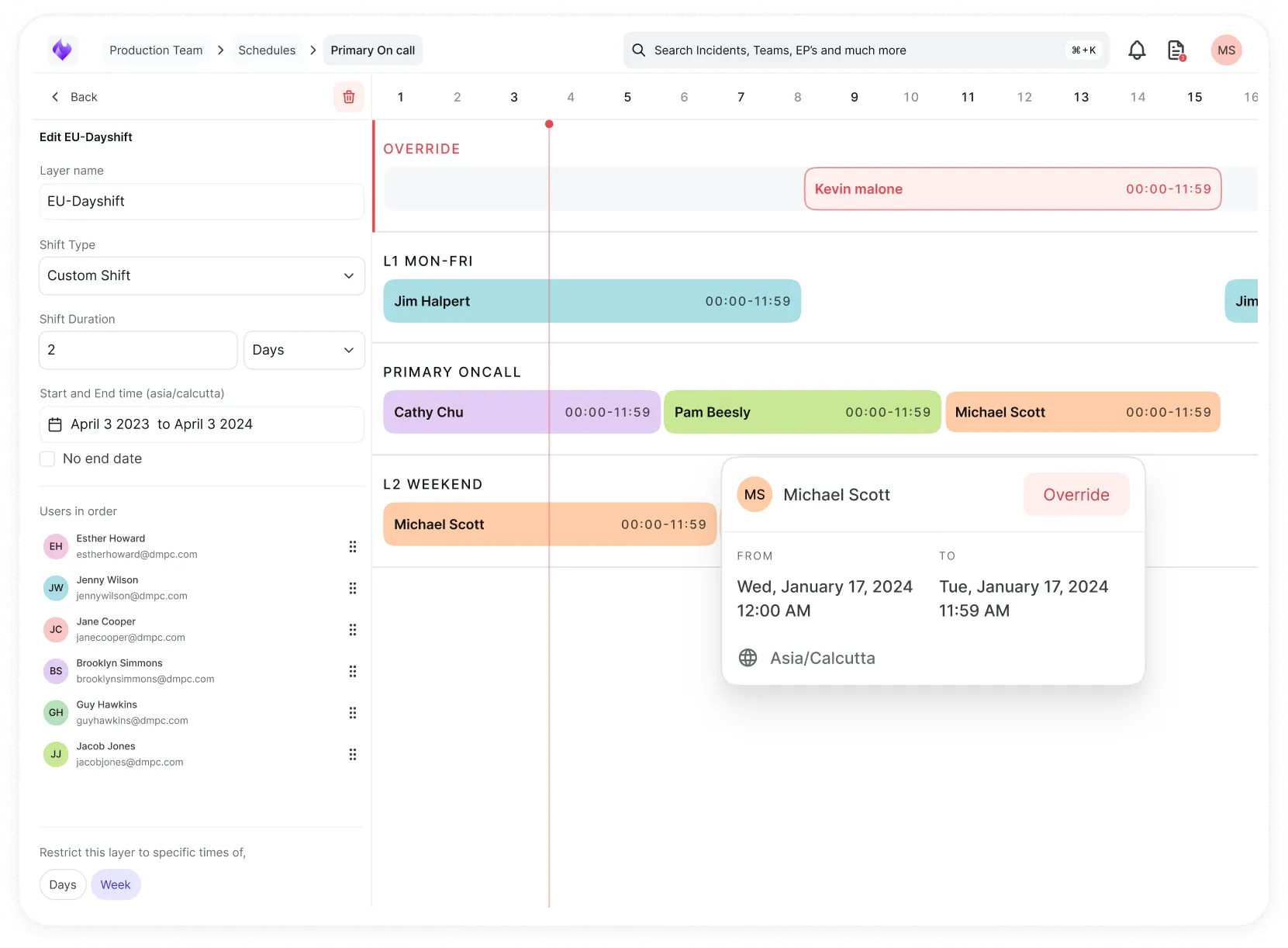
Simplify on-call scheduling, automate escalations, and reduce burnout.
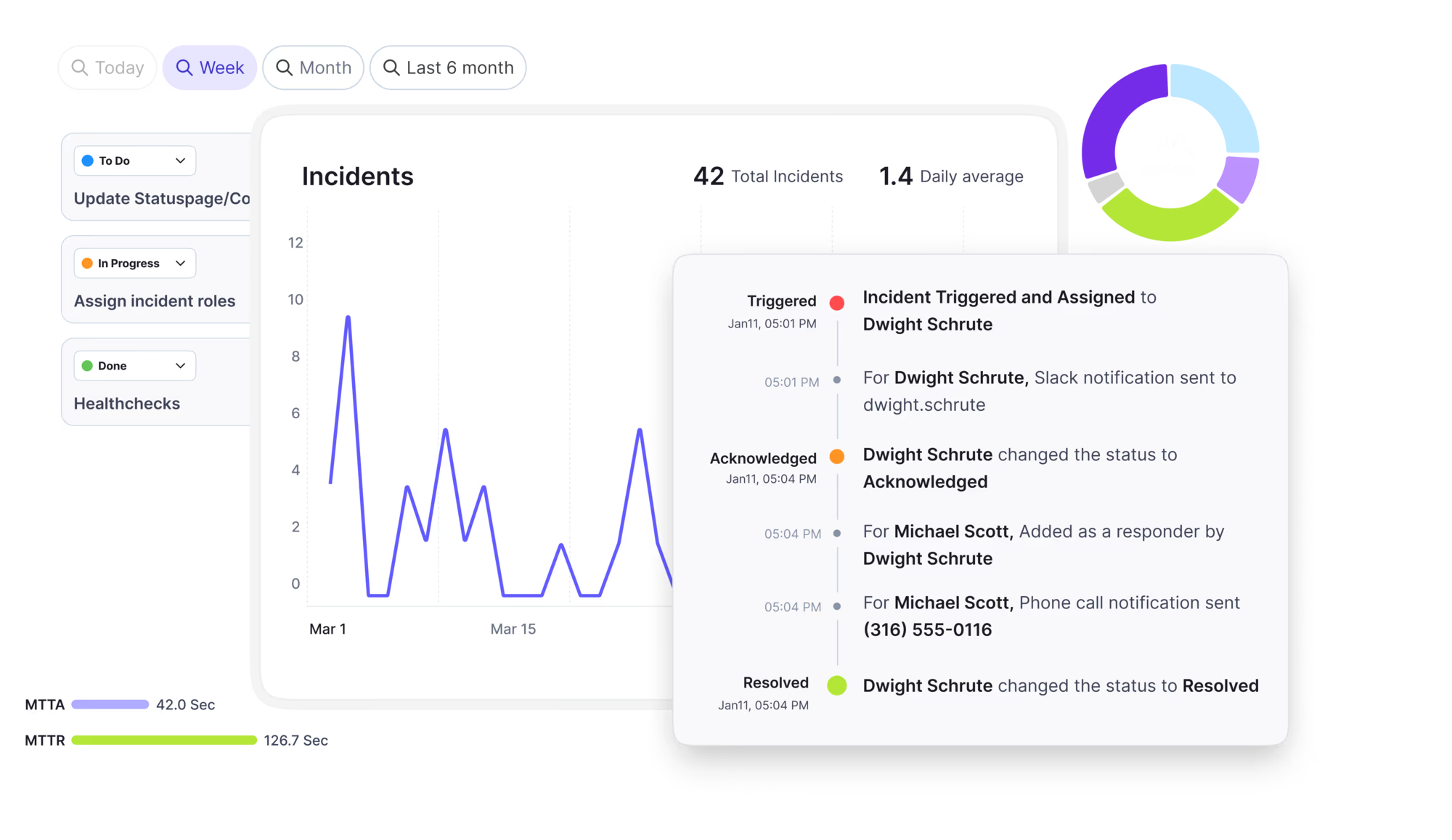
Automate postmortems, AI summaries, and post-incident workflows
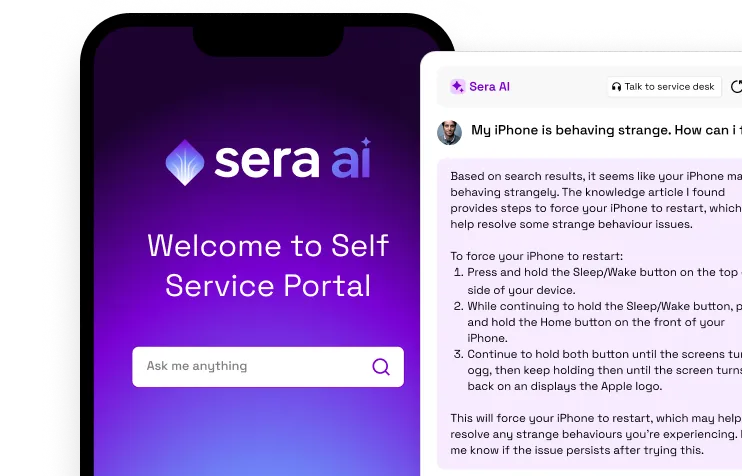
Create, organize, and continuously improve your knowledge base to find the right answers with Sera AI.
We're here to help

The integration with Atlassian Jira using the Xurrent Integration Service is

The integration with Atlassian Jira using the Xurrent Integration Service is

The integration with Atlassian Jira using the Xurrent Integration Service is

The integration with Atlassian Jira using the Xurrent Integration Service is

The integration with Atlassian Jira using the Xurrent Integration Service is

The integration with Atlassian Jira using the Xurrent Integration Service is

The integration with Atlassian Jira using the Xurrent Integration Service is

The integration with Atlassian Jira using the Xurrent Integration Service is
Resolve issues quickly with an AI-powered system that automates ticketing.
Unifiy IT, HR, Facilities, Finance, and more on a single, AI-powered service platform.
Simplify on-call scheduling, automate escalations, and reduce burnout.
Automate postmortems, AI summaries, and post-incident workflows
Create, organize, and continuously improve your knowledge base to find the right answers with Sera AI.
Resolve plant floor and IT issues before they disrupt production.
Stay audit-ready while resolving issues and reducing operational risk.

Detect, respond, and resolve incidents fast to cut downtime and MTTR.

Keep your store online, even during your biggest sales moments.

Protect patient data and resolve issues fast, so care teams stay focused on care.

Standardize service delivery across every store and channel.

We are here to help 24/7

Connect with other Xurrent Users

Get insights and tips on how to get the most out of Xurrent

Apps, APIs, and updates

Xurrent service functionality

Eliminate manual tasks, optimize workflows, and deliver faster resolutions.
Learn how organizations have reduced downtime, improved 50% MTTA & MTTR, and cut costs with Xurrent IMR.
Discover Xurrent IMR's quick support, bidirectional integrations with Jira and Slack, and more cohesive incident response capabilities compared to Opsgenie.
Understand why users value Xurrent IMR for its intuitive interface, efficient incident alerting, customizable On-call schedules, and escalations.
A Configuration Item (CI) is any component of an IT infrastructure that must be tracked, managed, and controlled to deliver and support IT services. CIs include physical assets like servers, network switches, and laptops; software components such as applications, databases, and operating systems; documentation like runbooks and architecture diagrams; and even intangible elements such as service definitions, contracts, and SLAs. In ITSM frameworks like ITIL, a CI is the fundamental unit stored in a Configuration Management Database (CMDB), where it is identified with attributes, relationships, and lifecycle status. The scope of what qualifies as a CI depends on organizational needs—some teams track every virtual machine and software license, while others focus only on service-critical components that directly impact availability or compliance.
Configuration Items form the foundation of effective IT service delivery, incident response, and change management. When incidents occur, responders need to quickly identify which CIs are affected, understand their dependencies, and assess business impact—without accurate CI data, troubleshooting becomes guesswork, extending MTTR and increasing downtime costs. During change management, knowing which CIs will be modified and which services depend on them prevents unintended outages and ensures proper approval workflows. For compliance and audit readiness, CIs provide the documented evidence required by ISO 20000, SOC 2, and other standards, proving that assets are tracked, secured, and maintained according to policy.
Organizations that fail to manage CIs effectively face duplicate asset purchases, untracked software licenses that create compliance risk, and fragmented visibility that slows cross-team collaboration. When service desk agents cannot see which CIs support a failing service, they route tickets incorrectly or escalate unnecessarily. When SREs lack CI relationship data, they cannot predict the blast radius of a change or an outage. Accurate CI management reduces these risks by creating a single source of truth that connects infrastructure, services, incidents, and changes into a unified operational view.
Configuration Items are identified, documented, and stored in a CMDB or similar repository, where each CI receives a unique identifier, classification, and set of attributes. Attributes typically include owner, location, status (active, retired, under maintenance), version, and criticality. Relationships between CIs are mapped to show dependencies—for example, a web application CI may depend on a database CI, which in turn depends on a virtual machine CI hosted on a physical server CI.
Discovery tools and integrations automatically populate and update CI records by scanning networks, querying cloud APIs, and pulling data from monitoring platforms, reducing manual entry and keeping records current. When an incident is logged, the affected CI is linked to the incident ticket, enabling responders to view its configuration, history, and dependencies. During change approval, the Change Advisory Board (CAB) reviews which CIs will be modified and assesses risk based on their relationships and service impact.
CI lifecycle management ensures that records are created when assets are procured, updated as they are deployed or modified, and retired when decommissioned. Regular audits reconcile physical and virtual assets against CMDB records to identify discrepancies, unauthorized changes, or shadow IT. Automation workflows trigger alerts when CI attributes change unexpectedly, supporting continuous compliance and operational hygiene.
- Enterprise service desk managing a SaaS outage : When users report login failures, the service desk links the incident to the "Authentication Service" CI in the CMDB, which shows dependencies on an identity provider CI and a load balancer CI. The team immediately escalates to the network and security teams responsible for those CIs, reducing resolution time by 40% compared to manual investigation.
- Financial services firm preparing for SOC 2 audit : The compliance team exports CI records for all production servers, databases, and applications, along with their ownership, patch status, and access controls. Auditors verify that every CI has a documented owner, change history, and security baseline, satisfying control requirements without manual evidence gathering.
- Healthcare IT operations planning a data center migration : The infrastructure team queries the CMDB for all CIs located in the legacy data center, identifying 200+ servers, storage arrays, and network devices. By mapping CI relationships, they determine migration order to avoid breaking service dependencies, and they link each CI to a change request to track progress and approvals throughout the multi-month project.
- CMDB (Configuration Management Database)
- Configuration Management
- Change Management
- Incident Management
- IT Asset Management (ITAM)
---

.webp)
.webp)