




Blog
Insights & updates from our experts


Resolve plant floor and IT issues before they disrupt production.

Stay audit-ready while resolving issues and reducing operational risk.
Resolve issues quickly with an AI-powered system that automates ticketing.
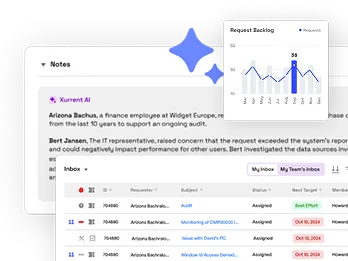
Unifiy IT, HR, Facilities, Finance, and more on a single, AI-powered service platform.
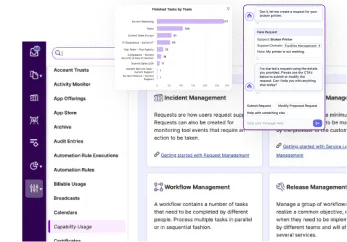
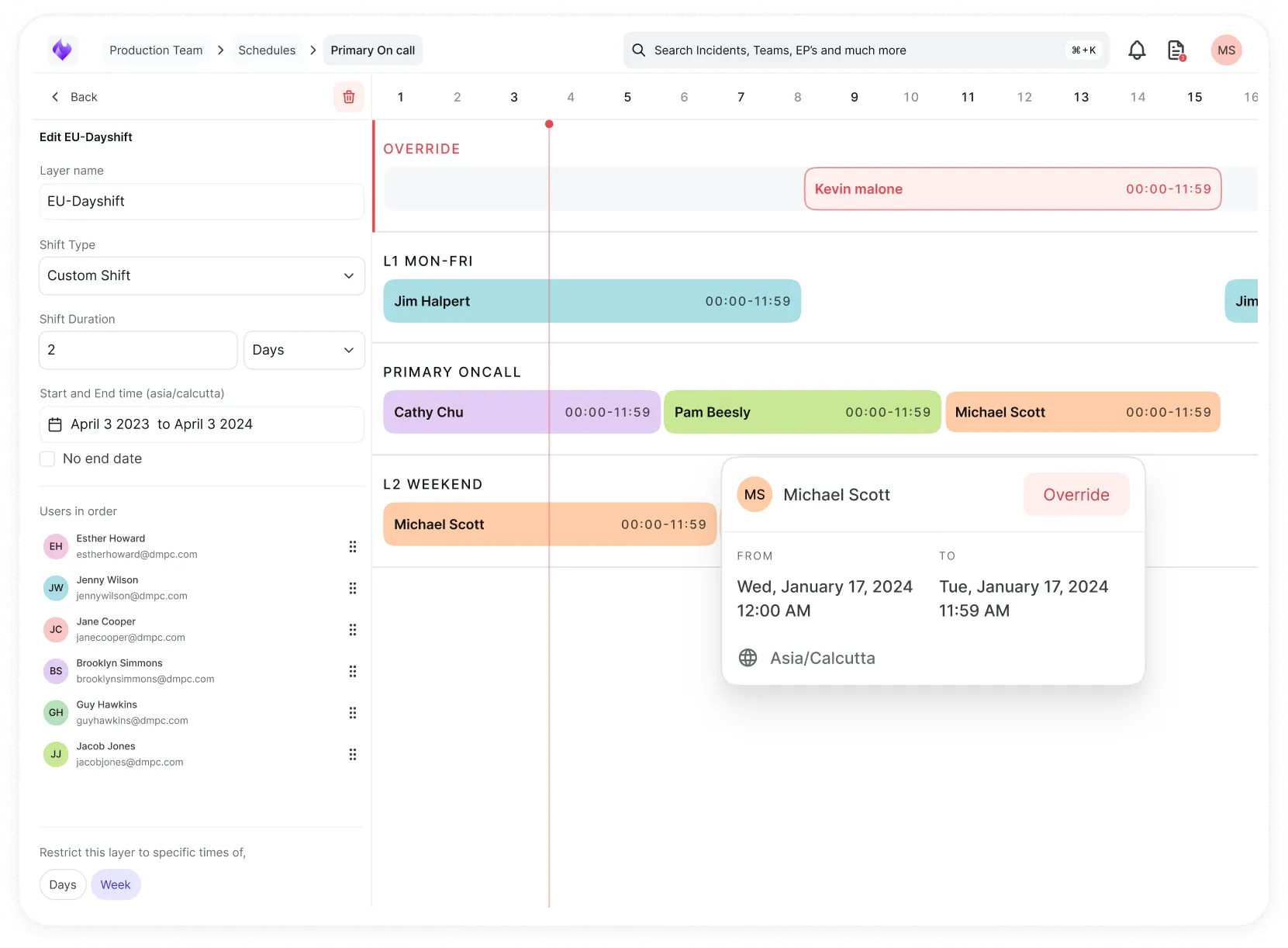
Simplify on-call scheduling, automate escalations, and reduce burnout.
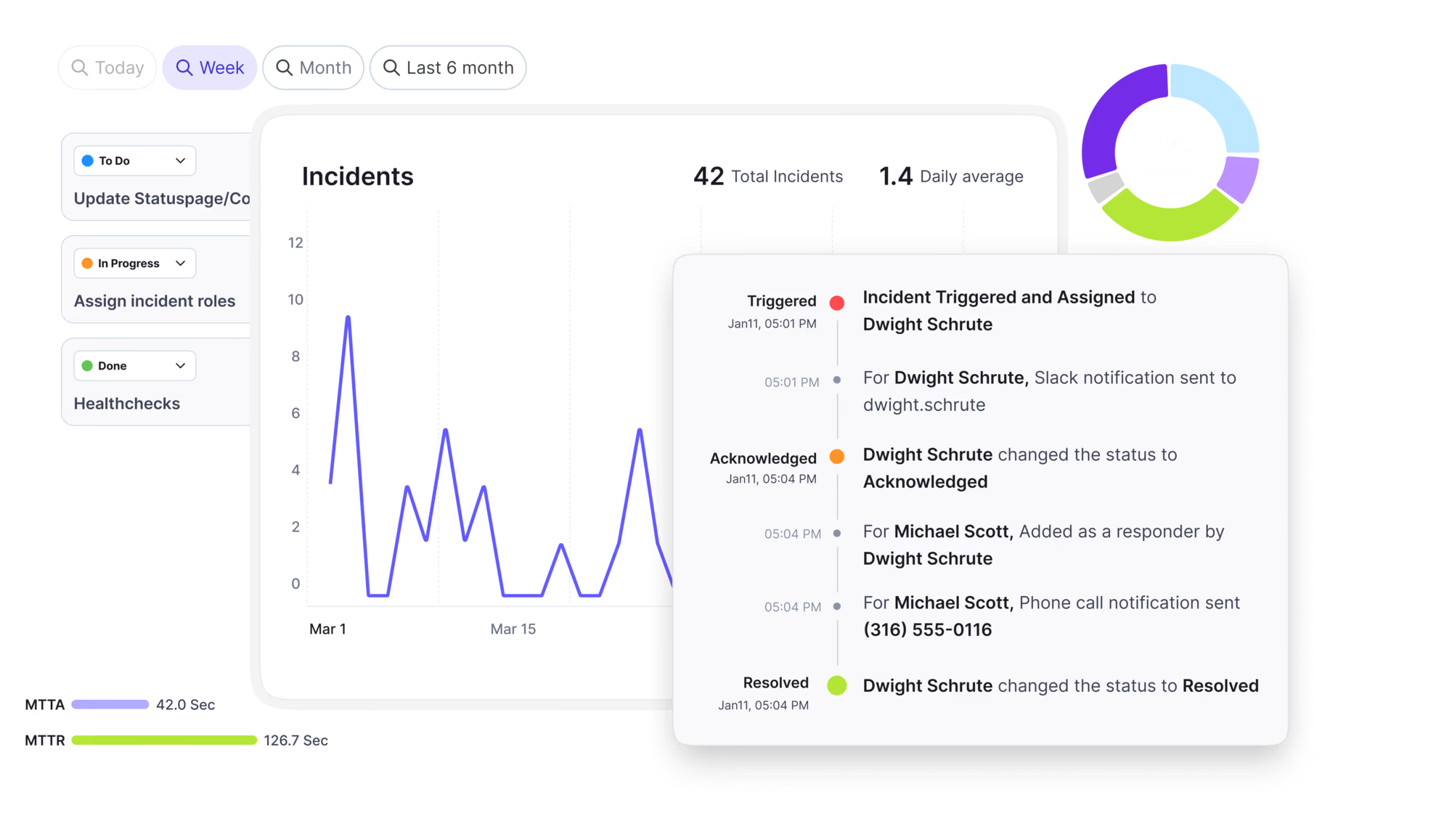
Automate postmortems, AI summaries, and post-incident workflows
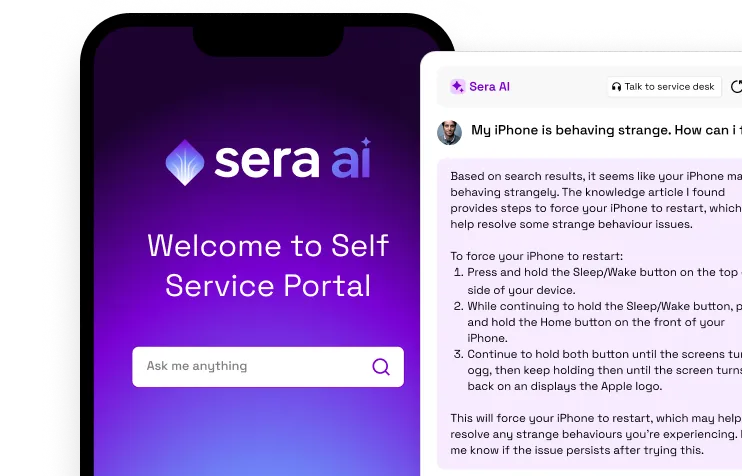
Create, organize, and continuously improve your knowledge base to find the right answers with Sera AI.
We're here to help

The integration with Atlassian Jira using the Xurrent Integration Service is

The integration with Atlassian Jira using the Xurrent Integration Service is

The integration with Atlassian Jira using the Xurrent Integration Service is

The integration with Atlassian Jira using the Xurrent Integration Service is

The integration with Atlassian Jira using the Xurrent Integration Service is

The integration with Atlassian Jira using the Xurrent Integration Service is

The integration with Atlassian Jira using the Xurrent Integration Service is

The integration with Atlassian Jira using the Xurrent Integration Service is
Resolve issues quickly with an AI-powered system that automates ticketing.
Unifiy IT, HR, Facilities, Finance, and more on a single, AI-powered service platform.
Simplify on-call scheduling, automate escalations, and reduce burnout.
Automate postmortems, AI summaries, and post-incident workflows
Create, organize, and continuously improve your knowledge base to find the right answers with Sera AI.
Resolve plant floor and IT issues before they disrupt production.
Stay audit-ready while resolving issues and reducing operational risk.

Detect, respond, and resolve incidents fast to cut downtime and MTTR.

Keep your store online, even during your biggest sales moments.

Protect patient data and resolve issues fast, so care teams stay focused on care.

Standardize service delivery across every store and channel.

We are here to help 24/7

Connect with other Xurrent Users

Get insights and tips on how to get the most out of Xurrent

Apps, APIs, and updates

Xurrent service functionality

Eliminate manual tasks, optimize workflows, and deliver faster resolutions.
Learn how organizations have reduced downtime, improved 50% MTTA & MTTR, and cut costs with Xurrent IMR.
Discover Xurrent IMR's quick support, bidirectional integrations with Jira and Slack, and more cohesive incident response capabilities compared to Opsgenie.
Understand why users value Xurrent IMR for its intuitive interface, efficient incident alerting, customizable On-call schedules, and escalations.
An incident is any unplanned interruption to an IT service or reduction in the quality of that service. In ITIL terminology, an incident is defined as an event that disrupts normal service operation and requires restoration as quickly as possible. This includes complete service outages (such as a database crash preventing all user access), partial degradations (such as slow application response times affecting a subset of users), and failures of individual components that impact service delivery. Incidents are distinct from service requests—which are planned, user-initiated asks for access or information—and from problems, which represent the underlying root causes that may trigger multiple related incidents over time.
Incidents originate from two primary sources: human-reported and machine-detected. Human-reported incidents occur when end users contact the service desk to report an issue, such as an inability to log into a critical business application. Machine-detected incidents are identified by monitoring and observability tools that track metrics like CPU utilization, transaction error rates, and log anomalies, then generate alerts when thresholds are breached or patterns indicate service degradation. Both pathways require triage, prioritization, and coordinated response to restore normal service operation and minimize business impact.
Incidents directly affect business continuity, revenue, customer trust, and operational efficiency. When a customer-facing service fails—such as an e-commerce checkout system or online banking platform—every minute of downtime translates to lost transactions, frustrated users, and potential regulatory scrutiny. For internal services, incidents disrupt employee productivity, delay critical workflows, and create cascading failures across dependent systems. Organizations measure incident impact through metrics like Mean Time to Repair (MTTR), which tracks how quickly teams restore service, and Mean Time Between Failures (MTBF), which indicates service reliability over time.
Effective incident management reduces MTTR by ensuring the right responders are alerted immediately, context is shared across teams, and resolution steps are coordinated without duplication or miscommunication. Poor incident management—characterized by delayed detection, unclear ownership, fragmented tooling, and missing context—extends outages, increases customer impact, and burns out on-call engineers. Incidents also serve as learning opportunities: structured post-incident reviews identify root causes, document corrective actions, and feed continuous improvement efforts. Without accountability for follow-through, the same incidents recur, compounding operational debt and eroding service reliability.
Incidents also carry compliance and audit implications. Regulated industries must document incident timelines, response actions, and resolution outcomes to demonstrate adherence to SLAs, data protection standards, and operational controls. Failure to manage incidents transparently can result in SLA breaches, financial penalties, and loss of customer confidence.
Incident management follows a structured lifecycle designed to restore service quickly while capturing information for future improvement. The process begins with detection and logging : monitoring tools generate alerts based on predefined thresholds or anomaly detection, or users report issues directly to the service desk. Each incident is logged with details including affected service, severity, timestamp, and initial symptoms. Severity classification (typically P1 through P4 or similar) determines urgency and escalation rules, with P1 incidents representing critical business impact requiring immediate response.
Next comes triage and routing : incidents are assigned to the appropriate resolver group based on service ownership, technical domain, or escalation policy. In ITSM workflows, this often involves service desk agents categorizing and routing tickets to second- or third-level support teams. In DevOps and SRE environments, automated incident management platforms route alerts directly to on-call engineers via paging systems, Slack, or mobile notifications, bypassing manual handoffs.
Diagnosis and resolution is the active troubleshooting phase. Responders investigate symptoms, review logs and metrics, consult runbooks, and collaborate in war rooms (virtual or physical spaces where cross-functional teams coordinate in real time). Resolution may involve restarting services, rolling back deployments, applying hotfixes, or engaging vendor support. Throughout this phase, status updates are communicated to stakeholders via status pages, internal channels, and direct notifications to affected users.
Once service is restored, the incident enters closure and review . The incident record is updated with resolution details, closure time, and any workarounds applied. For high-severity incidents, teams conduct a postmortem or root cause analysis to identify contributing factors, document lessons learned, and assign corrective actions—such as infrastructure changes, code fixes, or process improvements—to prevent recurrence. These actions are tracked in change management systems to ensure accountability and follow-through.
- E-commerce platform outage : A major retailer's payment gateway fails during a holiday sale due to a database connection pool exhaustion. Monitoring tools detect the failure within seconds and page the on-call SRE team. The team identifies the root cause, scales the connection pool, and restores service within 18 minutes. A postmortem reveals inadequate load testing, leading to infrastructure upgrades and revised capacity planning.
- Enterprise email service degradation : Employees at a multinational corporation report slow email delivery and intermittent connection failures. The service desk logs multiple incidents, which are automatically grouped by the ITSM platform as related to the same underlying issue. IT operations identifies a misconfigured mail server following a recent patch deployment, rolls back the change, and resolves the incident within two hours. The incident is classified as P2 due to widespread but non-critical impact.
- Healthcare system data breach alert : A hospital's security monitoring system detects unusual database access patterns indicating a potential breach. An incident is automatically created in the incident management platform and routed to the security operations team. The team isolates affected systems, initiates forensic analysis, and notifies compliance officers. The incident is escalated to P1 due to regulatory implications, and a detailed timeline is maintained for audit purposes.
- Incident Management
- Problem
- Change
- Service Level Agreement
- Mean Time to Repair
---


.webp)
.webp)