





Blog
Insights & updates from our experts


Resolve plant floor and IT issues before they disrupt production.

Stay audit-ready while resolving issues and reducing operational risk.
Resolve issues quickly with an AI-powered system that automates ticketing.
Unifiy IT, HR, Facilities, Finance, and more on a single, AI-powered service platform.
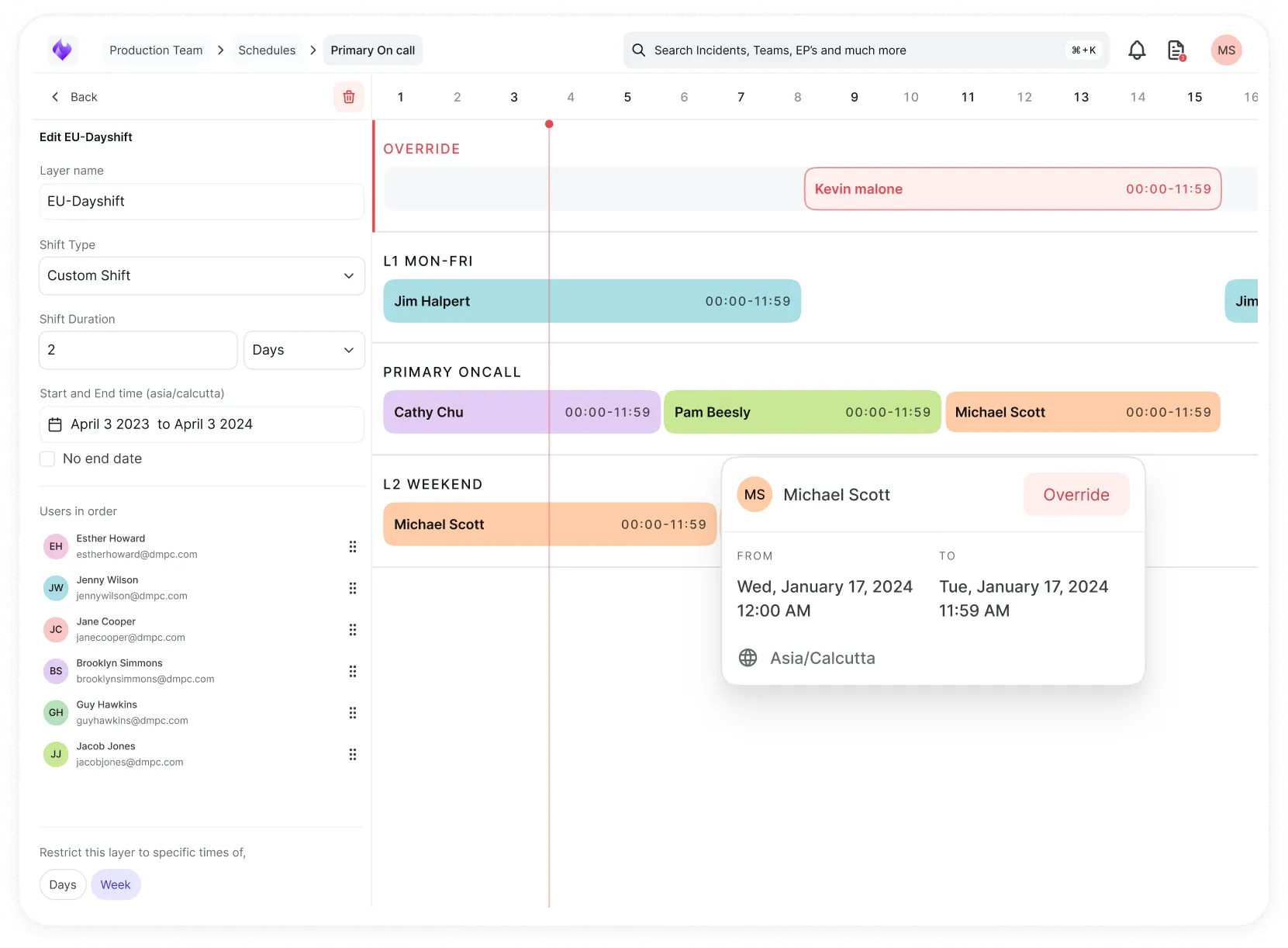
Simplify on-call scheduling, automate escalations, and reduce burnout.
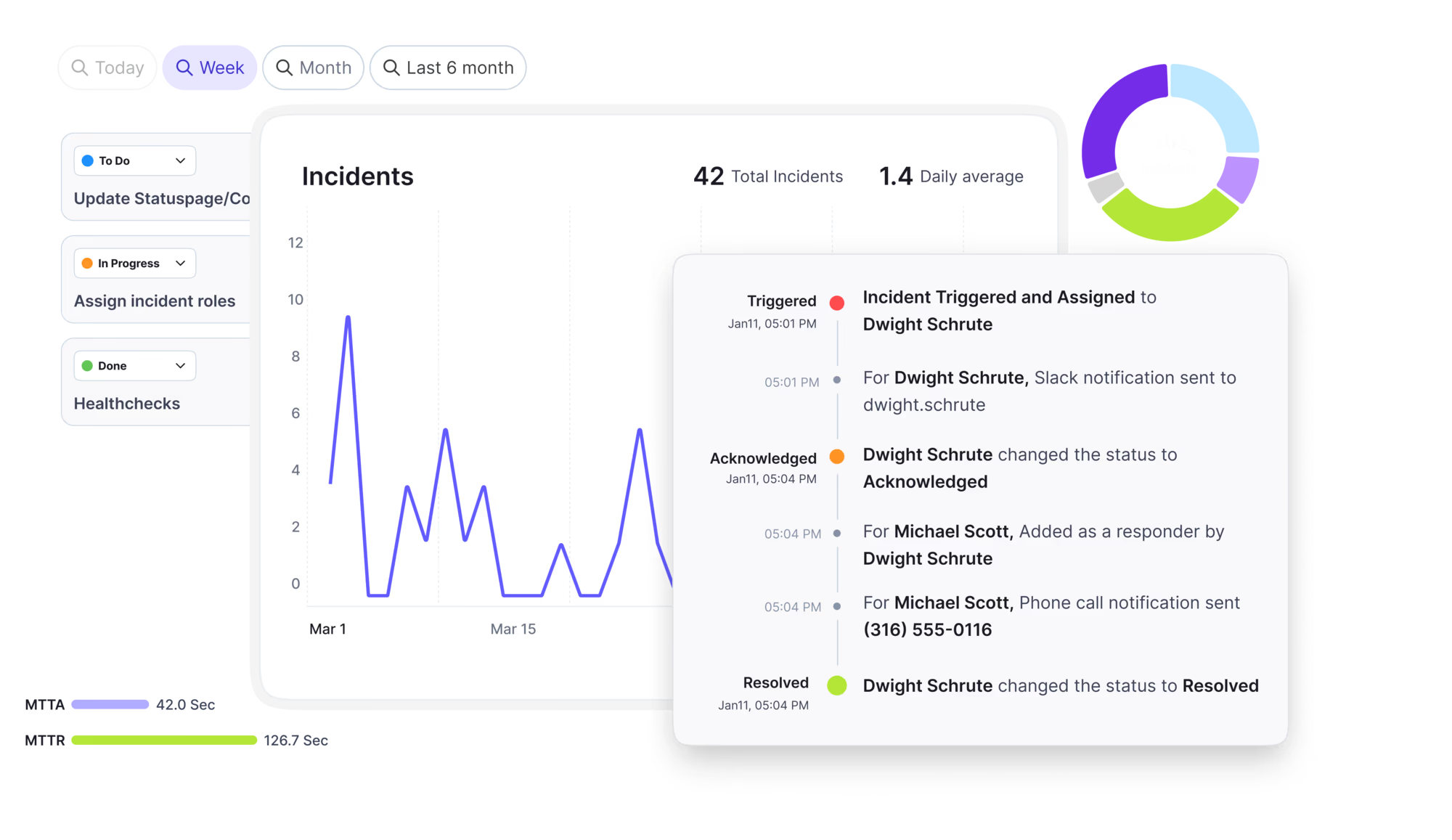
Automate postmortems, AI summaries, and post-incident workflows
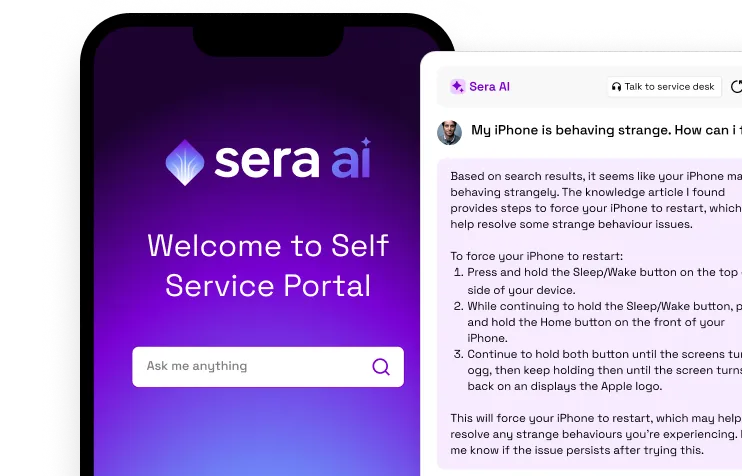
Create, organize, and continuously improve your knowledge base to find the right answers with Sera AI.
We're here to help

The integration with Atlassian Jira using the Xurrent Integration Service is

The integration with Atlassian Jira using the Xurrent Integration Service is

The integration with Atlassian Jira using the Xurrent Integration Service is

The integration with Atlassian Jira using the Xurrent Integration Service is

The integration with Atlassian Jira using the Xurrent Integration Service is

The integration with Atlassian Jira using the Xurrent Integration Service is

The integration with Atlassian Jira using the Xurrent Integration Service is

The integration with Atlassian Jira using the Xurrent Integration Service is
Resolve issues quickly with an AI-powered system that automates ticketing.
Unifiy IT, HR, Facilities, Finance, and more on a single, AI-powered service platform.
Simplify on-call scheduling, automate escalations, and reduce burnout.
Automate postmortems, AI summaries, and post-incident workflows
Create, organize, and continuously improve your knowledge base to find the right answers with Sera AI.
Resolve plant floor and IT issues before they disrupt production.
Stay audit-ready while resolving issues and reducing operational risk.

Detect, respond, and resolve incidents fast to cut downtime and MTTR.

Keep your store online, even during your biggest sales moments.

Protect patient data and resolve issues fast, so care teams stay focused on care.

Standardize service delivery across every store and channel.

We are here to help 24/7

Connect with other Xurrent Users

Get insights and tips on how to get the most out of Xurrent

Apps, APIs, and updates

Xurrent service functionality

Eliminate manual tasks, optimize workflows, and deliver faster resolutions.
Learn how organizations have reduced downtime, improved 50% MTTA & MTTR, and cut costs with Xurrent IMR.
Discover Xurrent IMR's quick support, bidirectional integrations with Jira and Slack, and more cohesive incident response capabilities compared to Opsgenie.
Understand why users value Xurrent IMR for its intuitive interface, efficient incident alerting, customizable On-call schedules, and escalations.
Case Management is a structured approach to handling service interactions that require investigation, coordination, and documentation over time rather than immediate resolution. Unlike standard incidents or service requests that follow linear workflows, case management organizes work around a central "case" record that aggregates related information—such as correspondence, evidence, approvals, tasks, and decisions—into a single container that persists until final resolution or closure. In ITSM and ESM contexts, case management typically handles complex scenarios like HR investigations, legal inquiries, compliance audits, customer complaints, or multi-step service fulfillment that involve multiple stakeholders, iterative analysis, and evolving requirements.
The case acts as the operational hub: all activities, notes, attachments, and status changes are captured within it, creating a complete audit trail and shared context for everyone involved. This differs from traditional ticket-based workflows where each interaction may spawn a separate record; case management keeps everything connected to the original issue, even when resolution spans days, weeks, or months. Modern ITSM platforms embed case management capabilities to support departments beyond IT—such as HR case workers managing employee grievances, facilities teams coordinating office moves, or finance teams processing vendor disputes—extending service management principles across the enterprise.
Case management delivers accountability and transparency for work that doesn't fit neatly into predefined incident or request categories. When issues require judgment, collaboration across teams, or adherence to regulatory timelines, case management ensures nothing falls through the cracks. It provides a structured framework for tracking progress, escalating when needed, and demonstrating compliance with internal policies or external regulations like GDPR, SOC 2, or industry-specific mandates.
Without case management, complex issues fragment across email threads, spreadsheets, and disconnected tickets, leading to duplicated effort, missed deadlines, and incomplete documentation. Service desk agents lose visibility into case status, stakeholders receive inconsistent updates, and audit trails become impossible to reconstruct. For organizations managing sensitive matters—employee relations, legal holds, security investigations—the lack of a unified case record introduces compliance risk and erodes trust.
Case management also improves efficiency by centralizing communication and decision history. Teams spend less time hunting for context and more time resolving the underlying issue. SLA tracking, approval routing, and automated notifications keep cases moving forward, while reporting and analytics surface trends—such as recurring complaint types or bottlenecks in approval chains—that drive continuous improvement. In ESM deployments, case management enables non-IT departments to deliver consistent, measurable service experiences using the same operational rigor IT applies to incident and change management.
Case management begins when a user submits a request or an agent identifies an issue that requires ongoing coordination. The system creates a case record, assigns it a unique identifier, and routes it to the appropriate team or case worker based on category, priority, or business rules. The case record becomes the single source of truth, capturing all interactions—emails, phone notes, internal comments, file attachments, and linked records—in a chronological timeline.
As the case progresses, the assigned case worker investigates, gathers evidence, and coordinates with other stakeholders. Tasks may be created and assigned to subject matter experts; approvals may be routed through management or compliance teams; status updates are logged automatically or manually. The case moves through defined stages—such as "New," "In Progress," "Awaiting Approval," "Resolved," and "Closed"—with each transition recorded for audit purposes. SLAs and escalation rules ensure cases don't stall; automated notifications alert stakeholders when action is required or deadlines approach.
Throughout the lifecycle, the case management system enforces data integrity and access controls. Sensitive cases—such as HR investigations or legal matters—restrict visibility to authorized users, while audit logs track who viewed or modified the case and when. Knowledge articles, templates, and guided workflows help case workers follow best practices and maintain consistency across similar cases. Once resolved, the case is closed with a documented outcome, and the complete history is archived for compliance, reporting, and future reference. Analytics dashboards surface metrics like average case duration, resolution rates, and backlog trends, enabling managers to optimize resource allocation and process design.
- HR employee relations case : An employee files a workplace harassment complaint. HR opens a case that tracks witness interviews, policy reviews, corrective action plans, and legal holds. The case remains open for weeks while HR coordinates with legal, documents findings, and implements remediation, with all evidence and decisions captured in a single auditable record that satisfies regulatory and internal compliance requirements.
- Customer service escalation for enterprise SaaS provider : A high-value customer reports intermittent data sync failures affecting multiple users. The support team creates a case that aggregates related incident tickets, engineering diagnostics, product management feedback, and executive updates. The case persists across multiple engineering sprints and includes root cause analysis, workaround documentation, and a final patch deployment, ensuring the customer receives consistent communication and the vendor maintains a complete resolution history.
- Facilities office relocation request : A department requests a floor move involving 50 employees. Facilities opens a case that coordinates IT equipment transfers, furniture procurement, security badge updates, and vendor scheduling. The case tracks approvals from real estate, finance, and IT, manages task assignments across multiple teams, and documents completion milestones, ensuring the move completes on schedule with full accountability and no missed dependencies.
- Incident Management
- Service Request Management
- Problem Management
- Change Enablement (Management)
- Knowledge Management
---

.webp)
.webp)