





Blog
Insights & updates from our experts


Resolve plant floor and IT issues before they disrupt production.

Stay audit-ready while resolving issues and reducing operational risk.
Resolve issues quickly with an AI-powered system that automates ticketing.
Unifiy IT, HR, Facilities, Finance, and more on a single, AI-powered service platform.
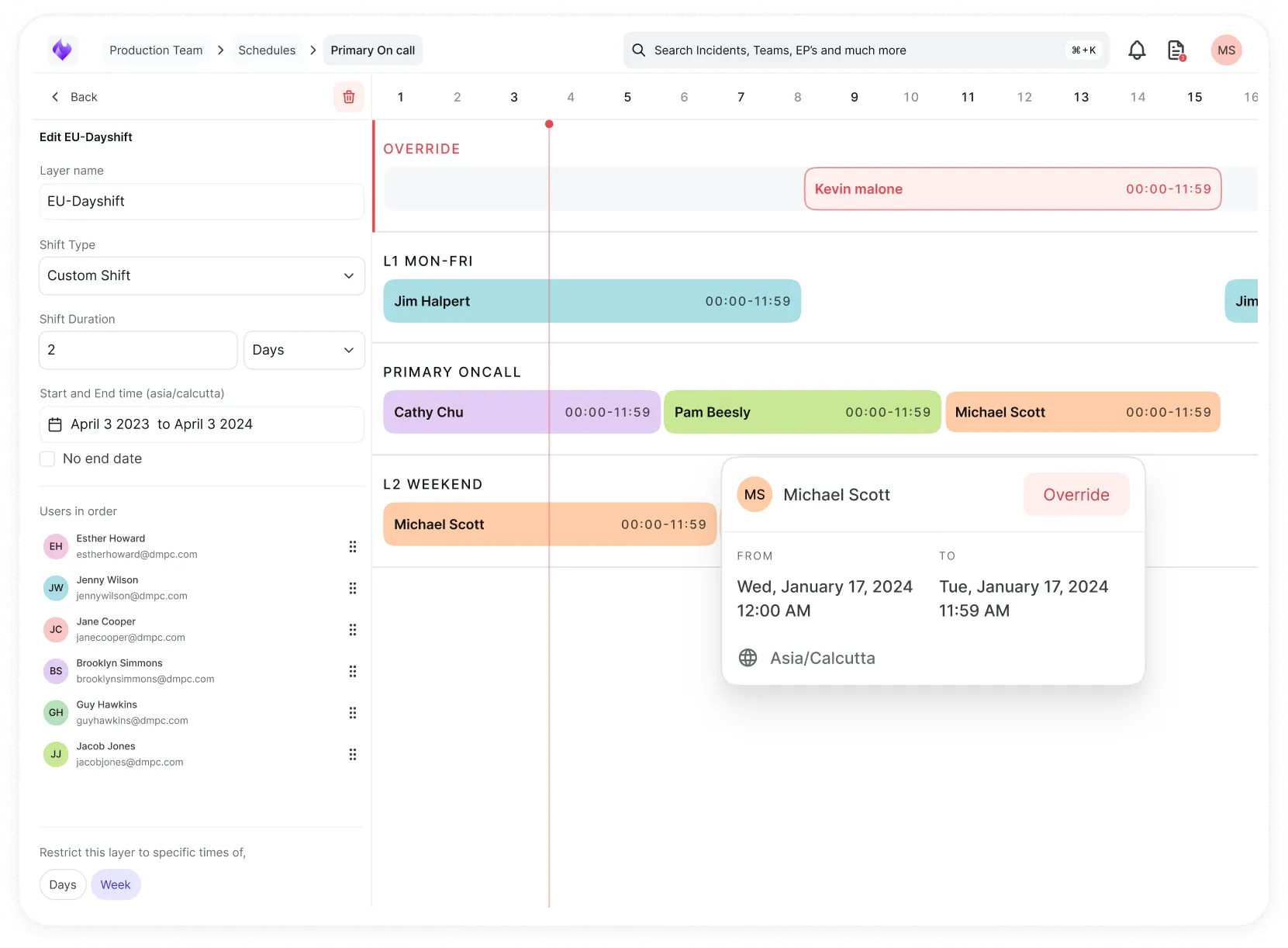
Simplify on-call scheduling, automate escalations, and reduce burnout.
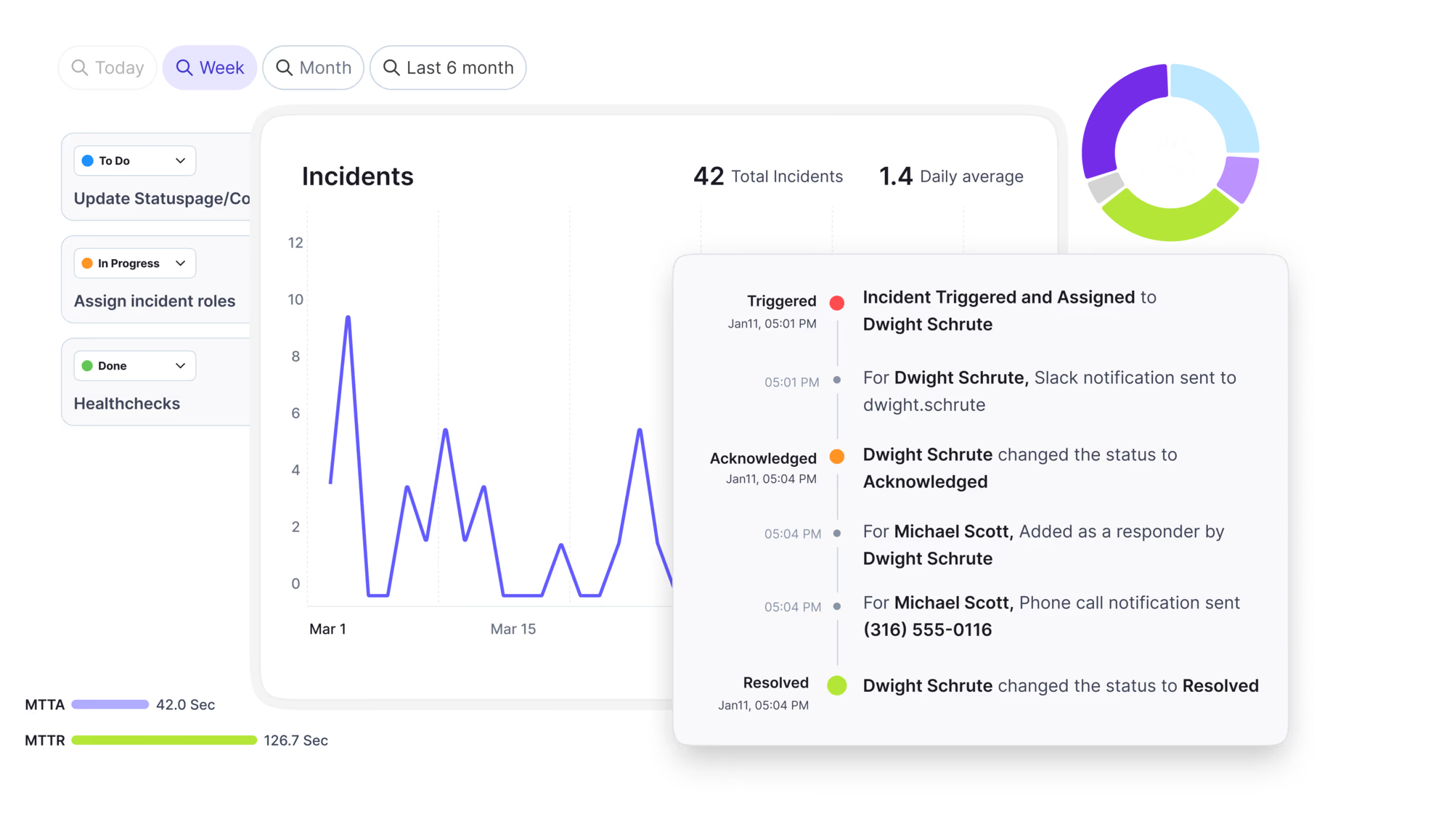
Automate postmortems, AI summaries, and post-incident workflows
Create, organize, and continuously improve your knowledge base to find the right answers with Sera AI.

We're here to help

The integration with Atlassian Jira using the Xurrent Integration Service is

The integration with Atlassian Jira using the Xurrent Integration Service is

The integration with Atlassian Jira using the Xurrent Integration Service is

The integration with Atlassian Jira using the Xurrent Integration Service is

The integration with Atlassian Jira using the Xurrent Integration Service is

The integration with Atlassian Jira using the Xurrent Integration Service is

The integration with Atlassian Jira using the Xurrent Integration Service is

The integration with Atlassian Jira using the Xurrent Integration Service is
Resolve issues quickly with an AI-powered system that automates ticketing.
Unifiy IT, HR, Facilities, Finance, and more on a single, AI-powered service platform.
Simplify on-call scheduling, automate escalations, and reduce burnout.
Automate postmortems, AI summaries, and post-incident workflows
Create, organize, and continuously improve your knowledge base to find the right answers with Sera AI.
Resolve plant floor and IT issues before they disrupt production.
Stay audit-ready while resolving issues and reducing operational risk.

Detect, respond, and resolve incidents fast to cut downtime and MTTR.

Keep your store online, even during your biggest sales moments.

Protect patient data and resolve issues fast, so care teams stay focused on care.

Standardize service delivery across every store and channel.

We are here to help 24/7

Connect with other Xurrent Users

Get insights and tips on how to get the most out of Xurrent

Apps, APIs, and updates

Xurrent service functionality

Eliminate manual tasks, optimize workflows, and deliver faster resolutions.
Learn how organizations have reduced downtime, improved 50% MTTA & MTTR, and cut costs with Xurrent IMR.
Discover Xurrent IMR's quick support, bidirectional integrations with Jira and Slack, and more cohesive incident response capabilities compared to Opsgenie.
Understand why users value Xurrent IMR for its intuitive interface, efficient incident alerting, customizable On-call schedules, and escalations.
Availability Management is the ITSM practice responsible for ensuring that IT services and infrastructure components meet agreed availability targets to support business operations. It defines, analyzes, plans, measures, and continuously improves all aspects of service availability—from infrastructure uptime and application responsiveness to scheduled maintenance windows and recovery procedures. Unlike reactive incident response, Availability Management operates proactively: it identifies single points of failure, models availability requirements against business needs, and implements redundancy, monitoring, and recovery capabilities before disruptions occur. The practice spans both service design (architecting for resilience) and service operation (maintaining agreed service levels), and it directly supports SLA commitments by translating business availability requirements into technical availability targets for servers, networks, databases, and applications.
Service availability directly determines whether users can access the systems they depend on to complete work, serve customers, or generate revenue. When availability falls short—whether due to unplanned outages, slow response times, or extended maintenance windows—the business experiences lost productivity, missed transactions, reputational damage, and potential regulatory penalties. Availability Management prevents these outcomes by ensuring that availability targets are realistic, measurable, and aligned with actual business risk and cost tolerance. It provides the data and analysis IT leaders need to justify investments in redundancy, failover automation, and monitoring tools, and it establishes accountability for availability across infrastructure, application, and support teams. Without structured Availability Management, organizations operate reactively: they discover availability gaps only after incidents occur, leading to repeated outages, unclear accountability, and SLA breaches that erode trust between IT and the business.
Availability Management operates through a continuous cycle of planning, design, measurement, and improvement. It begins by gathering business requirements: understanding which services are critical, what availability levels are acceptable (often expressed as uptime percentages like 99.9% or recovery time objectives), and what the cost of downtime is for each service. These requirements are translated into technical availability targets for the underlying infrastructure and applications. The practice then conducts availability design reviews, identifying single points of failure, assessing current redundancy and failover capabilities, and recommending architectural improvements such as load balancing, clustering, or geographic distribution. During operation, Availability Management monitors actual availability against targets using metrics like uptime percentage, mean time between failures (MTBF), mean time to repair (MTTR), and service availability percentage. It analyzes incidents and outages to identify patterns, root causes, and opportunities to improve resilience—feeding findings into Problem Management and Change Enablement processes. Regular availability reporting provides visibility to service owners and business stakeholders, and the practice maintains an Availability Plan that documents current state, risks, improvement initiatives, and projected availability for each service. Availability Management also coordinates closely with Capacity Management to ensure that performance and availability targets are met under expected and peak load conditions.
- Financial services trading platform : Availability Management defines a 99.99% uptime target for the trading application, implements active-active data center failover, schedules maintenance windows outside trading hours, monitors real-time availability dashboards, and conducts quarterly disaster recovery tests to validate that recovery time objectives (RTO) of under 15 minutes can be met during infrastructure failures.
- Healthcare electronic health records (EHR) system : The practice establishes 24/7 availability requirements for patient record access, identifies database replication and application clustering as critical resilience controls, tracks monthly availability reports showing 99.95% uptime, and works with Change Management to ensure that software updates are deployed using blue-green deployment patterns to eliminate downtime during releases.
- E-commerce retailer during peak season : Availability Management models expected traffic surges during Black Friday, coordinates with Capacity Management to scale infrastructure, implements automated health checks and failover for payment processing services, monitors availability in real time during the event, and conducts post-event reviews to document actual availability performance and identify improvements for future peak periods.
- Service Level Management
- Incident Management
- Capacity and Performance Management
- Monitoring and Event Management
- Change Enablement (Management)
---


.webp)
.webp)