




Blog
Insights & updates from our experts


Resolve plant floor and IT issues before they disrupt production.

Stay audit-ready while resolving issues and reducing operational risk.
Resolve issues quickly with an AI-powered system that automates ticketing.
Unifiy IT, HR, Facilities, Finance, and more on a single, AI-powered service platform.
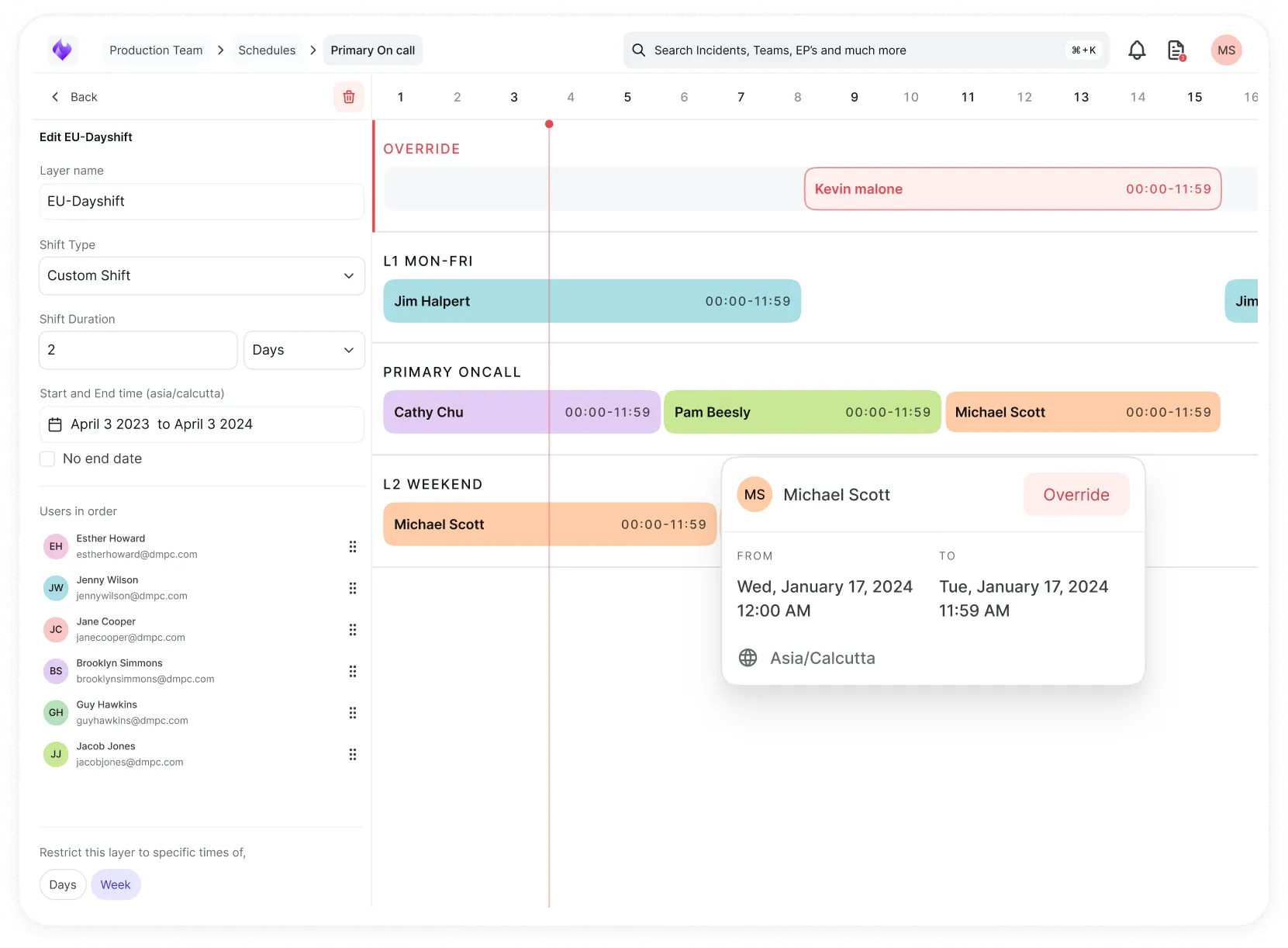
Simplify on-call scheduling, automate escalations, and reduce burnout.
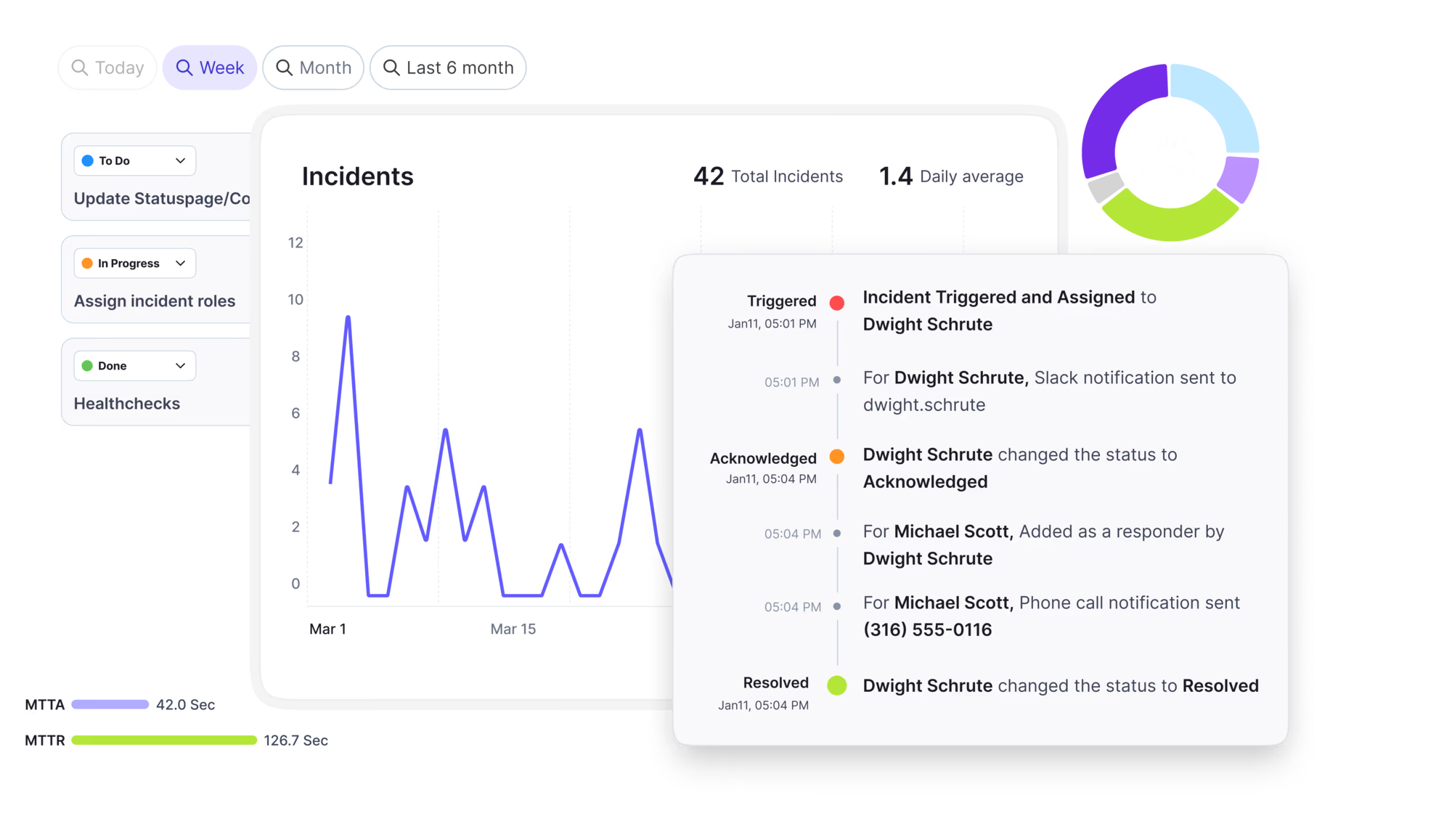
Automate postmortems, AI summaries, and post-incident workflows
Create, organize, and continuously improve your knowledge base to find the right answers with Sera AI.

We're here to help

The integration with Atlassian Jira using the Xurrent Integration Service is

The integration with Atlassian Jira using the Xurrent Integration Service is

The integration with Atlassian Jira using the Xurrent Integration Service is

The integration with Atlassian Jira using the Xurrent Integration Service is

The integration with Atlassian Jira using the Xurrent Integration Service is

The integration with Atlassian Jira using the Xurrent Integration Service is

The integration with Atlassian Jira using the Xurrent Integration Service is

The integration with Atlassian Jira using the Xurrent Integration Service is
Resolve issues quickly with an AI-powered system that automates ticketing.
Unifiy IT, HR, Facilities, Finance, and more on a single, AI-powered service platform.
Simplify on-call scheduling, automate escalations, and reduce burnout.
Automate postmortems, AI summaries, and post-incident workflows
Create, organize, and continuously improve your knowledge base to find the right answers with Sera AI.
Resolve plant floor and IT issues before they disrupt production.
Stay audit-ready while resolving issues and reducing operational risk.

Detect, respond, and resolve incidents fast to cut downtime and MTTR.

Keep your store online, even during your biggest sales moments.

Protect patient data and resolve issues fast, so care teams stay focused on care.

Standardize service delivery across every store and channel.

We are here to help 24/7

Connect with other Xurrent Users

Get insights and tips on how to get the most out of Xurrent

Apps, APIs, and updates

Xurrent service functionality

Eliminate manual tasks, optimize workflows, and deliver faster resolutions.
Learn how organizations have reduced downtime, improved 50% MTTA & MTTR, and cut costs with Xurrent IMR.
Discover Xurrent IMR's quick support, bidirectional integrations with Jira and Slack, and more cohesive incident response capabilities compared to Opsgenie.
Understand why users value Xurrent IMR for its intuitive interface, efficient incident alerting, customizable On-call schedules, and escalations.
Capacity and Performance Management is the practice of ensuring that IT infrastructure, applications, and services have sufficient resources to meet current and future demand while maintaining agreed performance levels. This discipline combines proactive capacity planning—forecasting resource needs based on growth trends and business requirements—with continuous performance monitoring to detect bottlenecks, optimize utilization, and prevent service degradation before users are affected. In ITIL 4, Capacity and Performance Management is recognized as a unified practice that balances cost efficiency with service quality by aligning technical capacity decisions with business objectives and service level agreements (SLAs).
The practice operates across three interconnected layers: business capacity management, which translates business plans into IT resource requirements; service capacity management, which monitors end-to-end service performance and capacity for specific IT services; and component capacity management, which tracks individual infrastructure elements like servers, storage, network bandwidth, and application response times. Together, these layers provide the visibility needed to avoid both over-provisioning—which wastes budget—and under-provisioning, which causes outages and performance complaints.
Organizations that neglect Capacity and Performance Management face predictable consequences: unplanned outages during peak demand, degraded application response times that frustrate users, emergency infrastructure purchases at premium cost, and SLA breaches that damage customer trust and trigger financial penalties. When capacity planning is reactive rather than proactive, IT teams spend time firefighting instead of improving services, and business initiatives are delayed because infrastructure can't support new workloads.
Effective Capacity and Performance Management directly impacts operational resilience and cost control. By forecasting demand accurately, IT leaders can negotiate better pricing on infrastructure, schedule upgrades during maintenance windows rather than during crises, and demonstrate clear ROI for capacity investments to finance and executive stakeholders. Performance monitoring tied to capacity planning also enables teams to identify inefficient code, misconfigured systems, or architectural bottlenecks before they escalate into incidents, reducing MTTR and improving overall service availability.
For enterprises managing hybrid and multi-cloud environments, this practice is essential for controlling cloud spend. Without continuous monitoring of resource utilization and performance baselines, organizations often over-provision cloud instances "just in case," leading to runaway costs. Capacity and Performance Management provides the data needed to rightsize workloads, implement autoscaling policies, and make informed decisions about which workloads belong on-premises versus in the cloud.
Capacity and Performance Management operates through a continuous cycle of monitoring, analysis, forecasting, and optimization. The process begins with establishing performance baselines and capacity thresholds for each service and infrastructure component. Teams define metrics such as CPU utilization, memory consumption, disk I/O, network latency, transaction throughput, and application response times, then set thresholds that trigger alerts before performance degrades to unacceptable levels.
Monitoring tools collect real-time and historical data from infrastructure, applications, and services. This data feeds into capacity models that analyze trends—such as steady growth in database size, seasonal spikes in web traffic, or gradual increases in API call volume—and project future resource needs. Capacity managers use these forecasts to plan infrastructure upgrades, negotiate vendor contracts, and schedule capacity additions aligned with business cycles and budget availability.
Performance analysis identifies anomalies and inefficiencies. When a service begins consuming more resources than expected, teams investigate whether the cause is legitimate growth, inefficient code, configuration drift, or an emerging incident. This analysis informs both immediate remediation—such as restarting a memory-leaking process—and longer-term improvements like application refactoring or infrastructure redesign.
The practice also includes regular capacity reviews with business stakeholders to align IT capacity plans with upcoming product launches, marketing campaigns, mergers, or other events that will change demand patterns. These reviews ensure that capacity investments are prioritized based on business impact rather than purely technical considerations, and that service level targets remain realistic as workloads evolve.
- E-commerce platform preparing for seasonal peak : An online retailer uses historical Black Friday traffic data and current year sales projections to forecast a 400% increase in web traffic and transaction volume. The capacity team provisions additional application servers, scales database read replicas, and increases CDN bandwidth two weeks before the event, then monitors performance in real time during the sale to ensure checkout response times stay under 2 seconds and no customers encounter errors due to resource exhaustion.
- SaaS provider optimizing cloud costs : A B2B software company monitors CPU and memory utilization across 500 cloud instances and discovers that 60% of workloads run below 30% utilization during off-peak hours. The capacity team implements autoscaling policies that reduce instance counts overnight and on weekends, then uses performance data to rightsize instance types, reducing monthly cloud spend by 35% while maintaining sub-100ms API response times during business hours.
- Financial services firm managing database growth : A bank's core banking system database grows 15% annually, and transaction volumes increase 8% per year. Capacity management tracks storage consumption, query performance, and backup window duration, then forecasts that the current storage array will reach 85% capacity in 14 months. The team schedules a storage expansion and database partitioning project six months in advance, avoiding an emergency outage and ensuring that batch processing windows remain within acceptable limits as data volume grows.
- Availability Management
- Service Level Management
- Monitoring and Event Management
- Problem Management
- IT Operations Management (ITOM)
---



.webp)
.webp)