




Blog
Insights & updates from our experts


Resolve plant floor and IT issues before they disrupt production.

Stay audit-ready while resolving issues and reducing operational risk.
Resolve issues quickly with an AI-powered system that automates ticketing.
Unifiy IT, HR, Facilities, Finance, and more on a single, AI-powered service platform.
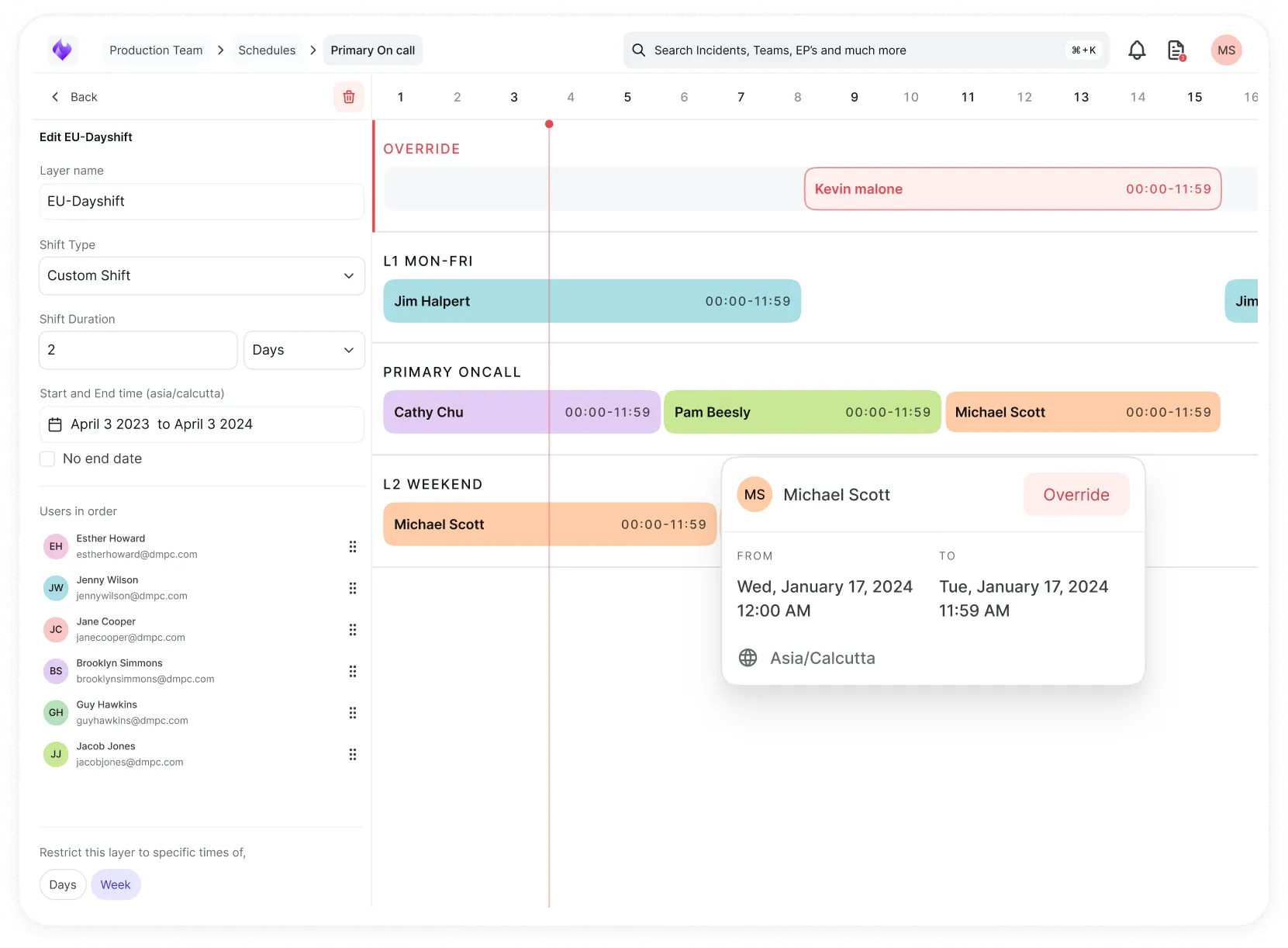
Simplify on-call scheduling, automate escalations, and reduce burnout.
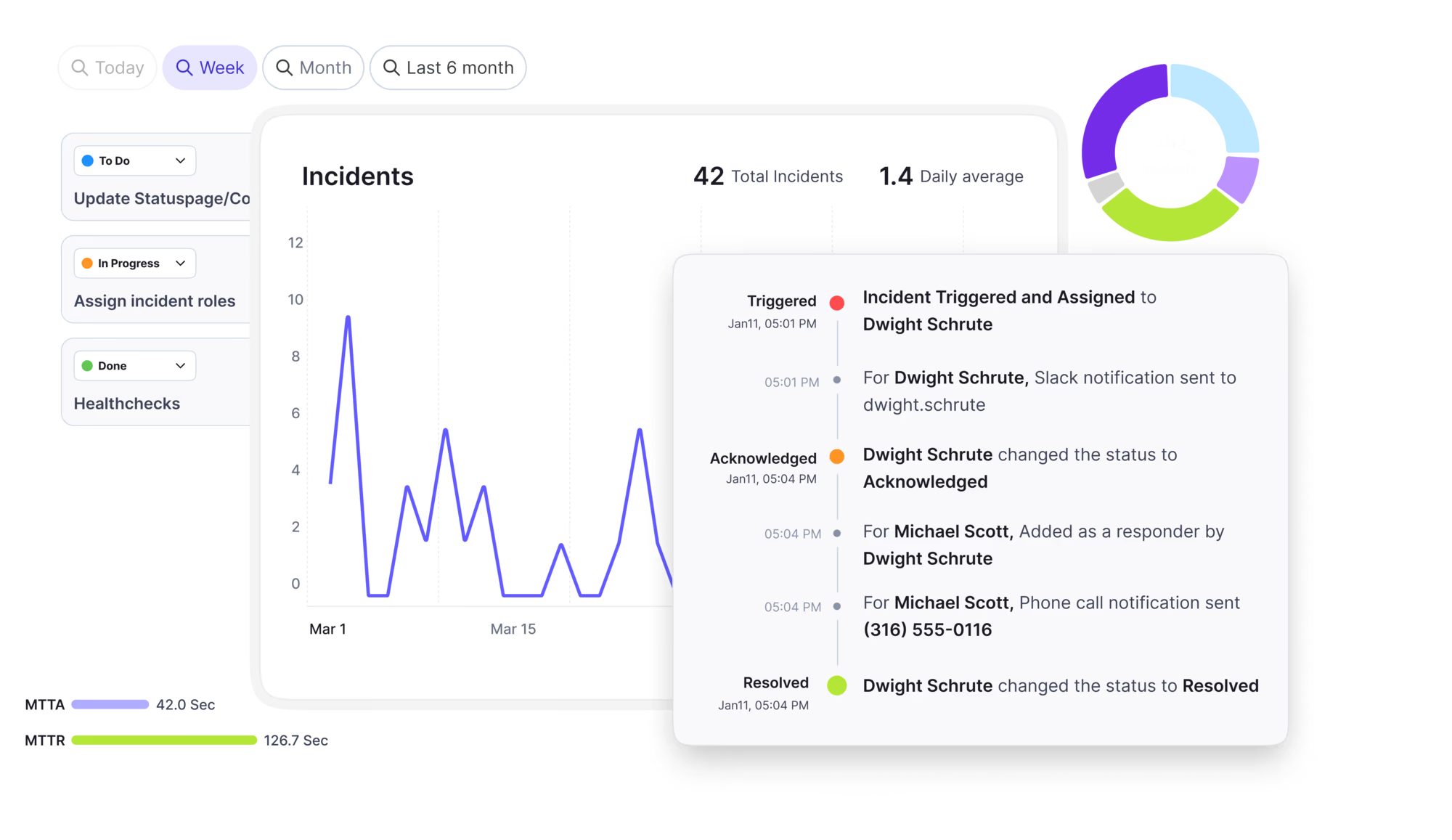
Automate postmortems, AI summaries, and post-incident workflows
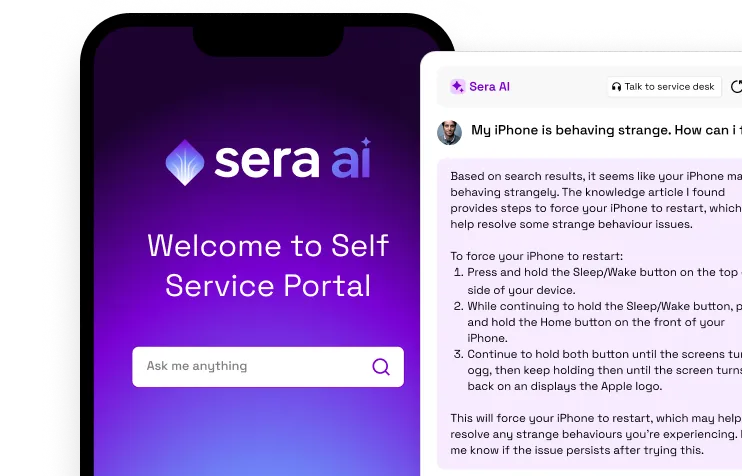
Create, organize, and continuously improve your knowledge base to find the right answers with Sera AI.
We're here to help

The integration with Atlassian Jira using the Xurrent Integration Service is

The integration with Atlassian Jira using the Xurrent Integration Service is

The integration with Atlassian Jira using the Xurrent Integration Service is

The integration with Atlassian Jira using the Xurrent Integration Service is

The integration with Atlassian Jira using the Xurrent Integration Service is

The integration with Atlassian Jira using the Xurrent Integration Service is

The integration with Atlassian Jira using the Xurrent Integration Service is

The integration with Atlassian Jira using the Xurrent Integration Service is
Resolve issues quickly with an AI-powered system that automates ticketing.
Unifiy IT, HR, Facilities, Finance, and more on a single, AI-powered service platform.
Simplify on-call scheduling, automate escalations, and reduce burnout.
Automate postmortems, AI summaries, and post-incident workflows
Create, organize, and continuously improve your knowledge base to find the right answers with Sera AI.
Resolve plant floor and IT issues before they disrupt production.
Stay audit-ready while resolving issues and reducing operational risk.

Detect, respond, and resolve incidents fast to cut downtime and MTTR.

Keep your store online, even during your biggest sales moments.

Protect patient data and resolve issues fast, so care teams stay focused on care.

Standardize service delivery across every store and channel.

We are here to help 24/7

Connect with other Xurrent Users

Get insights and tips on how to get the most out of Xurrent

Apps, APIs, and updates

Xurrent service functionality

Eliminate manual tasks, optimize workflows, and deliver faster resolutions.
Learn how organizations have reduced downtime, improved 50% MTTA & MTTR, and cut costs with Xurrent IMR.
Discover Xurrent IMR's quick support, bidirectional integrations with Jira and Slack, and more cohesive incident response capabilities compared to Opsgenie.
Understand why users value Xurrent IMR for its intuitive interface, efficient incident alerting, customizable On-call schedules, and escalations.
Agentic AI is an artificial intelligence architecture that enables autonomous software agents to plan, reason, and execute multi-step workflows toward defined goals with minimal human intervention. Unlike traditional AI systems that respond to single prompts or follow pre-programmed decision trees, agentic AI combines large language models (LLMs), retrieval-augmented generation (RAG), and orchestration frameworks to evaluate context, select tools, and adapt actions dynamically across complex operational environments. In ITSM and incident management contexts, agentic AI operates as an intelligent layer that can triage tickets, correlate alerts, query knowledge bases, execute runbooks, and coordinate responses across monitoring, ticketing, and collaboration platforms—learning from outcomes to improve future performance without requiring explicit reprogramming for each scenario.
Agentic AI directly addresses the operational bottlenecks that slow incident resolution and inflate service desk workloads: alert fatigue, context switching, manual ticket routing, and repetitive troubleshooting. By autonomously filtering noise from monitoring tools, correlating related incidents, and surfacing relevant knowledge articles or past resolutions, agentic AI reduces mean time to resolution (MTTR) and first contact resolution (FCR) rates while freeing engineers and service desk agents to focus on complex, high-value work. For organizations managing distributed services or operating under strict SLAs, agentic AI provides consistent, 24/7 response capability that scales without proportional headcount increases. The consequence of ignoring this shift is measurable: teams continue to burn cycles on manual triage, miss SLA targets due to delayed escalations, and lose institutional knowledge when experienced responders leave—problems that agentic AI mitigates by embedding reasoning and memory directly into operational workflows.
Agentic AI operates through a goal-oriented execution loop that combines perception, planning, action, and learning. When an incident or service request enters the system, the AI agent first perceives the context by retrieving relevant data from integrated sources—monitoring alerts, CMDB records, past incident timelines, knowledge articles, and real-time service health dashboards. It then reasons about the goal (e.g., "restore service," "route to correct team," "answer user question") and generates a multi-step plan, selecting from available tools such as API calls to ticketing systems, queries to observability platforms, or invocations of automation scripts. The agent executes each step, evaluates the outcome, and adjusts the plan if conditions change—for example, escalating to a human responder if automated remediation fails or confidence thresholds aren't met. Throughout this process, the agent maintains a memory of actions taken and results achieved, feeding this data back into its reasoning model to improve future decision-making. Orchestration layers like MCP servers govern agent permissions, model routing, and audit trails to ensure enterprise-grade security and compliance.
- Automated incident triage in a SaaS company : An agentic AI agent monitors incoming alerts from Datadog and PagerDuty, correlates duplicate events, queries the CMDB to identify affected services, checks recent deployment logs, and automatically creates a prioritized incident ticket in Xurrent IMR with a suggested runbook and relevant on-call engineer—all within seconds of the first alert, reducing manual triage time from 15 minutes to under 30 seconds.
- Self-service knowledge retrieval for enterprise service desks : A financial services organization deploys an agentic AI assistant within their ITSM portal that interprets employee service requests in natural language, searches across knowledge bases and past ticket resolutions using RAG, and either provides a direct answer with step-by-step instructions or routes the request to the appropriate support team with full context—improving FCR by 40% and reducing ticket backlog.
- Proactive problem management in healthcare IT : An agentic AI system continuously analyzes incident patterns across hospital network infrastructure, identifies recurring root causes (such as memory leaks in a specific application version), automatically generates problem records with evidence from multiple incidents, and suggests remediation tasks that are pushed into the change management workflow—enabling the IT team to prevent repeat outages before they impact patient care systems.
- AIOps (Artificial Intelligence for IT Operations)
- Machine Learning
- LLM (Large Language Model)
- RAG (Retrieval-Augmented Generation)
- Virtual Agent
---

.webp)
.webp)