





Blog
Insights & updates from our experts


Resolve plant floor and IT issues before they disrupt production.

Stay audit-ready while resolving issues and reducing operational risk.
Resolve issues quickly with an AI-powered system that automates ticketing.
Unifiy IT, HR, Facilities, Finance, and more on a single, AI-powered service platform.
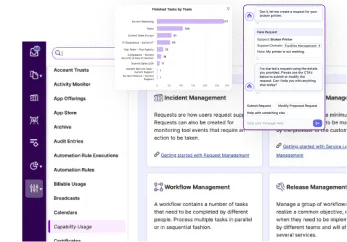
Simplify on-call scheduling, automate escalations, and reduce burnout.
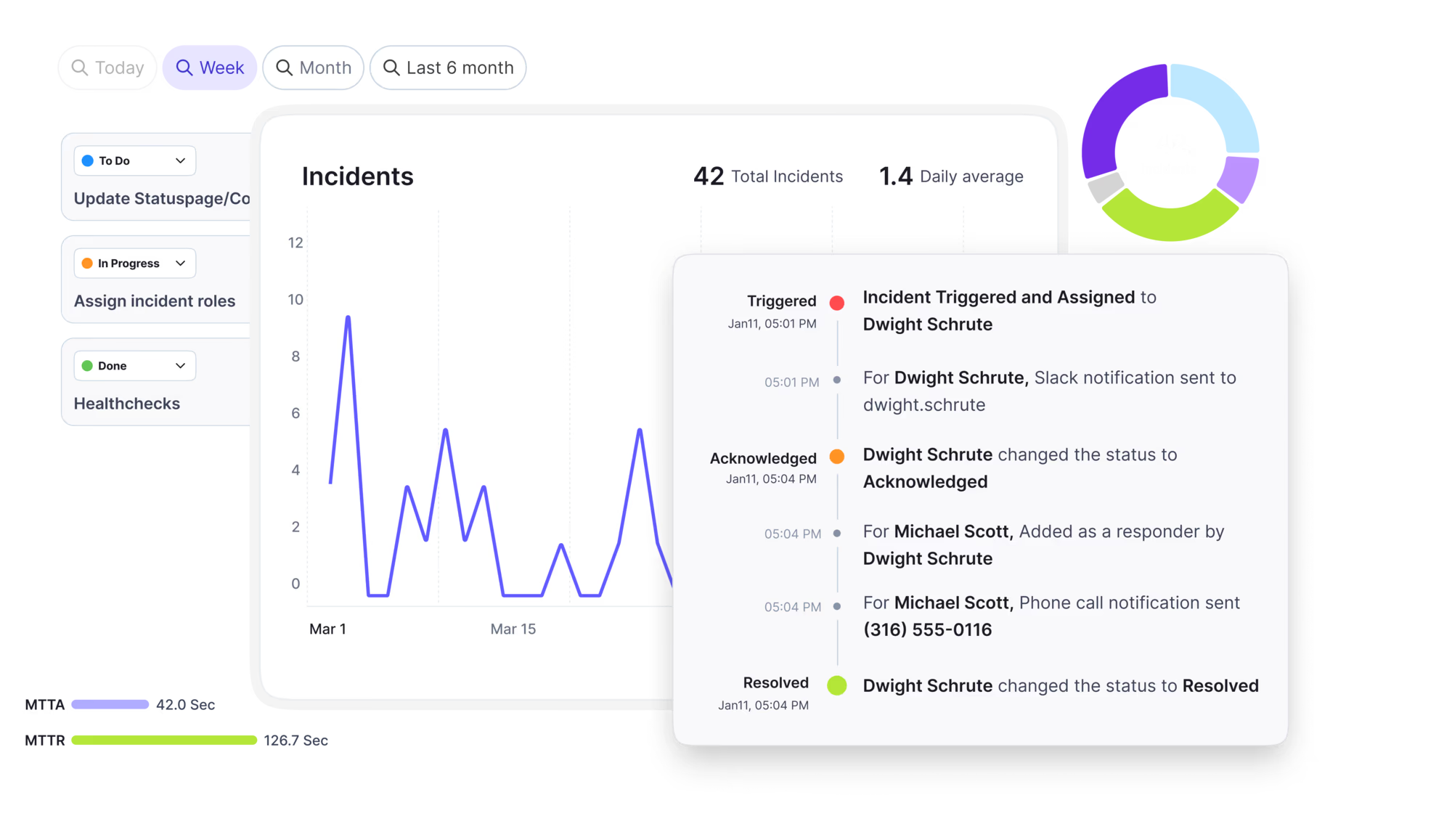
Automate postmortems, AI summaries, and post-incident workflows
Create, organize, and continuously improve your knowledge base to find the right answers with Sera AI.

We're here to help

The integration with Atlassian Jira using the Xurrent Integration Service is

The integration with Atlassian Jira using the Xurrent Integration Service is

The integration with Atlassian Jira using the Xurrent Integration Service is

The integration with Atlassian Jira using the Xurrent Integration Service is

The integration with Atlassian Jira using the Xurrent Integration Service is

The integration with Atlassian Jira using the Xurrent Integration Service is

The integration with Atlassian Jira using the Xurrent Integration Service is

The integration with Atlassian Jira using the Xurrent Integration Service is
Resolve issues quickly with an AI-powered system that automates ticketing.
Unifiy IT, HR, Facilities, Finance, and more on a single, AI-powered service platform.
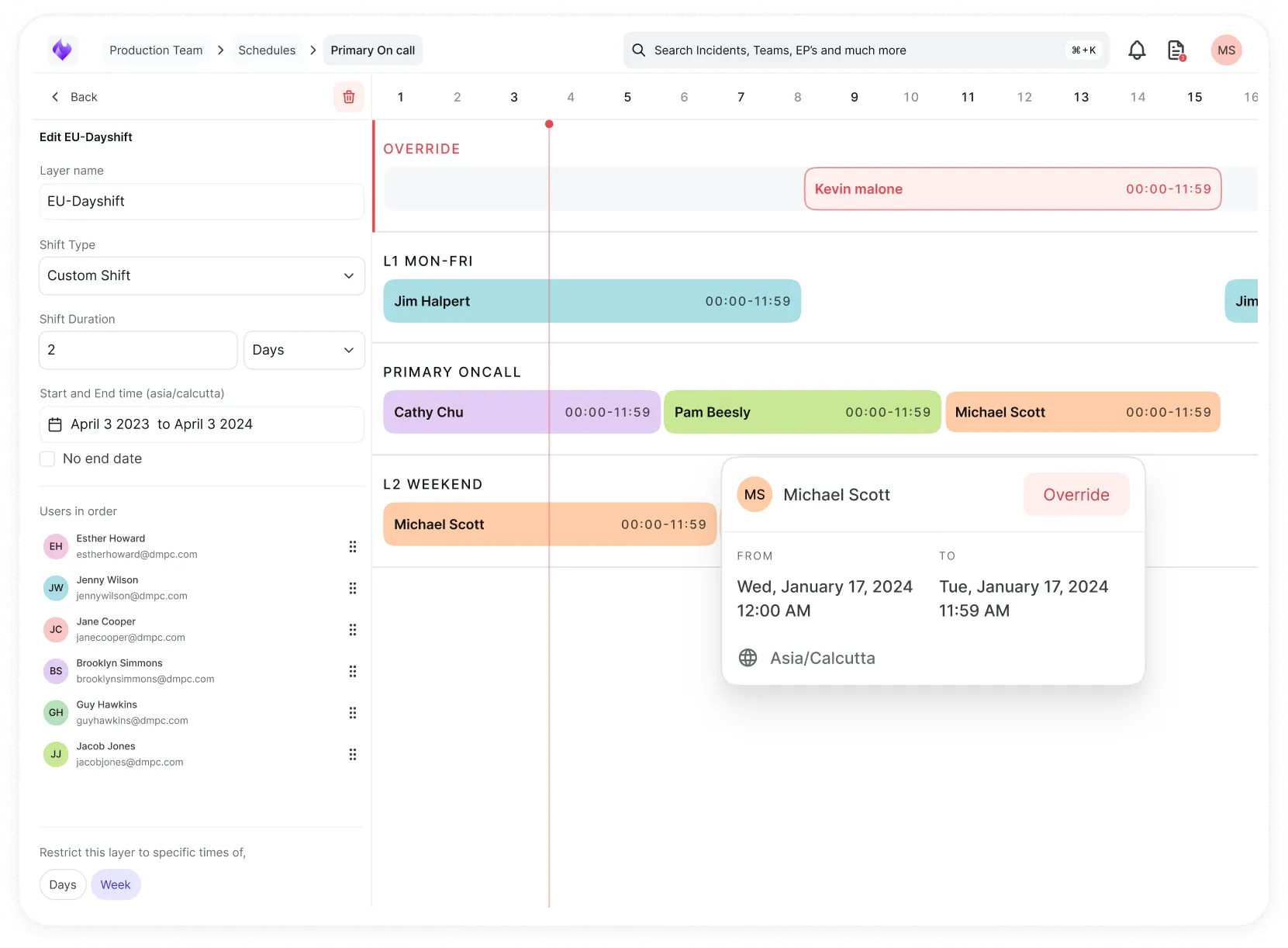
Simplify on-call scheduling, automate escalations, and reduce burnout.
Automate postmortems, AI summaries, and post-incident workflows
Create, organize, and continuously improve your knowledge base to find the right answers with Sera AI.
Resolve plant floor and IT issues before they disrupt production.
Stay audit-ready while resolving issues and reducing operational risk.

Detect, respond, and resolve incidents fast to cut downtime and MTTR.

Keep your store online, even during your biggest sales moments.

Protect patient data and resolve issues fast, so care teams stay focused on care.
Standardize service delivery across every store and channel.

We are here to help 24/7

Connect with other Xurrent Users

Get insights and tips on how to get the most out of Xurrent

Apps, APIs, and updates

Xurrent service functionality

Eliminate manual tasks, optimize workflows, and deliver faster resolutions.
Learn how organizations have reduced downtime, improved 50% MTTA & MTTR, and cut costs with Xurrent IMR.
Discover Xurrent IMR's quick support, bidirectional integrations with Jira and Slack, and more cohesive incident response capabilities compared to Opsgenie.
Understand why users value Xurrent IMR for its intuitive interface, efficient incident alerting, customizable On-call schedules, and escalations.

Manufacturing downtime drains $260,000 per hour from the average industrial operation. For Fortune Global 500 companies, unplanned stoppages add up to $1.4 trillion annually. That's 11% of total revenue lost to idle equipment, missed shipments, and scrambling teams.
The gap between top performers and the rest is how fast they detect, route, and resolve incidents. This article covers the latest downtime statistics by industry, the leading causes, and strategies for cutting MTTR and total downtime costs.
Unplanned manufacturing downtime costs an average of $260,000 per hour across industrial sectors. For the Fortune Global 500, that adds up to roughly $1.4 trillion annually, about 11% of total revenue. Those numbers translate to missed shipments, idle workers, and customers waiting on orders that won't arrive on time.
Manufacturing downtime is any period when production equipment or processes aren't running. Planned downtime includes scheduled maintenance, equipment changeovers, and facility upgrades, all of which you control and can schedule during low-demand windows. Unplanned downtime is the problem child: equipment failures, material shortages, IT outages, or operator errors that halt production without warning.
The difference matters. You can optimize planned downtime. Unplanned downtime catches teams off guard and costs far more to resolve, because they scramble to diagnose, fix, and restart under pressure.
Current industry research on the scope of the problem:
Incident frequency has dropped over the past several years, yet the cost per incident keeps climbing as production systems grow more complex and interconnected.
If your facility runs well above these benchmarks, look at how you detect, route, and resolve incidents.
The financial hit varies by operation size, industry, and production complexity. The averages still show heavy losses that compound.
High-volume operations like automotive assembly lines can lose $22,000 per minute during line stoppages. Smaller operations might see hourly costs in the tens of thousands rather than hundreds of thousands, still painful across a year's worth of incidents.
Downtime costs compound. A one-hour outage costs more than one hour of lost production. It triggers overtime, expedited shipping, quality issues from rushed restarts, and possible customer penalties. The true cost runs 2x to 3x higher than the direct production loss.
Downtime costs differ by sector, driven by production value, equipment complexity, and regulatory requirements.
Automotive plants face some of the highest per-minute costs in manufacturing, often exceeding $20,000 per minute during assembly line stoppages. The just-in-time production model means a single equipment failure can cascade through the entire supply chain within hours. When one station stops, everything downstream stops with it.
Energy operations run continuously, so any unplanned stoppage creates compounding losses. Offshore platforms and refineries can lose millions per day during major outages. Restart sequences add hours before full production resumes.
Beyond standard production losses, food manufacturers face spoilage costs unique to perishable goods. A four-hour outage in a dairy processing facility might mean discarding an entire batch that can't be processed after temperature excursions. The product loss often exceeds the equipment repair cost.
Regulatory compliance adds a layer of expense that other industries don't face. A production interruption might require batch rejection, documentation reviews, and potential FDA reporting. The compliance costs can exceed the direct production losses, and the documentation burden extends resolution time.
Clean room environments and precision equipment drive per-minute costs into the highest brackets. Semiconductor fabs often cite downtime costs exceeding $100,000 per hour due to the value of in-process wafers and the sensitivity of manufacturing conditions. Even brief environmental fluctuations can ruin entire production runs.
Preventing downtime starts with knowing why it happens. Industry data groups most incidents into a few categories.
Equipment breakdowns account for 42% to 44% of unplanned downtime incidents. Aging infrastructure makes it worse: machines past their service life fail more often and take longer to repair because replacement parts are harder to source.
Human factors contribute to 23% to 31% of downtime events. Operational mistakes, inadequate training, and procedural errors all fall into this bucket. The encouraging news: this category responds well to improved training, clearer procedures, and better human-machine interfaces.
Approximately 12% of unplanned downtime stems from supply chain bottlenecks and missing material deliveries. When a critical component doesn't arrive on schedule, production stops no matter how well the equipment runs. The machine is fine; it has nothing to process.
As manufacturing gets more connected, IT and OT (operational technology) failures cause more production stoppages. A network outage that would inconvenience an office can halt a production line when machines depend on real-time data exchange. IT and plant-floor convergence creates new failure modes.
Cyberattacks on manufacturing operations have climbed, with ransomware and industrial control system compromises causing extended outages. This category is growing faster than any other cause of unplanned downtime, and recovery often takes days rather than hours.
Accurate cost calculations help justify investments in prevention and faster response. Two approaches work for different situations.
The full formula captures direct and indirect impacts:
Total Downtime Cost = Lost Revenue + Labor Costs + Recovery Costs + Indirect Costs
For a fast benchmark, use this simplified calculation:
(Units per hour × profit margin per unit) × hours of downtime = Lost production value
This gives you a floor estimate. Real costs run higher once you add recovery and indirect expenses, but the quick formula works for early conversations about downtime impact.
MTTR stands for Mean Time to Repair (or Mean Time to Resolve). It measures the average time from incident detection to full resolution, one of the most actionable metrics for reducing downtime costs.
Every minute off MTTR cuts downtime costs. Organizations that track and work to improve MTTR see 20% to 40% reductions in total downtime within the first year.
These strategies address the root causes in the industry data.
Scheduled maintenance prevents many equipment failures. Predictive maintenance goes further, using sensors and machine learning to anticipate issues from vibration patterns, temperature trends, and other indicators. Teams can catch problems days or weeks before failure, turning emergencies into planned repairs.
When monitoring systems generate hundreds of alerts a day, teams struggle to spot the ones that matter. AI-powered correlation groups related alerts into single actionable incidents, so responders focus on real problems rather than symptoms. Platforms like Xurrent IMR use this to reduce alert volume while improving response accuracy.
Ad hoc responses extend resolution time because each responder works differently. Standardized workflows, sometimes called runbooks, give consistent, repeatable steps from detection through resolution. When everyone follows the same playbook, handoffs go smoother and critical steps don't get missed.
After an incident, capturing what happened and why prevents repeats. Manual documentation gets skipped when teams are busy fighting the next fire. Automated timeline reconstruction and postmortem generation capture the lessons without adding documentation burden. Xurrent IMR handles this automatically, so teams focus on fixing rather than writing.
Fragmented systems create slower handoffs and lost context between teams. When IT operations, plant floor systems, and maintenance workflows run in separate tools, incidents take longer to resolve because responders lack visibility into the full picture. Xurrent connects service, incidents, and operations in one workflow, giving every team shared visibility from detection through resolution.
IT and OT incident management are converging, which enables faster, more coordinated responses than older approaches allowed. AI-native platforms lead this shift with capabilities that weren't possible a few years ago.
Organizations that adopt unified incident response platforms see MTTR improvements of 30% to 50% within the first quarter. Moving from reactive firefighting to proactive reliability management changes how teams work and how fast they recover when something breaks.
Statistics only matter if they drive action. By deploying a connected ITSM software for manufacturing, Xurrent brings service, incidents, and operations into one connected platform so manufacturing organizations can move from measuring downtime to reducing it.
With AI-driven workflows, sub-350ms response times, and unified visibility across IT and operational systems, Xurrent helps teams detect issues faster, respond better, and learn from every incident.
Most AI SREs are pattern matchers trained on public data. They know what a memory leak looks like in the abstract. They don't know that your payments-api has a flaky liveness probe everyone ignores, that the checkout team owns the retry policy, or that the last three "database incidents" were actually cache misconfigurations. That knowledge lives in your postmortems, your Slack channels, and the heads of two senior engineers.
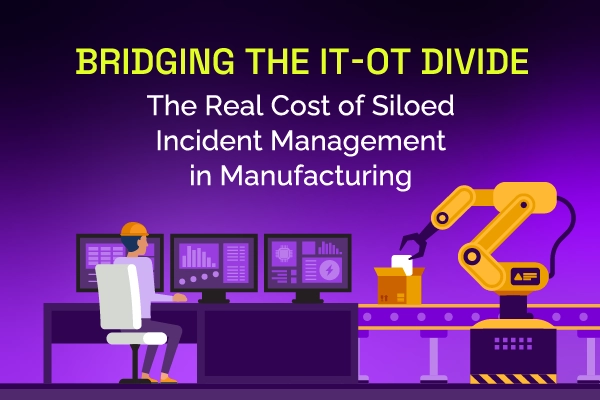
Same incident, different shift, same lost time. See why legacy ITSM keeps costing manufacturing IT teams in rework and overtime, and how modern incident and knowledge management breaks the cycle.
Most AI SREs are pattern matchers trained on public data. They know what a memory leak looks like in the abstract. They don't know that your payments-api has a flaky liveness probe everyone ignores, that the checkout team owns the retry policy, or that the last three "database incidents" were actually cache misconfigurations. That knowledge lives in your postmortems, your Slack channels, and the heads of two senior engineers.

Most vendors will tell you ITSM implementation takes six months to a year — but modern, configuration-first platforms have rewritten the math entirely. See what real implementations look like in 2026, and why a long rollout is now a choice, not a given.

.webp)
.webp)