




Blog
Insights & updates from our experts


Resolve plant floor and IT issues before they disrupt production.

Stay audit-ready while resolving issues and reducing operational risk.
Resolve issues quickly with an AI-powered system that automates ticketing.
Unifiy IT, HR, Facilities, Finance, and more on a single, AI-powered service platform.
Simplify on-call scheduling, automate escalations, and reduce burnout.
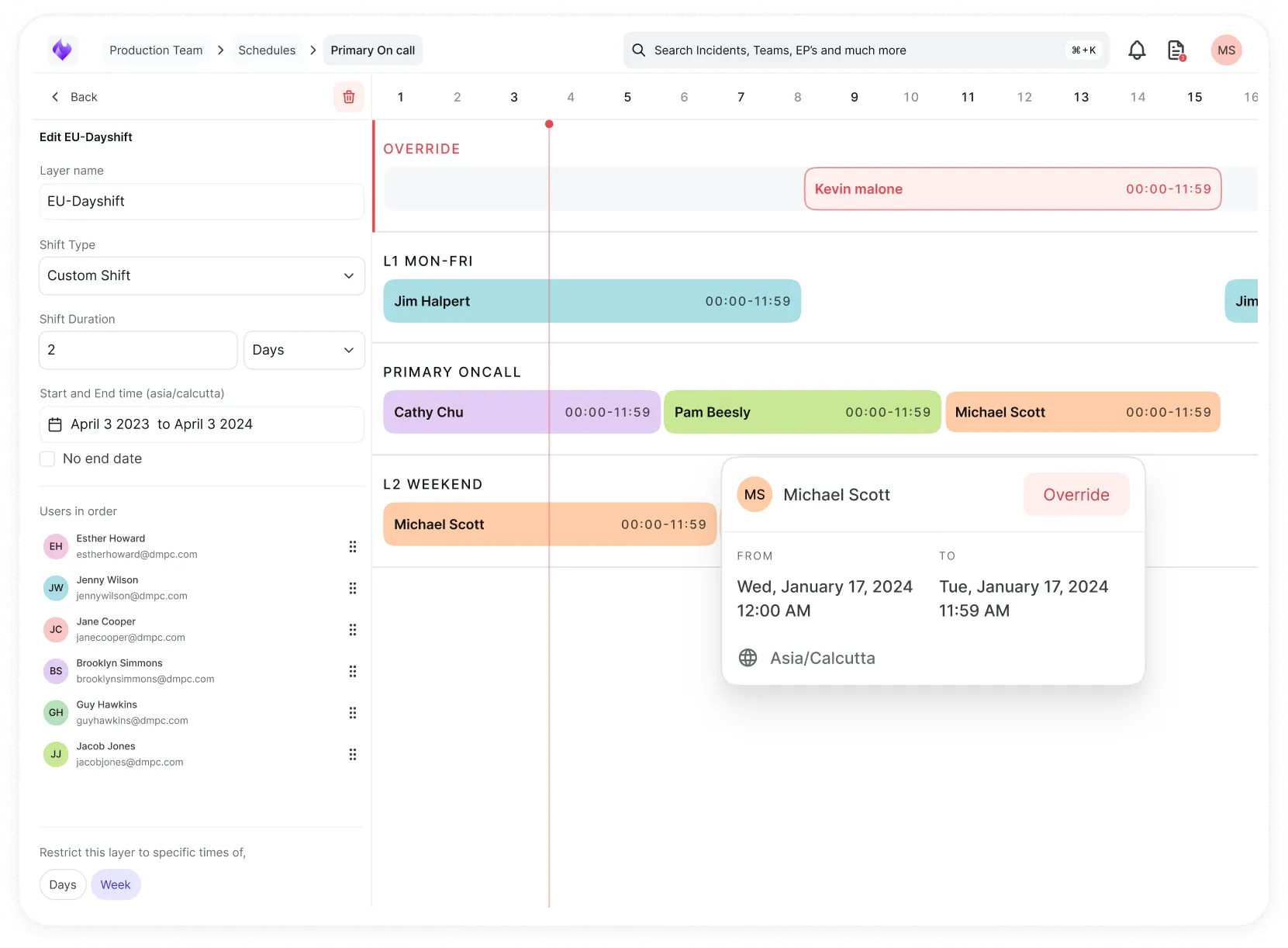
Automate postmortems, AI summaries, and post-incident workflows
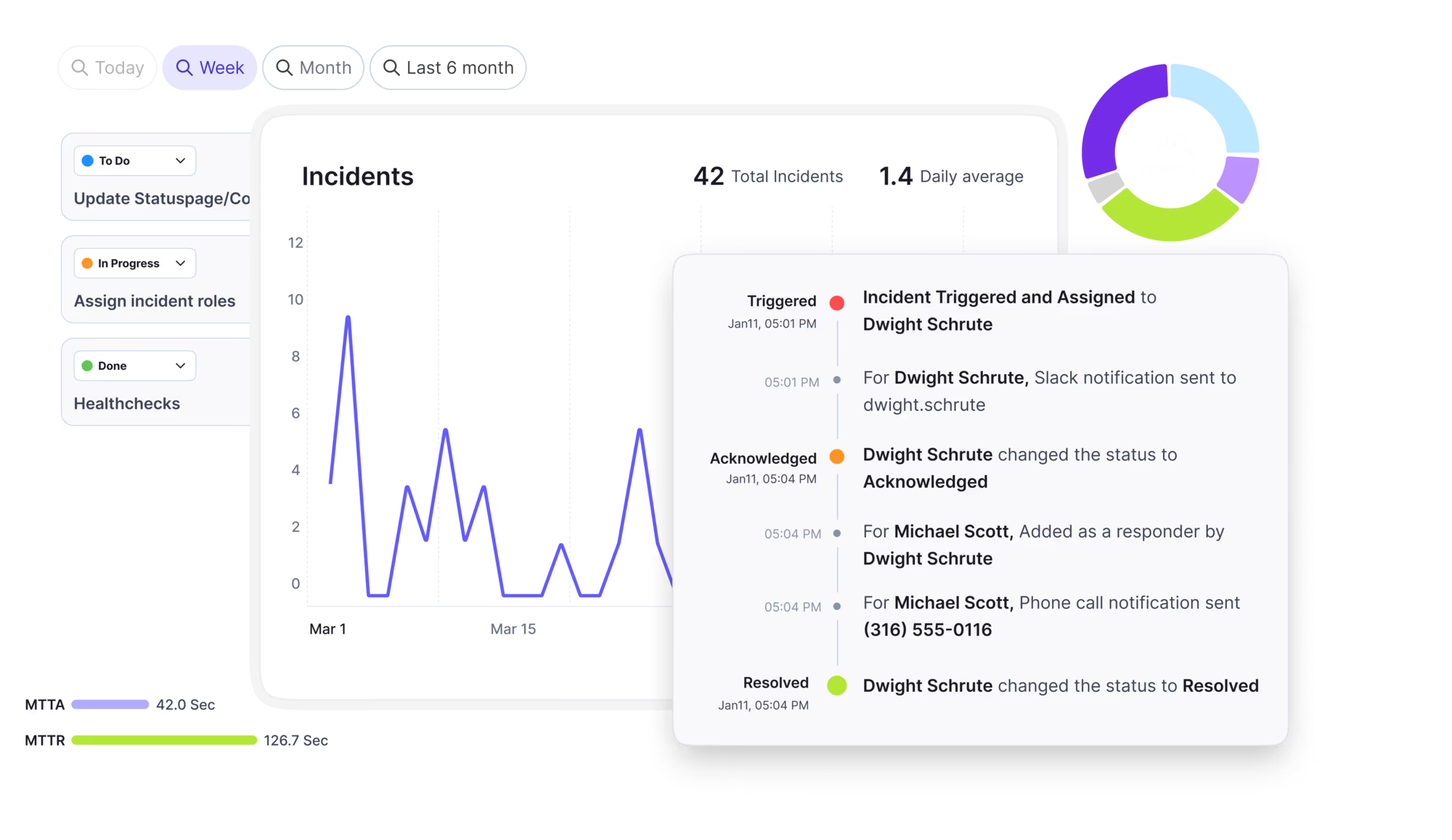
Create, organize, and continuously improve your knowledge base to find the right answers with Sera AI.
We're here to help

The integration with Atlassian Jira using the Xurrent Integration Service is

The integration with Atlassian Jira using the Xurrent Integration Service is

The integration with Atlassian Jira using the Xurrent Integration Service is

The integration with Atlassian Jira using the Xurrent Integration Service is

The integration with Atlassian Jira using the Xurrent Integration Service is

The integration with Atlassian Jira using the Xurrent Integration Service is

The integration with Atlassian Jira using the Xurrent Integration Service is

The integration with Atlassian Jira using the Xurrent Integration Service is
Resolve issues quickly with an AI-powered system that automates ticketing.
Unifiy IT, HR, Facilities, Finance, and more on a single, AI-powered service platform.
Simplify on-call scheduling, automate escalations, and reduce burnout.
Automate postmortems, AI summaries, and post-incident workflows
Create, organize, and continuously improve your knowledge base to find the right answers with Sera AI.
Resolve plant floor and IT issues before they disrupt production.
Stay audit-ready while resolving issues and reducing operational risk.

Detect, respond, and resolve incidents fast to cut downtime and MTTR.

Keep your store online, even during your biggest sales moments.

Protect patient data and resolve issues fast, so care teams stay focused on care.

Standardize service delivery across every store and channel.

We are here to help 24/7

Connect with other Xurrent Users

Get insights and tips on how to get the most out of Xurrent

Apps, APIs, and updates

Xurrent service functionality

Eliminate manual tasks, optimize workflows, and deliver faster resolutions.
Learn how organizations have reduced downtime, improved 50% MTTA & MTTR, and cut costs with Xurrent IMR.
Discover Xurrent IMR's quick support, bidirectional integrations with Jira and Slack, and more cohesive incident response capabilities compared to Opsgenie.
Understand why users value Xurrent IMR for its intuitive interface, efficient incident alerting, customizable On-call schedules, and escalations.

Jira Service Management pricing looks straightforward on paper—$0 for Free, roughly $20 per agent for Standard, around $49 for Premium, and custom quotes for Enterprise. But the real cost picture includes marketplace apps, implementation services, and renewal surprises that don't show up on the pricing page.
This guide breaks down what each JSM tier actually includes, where hidden costs emerge, and how to evaluate whether the total investment makes sense for your team.
Jira Service Management (JSM) pricing starts at $0 for the Free plan with up to 3 agents, roughly $20 per agent per month for Standard, around $49 per agent per month for Premium, and custom pricing for Enterprise. All paid plans bill annually, and you only pay for agents—the people who handle tickets—not the employees or customers who submit them.
Now, here's where things get confusing. Jira Service Management is one of three separate Jira products, and each has its own pricing page. Mixing them up is easy to do.
If you're researching JSM pricing, double-check that you're on the right Atlassian page. The products look similar but serve different purposes entirely.
JSM uses per-agent pricing, which means you pay based on how many team members respond to and resolve tickets. The people submitting requests—your employees or customers—don't count toward your license costs.
Annual billing typically saves 15-20% compared to monthly billing. And as you add more agents, the per-agent price drops through volume tiers.
The Free plan covers up to 3 agents with basic incident management, a knowledge base, and limited automation. Storage caps at 2GB, and you won't get audit logs or a branded portal. It works for testing JSM, though most teams outgrow it within a few months.
Standard unlocks a branded help center, audit logs, unlimited email notifications, and more automation rules. Storage jumps to 250GB, and you get access to Atlassian support. For teams moving from evaluation into daily use, Standard is typically the starting point.
Premium adds asset and configuration management (often called CMDB), advanced incident management with on-call scheduling, AI-powered virtual agents, and sandbox environments for testing changes. Storage becomes unlimited. The higher price reflects features that larger service operations often require.
Enterprise pricing is custom-quoted based on your organization's size and specific requirements. It includes advanced security controls, data residency options, unlimited instances, and compliance certifications. You'll negotiate directly with Atlassian's sales team for this tier.
An agent is anyone who triages, responds to, or resolves requests in JSM. IT support staff, HR coordinators, facilities managers—if they're working tickets, they're agents.
The people submitting tickets don't count toward your licenses. So a team of 10 agents serving 5,000 employees pays for 10 licenses, not 5,010. That distinction directly affects your costs.
One thing to keep in mind: there's no part-time agent pricing. If someone handles tickets occasionally, they still require a full license.
The Free plan offers a way to test JSM without spending anything, though its restrictions become obvious quickly for most real-world use cases.
You get basic request management, incident tracking, knowledge base templates, and a handful of automation rules. Multi-channel support through email, portal, and chat is available, along with integrations to other Atlassian products.
The 3-agent cap is the main constraint. Beyond that, you're limited to 2GB of storage, no audit logging, and no branded help center. SLA management stays basic, and reporting options are minimal compared to paid tiers.
If your team grows past 3 agents, you'll hit the limit immediately. Teams that require compliance documentation, custom branding, or more sophisticated automation will find the Free plan too restrictive. It's useful for evaluation, but most organizations move to Standard within a few months.
Standard is where most production deployments begin. The jump from Free unlocks capabilities that growing service desks typically require.
You get a branded help center with custom domains, expanded automation rules, audit logs for compliance, and unlimited email notifications. Storage increases to 250GB, and you gain access to Atlassian's support team.
The key upgrades include audit logging, custom branding, increased storage, and more automation capacity. SLA management and reporting also improve significantly.
Some teams report that JSM's interface feels complex, especially for users coming from simpler help desk tools. The learning curve can extend deployment timelines, and training costs add to the total investment.
Premium's higher price point reflects advanced capabilities designed for teams with complex ITSM requirements or high-availability demands.
Asset and configuration management lets you track hardware, software, and dependencies across your environment. Advanced incident management includes on-call scheduling, alerting, and escalation workflows. Storage becomes unlimited.
AI-powered virtual agents can handle routine requests automatically — Fortune Business Insights reports AI-based ITSM automation can reduce incident resolution times by almost 50%. You also get expanded automation rules and sandbox environments for testing changes before they hit production.
Premium's advanced features often require significant setup time. CMDB implementation alone can take weeks or months depending on your environment. Teams without dedicated administrators may struggle to get full value from Premium capabilities.
Tip: Before committing to Premium, assess whether your team has the bandwidth to implement and maintain features like CMDB and on-call management. Underutilized features represent wasted spend.
Enterprise is custom-quoted, so published pricing isn't available. The plan targets large organizations with specific security, compliance, or scale requirements.
You get advanced security controls, data residency options for choosing where your data lives, and compliance certifications for regulated industries. Single sign-on, identity management, and enhanced access controls come standard.
Users on r/sysadmin describe high-tier JSM as a tool that can be "customized to death," leading to setups where consulting fees alone can range from $25,000 to $70,000 for advanced workflow and asset configuration.No caps on automation rules, storage, or instances. For organizations running multiple service desks across business units or geographies, removing those limits matters.
Custom pricing means costs vary significantly based on agent count, contract length, and negotiated terms. Atlassian was specifically named among vendors raising prices in 2025, so reviewing contract terms carefully is worth the time.
The per-agent price isn't the complete picture. Several additional expenses can inflate your total cost of ownership.
Many capabilities that seem essential—advanced reporting, specific integrations, enhanced automation—require paid apps from the Atlassian Marketplace. App fees add per-user or flat monthly costs on top of your JSM licenses. Admins on Reddit frequently warn about the "Atlassian Tax," where essentials like timeline views or permissions feel locked behind plugins that charge per-user, rapidly inflating your monthly bill.
Complex deployments often require consultants or Atlassian partners. Professional services costs can range widely depending on scope. Heavy customization also creates ongoing maintenance overhead that persists long after go-live. Users on r/sysadmin describe high-tier JSM as a tool that can be "customized to death," leading to setups where consulting fees alone can range from $25,000 to $70,000 for advanced workflow and asset configuration.
Some organizations report price increases at renewal that weren't clearly communicated upfront — Gartner finds enterprise SaaS costs commonly rise 10% to 20% at renewal. Reviewing contract terms, understanding renewal pricing, and negotiating caps on annual increases can prevent surprises.
Every platform has tradeoffs. Here are limitations worth weighing against JSM's pricing.
The interface can feel overwhelming for new users, particularly those coming from simpler tools. Training time and adoption challenges extend time-to-value.
Heavy customization creates technical debt. Customized instances become harder to upgrade, and you may find yourself locked into configurations that don't scale well as your organization grows.
Deep integration with Confluence, Jira Software, and other Atlassian products creates value—but also switching costs. If you later decide to move to a different platform, migration becomes complex and expensive.
Evaluating JSM in isolation doesn't give you the full picture. Comparing against alternatives helps clarify whether the pricing delivers appropriate value for your situation.
Compare core ITSM capabilities: incident management, service catalogs, knowledge bases, automation, and reporting. Some alternatives include features that JSM charges extra for or requires marketplace apps to deliver.
Factor in implementation time, training, marketplace apps, and ongoing administration—not just license fees. A platform with higher per-agent pricing but faster deployment and lower maintenance overhead may cost less over three years.
Some modern platforms offer deployment in weeks through configuration-first approaches rather than heavy customization. Xurrent, for example, delivers AI-native ITSM with sub-350ms response times and typical go-live timelines of 4 weeks—without the customization debt that extends many JSM implementations.
JSM works well for certain scenarios. Here's balanced guidance on where it fits—and where alternatives may serve you better.
If you're already invested in Jira Software, Confluence, and other Atlassian tools, JSM's native integrations create real value. Shared workflows, linked issues, and unified reporting across products reduce friction between teams.
For teams with straightforward service desk requirements and technical resources to manage the platform, JSM delivers solid ITSM capabilities at competitive pricing.
Organizations that want unified ITSM, incident response, and operations in one platform—or faster deployment without heavy customization—may find better value elsewhere. Platforms like Xurrent unify service, incidents, and operations with AI-driven workflows, predictable pricing, and no hidden fees.
Modern ITSM doesn't require months of implementation or marketplace app sprawl. Configuration-first platforms unify service, incidents, and operations in a single system, delivering enterprise-grade capabilities with predictable costs.
Xurrent offers AI-native ITSM with ITIL-accredited processes, sub-350ms response times, and deployment in weeks. No hidden fees, no clunky configs—just service made simple.