




Blog
Insights & updates from our experts


Resolve plant floor and IT issues before they disrupt production.

Stay audit-ready while resolving issues and reducing operational risk.
Resolve issues quickly with an AI-powered system that automates ticketing.
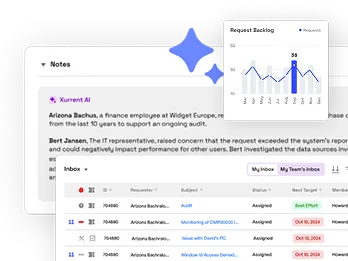
Unifiy IT, HR, Facilities, Finance, and more on a single, AI-powered service platform.
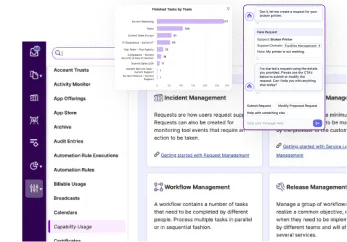
Simplify on-call scheduling, automate escalations, and reduce burnout.
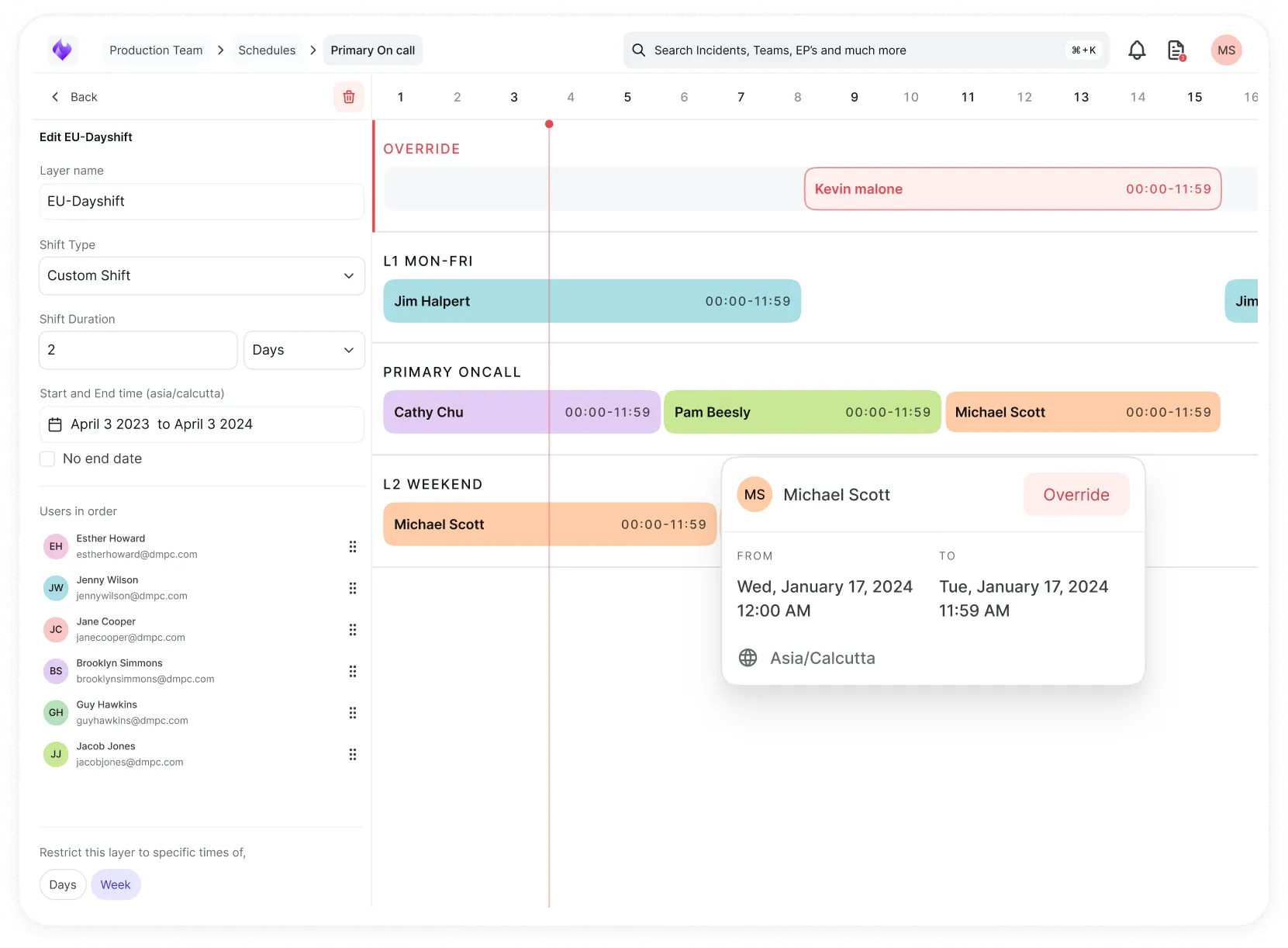
Automate postmortems, AI summaries, and post-incident workflows
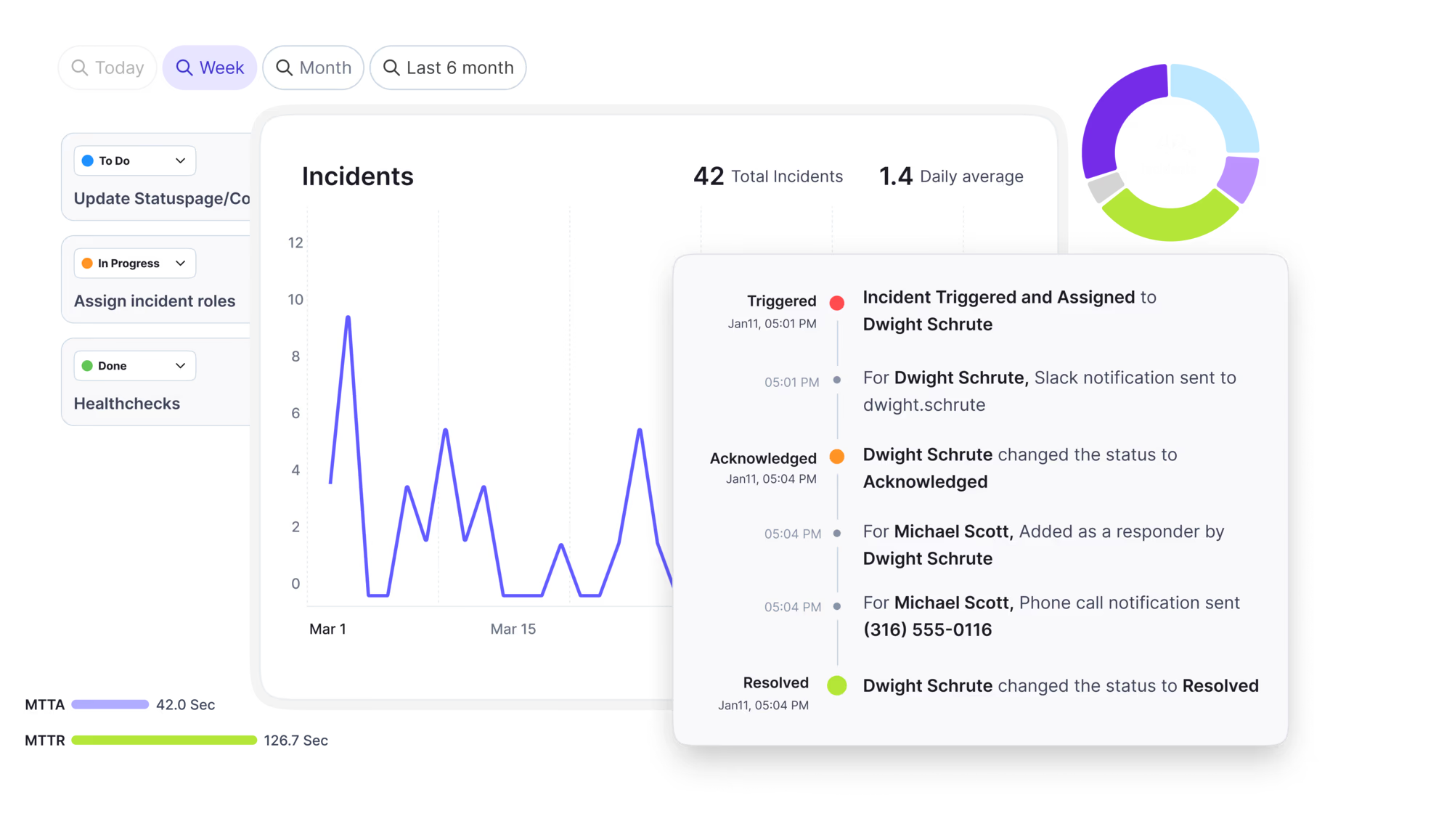
Create, organize, and continuously improve your knowledge base to find the right answers with Sera AI.
We're here to help

The integration with Atlassian Jira using the Xurrent Integration Service is

The integration with Atlassian Jira using the Xurrent Integration Service is

The integration with Atlassian Jira using the Xurrent Integration Service is

The integration with Atlassian Jira using the Xurrent Integration Service is

The integration with Atlassian Jira using the Xurrent Integration Service is

The integration with Atlassian Jira using the Xurrent Integration Service is

The integration with Atlassian Jira using the Xurrent Integration Service is

The integration with Atlassian Jira using the Xurrent Integration Service is
Resolve issues quickly with an AI-powered system that automates ticketing.
Unifiy IT, HR, Facilities, Finance, and more on a single, AI-powered service platform.
Simplify on-call scheduling, automate escalations, and reduce burnout.
Automate postmortems, AI summaries, and post-incident workflows
Create, organize, and continuously improve your knowledge base to find the right answers with Sera AI.
Resolve plant floor and IT issues before they disrupt production.
Stay audit-ready while resolving issues and reducing operational risk.

Detect, respond, and resolve incidents fast to cut downtime and MTTR.

Keep your store online, even during your biggest sales moments.

Protect patient data and resolve issues fast, so care teams stay focused on care.
Standardize service delivery across every store and channel.

We are here to help 24/7

Connect with other Xurrent Users

Get insights and tips on how to get the most out of Xurrent

Apps, APIs, and updates

Xurrent service functionality

Eliminate manual tasks, optimize workflows, and deliver faster resolutions.
Learn how organizations have reduced downtime, improved 50% MTTA & MTTR, and cut costs with Xurrent IMR.
Discover Xurrent IMR's quick support, bidirectional integrations with Jira and Slack, and more cohesive incident response capabilities compared to Opsgenie.
Understand why users value Xurrent IMR for its intuitive interface, efficient incident alerting, customizable On-call schedules, and escalations.
ManageEngine covers a lot of ground—service desk, endpoint management, network monitoring, security—but each capability lives in a separate product with its own console, licensing, and learning curve. For teams tired of stitching together modules and managing fragmented workflows, that modularity starts to feel like a liability.
This guide breaks down 11 alternatives worth evaluating, from enterprise platforms like ServiceNow to unified solutions that bring ITSM, ITOM, and incident response onto a single fabric. You'll also find a framework for comparing options and a side-by-side table to speed up your shortlist.
ManageEngine is a division of Zoho Corporation that builds IT management software. The product line covers ITSM, endpoint management, network monitoring, and security—but here's the catch: each capability lives in a separate product. So if you want a service desk, patch management, and infrastructure monitoring, you're buying and managing three different tools.
This modular approach works for some teams. For others, it creates exactly the kind of fragmentation that slows down incident response and makes cross-team visibility harder than it has to be.
Getting ManageEngine up and running often means configuring multiple admin consoles, connecting separate databases, and building workflows that span disconnected modules. That's a lot of overhead before you even handle your first ticket.
Teams looking for alternatives typically want something simpler: platforms where configuration replaces customization, and where going live takes weeks instead of months.
ManageEngine licenses each product separately. You might start with ServiceDesk Plus, then realize you also want OpManager for monitoring, then Endpoint Central for patching. Each addition comes with its own price tag, and the total can climb quickly.
Alternatives with bundled, transparent pricing tend to win favor here—especially when core ITSM, ITOM, and incident response capabilities come included rather than sold as add-ons.
ManageEngine offers automation features, but AI often feels bolted on rather than woven into the platform. You might get a chatbot, but not intelligent routing that learns from your ticket history or AI that generates knowledge articles from resolved incidents.
Platforms with native AI—where machine learning powers classification, routing, and workflow automation from day one—deliver faster resolution with less manual triage.
This one comes up frequently in user reviews. Response times vary, and support quality can depend on which product you're using or which region you're in. For teams running production workloads or managing critical incidents, unpredictable support becomes a real risk.
Here's the core issue: ManageEngine treats service desk, monitoring, and incident response as separate concerns. That means separate tools, separate data, and separate workflows.
When an alert fires in your monitoring tool but your service desk doesn't know about it, you get handoff delays and context gaps. Unified platforms that connect service management, operations, and incident response on a single fabric address this directly.
Before diving into specific alternatives, it helps to know what to look for. Here's a framework:
Best for: Mid-to-large enterprises that want ITSM, ITOM, and incident response in one connected platform.
Xurrent brings service, incidents, and operations together on a shared workflow fabric. The platform is ITIL-accredited with 19 certified practices, and AI is embedded throughout—not added as an afterthought.
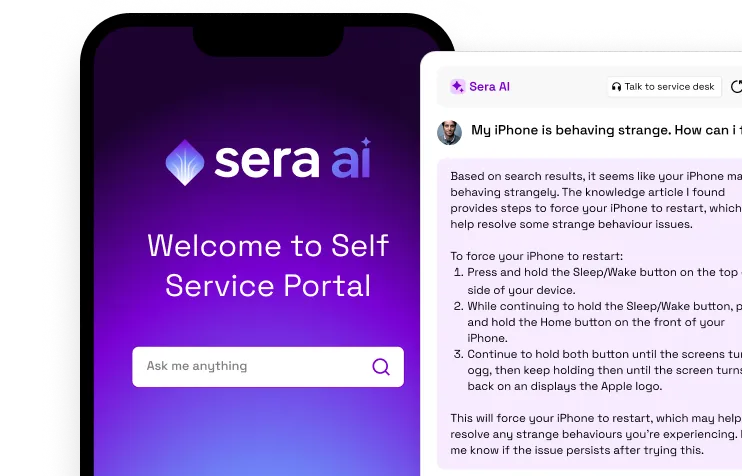
Sera AI powers intelligent routing, automated postmortems, and knowledge generation. Response times run under 350 milliseconds, and teams typically go live in as little as four weeks using low-code configuration.
On the security side, Xurrent holds ISO 27001/27018, SOC 2 Type II, and C5 attestation. BYOK encryption and secure AI isolation keep your data private—AI interactions stay confined to your environment and are never used for training.
Best for: Large enterprises with complex requirements and dedicated platform teams.
ServiceNow offers deep ITSM capabilities, strong workflow automation, and a massive partner ecosystem. The tradeoff? Implementations often stretch into months, and you'll likely want dedicated administrators to manage the platform. Pricing reflects the enterprise positioning.
Best for: DevOps-focused teams already working in the Atlassian ecosystem.
Jira Service Management provides lightweight ITSM with tight CI/CD integration. If your engineering team already lives in Jira and Confluence, the learning curve is minimal. That said, teams with mature ITIL processes may find the platform lacks depth for change management or problem management.
Best for: Teams that prioritize ease of use and fast setup.
Freshservice delivers a clean, modern interface with solid automation capabilities. It's popular with small-to-mid-market organizations that want to get up and running quickly. For enterprise-scale deployments or deep ITOM integration, you may hit limitations.
Best for: Enterprises managing complex, multi-cloud environments.
BMC Helix combines strong AIOps capabilities with comprehensive service management. The platform handles sophisticated enterprise requirements well. Implementation complexity and pricing both reflect that enterprise focus.
Best for: Organizations that want ITSM alongside infrastructure monitoring.
SolarWinds provides solid service desk capabilities with strong network and infrastructure monitoring integration. It works well in hybrid environments where visibility across on-prem and cloud infrastructure matters. The broader SolarWinds portfolio spans multiple tools, so you may end up managing several products.
Best for: Teams focused on automation and endpoint management integration.
Ivanti takes a modular, scalable approach with strong automation capabilities. The platform integrates well with endpoint management tools. As you add modules, complexity can increase—so plan your rollout carefully.
Best for: Mid-market IT teams wanting integrated help desk and asset management.
SysAid provides solid ITSM fundamentals with recent investments in AI capabilities. It serves mid-market teams well, though the ecosystem is smaller than market leaders like ServiceNow or BMC.
Best for: Growing IT teams that want ITIL-aligned ITSM without enterprise pricing.
HaloITSM delivers strong value with comprehensive ITIL coverage. It's a solid choice for cost-conscious teams building out their service management practice. Brand recognition is lower than established players, which may matter for some buying committees.
Best for: European organizations or teams prioritizing simplicity.
TOPdesk offers straightforward ITSM with strong facilities and shared services capabilities. It's particularly popular in Europe. Advanced ITOM features are limited compared to platforms with deeper operations management roots.
Best for: MSPs and small IT teams focused on endpoint management.
NinjaOne excels at remote monitoring and management (RMM), patch management, and lightweight ticketing. It's highly regarded in the MSP community. If you're looking for full ITSM with ITIL process depth, you'll likely want to pair it with another tool.
Start with your primary pain point. Are you solving for ITSM, ITOM, endpoint management, or all three? The answer shapes which alternatives fit best.
Next, consider your team's maturity level. Early-stage teams often prioritize ease of use and fast deployment. Mature teams typically look for ITIL depth, advanced integrations, and enterprise-grade compliance.
When evaluating cost, look beyond the base price. Factor in modules, user counts, and hidden fees for integrations or premium support. Some platforms bundle capabilities that others charge separately for.
Test deployment speed before you commit. Request a pilot to validate go-live timelines and configuration effort. Platforms that emphasize configuration over customization typically deliver faster time to value.
Finally, prioritize unified platforms. Replacing one fragmented toolset with another doesn't solve the underlying problem. Platforms that connect ITSM, ITOM, and incident response on a shared fabric reduce handoffs and accelerate resolution across the entire reliability lifecycle.
Tip: When IT and engineering operate in the same system, work moves faster and teams can anticipate issues rather than just reacting to them.

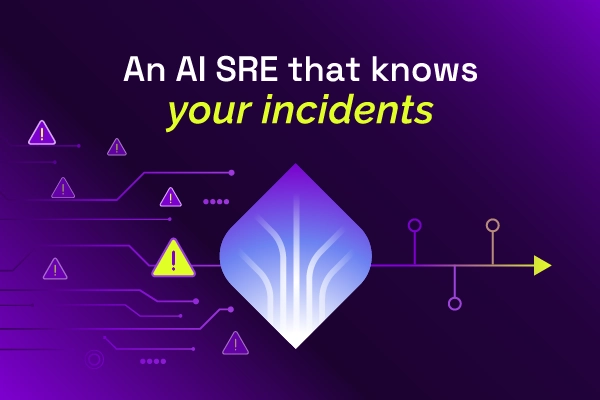
Most AI SREs are pattern matchers trained on public data. They know what a memory leak looks like in the abstract. They don't know that your payments-api has a flaky liveness probe everyone ignores, that the checkout team owns the retry policy, or that the last three "database incidents" were actually cache misconfigurations. That knowledge lives in your postmortems, your Slack channels, and the heads of two senior engineers.
Most vendors will tell you ITSM implementation takes six months to a year — but modern, configuration-first platforms have rewritten the math entirely. See what real implementations look like in 2026, and why a long rollout is now a choice, not a given.

.webp)
.webp)
.webp)