





Blog
Insights & updates from our experts


Resolve plant floor and IT issues before they disrupt production.

Stay audit-ready while resolving issues and reducing operational risk.
Resolve issues quickly with an AI-powered system that automates ticketing.
Unifiy IT, HR, Facilities, Finance, and more on a single, AI-powered service platform.
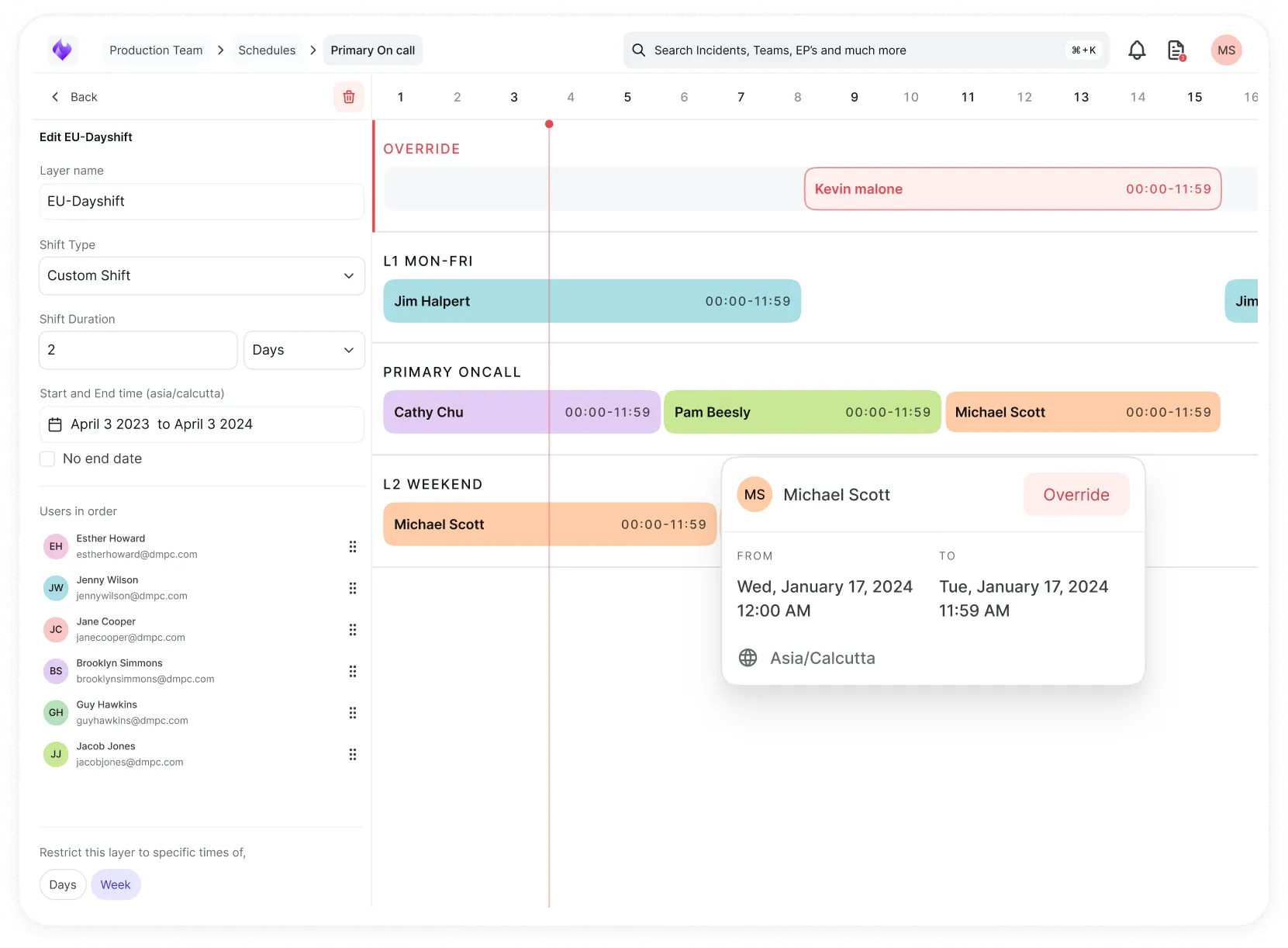
Simplify on-call scheduling, automate escalations, and reduce burnout.
Automate postmortems, AI summaries, and post-incident workflows
Create, organize, and continuously improve your knowledge base to find the right answers with Sera AI.
We're here to help

The integration with Atlassian Jira using the Xurrent Integration Service is

The integration with Atlassian Jira using the Xurrent Integration Service is

The integration with Atlassian Jira using the Xurrent Integration Service is

The integration with Atlassian Jira using the Xurrent Integration Service is

The integration with Atlassian Jira using the Xurrent Integration Service is

The integration with Atlassian Jira using the Xurrent Integration Service is

The integration with Atlassian Jira using the Xurrent Integration Service is

The integration with Atlassian Jira using the Xurrent Integration Service is
Resolve issues quickly with an AI-powered system that automates ticketing.
Unifiy IT, HR, Facilities, Finance, and more on a single, AI-powered service platform.
Simplify on-call scheduling, automate escalations, and reduce burnout.
Automate postmortems, AI summaries, and post-incident workflows
Create, organize, and continuously improve your knowledge base to find the right answers with Sera AI.
Resolve plant floor and IT issues before they disrupt production.
Stay audit-ready while resolving issues and reducing operational risk.

Detect, respond, and resolve incidents fast to cut downtime and MTTR.

Keep your store online, even during your biggest sales moments.

Protect patient data and resolve issues fast, so care teams stay focused on care.

Standardize service delivery across every store and channel.

We are here to help 24/7

Connect with other Xurrent Users

Get insights and tips on how to get the most out of Xurrent

Apps, APIs, and updates

Xurrent service functionality

Eliminate manual tasks, optimize workflows, and deliver faster resolutions.
Learn how organizations have reduced downtime, improved 50% MTTA & MTTR, and cut costs with Xurrent IMR.
Discover Xurrent IMR's quick support, bidirectional integrations with Jira and Slack, and more cohesive incident response capabilities compared to Opsgenie.
Understand why users value Xurrent IMR for its intuitive interface, efficient incident alerting, customizable On-call schedules, and escalations.
Sera AI has been part of how Xurrent works for years, routing and classifying requests, drafting knowledge articles, and assisting users directly as a virtual agent, with 91% of customers already running it in production. Today, we're extending that foundation with four new capabilities that span the full range of how enterprise IT teams work with AI. Whether your team wants AI woven into the interface they already use, or you're ready to deploy autonomous agents across your workflows, these capabilities meet you where you are.
Most enterprise teams aren't ready to abandon their service desk interface for a blank chat prompt. They shouldn't have to.
Sera AI Assist brings the power of an LLM conversation directly into the specialist experience your team already knows. When a specialist opens a request, the Sera AI Assist panel is right there, ready to summarize the issue, surface related problems, or look for similar requests with a single click. When they need to go deeper, they ask. In natural language, without switching tools or leaving the ticket.
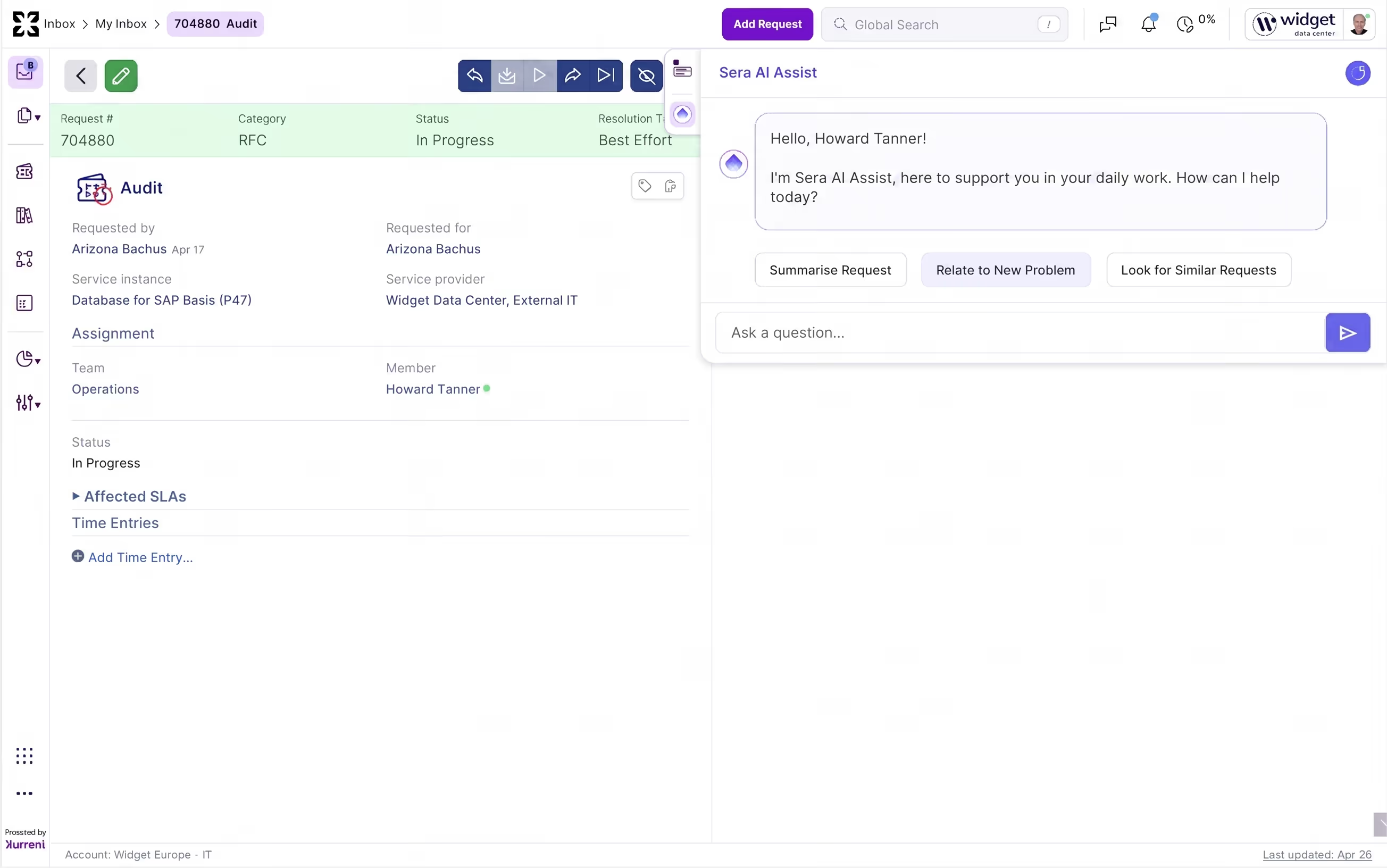
Draft a response. Query the system. Get context on a CI. The capabilities are there when a specialist needs them, and out of the way when they don't. For teams that want to move forward without a forced paradigm shift, this is how you get there. The interface your specialists trust doesn't go away. It gets smarter.
Sera AI Studio gives IT teams the controls to configure, test, and tune how their virtual agent behaves before any of it touches end users.
The Agent Instructions tab lets administrators define exactly how the virtual agent understands and routes requests: company terminology, behavioral rules, escalation logic, sensitivity handling. It's a structured markdown file that shapes how the agent thinks about your environment specifically, not a generic one.
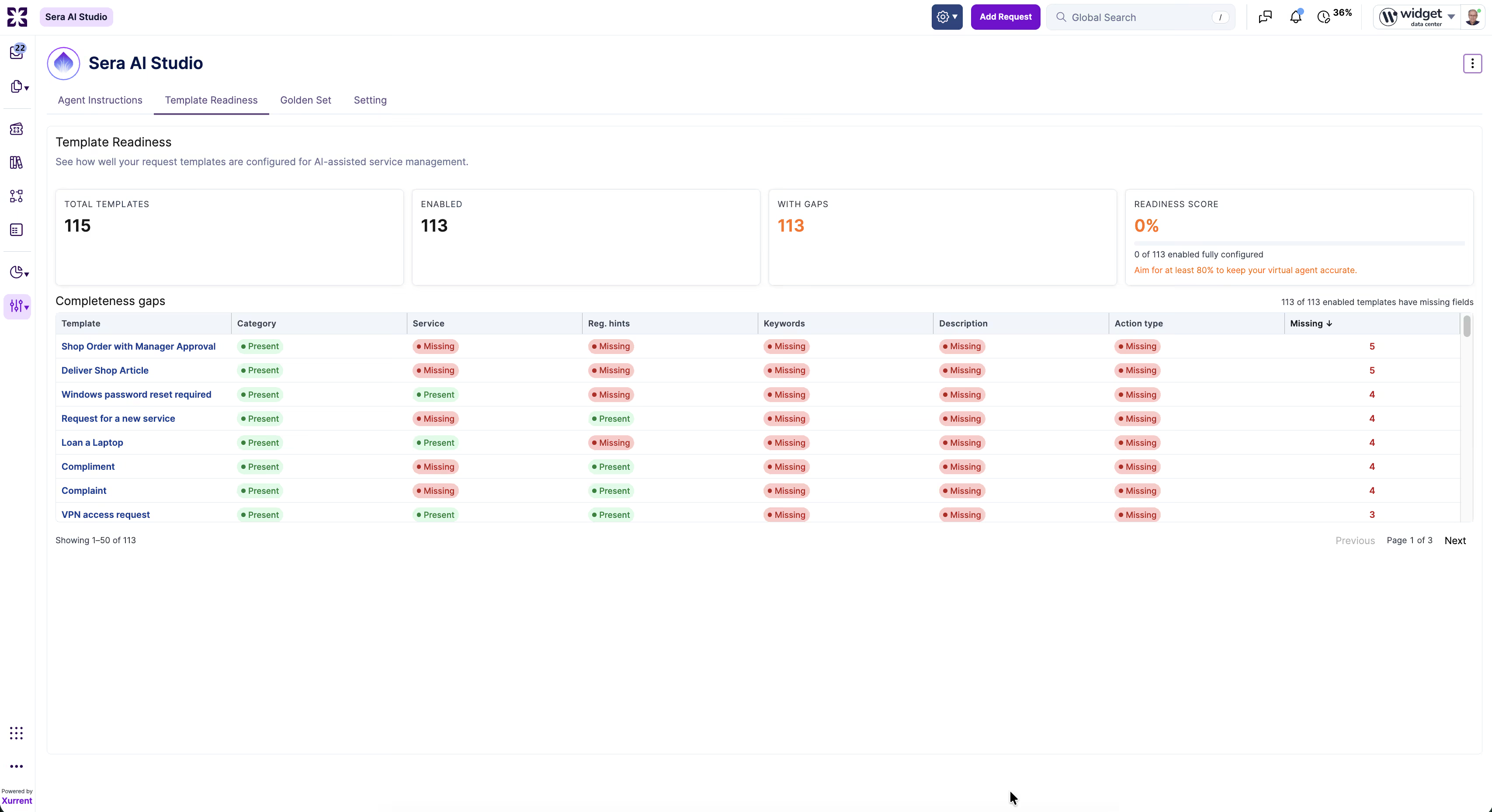
The Template Readiness tab shows how well your request templates are configured for AI-assisted service management. It surfaces a readiness score and a completeness gap analysis across every enabled template, flagging which ones are missing fields like service, routing hints, keywords, description, and action type. It's a practical starting point for any team that wants to understand what's ready for AI and what needs attention before turning it on.
The Golden Set tab is where you validate it. Teams define expected outcomes for specific prompts. "I need to reset my password" should surface the VPN Password Reset Guide, for example. Then they run scoring tests against the live agent. Each row returns a pass or fail, a response time, and an AI-generated suggestion for improvement. A configurable scoring threshold flags anything that falls below your acceptable accuracy bar, and a notification fires if a re-run produces a lower score than the previous one. That last detail matters: it catches regressions before your users do.
The result is an AI deployment your organization can actually trust, because you configured it deliberately, tested it thoroughly, and know exactly how it performs.
For organizations operating with a broader AI ecosystem, including custom agents, preferred LLMs, and automation frameworks built outside of Xurrent, the MCP server opens the platform to all of it.
The Model Context Protocol server lets customers connect any external AI model to Xurrent, whether that's OpenAI, Google, Anthropic, or one built in-house. External agents don't just get access to Xurrent data. They inherit the Shared Policy and Data Layer, operating under the same governance, audit trail, and visibility as everything else running on the platform. No matter where the intelligence comes from, how it behaves inside Xurrent is governed consistently.
This is what open AI interoperability looks like when it's done right. Not a free-for-all. One platform, one governance layer, open to whatever your team wants to bring.
Sera AI has been assisting the IT team for years. The agents that launched today enable autonomous action.
Xurrent's AI Agents arrive as digital members of the IT team. They're onboarded like any specialist, assigned to teams, given specific roles, and held to the same accountability standards as the humans working alongside them. The Agent Studio dashboard shows you exactly how they're performing: how many times they've run this week, their average success rate, and how much time they've saved.
Each agent comes with configurable skills. A Triage Agent can run duplicate detection, CI linking, completeness gating, and impact assessment, with each skill carrying its own confidence threshold and action type so you decide how much autonomy the agent gets before it acts versus suggests. A Triage Agent can be working an active request right alongside your human team, asking the end user the right clarifying questions and routing based on the answers. Every action is logged, auditable, and governed by the same policies that apply to everyone on the platform.
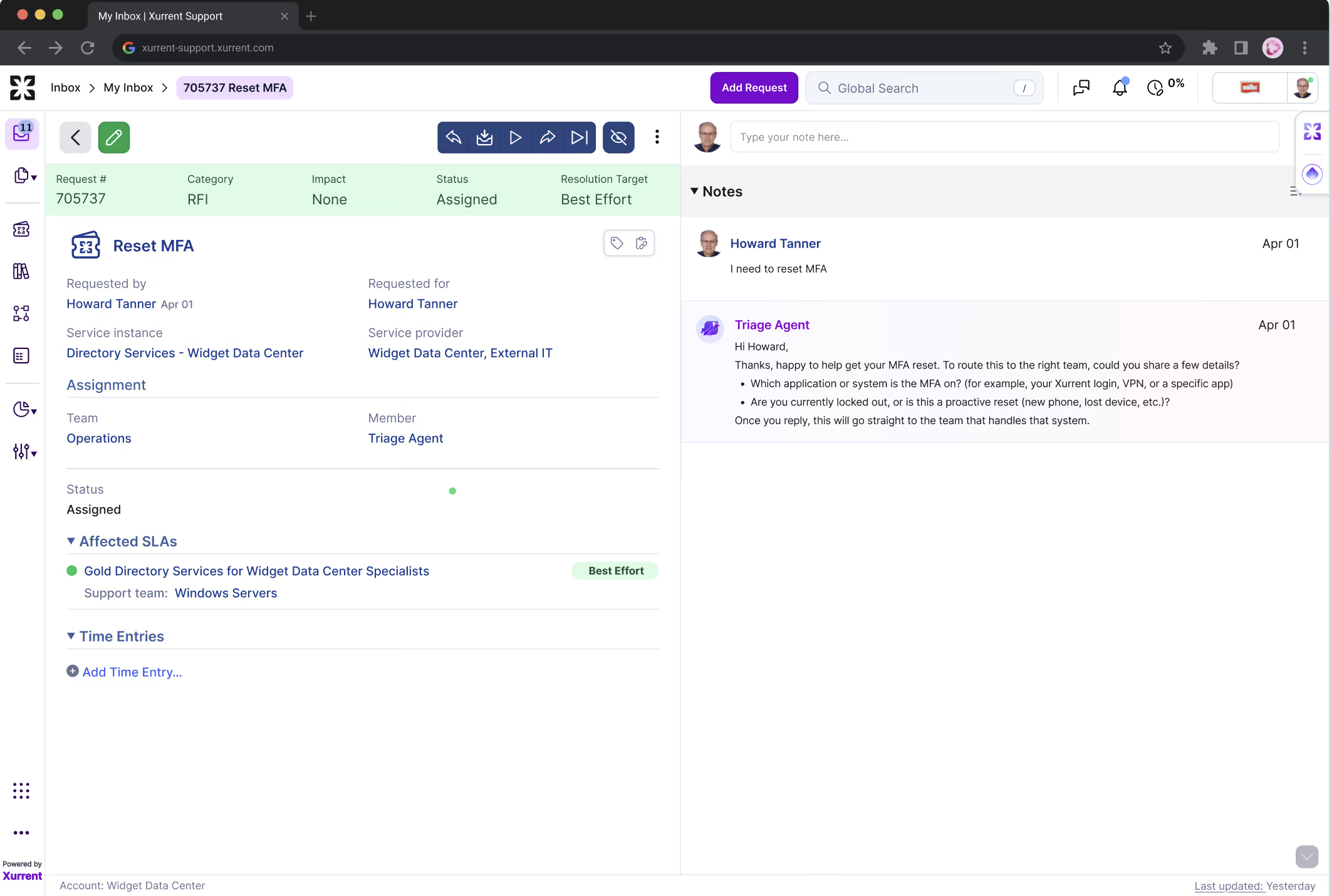
This is only safe to do because of what Xurrent was built on. The Shared Policy and Data Layer, the Service Catalog and Data Model, the governed foundation that's been in place for a decade, is what makes agentic AI trustworthy in an enterprise environment. Deploying autonomous agents without that kind of architecture isn't innovation; it's exposure. Xurrent customers don't have to choose between AI productivity and organizational control. They get both.
IT teams don't just manage the work anymore. They direct the workforce that does it. Get started with Xurrent today.


.webp)
.webp)
.webp)